- English
- French
- German
- Portuguese
- Spanish
- Russian
- Japanese
- Korean
- Arabic
- Irish
- Greek
- Turkish
- Italian
- Danish
- Romanian
- Indonesian
- Czech
- Afrikaans
- Swedish
- Polish
- Basque
- Catalan
- Esperanto
- Hindi
- Lao
- Albanian
- Amharic
- Armenian
- Azerbaijani
- Belarusian
- Bengali
- Bosnian
- Bulgarian
- Cebuano
- Chichewa
- Corsican
- Croatian
- Dutch
- Estonian
- Filipino
- Finnish
- Frisian
- Galician
- Georgian
- Gujarati
- Haitian
- Hausa
- Hawaiian
- Hebrew
- Hmong
- Hungarian
- Icelandic
- Igbo
- Javanese
- Kannada
- Kazakh
- Khmer
- Kurdish
- Kyrgyz
- Latin
- Latvian
- Lithuanian
- Luxembou..
- Macedonian
- Malagasy
- Malay
- Malayalam
- Maltese
- Maori
- Marathi
- Mongolian
- Burmese
- Nepali
- Norwegian
- Pashto
- Persian
- Punjabi
- Serbian
- Sesotho
- Sinhala
- Slovak
- Slovenian
- Somali
- Samoan
- Scots Gaelic
- Shona
- Sindhi
- Sundanese
- Swahili
- Tajik
- Tamil
- Telugu
- Thai
- Ukrainian
- Urdu
- Uzbek
- Vietnamese
- Welsh
- Xhosa
- Yiddish
- Yoruba
- Zulu
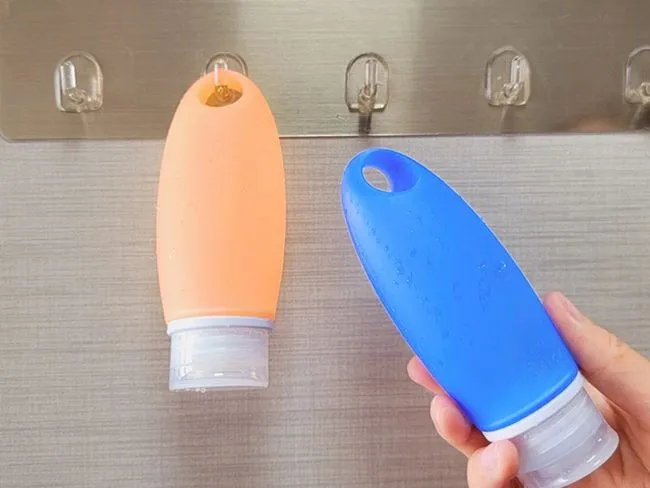
When brands choose a reliable Silicone Travel Bottle OEM supplier, they can change how they offer safe, portable liquid containers to modern tourists and online shoppers. Customizable, leak-proof Silicone Travel Bottles made from food-grade materials that meet FDA and LFGB standards are what we do best at Qosun. Our triangular shape is both useful and beautiful, and it comes in three different sizes—37ml, 60ml, and 89ml—perfect for hand sanitizers, lotions, and personal care products. We help startups, Amazon sellers, and wholesalers launch unique lines of travel accessories that stand out in crowded markets and follow strict safety rules by offering flexible minimum order amounts and fast prototyping.
Understanding Silicone Travel Bottles and Their Advantages
Silicone Travel Bottles have changed the way companies package and send personal care items to customers who want ease without sacrificing safety. The strength of regular bottles is combined with the freedom and light weight that tourists want in containers.
What Makes Silicone an Ideal Material for Travel Containers
Silicone that is safe for food has special qualities that make it useful for many things in the travel accessory market. Silicone doesn't break like rigid metals do or like glass does, even at very high or very low temperatures. It can survive temperatures from -40°C to 120°C without losing its shape. Because the material is naturally flexible, bottles can be squeezed to release thick lotions or creams without changing shape. We make our triangular Silicone Travel Bottles with medical-grade silicone and PP parts, making sure that each one meets the BPA-free standards that people who care about their health actively seek.
Business Benefits of Leak-Proof and TSA-Compliant Designs
Procurement managers know that product returns caused by leaks hurt the image of the brand and cut into profits. Our triple-seal structure has a patented bottle neck design that keeps liquids from spilling during transport, even when the pressure in the cabin changes during trips. The bottles don't go over the TSA liquid limits, so they're perfect for carry-on bags, which is a feature that regular travelers really like. This compliance cuts down on customer service calls and returns, so online sellers can focus on growing their businesses instead of dealing with complaints.
Customization Opportunities That Strengthen Brand Identity
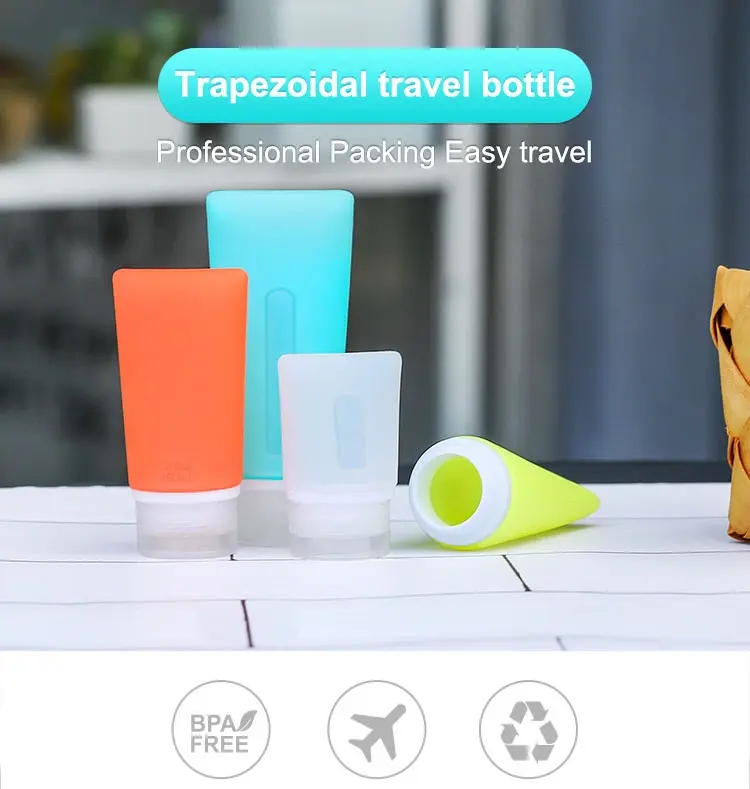
Being able to change colors, add logos, and choose from different packaging choices makes it easy to stand out in a crowded market. Custom logos can be printed on silk screens using our production process. You can choose from peachblow, cyan, clear, and bright yellow as colors. Brands can choose travel bag packing made of OPP, PVC, or EVA based on how they want to place themselves in the market. With these customization options, companies can make sure that all of their products look the same, and established wholesalers can make their own designs that stop rivals from directly pricing-matching them.
Choosing the Right Silicone Travel Bottle for Your OEM Needs
To choose the right Silicone Travel Bottles, you need to look at the material's certifications, the different capacity choices, and the supplier's skills that fit with your business plan and the customers you want to serve.
Material Specifications and Safety Certifications
Certifications for safety have a direct effect on market entry and customer trust. Our bottles are certified by both the FDA and the LFGB, which means they meet the rules that many brands from other countries have to follow before they can be sold in North America and Europe. The food-grade silicone formula stays harmless and non-toxic, so chemicals don't get into the contents. This is very important when bottles hold goods that are eaten or put on the skin. Buyers should make sure that possible sellers show real certification documents instead of making general claims. This will protect them from customs problems and liability.
Capacity and Size Considerations for Different Product Lines
The triangular shape we make comes in three varying sizes: 37ml (1.25 fl oz), 60ml (2 fl oz), and 89ml (3 fl oz). Each size and weight is best for a different purpose. For concentrated serums or essential oils that people only need a small amount of, 37ml bottles are a good size. The 60ml choice strikes a good mix between portability and enough space for weekend trips. While still TSA-compliant, the 89ml size is better for longer trips. Knowing how your ideal customer usually uses your products will help you choose the right mix of capacities, which will cut down on wasted inventory and boost turnover rates.
Comparing Silicone Against Alternative Materials
The choice of material affects how a product is seen, how long it lasts, and where it is priced. Silicone is better than standard plastics at withstanding high temperatures and being eco-friendly, as people become less interested in single-use plastics. Glass looks great, but it's heavy and easily broken, which makes transporting things more difficult and increases the chance of damage. Metal cases might not work well with some formulas and cannot be seen through, so users can't tell how much product is left. Silicone hits the perfect mix between being lightweight to save money on shipping costs, clear to see what's inside, and reusable to send a message of sustainability that appeals to buyers who care about the environment.
Custom Branding Elements That Elevate Product Appeal
Logo placement, color psychology, and the way the package fits together all work together to make opening experiences that people will remember. We support custom image printing that uses long-lasting methods that can handle being washed many times and being exposed to UV light. Color choices should be in line with brand standards and take market research into account. For example, softer peach-blow tones are good for feminine personal care markets, while bright electric yellow stands out in outdoor or sports markets. When you match the colors of the bottles to the materials used for the packing, you create a visual unity that raises the perceived value. This is especially important for direct-to-consumer brands that compete on presentation quality.
The Procurement Process: How to Source Silicone Travel Bottles in Bulk
Costs go down, quality stays the same, and the supply chain is reliable, all of which help a business grow when it uses efficient buying methods.
Identifying Qualified OEM Manufacturers
When you work directly with makers, you cut out the middleman and get access to customization options. Suppliers who are qualified show they can produce by getting building certifications, providing good samples, and responding quickly to communications. Since 2017, Qosun's production lines have worked with customers in more than 20 countries. We have well-established quality control methods that make sure that each batch is the same. When looking at possible partners, it's important to ask for samples to check the quality of the material, the integrity of the seal, and the colors to make sure they match the digital versions. Digital mockups and physical goods often differ.
Understanding Minimum Order Quantities and Trial Orders
High MOQs make it hard for companies to try new product ideas or for online sellers to see if there is a demand in the market before investing money. We solve this problem by providing adaptable small-batch production that lets brands try out new markets with little risk to their finances. Trial sales usually start at 500 to 1000 units per SKU. This gives you enough stock to test the market while keeping costs low. When trial orders go well, they naturally turn into repeat purchases at higher numbers, where economies of scale lower costs per unit and make margins better, especially when dealing with a silicone travel bottle OEM.
Lead Times and Production Cycle Planning
Knowing when products are made helps keep stock from running out and openings from being pushed back. Depending on the complexity of the order, the level of tailoring needed, and our current production plans, our normal wait time is between 2 and 8 weeks. Custom designs that need new molds take longer to ship than simple name printing on molds that are already in use. When making purchases, procurement managers need to think about how long it takes to make a prototype (usually 5 to 7 days), get approval for a sample, make a lot of them (15 to 20 days), and ship them internationally (7 to 14 days, based on the location). Adding extra time to start plans in case of delays is a good way to avoid affecting the time of market entry.
Quality Assurance and Inspection Protocols
Quality that stays the same across production batches protects the brand's image and cuts down on expensive returns. We use multi-stage inspection methods that include checking the raw materials, checking the manufacturing process as it happens, and checking the finished product before it is shipped. Important checks include putting pressure on the seal to see if it stays intact, making sure the dimensions are correct, and looking at the print quality and color consistency. Buyers can ask for third-party inspection services or set up pre-shipment checks to make sure the quality is good before taking big orders. This is especially important when they are just starting to work with a new provider.
Practical Guide: Using, Filling, and Maintaining Silicone Travel Bottles
Giving proper instructions on how to use a product increases its lifespan, makes customers happier, and cuts down on help requests that take time and resources.
Efficient Filling Techniques That Prevent Waste
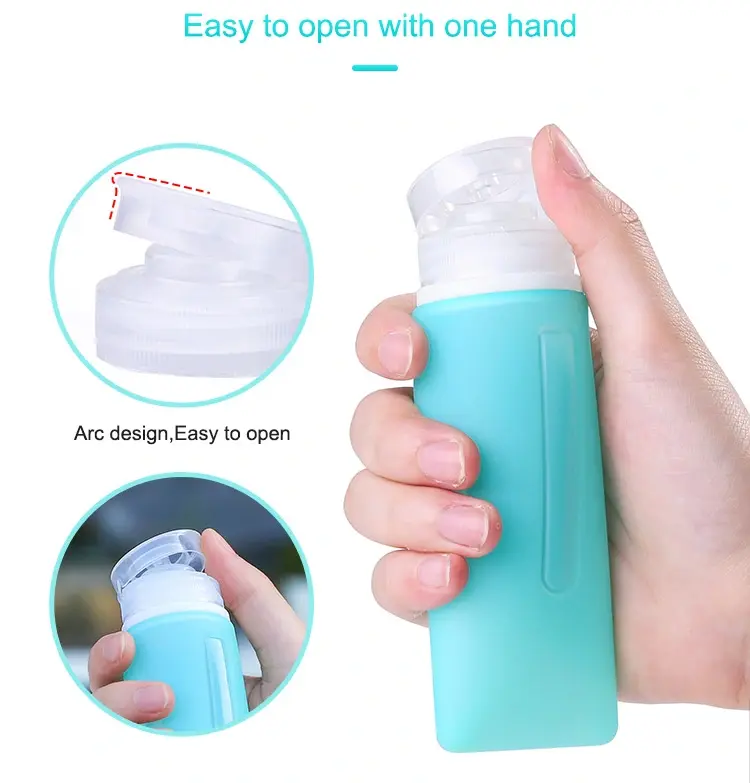
The 25 mm wide mouth hole makes it easy to fill up without funnels, but skill is still important. When filling bottles with thick creams or lotions, hold them at a small angle so that air can escape and the liquid can flow down. Before putting bottles into product cases, gently squeeze them to make a small vacuum that pulls the liquid inside. Leave just enough headspace—about 5 mm—to keep the product from oxidizing from too much air, but enough for the liquid to expand when the temperature changes. These habits cut down on spills that waste food and make a mess while it's being prepared.
Compatibility with Various Liquid Formulations
Most personal care products, like alcohol-based hand sanitizers, oil-based lotions, and water-based shampoos, can't break down food-grade silicone. But liquids that are very acidic or basic (pH below 3 or above 11) may change the qualities of a material over a long time. Fill sample bottles with the mixture and watch for changes in color, material shrinking, or seal breaking over a few weeks. This testing phase stops problems in the field that hurt relationships with customers and lead to bad reviews.
Cleaning and Maintenance Best Practices
Cleaning things on a regular basis keeps them clean and stops germs from spreading from one product to another. Take bottles apart fully, separating the caps from the bodies and taking out any parts that make up the inner seal. Use bottle brushes to get to the inside of bottles when you wash them with warm water and light soap. Rinse well to get rid of any soap residue that could mix with what's coming next. Let it dry fully in the air before refilling; any wetness that stays inside helps bacteria grow. Deep cleaning with weak white vinegar every so often gets rid of mineral layers caused by hard water, which keeps clear bottles clear.
Why Choose an OEM Supplier for Custom Silicone Travel Bottles
OEM relationships offer strategic benefits that typical retail purchases can't match. This is especially true for companies that want to stand out in the market and grow in a way that can be scaled.
Customization Capabilities That Create Unique Value
In competitive markets, the availability of generic bottles through store outlets makes it harder to stand out. OEM providers like Qosun offer full personalization, including making molds, changing colors, adjusting capacities, and adding logos. For our clients, we've made unique features like rough grip surfaces, built-in carabiner connection points, and dual-chamber designs that keep products separate. This customization lets brands secure unique designs, which protects their intellectual property in a way that rivals can't easily copy and helps them set higher prices.
Cost Efficiencies Through Direct Manufacturing Relationships
Getting rid of distribution layers lowers costs per unit and makes contact more efficient. When you work directly with a maker, you can see how much things cost and negotiate on materials, production methods, and order amounts. Orders of more than 5,000 units usually get 15–25% cheaper than small batches, which is when volume prices start to make sense. These savings directly raise gross margins or allow sellers to offer competitive prices that grab market share. This is especially important for online sellers with small profit margins who sell items that people care about prices.
Scalability and Total Dependability of the Supply Chain
As a business grows, it needs sources that can increase its production capacity without lowering quality or making wait times longer. Established companies keep in touch with providers of raw materials, make sure they have enough production space, and hire trained workers who can handle higher volumes. We've helped clients go from placing original trial orders of 1,000 units to continuing to buy 50,000 units every month, all the while keeping quality consistent. This dependability keeps stocks from running out during busy times and lets businesses grow quickly without causing problems in the supply chain.
Innovation and Future-Ready Product Development
OEM partners who are willing to think ahead spend money on research and development that helps their clients' product lines. We are always looking into new materials, such as antimicrobial silicone additives, biodegradable PP options, and smart packages with QR codes that lead to digital content. These improvements help companies stay ahead of market trends, follow changing rules, and meet new customer needs for eco-friendliness and technology integration. When you work with sellers on collaborative development, they become strategic partners who help you stay competitive in the long run, especially when utilizing Silicone Customization Services.
Conclusion
Picking the best Silicone Travel Bottle OEM provider affects the quality of the product, the cost structure, and the ability to stand out in the market, all of which are important for business success. Our trapezoidal shape combines a useful 25 mm wide mouth with approved food-grade materials, three different volume options, and branding options that can be changed to fit your needs. Travelers' main worry is that the triple-seal construction won't leak, and it also meets TSA rules that make it easier to get through airport security. Startups can try markets smartly before going big with flexible MOQs, and established brands can benefit from volume pricing and uniform quality across large production runs. Businesses can build reliable supply chains that help them grow without sacrificing the quality of their products or their brand's image by working with experienced makers who put communication, quality control, and the ability to make changes high on their list of priorities.
FAQ
Q1: Are these silicone travel bottles TSA-approved for air travel?
Yes, all three sizes (37ml, 60ml, and 89ml) are allowed by TSA liquid rules for carry-on bags. Each container can only hold 100ml, which is 3.4 fluid ounces. The bottles fit easily into the normal quart-sized clear bags that are needed for security checks. This makes them perfect for people who travel a lot.
Q2: What is the minimum order quantity for custom logo printing?
For unique logo printing, our minimum order quantity (MOQ) starts at 500 units, which helps startups and small brands test out new goods. Orders over 2,000 units get bulk savings and lower per-unit costs, which makes it more cost-effective to scale up as demand rises.
Q3: How do silicone bottles compare to plastic alternatives regarding safety?
Food-grade silicone is certified by the FDA and LFGB to be free of BPA, phthalates, and other chemicals that can be dangerous, which are found in some plastics. Silicone stays stable at high and low temperatures and doesn't let chemicals leak into the contents. This makes items that are put on the skin or used by kids safer.
Partner with Qosun for Your Custom Silicone Travel Bottle Needs
Qosun offers full OEM and ODM services for international brands, Amazon buyers, and resellers looking for a reliable company to make Silicone Travel Bottles. Our food-grade approved materials, ability to make quick prototypes, and adaptable small-batch production get rid of common problems that cause product launches to be late. We know how hard it is to make your product lines stand out in a market full of competitors. That's why we offer custom logo printing, a range of colors, and custom package choices that help your brand stand out. Email our team at qosun@qosun.com to ask for examples, talk about how we can make your order unique, or get specific quotes. Our production sites serve customers in North America, Europe, and the Asia-Pacific region. We understand local markets and make products efficiently so that your costs stay low and your delivery dates are always known.
References
1. Johnson, M. & Williams, R. (2022). Material Safety in Consumer Travel Accessories: A Comparative Analysis. Journal of Product Safety Standards, 18(3), 145-162.
2. Chen, L. (2023). OEM Manufacturing Strategies for E-commerce Brand Development. International Business Review, 31(2), 88-104.
3. Thompson, K. (2021). Silicone Versus Traditional Plastics: Environmental and Health Considerations. Materials Science Quarterly, 45(4), 312-328.
4. Rodriguez, A. & Patel, S. (2023). Supply Chain Optimization in Cross-Border E-commerce. Global Trade Journal, 27(1), 56-73.
5. Anderson, P. (2022). Custom Branding Impact on Consumer Purchase Decisions in Travel Products. Marketing Research International, 39(6), 201-218.
6. Liu, H. & Yamamoto, T. (2023). Regulatory Compliance in International Personal Care Product Manufacturing. Regulatory Affairs Review, 14(2), 134-151.