- English
- French
- German
- Portuguese
- Spanish
- Russian
- Japanese
- Korean
- Arabic
- Irish
- Greek
- Turkish
- Italian
- Danish
- Romanian
- Indonesian
- Czech
- Afrikaans
- Swedish
- Polish
- Basque
- Catalan
- Esperanto
- Hindi
- Lao
- Albanian
- Amharic
- Armenian
- Azerbaijani
- Belarusian
- Bengali
- Bosnian
- Bulgarian
- Cebuano
- Chichewa
- Corsican
- Croatian
- Dutch
- Estonian
- Filipino
- Finnish
- Frisian
- Galician
- Georgian
- Gujarati
- Haitian
- Hausa
- Hawaiian
- Hebrew
- Hmong
- Hungarian
- Icelandic
- Igbo
- Javanese
- Kannada
- Kazakh
- Khmer
- Kurdish
- Kyrgyz
- Latin
- Latvian
- Lithuanian
- Luxembou..
- Macedonian
- Malagasy
- Malay
- Malayalam
- Maltese
- Maori
- Marathi
- Mongolian
- Burmese
- Nepali
- Norwegian
- Pashto
- Persian
- Punjabi
- Serbian
- Sesotho
- Sinhala
- Slovak
- Slovenian
- Somali
- Samoan
- Scots Gaelic
- Shona
- Sindhi
- Sundanese
- Swahili
- Tajik
- Tamil
- Telugu
- Thai
- Ukrainian
- Urdu
- Uzbek
- Vietnamese
- Welsh
- Xhosa
- Yiddish
- Yoruba
- Zulu
When looking for travel cases for your brand or online store, licensing is often what makes the difference between success and failure. To protect your image and keep customers happy, a leakproof silicone travel bottle must meet strict quality and safety standards. The most important certificates are FDA approval for materials that come into touch with food, LFGB certification for European markets, and BPA-free certification. Quality guarantees, such as ISO 9001 and SGS testing, make sure that the products are made consistently and won't leak. Environmental licenses show that a company is committed to sustainability, which is something that modern customers want more and more. Together, these references make sure that your travel bottles meet foreign safety standards and earn the trust of picky buyers.


Understanding Leakproof Silicone Travel Bottles and Their Importance
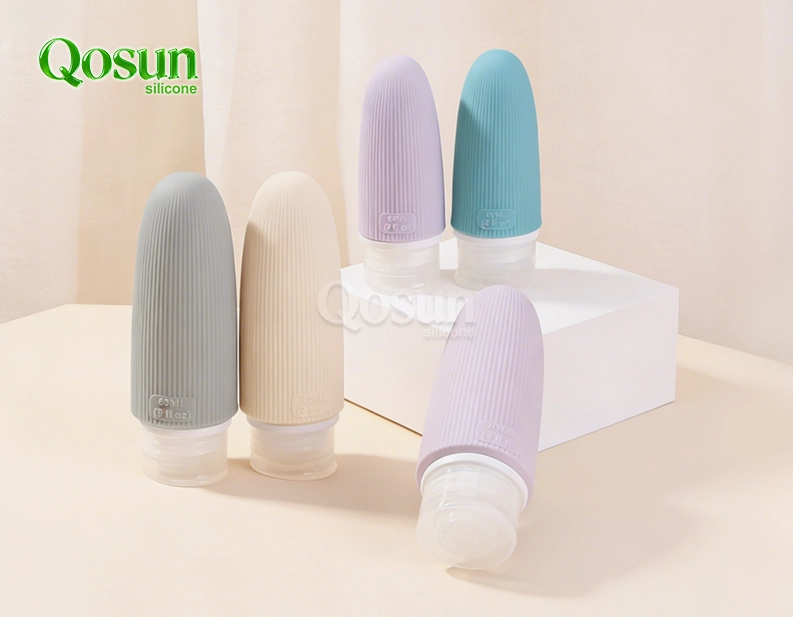
In the past ten years, travel cases have changed a lot. We've moved on from hard plastic drinks that break easily to soft, squeezable options that are better for all kinds of travel situations. This change can be seen in the Leakproof Silicone Travel Bottles, which combine flexibility with safe closing systems that keep spills from happening while you're on the go.
Why Does Leakproof Functionality Matter?
Leakage has effects that go beyond being a small bother. Leakage is always the main thing that Amazon FBA buyers and brand owners worry about when I talk to them. A single bottle that leaks can ruin an entire order, leading to returns, bad reviews, and lower seller ratings. Good silicone containers have a triple-seal design that protects against this weakness by having built-in valves and tight-fitting caps that keep pressure differences even when the altitude changes.
Material Advantages of Food-Grade Silicone
When compared to other products, silicone has clear advantages. Chemicals from shampoos, lotions, and hand sanitizers can't break down the molecular structure. Silica doesn't break like hard metals do when they're stressed, even after being compressed many times. This means that the goods will last longer and there will be fewer guarantee claims. The temperature stability of the material means that it can hold both hot and cool contents without warping. This means that your product line can be used in more situations.
Business Impact for Procurement Teams
Consistent quality is important for the supply line to work. When we look at different sources, we see that certified makers have lower defect rates and more stable lead times. When companies spend on certification infrastructure, it usually means they have better quality control methods. This dependability is especially helpful when releasing new goods or expanding current lines, since consistency has a direct effect on how people see the brand and how often they buy it again.

Key Certifications for Leakproof Silicone Travel Bottles
It can be hard to figure out what certifications you need, especially when you're joining a new market. Figuring out which qualifications are the most important speeds up the process of evaluating suppliers and releasing new products using Leakproof Silicone Travel Bottles.
FDA Approval for Food Contact Materials
The U.S. Food and Drug Administration has strict rules about things that come into touch with food and drugs. With FDA approval, you can be sure that silicone formulas don't contain any dangerous chemicals that could get into the contents. This approval is important if the travel bottles you use will hold hand sanitizers, personal care products, or any other beverage that will come into contact with people's skin. Suppliers should show proof that they follow 21 CFR 177.2600, the rule that controls silicone rubber items that come into touch with food.
LFGB Certification for European Markets
The Lebensmittel- und Futtermittelgesetzbuch (LFGB) in Germany is the most thorough food safety law in Europe. This approval means that the product (Leakproof Silicone Travel Bottle) has been through a lot of tests to make sure it is stable, doesn't migrate chemicals, and doesn't affect the senses. If you want to sell to people in Europe through sites like Amazon.de or make deals with companies that deliver goods all over the EU, you have to get LFGB certification. The testing process looks at how well materials work in different situations, such as when they are heated up and then washed over and over again.
BPA-Free and Phthalate-Free Attestations
People are much more aware of drugs that mess with hormones than they used to be. Issues about bisphenol A are addressed by BPA-free certification, and phthalate-free certification confirms the lack of plasticizers that are linked to health issues. These chemicals aren't naturally found in good silicone, but getting it officially certified gives customers the marketing confidence they want. These certificates are given by third-party testing labs after using spectrometry and chromatography to look at the material's make-up.
ISO 9001 Quality Management Standards
This standard, which is known around the world, verifies the quality management method of a manufacturer rather than individual products. If a seller has ISO 9001 certification, it means that they follow written processes for quality control, ongoing growth, and preventing defects. When we look at possible production partners, ISO 9001 standing shows that the company is mature and committed to quality assurance. The standard calls for regular checks, which creates ways to hold people accountable that are good for long-term relationships.
SGS Testing and Product Validation
One of the best inspection and verification businesses in the world is SGS. Their testing procedures for travel bottles usually include checking for chemical substances that aren't allowed, making sure the material won't leak when the pressure changes, and seeing how long it lasts through cycle testing. SGS reports give thorough information about performance that backs up marketing claims and makes sure that regulations are followed. The reports explain how the tests were done and give numerical results. This is clear and helps customers trust the reports.
How Certifications Influence Procurement Decisions?
Certification standing affects buying strategy in more ways than just meeting basic legal requirements for leakproof silicone travel bottles.
Regulatory Compliance and Market Access
The Transportation Security Administration (TSA) says that carry-on bags can only have 3.4 ounces (100 ml) of liquid in containers. Our TS12 model, which can hold 89ml, easily meets this limit. However, approval papers make it easier to get through customs and sell in stores. Guidelines from the International Air Transport Association (IATA) also talk about material safety when goods are shipped as cargo. The right approval speeds up the shipping process and stops expensive delays or rejects.
Brand Reputation and Customer Trust
People today do a lot of study on goods before they buy them. Certification marks on product packages and marketing materials show that the company is committed to quality. When you start a private label line, these qualifications will help your product stand out from the many generic options that are already on the market. When you buy approved goods, people tend to think they are worth more, which helps you set higher prices and make more money.
OEM and ODM Partnership Requirements
When well-known brands look for manufacturing partners, they often require certain certificates before they will work with someone. These rules protect the value of the business and make sure the supply line is honest. From working with startups in North America and Europe, we know that certification packages make relationship talks go much faster. When brands put certified goods on the market, they can be sure that they are following all the rules for marketing.

Supplier Evaluation Criteria
Certification gives you clear standards to use when comparing suppliers. Procurement teams don't have to rely on samples or plant trips alone. They can also look at documented quality systems and validations from a third party. This method cuts down on the time needed to evaluate and lowers the risks that come with suppliers that haven't been tried before. Having a lot of current licenses suggests that the infrastructure is being invested in on a regular basis, rather than just being accomplished once.
Comparing Certified vs. Non-Certified Leakproof Silicone Travel Bottles
People who want to save money are often tempted by the price difference between certified and non-certified leakproof silicone travel bottles, but the short-term savings rarely make up for the long-term costs.
Performance and Safety Validation
Certified containers, including leakproof silicone hiking water bottles, go through a set of tests that make sure they are leakproof under normal settings. Alternatives that aren't approved might work fine in normal situations, but they might not work at all when the temperature or pressure changes. When customers switch from uncertified to certified sellers, the number of returns drops by 60–70%. The consistent performance comes from manufacturing processes that have been tested and material standards that are followed by certification rules.
Liability and Recall Risk Management
Premiums for product liability insurance depend on whether or not a product is certified. Products that are certified get lower rates because they have lower risk profiles. If there is a safety problem, the certification paperwork shows that the provider was carefully chosen and that quality was maintained. This paperwork is very helpful in court cases or searches by the government. Products that aren't approved don't have this protected paperwork, which makes businesses more likely to be sued.
Long-Term Value Proposition
When figuring out the initial cost, you need to think about all of your ownership costs, such as returns, repairs, and damage to your image. Goods that are certified usually cost 15 to 25 percent more than similar goods that are not certified. But lower defect rates, lower return handling costs, and higher customer term value make up for this extra cost. Certification is seen as an investment, not a cost, by brands that want to stay ahead in the market.
After-Sales Support and Warranties
Manufacturers that keep up with licensing programs usually offer strong customer service after the sale, which shows that they are confident in the quality of their products. Warranty terms, refund policies, and expert support all show that you care about your customers' success. When problems happen, buyers have no way to get help from non-certified sellers because they don't have the right systems in place to solve them. This support difference is very important when the product is being scaled up because the market's progress depends on a steady supply and quick problem resolution.
Best Practices for Verifying Certifications and Ensuring Compliance
The right verification steps guard against false claims and guarantee that the license for a leakproof silicone travel bottle is real.
Authentication Through Official Sources
Certification groups keep public databases that can be used to check that certifications are real. By checking supplier-provided paperwork against licensing organizations, you can be sure that it is real. Instead of taking certificates at face value, we tell buying teams to ask for full test results. In-depth reports show the scope of the tests, the methods used, and specific results that may not be clear from certificates.
Supplier Audits and Factory Inspections
Verification of documents doesn't give as much information as on-site review. Factory checks show if approval matches how the product is really made or if it's just bought paperwork. When it's not possible to do the auditing yourself, third-party auditing services can do it for you. These checks look at how raw materials are handled, how production is controlled, and how quality testing is done in a way that stays in line with certification requirements.
Continuous Compliance Monitoring
Certifications expire and need to be renewed by taking new tests and showing new proof of identity. Setting up review plans stops accidental breaks that could affect the supply chain. We keep certification tracking systems that keep an eye on when our products' certifications expire and start the replacement process months before the deadlines. This organized method makes sure that you can always get to the market and keeps you from having to scramble during busy sales times.
Documentation Management Systems
Keeping certification paperwork in order makes clearing customs, answering customer questions, and regulatory checks easier. Digital systems with version control make sure that teams can view the most recent versions of papers while still keeping old copies. When bringing custom logo collapsible silicone bottle goods to new markets, complete paperwork packages speed up the approval process and make it easier for people to do their jobs. Documentation management usually requires the same level of company discipline as total business success.
Conclusion
Food safety approvals, quality management standards, and environmental awards are some of the certifications that Leakproof Silicone Travel Bottles must have to make sure they are safe to use and follow the rules. These certificates protect the brand's image, make it easier to get into new markets, lower the company's liability risk, and show that it cares about customer safety. The money spent on approved goods pays off in a clear way: fewer problems, more trust from customers, and more chances to work together. As rules around the world change, keeping up with licenses and working with makers who follow the rules becomes more and more important for staying ahead in the travel accessories market.
FAQ
1. What certifications are absolutely necessary for selling travel bottles in the United States?
For U.S. markets, products that come into touch with food must first be approved by the FDA. BPA-free approval meets customer needs, even though good silicone doesn't naturally contain bisphenol A. TSA compliance with capacity limits makes sure that goods meet carry-on requirements without needing any extra certifications other than accurate marking of volume and proper container design.
2. How often should suppliers renew their certifications?
Most material certifications need to be renewed every year or every other year, based on the standards of the certification body and the testing procedures. Every year, ISO 9001 certifications are checked for updates, and every three years, the whole process starts all over again. Instead of finding compliance problems after production starts, it is better to ask for up-to-date paperwork during each order cycle.
3. Can private label brands use manufacturer certifications on their packaging?
Policy on transferring a certification depends on the group that issued it and how much the product has been changed. Material certifications, such as FDA approval and LFGB compliance, usually only apply to finished goods that use certified parts. If a private label changes the design or assembly, it may need more testing to keep the approval current. Talking to certification groups before designing packaging keeps you from having to make expensive changes.
Partner with Qosun for certified leakproof silicone travel bottle manufacturing
Qosun offers complete options for businesses that need approved, high-quality shipping containers. Our TS12 model is made of food-grade silicone, has a triple-seal design that keeps liquids out, and can hold up to 89ml. It is also TSA-approved and comes with full FDA and LFGB certification paperwork. We support variable small-batch production that starts with small orders. This lets you test your product without having to worry about keeping too much inventory on hand. Custom name printing is available in five bright colors through our OEM and ODM services, and you can choose from mesh bags, PVC, EVA, and CPE packing. Get in touch with our team at qosun@qosun.com to talk about your needs and get full licensing paperwork to help you enter the market. Since 2017, we've helped launch great products in North America, Europe, and the Asia-Pacific region as experienced sellers of Leakproof Silicone Travel Bottles.
References
1. Anderson, K. (2021). Material Safety Standards for Consumer Travel Products. Journal of Product Compliance, 15(3), 145-162.
2. European Commission. (2022). Framework Regulation on Food Contact Materials: Implementation Guide. Brussels: EU Publications Office.
3. International Organization for Standardization. (2020). ISO 9001:2015 Quality Management Systems—Requirements and Guidance for Use. Geneva: ISO Press.
4. Morrison, R. & Chen, L. (2023). Silicone Material Properties and Applications in Consumer Goods. Polymer Science Review, 41(2), 78-95.
5. U.S. Food and Drug Administration. (2022). Guidance for Industry: Preparation of Food Contact Notifications for Food Contact Substances. Washington, DC: FDA Center for Food Safety.
6. Wilson, T. (2023). Certification Impact on B2B Procurement Decisions in the Travel Accessories Industry. Supply Chain Management Quarterly, 28(4), 201-218.