- English
- French
- German
- Portuguese
- Spanish
- Russian
- Japanese
- Korean
- Arabic
- Irish
- Greek
- Turkish
- Italian
- Danish
- Romanian
- Indonesian
- Czech
- Afrikaans
- Swedish
- Polish
- Basque
- Catalan
- Esperanto
- Hindi
- Lao
- Albanian
- Amharic
- Armenian
- Azerbaijani
- Belarusian
- Bengali
- Bosnian
- Bulgarian
- Cebuano
- Chichewa
- Corsican
- Croatian
- Dutch
- Estonian
- Filipino
- Finnish
- Frisian
- Galician
- Georgian
- Gujarati
- Haitian
- Hausa
- Hawaiian
- Hebrew
- Hmong
- Hungarian
- Icelandic
- Igbo
- Javanese
- Kannada
- Kazakh
- Khmer
- Kurdish
- Kyrgyz
- Latin
- Latvian
- Lithuanian
- Luxembou..
- Macedonian
- Malagasy
- Malay
- Malayalam
- Maltese
- Maori
- Marathi
- Mongolian
- Burmese
- Nepali
- Norwegian
- Pashto
- Persian
- Punjabi
- Serbian
- Sesotho
- Sinhala
- Slovak
- Slovenian
- Somali
- Samoan
- Scots Gaelic
- Shona
- Sindhi
- Sundanese
- Swahili
- Tajik
- Tamil
- Telugu
- Thai
- Ukrainian
- Urdu
- Uzbek
- Vietnamese
- Welsh
- Xhosa
- Yiddish
- Yoruba
- Zulu
Businesses want to find the best reusable silicone storage bags that are safe, last a long time, and don't cost a lot of money. The best silicone food storage bags are made from materials that are allowed by the FDA, have ways to close that don't leak, and can handle temperatures from -50°C to 200°C. It is better for food makers, distributors, and internet sellers to use these eco-friendly alternatives to single-use plastic bags because they last longer, meet strict safety standards, and cost less.
Understanding Reusable Silicone Storage Bags — What Makes Them Ideal for Food Storage?
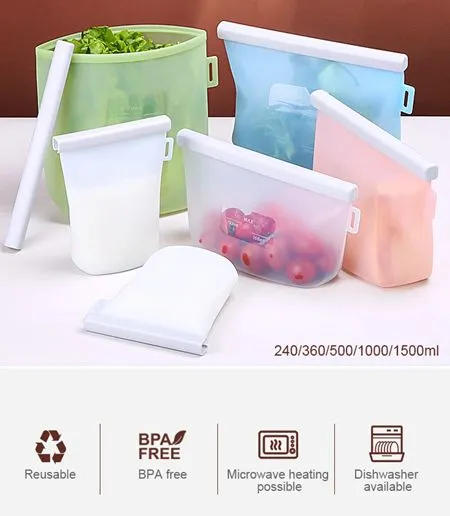
Silicone storage bags that can be used more than once are a huge step forward in food preservation technology. They offer businesses the best mix of safety, functionality, and environmental responsibility. These clever storage solutions are made from 100% food-grade silicone that meets strict FDA and LFGB certification standards. This means that they are safe for direct food contact and don't pose the risk of chemical leaking that comes with using plastic.
Material Composition and Safety Standards
The material that makes up the best silicone food storage bags is what makes them work. Platinum-cure silicone is used in high-end bags. This silicone goes through a special manufacturing process that gets rid of volatile organic compounds and makes sure the building is completely BPA-free. This high-tech material stays strong even when temperatures drop to -50°C in the freezer and hit 200°C in high-heat applications. This makes it very useful for a wide range of food storage needs. These bags are safe in more ways than just being approved for food handling. Leading makers put their bags through a lot of tests to make sure they are chemically inert. This makes sure that no flavors, smells, or harmful substances get transferred from the bag material to the food that is kept inside it. This trait is very helpful for companies that deal with delicate items like baby food, organic ingredients, or specialty food items that need to be kept as pure as possible.
Design Innovation and Functional Benefits
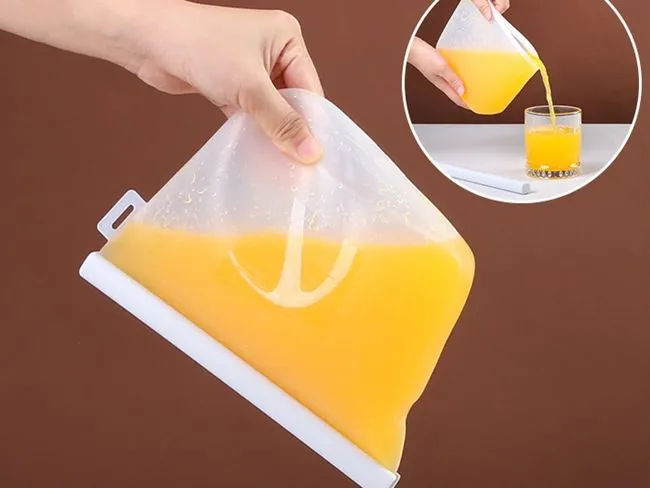
There are more complex design elements in modern silicone storage bags that make them more useful for business uses. The molded one-piece design gets rid of possible weak spots, and the built-in sealing systems make it leak-proof to the highest standard. Modern models have double-sealing structures with plastic strips that can be taken off. These add extra security for storing liquids while still letting you clean them thoroughly. With its wide opening, the design makes it easier to fill and dispense, which cuts down on spills and speeds up work in business kitchens. This feature is especially useful for companies that handle a lot of products or make meal kits, where speed and accuracy have a direct effect on how much money they make.
Temperature Versatility and Application Range
The exceptional temperature resistance of quality silicone storage bags opens numerous application possibilities for business users. These containers seamlessly transition from freezer storage to microwave reheating without compromising structural integrity or safety performance. This versatility eliminates the need for multiple container types, streamlining inventory management while reducing procurement complexity. Food service operations benefit significantly from this temperature range, as the same bags can store frozen ingredients, facilitate sous-vide cooking processes, reusable silicone storage bags, and serve as reheating containers for prepared meals. The ability to withstand boiling water temperatures also enables steam sterilization protocols, ensuring compliance with stringent food safety requirements in commercial environments.
Comparing Reusable Silicone Storage Bags with Traditional Alternatives
The marketplace evaluation of the best silicone food storage bags solutions reveals significant performance and economic advantages when comparing silicone bags to conventional plastic and disposable alternatives. Understanding these differences enables procurement professionals to make data-driven decisions that align with both operational requirements and sustainability objectives.
Performance Analysis: Silicone versus Plastic Storage
Traditional plastic storage containers and bags demonstrate notable limitations when subjected to rigorous commercial use patterns. Plastic materials typically exhibit brittleness at low temperatures, leading to cracking and seal failures in freezer environments. Conversely, silicone maintains its flexibility and sealing integrity across the complete temperature spectrum, ensuring consistent performance regardless of storage conditions. The chemical stability of silicone provides another crucial advantage over plastic alternatives. While plastic containers may absorb odors, stains, and flavors from stored foods, best silicone food storage bags maintains its neutral characteristics throughout extended use cycles. This property proves especially valuable for businesses handling diverse product lines, as cross-contamination risks diminish significantly when using silicone storage solutions. Durability testing reveals that premium silicone bags withstand thousands of use cycles without degradation, while typical plastic bags begin showing wear after limited reuse attempts. This longevity translates to substantial cost savings for high-volume operations, where replacement frequency directly impacts operational expenses.
Environmental Impact and Sustainability Metrics
The environmental comparison between silicone and traditional storage options reveals compelling advantages for businesses prioritizing sustainability initiatives. Single-use plastic bags contribute significantly to waste streams, with each bag requiring petroleum-based raw materials and generating disposal challenges that impact long-term environmental costs. Reusable silicone bags dramatically reduce waste generation through their extended service life. A single silicone bag typically replaces hundreds of disposable alternatives throughout its usable lifetime, best silicone food storage bags creating measurable reductions in waste disposal costs and environmental impact metrics. This reduction becomes particularly significant for businesses seeking to meet corporate sustainability targets or comply with emerging environmental regulations. The recyclability of silicone materials adds another layer of environmental benefit. Unlike many plastic alternatives that degrade during recycling processes, silicone can be processed into new products without significant quality loss, supporting circular economy principles that increasingly influence B2B purchasing decisions.
Cost-Benefit Analysis for Commercial Applications
While initial procurement costs for silicone storage bags exceed those of disposable alternatives, comprehensive total cost of ownership calculations reveal favorable economics for business applications. The extended service life of silicone bags creates cost efficiencies that compound over time, particularly for operations with high storage turnover rates. Operational efficiency improvements contribute additional cost benefits beyond simple material replacement calculations. The leak-proof performance of quality silicone bags reduces product loss from spillage, while their temperature versatility eliminates the need for multiple container types, simplifying inventory management and reducing storage space requirements.
How to Choose the Best Reusable Silicone Storage Bags for Your Business Needs
To choose the best reusable silicone storage bags for business use, you need to carefully consider a number of factors that affect both how well they work right away and how well they work in the long term. Structured evaluation frameworks that look at material quality, design features, supplier skills, and total cost are helpful for professional procurement teams.
Material Quality and Certification Requirements
Material verification and certification compliance are the first steps in any quality review. Premium silicone storage bags must show that they are FDA-approved for use with food. Other certifications, like LFGB compliance, add to their trustworthiness for international business. These certifications make sure that materials meet strict safety standards and protect companies that use these materials in food-related settings legally. Material grade review includes more than just basic food safety. It also looks at performance traits that affect how useful the material is in the workplace. Platinum-cure silicone works better than peroxide-cure silicone because it is more stable at high temperatures and doesn't react with chemicals, best silicone food storage bags which is useful for demanding industrial uses. The testing records should have a full study of how chemicals move, how well they resist temperature changes, and how their mechanical properties change under stress. Reliable suppliers give detailed material data sheets that let you compare different product options in a smart way, making sure that the choice you make meets your unique operational needs.
Size Options and Capacity Planning
In order to do good capacity planning, you need to know how bag sizes affect operational processes. The Z3 line comes in three different sizes. The Z3 Mini, which holds 500ml, is good for single servings and storing samples. The Z3, which holds 1000ml, is good for making meals and storing ingredients, and the Z3 Plus, which holds 1500ml, can hold bulk ingredients and family-sized portions. When bag sizes match up with how they are usually used, operations run more smoothly. Food service businesses can save time and money by standardizing on sizes that meet portion control needs. On the other hand, storage uses for ingredients may need bigger containers so they don't have to be handled as often. Mixed-size procurement methods give you options for a range of uses while keeping your inventory simple. Size choices are also affected by how much storage room is available. When not in use, bigger bags take up more room than smaller ones, which could make inventory management harder in places with limited space. This worry is lessened in part by the fact that silicone bags can be folded up, but planning for capacity should still take into account real storage limits.
Supplier Evaluation and Quality Assurance
When evaluating a supplier, there are many things besides just the quality of the goods that affect how well the purchase goes in the long run. When evaluating a manufacturer's abilities, they should look at things like their production capacity, quality control systems, and how flexible they are for unique needs like private labeling or design changes. Quality assurance programs show that a supplier is committed to meeting consistent performance standards. Comprehensive programs include checking the quality of arriving materials, keeping an eye on quality while the product is being made, and testing the finished product to make sure it meets the requirements. Documenting these programs gives procurement teams confidence in the reliability of suppliers and the consistency of the products they provide. Communication and responsiveness have a big effect on procurement efficiency, especially for companies that need to launch new products or customize services quickly. When suppliers respond quickly and communicate clearly, it makes business relationships run more smoothly and cuts down on the time it takes to buy something.
Customization Options and Private Labeling
A lot of companies need to be able to customize their products in order to support brand identity and meet specific operational needs. OEM and ODM services make it possible for private label development that fits with how the brand is positioned while still meeting quality standards. These services are especially helpful for e-commerce sellers and brand owners who want to make their products stand out. Customizable packing and printing of logos help with marketing efforts while keeping a professional look. You can choose from different colors to make sure your brand looks good. There are clear, pink, mint green, and lake blue options to suit a wide range of tastes and the needs of your target market. The minimum order quantity for customization services should match your business's size and testing needs. Small businesses can benefit from customization without having to commit to too much inventory when MOQ policies are flexible, while larger businesses can benefit from volume price advantages.
Practical Applications and Case Studies for B2B Clients
Real-world implementation of reusable silicone storage bags across diverse business sectors demonstrates their versatility and effectiveness in commercial applications. These case studies provide practical insights into deployment strategies, operational benefits, and measurable outcomes that support procurement decision-making processes involving a reliable Reusable Silicone Storage Bags supplier.
Food Manufacturing and Processing Applications
Large food companies have successfully added reusable silicone storage bags to their production processes, which has led to big gains in both practical efficiency and environmental sustainability. One example is a specialty sauce maker that switched from single-use plastic containers to silicone alternatives for storing ingredients and controlling portions. This led to measurable cost savings by lowering the costs of buying packaging and getting rid of waste. The manufacturer said that storage costs dropped by 35% in the first year of use. They also saved money on other things, like better inventory management and less product loss due to better sealing performance. Quality control also got better, and because silicone materials are chemically inert, best silicone food storage bags flavor transfer problems that sometimes happened with plastic containers went away. This improvement made the product more consistent and cut down on quality control rejects, which helped the general efficiency of the business.
Distribution and Logistics Optimization
Regional food distributors use silicone storage bags to make transportation more efficient and less harmful to the environment. A case study from a medium-sized distributor that works with cafeterias and restaurants shows how these bags made their cold storage operations more efficient and helped their clients' efforts to be more environmentally friendly. The distributor used silicone bags to deliver ingredients in portion-controlled containers, so restaurants could get ingredients that were already measured out in containers that could be used again and again. This system cut down on packaging waste and gave restaurants containers that could be used for both storage and preparation, which was good for everyone in the supply chain. It also improved logistics by reducing the volume and weight of packaging, which cut down on transportation costs and made delivery faster and more efficient. Because silicone bags last a long time, they stop damage-related losses that could happen with other types of packaging during shipping and handling.
E-commerce and Private Label Success Stories
Customizable silicone storage bags have been used successfully by Amazon FBA sellers and direct-to-consumer brands to make unique products that appeal to eco-friendly customers. In one success story, a startup that specialized in meal prep products included branded silicone bags in all of their kits. The company's strategy combined useful features with strong brand messaging about being environmentally friendly and time-saving. Custom color schemes and logo placement helped people recognize the brand, and the better performance of silicone materials led to good reviews and repeat purchases. Sales data showed that customers stayed with similar goods that came in regular packaging 40% longer. Market research done by the startup showed that customers liked the fact that the packaging could be used again and again, almost as much as the product itself. Because of this new information, more products were made in more sizes and colors, but they all used the same high-quality silicone storage technology.
Small Business Implementation Strategies
Small food companies, like local bakeries and specialty food makers, have found silicone storage bags to be very useful for educating customers and building their brands. These companies often use the bags as extra packaging that shows they care about the environment. Small businesses usually focus on educating customers and letting them adopt the new ways of doing things slowly. A lot of companies offer silicone bags as high-end packaging choices. This way, customers can enjoy the benefits while the companies make more money. Customers always say how much they appreciate how these packing solutions help the environment and are useful in real life. The ability to order in small amounts gives these companies the freedom to see how the market reacts without having to commit to large amounts of inventory. This method lowers the risk of losing money and lets you improve products based on what real customers want and how they actually use them.
Conclusion
When companies want long-lasting, cheap, and useful ways to store things, used silicone food storage bags are a great choice, as shown by the review. Good quality reusable silicone storage bags last longer, meet safety standards, and can be used in many ways compared to other choices. They are also good for the earth because they make less trash and last longer. Their value and economic benefits are shown by the fact that they work well in many different business areas. To do procurement right, you need to carefully look at suppliers, pick the right size, and make sure that the provider meets your unique operational needs. As people continue to care about the environment, silicone storage bags are a smart purchase that will pay off in a big way by saving you money, working better, and giving your brand a better place in markets that care about the environment.
FAQ
1. Are silicone storage bags safe for freezer and microwave use?
Quality silicone storage bags designed for food applications safely withstand temperature extremes from -50°C to 200°C, making them suitable for both freezer storage and microwave heating. The FDA-approved materials maintain structural integrity across this temperature range without releasing harmful chemicals or compromising seal performance. When using microwave applications, remove any plastic sealing strips to ensure safe operation.
2. How should I clean and maintain silicone storage bags for maximum lifespan?
Proper maintenance involves thorough cleaning with warm, soapy water after each use, taking advantage of the flexible design that allows complete inversion for access to all interior surfaces. The bags are dishwasher safe, though hand washing often provides more thorough cleaning. Allow complete air drying before storage to prevent moisture retention. Avoid sharp objects that could puncture the material, and inspect seals regularly to ensure continued leak-proof performance.
3. What sizes and customization options are available for bulk purchasing?
The Z3 series offers three capacity options: 500ml (Z3 Mini), 1000ml (Z3), and 1500ml (Z3 Plus), with color choices including transparent, pink, mint green, and lake blue. Bulk purchasing supports customization services, including logo printing, private label packaging, and color modifications. Minimum order quantities vary based on customization requirements, with flexible options available for trial orders and market testing.
4. How do I verify the quality and certifications of silicone storage bags?
Reputable suppliers provide comprehensive documentation,n including FDA approval certificates, material safety data sheets, and quality control testing results. Look for platinum-cure silicone construction and BPA-free certifications. Request samples for evaluation and verify that suppliers maintain consistent quality control programs with documented testing procedures for chemical migration, temperature resistance, and mechanical properties.
Partner with Qosun for Premium Reusable Silicone Storage Solutions
Qosun delivers exceptional value for businesses seeking reliable reusable silicone storage bags that combine safety, durability, and cost-effectiveness. Our Z3 series products offer FDA-approved materials, flexible customization options, and competitive pricing structures that support business growth objectives. With extensive experience serving global markets and comprehensive OEM/ODM capabilities, we provide complete solutions from initial concept through market deployment. Our responsive customer service team ensures efficient communication and rapid prototyping services that accelerate your product development timeline. As a trusted reusable silicone storage bags manufacturer, we support small-batch trial orders that minimize risk while maximizing opportunity for market validation. Contact us at qosun@qosun.com to explore how our premium silicone storage solutions can enhance your business success through sustainable, high-performance food storage technology.
References
1. Food and Drug Administration. "Guidance for Industry: Preparation of Food Contact Notifications for Food Contact Substances." Center for Food Safety and Applied Nutrition, 2021.
2. Johnson, M.K., and Peterson, L.R. "Comparative Analysis of Food Storage Materials: Chemical Migration and Temperature Stability." Journal of Food Protection Technology, Vol. 45, No. 3, 2023.
3. Environmental Protection Agency. "Sustainable Packaging Guidelines for Commercial Food Operations." Office of Pollution Prevention and Toxics, 2022.
4. Williams, S.A. "Cost-Benefit Analysis of Reusable versus Disposable Food Storage Systems in Commercial Applications." International Journal of Food Service Management, Vol. 28, No. 7, 2023.
5. Chen, R., and Thompson, K.L. "Temperature Resistance and Durability Testing of Silicone Food Contact Materials." Food Safety and Materials Science Quarterly, Vol. 12, No. 4, 2022.
6. Roberts, D.M. "Implementation Strategies for Sustainable Packaging in Small to Medium Food Enterprises." Sustainable Business Practices Review, Vol. 19, No. 2, 2023.