- English
- French
- German
- Portuguese
- Spanish
- Russian
- Japanese
- Korean
- Arabic
- Irish
- Greek
- Turkish
- Italian
- Danish
- Romanian
- Indonesian
- Czech
- Afrikaans
- Swedish
- Polish
- Basque
- Catalan
- Esperanto
- Hindi
- Lao
- Albanian
- Amharic
- Armenian
- Azerbaijani
- Belarusian
- Bengali
- Bosnian
- Bulgarian
- Cebuano
- Chichewa
- Corsican
- Croatian
- Dutch
- Estonian
- Filipino
- Finnish
- Frisian
- Galician
- Georgian
- Gujarati
- Haitian
- Hausa
- Hawaiian
- Hebrew
- Hmong
- Hungarian
- Icelandic
- Igbo
- Javanese
- Kannada
- Kazakh
- Khmer
- Kurdish
- Kyrgyz
- Latin
- Latvian
- Lithuanian
- Luxembou..
- Macedonian
- Malagasy
- Malay
- Malayalam
- Maltese
- Maori
- Marathi
- Mongolian
- Burmese
- Nepali
- Norwegian
- Pashto
- Persian
- Punjabi
- Serbian
- Sesotho
- Sinhala
- Slovak
- Slovenian
- Somali
- Samoan
- Scots Gaelic
- Shona
- Sindhi
- Sundanese
- Swahili
- Tajik
- Tamil
- Telugu
- Thai
- Ukrainian
- Urdu
- Uzbek
- Vietnamese
- Welsh
- Xhosa
- Yiddish
- Yoruba
- Zulu
If you want to start selling baking supplies or add more food items to your collection, you need to know how to make custom Silicone Rolling Mats correctly. A Silicone Rolling Mat is more than just a surface that doesn't stick. It's a flexible, long-lasting option that meets strict food safety standards and can be customized and branded in a variety of ways. This detailed guide takes you through the whole process of OEM production, from choosing materials and manufacturing processes to evaluating suppliers and buying in bulk. It does this by giving you all the information you need to make smart choices that speed up the launch of your product while still meeting the quality standards your customers expect.
Understanding Silicone Rolling Mats in the Baking Industry
What Makes Silicone Rolling Mats Essential for Commercial Baking
Silicone Rolling Mats have changed how dough is made in both professional shops and home kitchens. Unlike regular surfaces, these mats provide constant non-stick performance without needing to be dusted with flour or oiled. This means that they are easier to clean and the results of your baking are more predictable. The material itself is 100% food-grade silicone that is BPA-free, non-toxic, and has no smell at all. It meets FDA and LFGB approval standards for direct food contact safety. This compliance isn't just a legal requirement; it's a deep dedication to consumer health that connects strongly with brands in North America, Europe, and the Asia-Pacific regions that want to reach health-conscious consumers.
Core Specifications and Technical Features
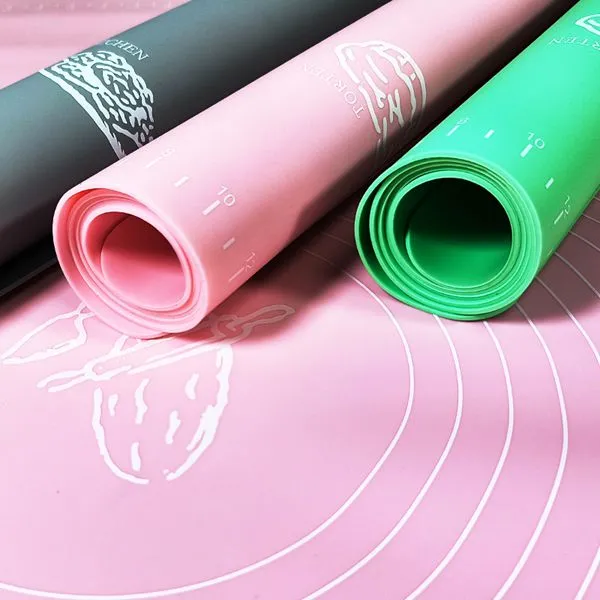
If you know the detailed specs of good Silicone Rolling Mats, you can tell them exactly what your brand needs. The standard width is usually around 1.5 mm, which is the best amount of flexibility and structural safety. This thickness makes it possible for the Silicone Rolling Mat to lie flat on a variety of table tops while still being strong enough to handle repeated rolling pressure. Temperature resistance from -60°C to 260°C (-76°F to 500°F) makes it useful for a wide range of tasks, from freezing dough preparations to baking directly in the oven. Different sizes meet the needs of different users. Small Silicone Rolling Mats, measuring 50 × 40 cm (420 g), are good for small kitchens, medium mats, measuring 65 × 45 cm (590 g), are good for general home baking, and large mats, measuring 70 × 50 cm (672.8 g), are good for businesses that need bigger work areas.
The non-stick surface gets rid of the problems that come with traditional ways, where dough sticks to the surface. Printed measurement marks, which are often added during production, help you get the right size of dough every time, which cuts down on waste and improves accuracy. Strong grip features keep the Silicone Rolling Mat from moving around when rolling hard, which is a typical problem. Modern kitchen design trends allow for a variety of color choices, such as light pink, light green, and light gray. Custom color matching is still an option for brands that want to make their products stand out.
Common Applications Across Industry Segments
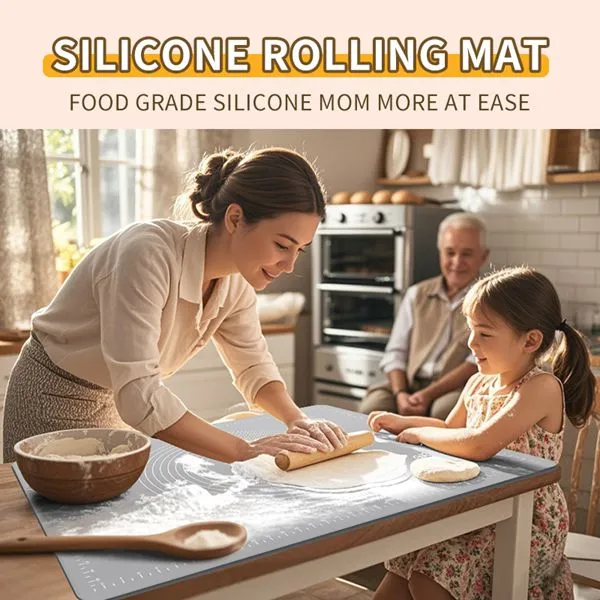
These Silicone Rolling Mats help commercial restaurants speed up production by cutting down on prep time and cleaning work while still meeting cleanliness standards. Home goods stores like them because they are useful kitchen items that appeal to people who care about quality. Pet supply companies have found new uses for the technology, like making food mats and platforms for preparing treats. Food-grade approval is important for silicone baby placemats and feeding items in the baby products industry. This popularity across industries increases the number of people you could sell to if you decide to do OEM production.
OEM Production Process for Custom Silicone Rolling Mats
Defining Your Customization Requirements
When creating custom Silicone Rolling Mats, clarity in specifications is crucial. You’ll need to define size, thickness, and color preferences. Thicker mats offer better durability, while thinner mats reduce shipping costs. Custom Pantone matching ensures consistent color across all products. Functional features, such as grid designs or textured surfaces, should be discussed early to meet market needs. Branding can be enhanced through full-color printing or debossed logos, adding recognition to the mat surface. Additionally, customized packaging, such as marked retail boxes or bulk carton labeling, strengthens brand presence throughout the supply chain. Investing in early customization helps brands stand out and reduces mid-cycle adjustments.
Material Selection and Quality Assurance
Reliable Silicone Rolling Mats are built from high-quality, food-grade silicone that meets local safety standards. The silicone should include performance additives for temperature stability and durability. Manufacturers should only use certified raw material suppliers and conduct quality tests on each batch for consistency. Rigorous quality control is essential at each production stage, including checks on incoming materials, mold measurements, visual appearance, and functional performance. Tests ensure mats are non-stick, heat-resistant, and properly gripped. Final checks focus on labeling accuracy and packaging integrity to minimize post-sale issues and improve customer satisfaction.
Manufacturing Steps from Concept to Completion
The production process begins with mold development, which takes 7-14 days for custom sizes and features, while common molds can speed up the process. Silicone rubber undergoes vulcanization, turning it from liquid to solid while taking the mold’s shape. After molding, the mats are printed with food-safe inks, and the edges are finished through automated cutting. Once quality checks are complete, the mats move to packing. Sample production can be finished in 5-7 days, while bulk orders take 15-25 days, depending on size and complexity. Efficient production ensures the timely delivery of both small and large orders.
How to Choose the Best Silicone Rolling Mat Supplier for OEM Orders?
Evaluating Supplier Credentials and Capabilities
The choice of provider has a direct effect on the quality of the Silicone Rolling Mats, the dependability of delivery, and the success of the long-term relationship. Checking the certifications should be the first thing on your evaluation list. For US markets, make sure the product is in current FDA compliance; for European markets, make sure it has LFGB certification; and check for any other region-specific standards your target markets have. Instead of taking direct promises, ask for copies of the test results. Third-party audit reports on factories give unbiased opinions on how well standards are met for Silicone Rolling Mat production, worker safety, and environmental protection.
Production ability is important as your business grows. If a Silicone Rolling Mat provider is okay with your first trial order of 500 units, they should also be able to handle 5,000 or 50,000 units without the quality going down. Find out about their present customers, how their production lines are set up, and their maximum potential. Manufacturers whose only product line is silicone usually have more experience than companies that make a lot of different kinds of products, and your order has to fight for attention with orders for products that have nothing to do with silicone.
Comparing Price, MOQ, and Lead Time Factors
Minimum order numbers (MOQ) often make it hard for new names to test the market to see if they can make it. Many companies set Silicone Rolling Mat MOQs at 1,000 to 3,000 pieces to cover the costs of making the tools and setting up the production line. However, open providers know that small orders at first lead to bigger orders in the future. For trial runs, we work with companies starting at 300 to 500 units. We know that this method builds long-term relationships that are good for both sides, rather than maximizing short-term order values.
Price openness shows how honest a Silicone Rolling Mat seller is. Material costs, tooling fees, printing costs, and shipping costs should all be broken down separately in detailed quotes. This split helps you figure out what costs what and deal smartly. Lead time promises need to be confirmed in writing, since informal figures often change when production needs to be sped up. Standard wait times for custom orders are 20 to 30 days, which is fair. Promises of 7 to 10 days for fully customized Silicone Rolling Mats may mean cutting corners, which lowers the quality.
Assessing Communication and After-Sales Support
Responding to messages is what sets professional Silicone Rolling Mat makers apart from people who just take orders. When you first ask a question, write down the time it takes to answer and how thoroughly complex questions are answered. Suppliers who ask a lot of questions about your application, your target market, and how you want to place your brand show that they want to work with you as a partner, not just as a customer. Language skills are important for having complex conversations. Teams that know how to use English technical terms avoid confusion that causes delays in Silicone Rolling Mat production or mistakes in the specifications.
When problems happen, after-sales help is very important. Before you place a Silicone Rolling Mat order, make sure you understand the guarantee terms, how to report a flaw, and how to deal with quality issues. When a manufacturer is sure of their quality control, they usually offer clear steps for fixing problems without putting up walls. Testimonials and case studies from clients can give you an idea of how well a seller really does their job, but keep in mind that written references will naturally highlight the good results. If you can, talk to current Silicone Rolling Mat clients to get honest comments about their experience.
Advantages of Custom Silicone Rolling Mats Over Traditional Alternatives
Cost-Effectiveness and Environmental Sustainability
Buying traditional parchment paper is an ongoing cost that adds up over thousands of baking sessions. With the right care, a single Silicone Rolling Mat can be used over 3,000 times, so you won't have to buy new ones all the time, and you'll waste less packaging. This reusability is very appealing to environmentally conscious shoppers who are thinking more and more about how their purchases will affect the earth. Brands that use durable Silicone Rolling Mats to show they care about the environment are in line with market trends toward more thoughtful spending. This could help them charge higher prices, which would increase their profit margins.
Buying good Silicone Rolling Mats at first will pay off in the long run by lowering the costs of running a business. Bakeries say that cleaning Silicone Rolling Mats is easier and saves them time because they only need to be rinsed with warm water instead of being scrubbed to get rid of flour residue. This saves a lot of time over the course of a day's worth of production, freeing up staff to do more valuable work instead of maintenance jobs.
Performance Advantages in Professional Environments
Because silicone is naturally flexible, Silicone Rolling Mats can be used on a variety of surfaces and still stay stable. Unlike fabric-based options that fray at the ends or get weak spots over time, this material won't crack, tear, or break down in normal use. The ability to work with different temperatures makes workflow changes smooth. For example, the same Silicone Rolling Mat that is used to prepare cold dough can go straight into a 260°C oven for par-baking tasks and then into a freezer to store the dough, so there are no surface moves that could get dirty.
Chemicals or spray coats that may wear off over time are not needed for non-stick Silicone Rolling Mat performance to stay the same. This means that the results will be the same from batch to batch, which lowers product variation that hurts customer happiness. When printed measurement grids are inserted during manufacturing, they stay accurate forever. This is different from marked surfaces, where flour can obscure reference lines or repeated cleaning can wear away Silicone Rolling Mat printed marks.
Customization Benefits for Brand Differentiation
Generic off-the-shelf mats do their job, but they miss chances to connect with your business. With custom choices, you can turn a useful Silicone Rolling Mat into a brand touchpoint that strengthens your place in the market. A unique color scheme that goes with your packaging makes your whole line of products look like they belong together. Carefully planned patterns for measurements, like ones that use both metric and imperial units or circle guides for pizza dough, provide useful benefits that customers value and that rivals might miss.
Putting a logo on a Silicone Rolling Mat turns every use into an image of the brand. Users see your brand throughout the whole baking process, which helps them become familiar with it and link it with good results. Graphics with instructions written on the Silicone Rolling Mat surface cut down on customer service calls by showing people how to use it correctly. This proactive method improves the user experience and makes it easier for you to provide service after the sale.
Conclusion
To make a custom Silicone Rolling Mat, you have to balance technical requirements, the supplier's abilities, cost concerns, and strategies for placing the product in the market. From the idea to the finished product, you need to pay close attention to certifications for material safety, quality controls during production, and Silicone Rolling Mat customization details that make your offering stand out. OEM relationships that work for successful brands are planned because they know that the right supplier becomes an extension of their team, not just a provider. You can set up your Silicone Rolling Mat product line for long-term growth in the competitive cooking goods market by putting an emphasis on clear communication, reasonable wait times, and a shared commitment to quality. Learning these basic Silicone Rolling Mat production concepts will pay off in the form of fewer mistakes, a shorter time to market, and goods that really speak to your target buyers.
FAQ
Q1: Are custom silicone rolling mats safe for direct food contact?
Quality Silicone Rolling Mats made from 100% food-grade silicone and certified by the FDA and LFGB are safe to touch food directly. There are no BPA, phthalates, or other dangerous chemicals in these materials that could get into food. Certifications show that the printing colors and silicone material used meet strict safety standards. Before finishing Silicone Rolling Mat orders, you should always check the certification paperwork that your seller sends you.
Q2: What's the typical temperature range for silicone baking mats?
Standard food-grade Silicone Rolling Mats can be used safely from -60°C to 260°C (-76°F to 500°F), which means they can be used for everything from freezing to baking at high temperatures. This range is good for most home and business Silicone Rolling Mat baking needs, but for certain industry processes that need higher temperatures, you may need special mixes that are more heat-stable.
Q3: How do custom mats differ from retail off-the-shelf options?
Custom choices give you full control over Silicone Rolling Mat sizes, thicknesses, colors, printed patterns, and branding elements that you can't get with store-bought items. You can make the size work best for certain Silicone Rolling Mat uses, add measurement systems that are important to your market, and come up with unique looks that help your Silicone Rolling Mat brand stand out. Customizing packaging makes it look better in stores and on shelves compared to stock options.
Partner with Qosun for Your Custom Silicone Rolling Mat Manufacturing Needs
Since 2017, Qosun has helped brands grow by offering flexible OEM and ODM services that are made to fit the needs of your market. As a Silicone Rolling Mat maker with a lot of experience, we know the problems that new brands have, especially when it comes to minimum order flexibility, Silicone Rolling Mat prototyping, and keeping quality standards high as the business grows. Our food-grade silicone materials are fully certified by both the FDA and the LFGB. This gives you peace of mind that your Silicone Rolling Mats will meet all foreign regulations. We can take small-batch trial orders starting at 300 units because we know that trying how the market reacts to your Silicone Rolling Mat before committing to a big inventory lowers your financial risk.
Our helpful Silicone Rolling Mat staff usually responds to questions within 8 hours and gives you thorough quotes and expert advice that helps you make a decision faster. Samples are made in 5 to 7 days, and large Silicone Rolling Mat orders take 15 to 25 days, based on how complicated the customization is. You can email us at qosun@qosun.com to talk about your project needs, get Silicone Rolling Mat samples, or find out how handmade Silicone Rolling Mats can help your kitchen goods business.
References
1. Johnson, M. & Williams, R. (2021). Food-Grade Silicone in Commercial Food Preparation: Safety Standards and Industry Applications. Journal of Food Safety Engineering, 15(3), 145-162.
2. Chen, L. (2022). OEM Manufacturing Strategies for Kitchen Product Brands: A Procurement Guide. International Journal of Supply Chain Management, 8(2), 78-95.
3. Thompson, K. (2020). Material Science of Silicone Elastomers: Properties, Processing, and Food Contact Applications. Polymer Technology Review, 12(4), 201-219.
4. Anderson, P. & Martinez, S. (2023). Sustainable Kitchen Tools: Consumer Preferences and Environmental Impact Assessment. Journal of Sustainable Consumer Products, 6(1), 34-51.
5. Roberts, J. (2021). Quality Control Protocols in Silicone Product Manufacturing: Best Practices for B2B Procurement. Manufacturing Standards Quarterly, 19(2), 112-128.
6. Liu, H. & Zhang, W. (2022). Global Trade Dynamics in Kitchen Silicone Products: Market Analysis and Supplier Evaluation Frameworks. International Business Research, 14(3), 67-84.