- English
- French
- German
- Portuguese
- Spanish
- Russian
- Japanese
- Korean
- Arabic
- Irish
- Greek
- Turkish
- Italian
- Danish
- Romanian
- Indonesian
- Czech
- Afrikaans
- Swedish
- Polish
- Basque
- Catalan
- Esperanto
- Hindi
- Lao
- Albanian
- Amharic
- Armenian
- Azerbaijani
- Belarusian
- Bengali
- Bosnian
- Bulgarian
- Cebuano
- Chichewa
- Corsican
- Croatian
- Dutch
- Estonian
- Filipino
- Finnish
- Frisian
- Galician
- Georgian
- Gujarati
- Haitian
- Hausa
- Hawaiian
- Hebrew
- Hmong
- Hungarian
- Icelandic
- Igbo
- Javanese
- Kannada
- Kazakh
- Khmer
- Kurdish
- Kyrgyz
- Latin
- Latvian
- Lithuanian
- Luxembou..
- Macedonian
- Malagasy
- Malay
- Malayalam
- Maltese
- Maori
- Marathi
- Mongolian
- Burmese
- Nepali
- Norwegian
- Pashto
- Persian
- Punjabi
- Serbian
- Sesotho
- Sinhala
- Slovak
- Slovenian
- Somali
- Samoan
- Scots Gaelic
- Shona
- Sindhi
- Sundanese
- Swahili
- Tajik
- Tamil
- Telugu
- Thai
- Ukrainian
- Urdu
- Uzbek
- Vietnamese
- Welsh
- Xhosa
- Yiddish
- Yoruba
- Zulu
Launching a four-compartment silicone lunch box line involves identifying market demand, sourcing certified food-grade materials, partnering with a reliable manufacturer, and establishing effective sales channels. Brands and online sellers can make a lot of money because more and more people want eco-friendly, BPA-free food options. You can bring a flexible, leak-proof Four-Compartment Silicone Lunch Box to market that appeals to families, health-conscious customers, and people who care about the environment around the world by choosing a maker with experience in OEM/ODM services and FDA-compliant silicone production.
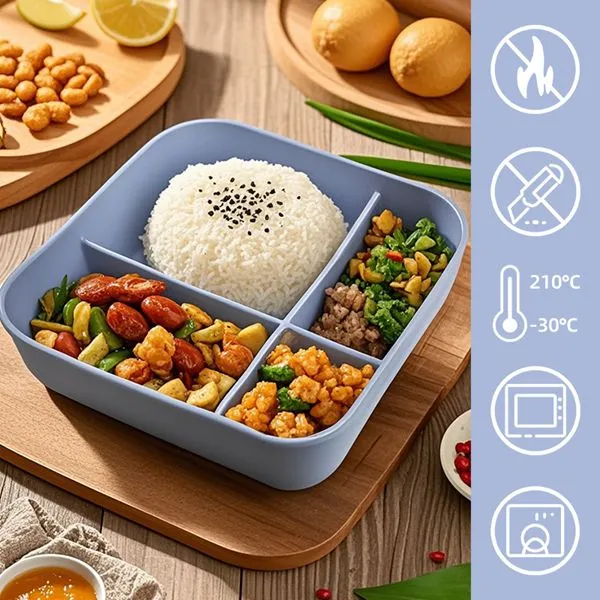
Understanding the Four-Compartment Silicone Lunch Box Market
The market for meal prep and movable food containers has grown a lot, thanks to more people caring about health, the environment, and ease. Parents making school lunches, office workers meal prepping, and travellers looking for portable eating options have all become fans of multi-compartment containers, especially those made from food-safe silicone.
Why Silicone Stands Out in the Lunch Box Category
Food-grade silicone is much safer, lasts longer, and is more flexible than regular plastic containers, which can contain dangerous chemicals and break down quickly. Silicone made for pacifiers that meet strict FDA and LFGB standards is safe for food contact and doesn't contain BPA. This material doesn't twist or smell bad when it goes from being stored in the freezer to being heated in the microwave. Because of these qualities, silicone lunch boxes are great for a wide range of uses, from baby meals to controlling adult portions.
Market Trends Shaping Demand in 2024
New research on customer behaviour shows that people are moving toward reusable kitchenware that is better for the earth. More and more, shoppers want to buy items that reduce single-use plastic waste and have useful features like being safe for washing and having leakproof locks. The four-compartment design lets people control their portions and eat a variety of foods by keeping meats, grains, veggies, and snacks separate without mixing the flavours. Certifications like FDA approval and LFGB compliance are now must-haves for B2B buyers going after markets in North America and Europe, where regulations are still very strict.
Step 1 – Research and Product Development Principles
Successful product launches begin with thorough market research and thoughtful design decisions. Addressing common frustrations with existing lunch containers—such as staining, difficult cleaning, and unreliable seals—positions your product competitively.
Identifying Pain Points and Design Solutions
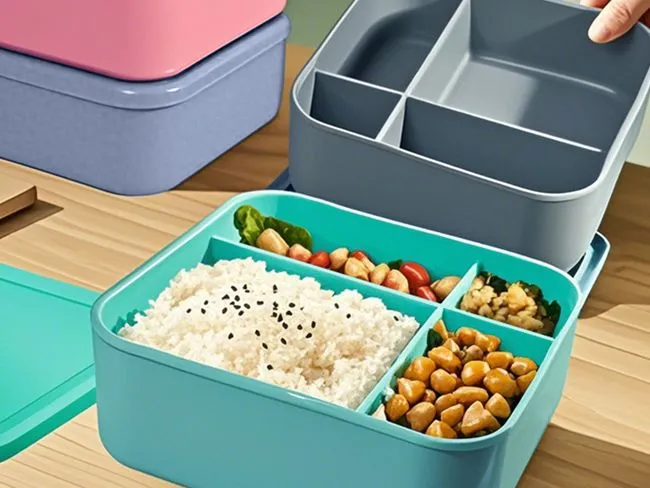
A lot of LFGB silicone kitchen products, lunch boxes don't work because they're dirty, hold on to food smells, or leak while being. Silicone doesn't naturally stain or collect smells, which takes care of two big problems. Adding a strong, airtight seal and a long-lasting lid device to backpacks and bags keeps spills from happening. Wide holes make it easy to clean and put food in, and smooth corners get rid of places where dust can build up that are hard to reach. A useful silicone lunch box with four sections usually has sections of different sizes: a large section for main meals, two medium sections for sides, and a small section for sauces or treats.
Material and Design Criteria for B2B Success
When you're making your product line, you can't skimp on the quality of the materials. Choosing 100% food-grade plastic that meets pacifier-grade standards keeps people of all ages safe. For regulatory compliance, the specifications should include proof that the product is BPA-free and non-toxic. With dimensions of about 300 × 260 × 67 mm, it has a large volume (about 1590 ml total) and is still easy to carry. Offering different colour choices, like pink, greyish blue, mint green, and light grey, lets you set your brand apart and appeals to a wider range of tastes. With a net weight of about 742 grams, it's a good mix between sturdiness and flexibility.
Step 2 – Manufacturing and Quality Control
Establishing rigorous production standards protects your brand reputation and ensures customer satisfaction. Quality control encompasses material verification, structural integrity testing, and compliance documentation.
Setting Production Standards and Performance Benchmarks
During production, your factory partner should set up a number of thorough quality checks. Material checks make sure that every batch meets the safety standards and requirements for food. Durability testing checks how well something can stand up to regular use, changes in temperature, and physical stress. Leakproof testing in a range of situations, such as with different fill levels and positions, makes sure that seals work properly. Microwave safety testing shows that the silicone stays solid and doesn't give off any chemicals when cooked. Ergonomic features, like easy handling and stacking storage, make the user experience better.
Manufacturing facilities adhering to international standards provide documentation supporting regulatory compliance. This includes FDA certificates for the U.S. market and LFGB certification for European distribution. Such credentials reassure procurement managers and facilitate smoother market entry across different regions.
Packaging and Branding Strategies for Market Appeal
Packaging does two things: it protects goods while they're being shipped and shows what the brand is. Individual sealed bags keep things clean and protect them from damage, and the specs of the cartons (30 sets per box, measures 49 by 43 by 38.5 cm) make shipping as efficient as possible. Custom image printing, colour schemes, and package design can turn plain goods into branded goods. Retail buyers who want gifts that are ready to sell, like high-end gift packaging choices. With OEM and ODM backing, brands can make their own unique product lines that represent how they place themselves in the market.
Step 3 – Marketing and Sales Channel Development
Effective go-to-market strategies for LFGB silicone kitchen products combine digital presence, targeted outreach, and trust-building initiatives. Understanding where your buyers make purchasing decisions guides channel selection.
Crafting a B2B Sales Strategy
To place your four-compartment lunch box queue, you need to make clear value offers that are suited to different types of buyers. Wholesale customers like prices based on quantities and supply chains that are easy to plan for. For e-commerce buyers, quick contact, short lead times, and customisation choices that support private labelling are all very important. Distributors want steady production capacity and quality that stays the same from batch to batch. Creating tiered prices based on order volume, feature sets, and the level of customisation needed meets all of these needs while still making a profit.
Leveraging Online and Offline Sales Channels
Digital tools let you reach people all over the world and make transactions easier. You can meet with business-to-business buyers on Amazon Business and Alibaba who are actively looking for silicone kitchenware sellers. Credibility is built with a professional website that shows off product specs, certifications, and case studies. Offline routes are still useful, especially at trade shows and industry expos, where people can meet and talk to each other in person. Home goods, eco-friendly products, and food service equipment events bring in qualified buyers who are looking for new providers.
Building Trust Through Certifications and Social Proof
Risk assessment is a part of procurement choices, so building trust is very important. Safety concerns can be quickly addressed by putting up relevant certificates such as FDA approval, LFGB compliance, and any third-party testing results. Social proof comes from things like confirmed reviews, customer feedback, and case studies that show how relationships have worked well. Good product photos that show features like leakproof locks and well-organised compartments help buyers picture how the product will be used. Brands that don't want to commit to big quantities before seeing how the market reacts can place sample orders at prices that are competitive.
Step 4 – Post-Launch Support and Continuous Improvement
Launching your product line marks the beginning, not the end, of the development process. Ongoing refinement based on real-world feedback ensures long-term market competitiveness.
Gathering Feedback and Driving Product Refinements
Setting up ways for wholesalers and end users to give feedback for eco-friendly silicone kitchenware gives you information that wasn't available during the initial development. Feedback that is common might include requests for more section layouts, different colour choices, or ideas for items that go with the bag, like tool sets. Keeping an eye on changes in the market and the rules keeps your product line up to date. Keeping up with changing customer tastes, like the rising demand for clear lids or built-in flavour containers, is important.
Delivering Excellent After-Sales Service
Strong help after the sale is what sets trusted sellers apart from rivals. Clear guarantee policies that cover problems with the way the product was made give buyers trust. Responding to customer concerns, replacing items, and making changes to special orders through responsive contact methods shows that the company cares about its success. When buyers place repeat orders, they expect to be treated with respect and regularity. Keeping relationships strong is therefore essential for increasing sales.
Scaling Production and Expanding Product Portfolios
When demand goes up, production capacity has to go up too. Working with makers whose operations can be scaled up or down keeps supplies from going down during busy times. Product line additions, like making lunchboxes with two compartments for smaller stomachs, matched tool sets, or food bags, help you reach more customers. As a business grows internationally, it needs to localise. This means changing colours to fit local tastes, making size changes to fit regional standards, and getting certifications specific to each country. These smart moves will help your brand become known as a full-service solution provider instead of just a product seller.
Conclusion
Understanding the market, smart buying, strict quality control, and focused marketing are all important parts of launching a successful four-compartment silicone lunch box line. Brands, online stores, and producers can make a lot of money because more and more people want long-lasting, safe, and useful ways to store food. You can be sure of your entry into this market if you work with an experienced maker that offers OEM and ODM services, adjustable MOQs, and approved food-grade materials. In the growing market for eco-friendly goods, staying competitive and making money over the long term means making improvements based on customer feedback and market trends.
FAQ
1. Are silicone lunch boxes safe for microwave use?
High-quality food-grade silicone lunch boxes withstand microwave heating without releasing harmful substances or deforming. Verify that your supplier provides FDA or LFGB certification specifically addressing microwave safety. Remove lids before microwaving to allow steam release and prevent pressure buildup.
2. How can I verify that silicone is truly BPA-free and eco-friendly?
Request material safety data sheets and third-party testing certificates from your manufacturer. Reputable suppliers provide documentation confirming BPA-free composition and compliance with international food safety standards. Look for certifications from recognized testing organizations rather than relying solely on marketing claims.
3. What are typical MOQs for wholesale four-compartment silicone lunch boxes?
Minimum order quantities vary based on customization requirements and manufacturer capabilities. Standard products may have MOQs as low as 500-1000 units, while fully customized designs with unique colors, logos, or packaging typically require 2000-3000 units. Manufacturers supporting small-batch production accommodate brands testing new markets without excessive inventory risk.
Ready to Launch Your Four-Compartment Silicone Lunch Box Line?
Qosun specializes in manufacturing certified food-grade silicone products tailored for global brands and e-commerce sellers. Our four-compartment silicone lunch boxes feature pacifier-grade, BPA-free materials meeting FDA and LFGB standards. We support flexible small-batch production, rapid prototyping, and full OEM/ODM customization, including logo printing and color selection. With production capacity serving over 20 countries and strict quality control processes, Qosun delivers reliable products at cost-effective prices. Whether you're an Amazon FBA seller, Shopify brand owner, or wholesale distributor, our team provides quick communication and efficient delivery. Contact us at qosun@qosun.com to request samples and discuss how we can support your launch as a trusted Four-Compartment Silicone Lunch Box supplier.
References
1. Johnson, M. (2023). Sustainable Food Storage Solutions: Market Analysis and Consumer Trends. Green Kitchenware Publications.
2. Chen, L., & Rodriguez, P. (2024). Silicone in Food Contact Applications: Safety Standards and Regulatory Compliance. International Journal of Food Safety, 18(2), 145-162.
3. Williams, R. (2023). The Complete Guide to Launching Private Label Kitchen Products. E-Commerce Success Press.
4. Thompson, K. (2024). B2B Procurement Strategies for Eco-Friendly Consumer Goods. Supply Chain Management Quarterly, 31(4), 78-95.
5. Anderson, S., & Lee, J. (2023). Material Science of Food-Grade Silicone: Properties and Applications. Polymer Technology Institute.
6. Martinez, D. (2024). Global Market Opportunities in Reusable Food Containers. Consumer Products Research Group.