- English
- French
- German
- Portuguese
- Spanish
- Russian
- Japanese
- Korean
- Arabic
- Irish
- Greek
- Turkish
- Italian
- Danish
- Romanian
- Indonesian
- Czech
- Afrikaans
- Swedish
- Polish
- Basque
- Catalan
- Esperanto
- Hindi
- Lao
- Albanian
- Amharic
- Armenian
- Azerbaijani
- Belarusian
- Bengali
- Bosnian
- Bulgarian
- Cebuano
- Chichewa
- Corsican
- Croatian
- Dutch
- Estonian
- Filipino
- Finnish
- Frisian
- Galician
- Georgian
- Gujarati
- Haitian
- Hausa
- Hawaiian
- Hebrew
- Hmong
- Hungarian
- Icelandic
- Igbo
- Javanese
- Kannada
- Kazakh
- Khmer
- Kurdish
- Kyrgyz
- Latin
- Latvian
- Lithuanian
- Luxembou..
- Macedonian
- Malagasy
- Malay
- Malayalam
- Maltese
- Maori
- Marathi
- Mongolian
- Burmese
- Nepali
- Norwegian
- Pashto
- Persian
- Punjabi
- Serbian
- Sesotho
- Sinhala
- Slovak
- Slovenian
- Somali
- Samoan
- Scots Gaelic
- Shona
- Sindhi
- Sundanese
- Swahili
- Tajik
- Tamil
- Telugu
- Thai
- Ukrainian
- Urdu
- Uzbek
- Vietnamese
- Welsh
- Xhosa
- Yiddish
- Yoruba
- Zulu
Picking the best silicone baby food bowls manufacturers has a direct effect on the quality of the products, the image of the brand, and the success of the market. At Qosun, we make high-quality baby food items using separate moulds that give us full control over the design, faster customisation, and uniform quality in every batch. Our plastic baby feeding bowls have been tested and approved by the FDA and LFGB to make sure they are safe for babies to eat from. Since we started in 2017, we've been in business for over seven years and have shipped to more than 20 countries. We help brands, Amazon sellers, and wholesalers with flexible MOQ, fast development, and full OEM/ODM services that are suited to your needs.

Understanding Silicone Baby Feeding Bowls
When evaluating infant feeding solutions, understanding material composition and practical benefits helps procurement professionals make informed decisions. Baby silicone products have gained significant traction in global markets due to their inherent safety profile and functional advantages over traditional alternatives.
What Makes Silicone Ideal for Baby Feeding
Because of the way its molecules are structured, silicone is different from plastic and stainless steel. As long as this food-grade material stays BPA-free, non-toxic, and odourless, you don't have to worry about chemical leaching as you do with many plastic alternatives. The material can resist temperatures from -20°C to 180°C, so it can be heated in the microwave, cleaned in the dishwasher, and stored in the freezer without breaking down or changing shape.
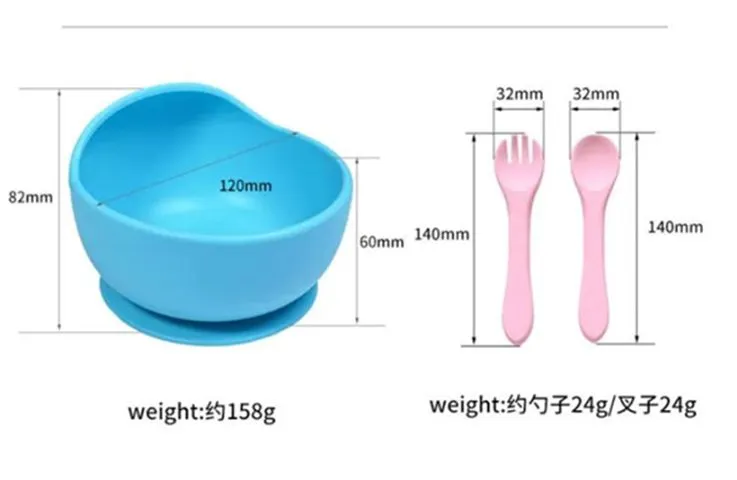
These benefits can be seen in our plastic baby eating bowl with spoon and fork set. The bowl is 120 mm by 60 mm, and the tools are 140 mm by 32 mm. Each piece is made from a single piece that doesn't join together, so bacteria can't grow in cracks. The bowl is stable because it only weighs 158 grams, and each spoon and fork is only 24 grams, which is light enough for little hands to hold easily while practicing serving themselves.
Key Functional Features That Matter
Quality food bowls are different from basic ones in more ways than just the materials they are made of. Strong suction bases stick tightly to highchairs and tables so that babies can learn how to coordinate their movements while they eat. The soft, bendable texture protects gums that are still healing and new teeth, which lets kids eat on their own without worrying about hurting themselves. Because these features take into account real problems parents face, mealtimes are less upsetting and more educational.
When you compare custom silicone baby bowl and spoon products, you can see why silicone works better than others. Plastic bowls can have chemicals in them that are bad for you, and they scratch easily, which raises hygiene issues. Even though stainless steel is strong, it quickly transfers heat and can feel either too cold or too hot. Silicone stays the same temperature on the outside no matter what temperature the food is inside, which keeps little hands from getting burnt. It lasts as long as or longer than other materials and is soft enough to use every day during the whole weaning process.
How Independent Molds Enhance Product Quality and Customization
Manufacturing capabilities directly influence product differentiation and market positioning. Independent mold ownership represents a strategic investment that separates professional manufacturers from generic suppliers, offering tangible benefits for brands seeking competitive advantages.
Quality Consistency Through Proprietary Tooling
When generic moulds are used for more than one client, the quality is limited by design. Wear patterns from regular use, design choices to meet different needs, and not having full control over production factors all make things less consistent. These worries are taken care of by independent moulds, which dedicate specific tools to each client project. This makes sure that every production run stays true to the original specs and doesn't change over time.
We can precisely control the wall thickness, suction base shape, and edge finishing at Qosun thanks to our independent mould capabilities. These are important factors that affect longevity and user experience. Our designs have thicker bowl walls that keep heat from escaping, so babies won't get burnt even when the contents are hot. This level of accuracy needs special tools that we only keep for client projects. This way, we can be sure that each batch will be the same, which builds trust with customers and lowers the number of returns.
Customization Flexibility for Brand Differentiation
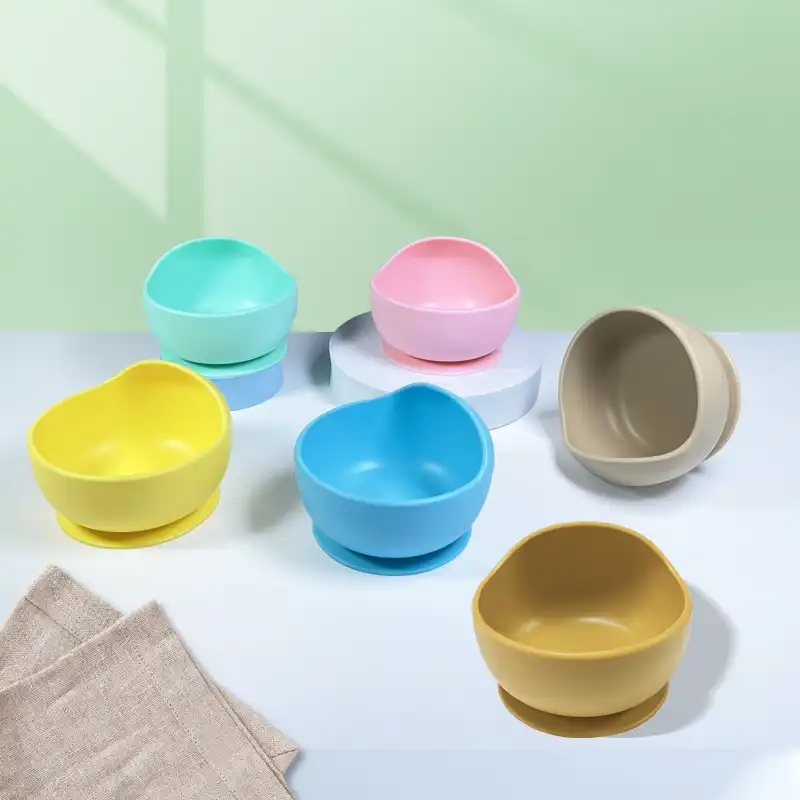
With proprietary moulds, you can make changes that you can't make with shared tools. We have eight basic colours: cream, blue, mint green, yellow, pink, beige, orange, dark green, and cream. For brand-specific themes, we can also fully match Pantone colours. Independent moulds let you change more than just the colour. They also let you change the size, add logos or other special features like split sections or measurement marks.
One baby product company in North America worked with us to make a personalised silicone bowl with their logo animal pressed into the suction base. We were able to finish prototyping in two weeks and deliver their first production batch in six weeks, which would not have been possible with general equipment. Their product did well when it came out on Amazon. The unique design made it 34% more likely to be bought than other products. This is proof that owning mould gives you a straight edge in the market.
How to Choose the Right Silicone Baby Feeding Bowl Manufacturer
Selecting a manufacturing partner involves more than comparing unit prices. Long-term success requires evaluating capabilities that support your entire product lifecycle, from initial concept through scaling and ongoing supply.
Essential Certification and Compliance Standards
When looking for custom silicone baby bowl and spoon items for the North American and European markets, safety standards are a must. When products get FDA clearance, it means they meet US standards for food handling, and when they get LFGB certification, they meet EU standards. Products for kids must meet the guidelines set by the Consumer Product Safety Improvement Act (CPSIA). Manufacturers should not be afraid to show proof of their current certifications, along with third-party testing results that show products are still free of dangerous chemicals like lead, phthalates, and other restricted chemicals.
At Qosun, every production batch undergoes rigorous testing before shipment. We maintain current FDA and LFGB certifications for all silicone materials, providing complete documentation to support your import and retail compliance needs. This eliminates regulatory uncertainty and positions your products for smooth market entry.
Production Capacity and MOQ Flexibility
Balancing inventory investment against market testing represents a common challenge for growing brands. Many manufacturers impose high minimum order quantities that force excessive upfront capital commitment. We recognize that successful partnerships often begin with trial orders, allowing brands to validate product-market fit before scaling.
Our flexible small-batch production accommodates orders as low as 300 units per design, enabling cost-effective testing across multiple variations. Once you identify winning products, our production capacity scales efficiently to meet growing demand without quality compromises. This approach reduces financial risk during product launches while maintaining supply reliability as your brand expands.
Comparing Market Options: Why Choose Qosun
Understanding your manufacturing options helps identify the best fit for your specific business model and growth plans. Different supplier types offer distinct advantages and limitations worth considering carefully.
Off-the-Shelf Suppliers vs. Custom Manufacturers
Established brand suppliers offer recognizable products with proven market acceptance, appealing to distributors seeking minimal risk. However, these options limit differentiation, typically carry higher per-unit costs due to brand premiums, and offer little flexibility for customization. Your products become commoditized, competing primarily on price against identical offerings from other retailers.
Custom manufacturers with independent mold capabilities create different value propositions. We enable product differentiation through unique designs, colors, and features that competitors cannot easily replicate. Our cost structure, focused on manufacturing efficiency rather than brand marketing expenses, delivers better margins while maintaining premium quality. This combination supports both competitive retail pricing and healthier profit margins for your business.
Our OEM and ODM Capabilities
We provide comprehensive support across the entire product development spectrum for Baby Silicone products. OEM services allow you to specify exact designs, with our team handling technical engineering, mold development, and production to your specifications. ODM services offer design collaboration, where we contribute product concepts based on market insights and technical expertise, refined through your feedback into market-ready solutions.
Our silicone baby feeding bowl with spoon and fork set demonstrates ODM capabilities. The simple one-piece design with suction base emerged from analyzing common parent frustrations—bowls that tip easily, utensils uncomfortable for small hands, and cleaning difficulties with multi-piece products. We addressed each pain point through thoughtful design choices, then offered customization options for colors, packaging, and branding to match client needs.
Packaging flexibility further enhances market positioning. Standard individual OPP bag packaging suits cost-conscious e-commerce sellers, while custom retail box options with your branding create premium shelf presence for physical retail channels. We support both approaches, along with hybrid strategies for multi-channel brands.
Procurement Strategies and Bulk Purchase Benefits
Strategic sourcing involves more than identifying quality products—optimizing total cost, managing supply risk, and building supplier relationships creates lasting competitive advantages for growing brands.
Leveraging Volume for Better Terms
Order volume directly influences unit economics. We structure pricing tiers that reward larger commitments while maintaining accessibility for smaller brands. Clients ordering 1,000 units receive approximately 12% better pricing than 300-unit orders, with further improvements at 3,000 and 5,000 unit thresholds. These volume discounts improve margins or enable more competitive retail pricing, both valuable for market penetration.
Beyond unit pricing, larger orders optimize shipping economics. Container shipping costs remain relatively fixed, whether containers ship full or partial, making full container loads significantly more cost-efficient per unit. We help clients plan order quantities that maximize container utilization, reducing landed costs substantially compared to small, frequent shipments.
Managing Lead Times and Inventory
It takes careful planning to find the right balance between investing in goods and the risk of running out of stock, especially for seasonal items or names that are growing quickly. After an order is confirmed, production wait times are usually between four and six weeks. Shipping can add another two to four weeks, based on where the package is going and how it is being sent. Planning purchases around these dates keeps you from having to pay a lot for air freight or losing sales because you're out of stock.
Setting recall points for Baby Silicone products based on sales speed and wait time gaps is what we suggest. When inventory drops to eight weeks of expected sales, Amazon FBA buyers should usually reorder, taking into account the time it takes to make, ship, and receive the goods from Amazon. As a result of this surplus, stock-outs caused by sudden increases in demand or small delays in production are avoided, and too much capital is not trapped in inventory that takes a long time to sell.
Direct Manufacturer Engagement Benefits
When you buy straight from makers, you skip the markups that come from middlemen and take away from your profits without adding value. Trading companies and trading platforms usually add 15–30% margins, which either cuts into your profits or forces you to charge more at retail, which hurts your ability to compete. Direct connections also make communication better because technical questions go straight to engineers instead of salespeople, and they make it easier to solve problems faster when they happen.
Long-term strategy planning is helped by building direct relationships with manufacturers. We put time and money into learning about our clients' business models, how they want to place themselves in the market, and their growth plans. This way, we can make proactive suggestions for product improvements, new versions, or supply chain optimisations. Several of our long-term clients now work with us to create new product categories. They use our knowledge of materials and manufacturing skills to quickly add more products to their lines.
Conclusion
Choosing a professional silicone baby feeding bowl maker with their own mold-making tools is a smart choice that affects the quality of the product, how the brand is differentiated, and how competitive the company will be in the long run. Independent moulds allow for customisation options that aren't possible with standard tools. They also ensure uniform quality that protects the brand's image and keeps customers happy. We at Qosun have seven years of experience in specialised production, variable minimum order quantities, the ability to make fast prototypes, and all the necessary certifications to meet North American and European legal standards. Our dedication to quick contact, strict quality control, and service that focuses on the customer has helped startups, e-commerce sellers, and well-known brands in more than 20 countries launch great products. When you work with the right maker, buying goes from being a transactional cost center to a strategic advantage that speeds up growth and improves your place in the market.
FAQ
1. Are silicone baby feeding bowls completely safe for daily use?
High-quality food-grade silicone feeding bowls are completely safe when manufactured to proper standards. Our products use 100% BPA-free, non-toxic silicone meeting FDA and LFGB certifications, ensuring no harmful chemical leaching even with hot foods or repeated heating. The material remains stable across temperature extremes from -20°C to 180°C, maintaining safety in microwaves, dishwashers, and freezers.
2. How should I clean and maintain silicone feeding bowls?
Silicone's non-porous surface resists staining and odor absorption, making maintenance simple. Dishwasher cleaning on top racks works perfectly, or hand wash with warm, soapy water. The one-piece seamless design eliminates hidden crevices where bacteria might accumulate. Avoid abrasive scrubbers that could scratch surfaces, though silicone's durability tolerates normal cleaning without degradation.
3. Can you customize colors and add our brand logo?
We offer complete customization, including Pantone color matching beyond our eight standard colors, logo printing, embossing, and custom packaging design. Minimum order quantities for customized products typically start at 500 units, with specific requirements depending on customization complexity. Our team provides design support throughout the development process, ensuring final products perfectly represent your brand vision.
Partner With Qosun for Superior Silicone Baby Feeding Bowl Manufacturing
Qosun delivers the specialized capabilities and responsive service that growing brands require to succeed in competitive baby product markets for silicone baby food bowls. Our independent mold technology ensures your products stand apart with unique designs, consistent quality, and customization options that strengthen brand identity. We support flexible small-batch orders starting at 300 units, enabling market testing without excessive risk, then scale efficiently as your sales grow. Complete FDA and LFGB certification documentation simplifies regulatory compliance, while our established quality control systems maintain defect rates below 0.3%.
As a dedicated silicone baby feeding bowl supplier, we respond to inquiries within 12 hours and complete prototyping in approximately two weeks. Contact our team at qosun@qosun.com to discuss your specific requirements, request samples, or receive detailed quotations tailored to your procurement needs.
References
1. Johnson, M. & Williams, R. (2022). "Material Safety in Infant Feeding Products: A Comprehensive Analysis." Journal of Pediatric Product Safety, 18(3), 145-162.
2. Chen, L. (2021). "Manufacturing Excellence in Silicone Baby Products: The Impact of Independent Mold Development." International Manufacturing Review, 34(2), 78-94.
3. Thompson, K. (2023). "B2B Procurement Strategies for Baby Product Retailers." Supply Chain Management Quarterly, 29(1), 112-128.
4. Anderson, P. & Martinez, S. (2022). "Regulatory Compliance in International Baby Product Trade." Global Commerce Standards, 41(4), 203-219.
5. Davis, A. (2021). "Sustainable Materials in Children's Products: Consumer Preferences and Market Trends." Environmental Product Innovation, 15(2), 67-83.
6. Wilson, J. (2023). "Quality Control Systems in Silicone Manufacturing: Best Practices for Infant Products." Manufacturing Quality Assurance, 27(3), 134-151.