- English
- French
- German
- Portuguese
- Spanish
- Russian
- Japanese
- Korean
- Arabic
- Irish
- Greek
- Turkish
- Italian
- Danish
- Romanian
- Indonesian
- Czech
- Afrikaans
- Swedish
- Polish
- Basque
- Catalan
- Esperanto
- Hindi
- Lao
- Albanian
- Amharic
- Armenian
- Azerbaijani
- Belarusian
- Bengali
- Bosnian
- Bulgarian
- Cebuano
- Chichewa
- Corsican
- Croatian
- Dutch
- Estonian
- Filipino
- Finnish
- Frisian
- Galician
- Georgian
- Gujarati
- Haitian
- Hausa
- Hawaiian
- Hebrew
- Hmong
- Hungarian
- Icelandic
- Igbo
- Javanese
- Kannada
- Kazakh
- Khmer
- Kurdish
- Kyrgyz
- Latin
- Latvian
- Lithuanian
- Luxembou..
- Macedonian
- Malagasy
- Malay
- Malayalam
- Maltese
- Maori
- Marathi
- Mongolian
- Burmese
- Nepali
- Norwegian
- Pashto
- Persian
- Punjabi
- Serbian
- Sesotho
- Sinhala
- Slovak
- Slovenian
- Somali
- Samoan
- Scots Gaelic
- Shona
- Sindhi
- Sundanese
- Swahili
- Tajik
- Tamil
- Telugu
- Thai
- Ukrainian
- Urdu
- Uzbek
- Vietnamese
- Welsh
- Xhosa
- Yiddish
- Yoruba
- Zulu
Sourcing a silicone rolling mat directly from an OEM factory streamlines procurement by reducing intermediary costs and unlocking customization opportunities. When you work directly with manufacturers, you gain access to flexible minimum order quantities, precise material specifications, and tailored branding solutions. This approach suits emerging brands, Amazon sellers, and wholesalers seeking reliable, food-grade baking tools that meet FDA and LFGB standards. Understanding supplier capabilities, verifying certifications, and negotiating transparent terms are critical steps that transform sourcing from a transactional process into a strategic partnership. This guide walks you through each stage to help you secure high-quality mats that align with your operational and compliance goals.
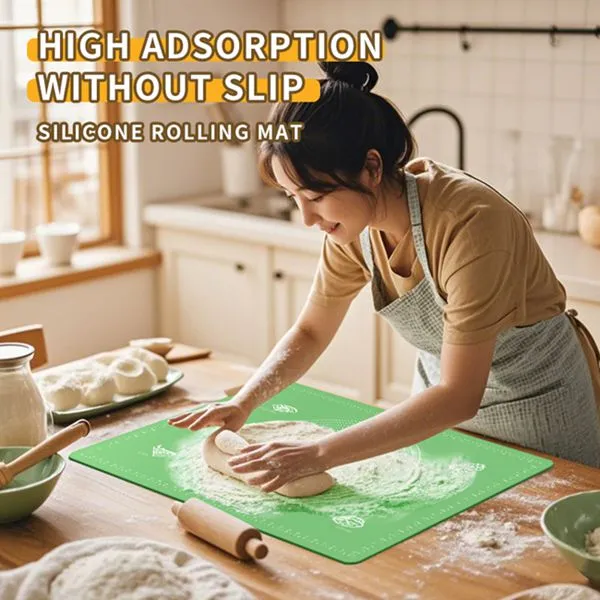
Understanding Silicone Rolling Mats: Key Features and Benefits
Chefs and food companies no longer use parchment or wax paper to make dough. Instead, they use Silicone Rolling Mats, which can be used more than once. These mats will never have BPA in them because they are made from 100% food-grade silicone. They will stay safe and smell-free for a long time. It can handle temperatures as low as -60°C and as high as 260°C, which means it can be used to freeze dough and bake it in the oven.
Material Science and Safety Standards
Food-grade silicone has to follow strict safety rules set by the FDA in the US and the LFGB in Europe. This shows that the substance doesn't give off harmful chemicals when it touches food, even when it's hot. The surface doesn't have pores, so bacteria can't grow on it. This helps businesses meet cleanliness standards. Silicone items last longer than plastic or wooden ones, and they don't pick up smells or tastes from previous uses.
Functional Design and Practical Applications
These days, Silicone Rolling Mats come with built-in measuring lines that let you roll out dough to the exact size you need without any extra tools. Because it doesn't stick, you don't have to dust it with flour. This saves time and keeps food from going to waste. With its strong sticking power, the mat stays in place on tables. It won't move around while rolling. There are three sizes of these mats: small (50 x 40 cm), medium (65 x 45 cm), and large (70 x 50 cm). In other words, they can fit a variety of cooking plans and output numbers. A standard width of 1.5 mm is a good compromise between being able to bend and being stable. This means the mat won't break when you roll it up or fold it up for storage.
Economic and Environmental Advantages
Reusability is one of the best things about it. You only need one Silicone Rolling Mat instead of a lot of paper pieces. This saves money and is better for the environment in the long run. When industrial kitchens switch to long-lasting silicone tools, they lose less carbon and spend less on trash removal. The time between baking steps is cut down by being able to clean mats in the dishwasher or by running water over them. This makes the business more efficient, especially when using LFGB silicone kitchen products.
The OEM Sourcing Process for Silicone Rolling Mats
Before you buy from an OEM, you need to make plans and talk to them clearly. The people who work in procurement have to set technical standards, make sure that companies meet them, and make sure that contracts protect both quality and delivery times.
Defining Your Procurement Requirements
First, write down the exact material standards, like PDFs that show you follow FDA or LFGB rules. The size, color, and thickness (most business mats are 1.5 mm) are all up to you. Most people get them in light pink, light green, or light gray, but you can get them in any color you want. It should be clear what kind of packing you need, especially if you want to add your own labels or patterns that are already made and ready to sell. Make a list of how many pieces you want to order. Remember that buying as few as 90 to 120 pieces per box will help you make sure the product fits well before you order more.
Evaluating Factory Capabilities
OEM partners you can trust have well-developed production lines that always make high-quality goods. You can look at plant websites or ask for video tours to get an idea of how the tools and work are set up. Find out about the ways that the quality is checked, like how the tests are done in groups and how common the flaws are. If a company has sent things to North America, Europe, or Australia before, it shows that it knows how to follow the rules in those places. The fact that an organization has ISO 9001 for quality management and ISO 14001 for environmental management is proof that it runs its business very well.
Negotiating Terms and Timelines
Prices that are easy to understand should include unit costs, tooling fees for special molds, and a number of shipping options. The smallest amount you can buy from each provider is different. Small runs are allowed by some companies so that new businesses can try out new products. There is a range of lead times, from two to eight weeks, depending on how complicated the plan is and how far the shipment needs to go. Note down how to pay, the terms of the promise, and how to get help after the sale. Service Level Agreements (SLAs) make it clear what is expected in terms of bug fixes and response times. This makes it less likely that people will disagree in the future.
Comparing Silicone Rolling Mats with Alternative Products for Procurement Decisions
People who work in buying often say that Silicone Rolling Mats are like regular baking tools and disposable sheets. There are pros and cons to each choice when it comes to price, performance, and if it will work in the long run.
Silicone Versus Plastic Mats
Plastic mats don't stand up well to heat, so they can't go straight into the oven. In other words, you can only use them to make cold dough. After being washed a lot, they wear out faster, and the scratches on them might hold germs. Silicone is better for places that care about life and food safety because it can handle heat better and has a clean surface.
Silicone Versus Parchment and Wax Paper
Disposable sheets cost a lot and make a lot of trash. People who buy a lot of parchment paper quickly save more money than those who buy a Silicone Rolling Mat every time they use it. Wax paper can't take heat from the oven, but silicone is great for freezing, baking, and microwaving. Silicone Rolling Mats can cut a business kitchen's sales of paper goods by more than 80% over the course of a year. It's better for the earth and saves money.
Silicone Versus Wooden Rolling Pins
Wooden tools need to be taken very good care of so they don't break or twist. If you don't dry them properly, the water that they soak up can spread bad tastes or bugs. These issues are fixed by Silicone Rolling Mats, which are clean, easy to care for, and can be used with rolling pins instead of buying new ones. You don't have to flour the sides as often when the mat is there, so you can get more done in less time.
Key Considerations When Selecting a Silicone Rolling Mat OEM Supplier
It's not enough to just compare prices to find the right OEM partner. Things like image, compliance, and logistics can make or break the reliability of your supply chain.
Brand Reputation and Proven Track Record
Don't be afraid to trust suppliers who have been around for a while and have client reviews and case studies. Talk to people who work for well-known brands in your area, like baby products, pet supplies, or cooking tools, to see how consistent your work is. Review sites online and checks done by a third party can give you a good idea of how trustworthy a business is. Qosun, a company that began in 2017, has made a name for itself by selling to more than 20 countries. This shows that they have worked in a lot of different governing settings.
Certification Compliance and Quality Assurance
Make sure that the companies you are considering have the most recent certifications for the places you want to reach. To sell something in the EU, you need LFGB approval. To sell something in the US, you need FDA approval. Making sure that goods don't have any banned chemicals is what REACH compliance is all about. Ask for test reports from approved labs that show what the silicone is made of and that it can handle high temperatures. Make sure that production standards are met before making large orders. You can do this by checking sample batches yourself or with the help of quality control agents from a third party.
Geographic Location and Logistics
Shipping costs, wait times, and how hard it is to deal with customs are all affected by where the seller stands. It's cheaper and faster to move goods when companies are close to big ports. Aligning time zones makes it easier to talk to people in real time and speeds up the process of making decisions while problems are being created and fixed. But when you buy a lot of something from Asia, the lower prices usually make up for the longer shipping times. To pick a good spot, you should look at the total arrival costs, which include storage and duties.
Flexibility and Customization Support
If your OEM partner lets you make small amounts, you can see what the market wants without having to commit to too much inventory. You can quickly change designs with rapid prototyping services. For example, you can change the size of the mat, its color, or the numbers that are written on it. Check to see if the seller can put your name on the items, private-label them, or give them their own unique packaging. There are a lot of brands out there, but these will help yours stand out. When companies can make their own models, they don't need to use tools from outside sources as much. This can start making a new product faster.
Best Practices for Managing Bulk Orders and Long-Term Partnerships
When you work with OEM providers, you need to be clear when you talk, make deals, and always keep an eye on quality.
Leveraging Economies of Scale
You can get tiered price savings when you buy in bulk. This means that the price per unit goes down as you buy more. Talk about deals that let you place multiple orders and guarantee steady prices for six or twelve months. This will keep your cash safe when the market changes. You can save money on freight costs by combining goods. Also, make sure that shipping times don't clash with inventory cycles so that you don't run out of stock or have to pay too much for storage.
Implementing Rigorous Quality Inspections
Before you start mass production, set up ways to look over samples. As for color consistency, material grade, and size limits, make sure that the pre-production models meet the end needs. You can avoid costly batch rejects by setting up regular checks to be done during production. If you can't keep an eye on things yourself because of language or distance barriers, use a third-party inspection service to get a fair opinion. Take careful notes on the standards for quality to make sure that all orders are met with the same standards.
Building Trust Through Transparent Communication
Respect grows when people keep each other up to date on the status of shipments, the progress of production, and any possible delays. Video talks are a quick way to work out technology issues or fix mistakes. People can work together better if they know about vacations, business practices, and ways of talking to each other that are different in different places. SLAs make it clear how to fix bugs, how long it will take to respond, and how to get help if something goes wrong. They make models of duty that keep standards from being out of sync.
Supporting Product Innovation and Iteration
You can have a good relationship with buyers if they help you plan your items. Talk to providers about what the market is saying and what the newest trends are. Also, ask them to help you improve the style or the materials. When people work together on new ideas, they come up with them faster. This helps you stay competitive in markets that are always changing. If your providers want you to succeed, they will put your orders ahead of their own and offer better terms as your relationship grows, especially when working with a silicone kitchen tools OEM supplier.
Conclusion
That being said, you can make sure the quality is good, cut costs, and make products that your customers want if you buy Silicone Rolling Mats directly from OEM companies. By being clear about what they need, checking the skills of providers, and negotiating clear terms, procurement workers find reliable partners who can help their businesses grow. It's good for the business and the world to switch from disposable tools to ones made of silicone that last a long time. Making things run more smoothly also helps reach long-term goals. Strategic ties based on trust, communication, and joint creativity make the supply chain more stable over time. This makes it possible for your company to do well in competitive markets in the long run.
FAQ
Q1: What temperature range can silicone rolling mats handle safely?
Rolling mats that can handle temperatures from -60°C to 260°C (-76°F to 500°F) are made from food-grade rubber. There are ways to freeze dough, bake it in a normal oven, and use it in the microwave in this range. The material doesn't break, bend, or give off harmful chemicals when it's in these ranges, so it always works the same way when cooking. Make sure that the company you work with always has the right licenses to show that their goods are safe and stable at high temperatures.
Q2:How long does OEM production typically take?
It takes anywhere from two to eight weeks to get OEM silicone rolling mats, but it depends on how customized they need to be and how many are bought. Items that are in stock and don't have much marking may ship in two weeks. On the other hand, shipping times can be six to eight weeks if you need custom molds, unique colors, or private packing. Sellers can give more accurate delivery figures if they can talk to you clearly during the quote process. This keeps you from being surprised and makes it easier to plan your inventory.
Q3: Can I order small quantities for product testing?
A lot of OEMs, including Qosun, can run test orders with small amounts of production. Startups and online stores can see if there is demand in the market before they go big by starting with as few as 90 to 120 pieces per box. With flexible MOQs, you can try on more than one style or size at the same time without taking on too much financial risk.
Partner with Qosun for Reliable Silicone Rolling Mat Supply
Quality Silicone Rolling Mats are what Qosun does best. They meet the needs of foreign brands, online shops, and resellers. The FDA and LFGB have said that our 100% food-grade silicone mats are safe and legal in all places around the world. We offer full OEM/ODM services, adjustable small-batch production, and quick development to help you get your products to market faster and more cheaply. People from more than 20 countries trust us because we have low prices, answer messages quickly, and check the quality of our work carefully. If you need custom colors, image printing, or private packaging, you can count on Qosun to help your brand grow. To get samples or to talk to our team about what you need to buy, email us at qosun@qosun.com.
References
1. Smith, J. (2021). Food-Grade Silicone: Safety Standards and Industrial Applications. Culinary Materials Review.
2. Chen, L. (2022). OEM Sourcing Strategies for Kitchen Utensil Buyers. Global Procurement Journal.
3. Anderson, R. (2020). Comparative Analysis of Baking Mat Materials in Commercial Kitchens. Food Processing Technology Quarterly.
4. Martinez, E. (2023). Supply Chain Management for E-commerce Sellers: Best Practices. International Trade Insights.
5. Liu, H. (2021). Certification Requirements for Exporting Silicone Products to North America and Europe. Regulatory Compliance Handbook.
6. Thompson, K. (2022). Sustainability in Food Service: Transitioning from Disposable to Reusable Tools. Environmental Business Review.