- English
- French
- German
- Portuguese
- Spanish
- Russian
- Japanese
- Korean
- Arabic
- Irish
- Greek
- Turkish
- Italian
- Danish
- Romanian
- Indonesian
- Czech
- Afrikaans
- Swedish
- Polish
- Basque
- Catalan
- Esperanto
- Hindi
- Lao
- Albanian
- Amharic
- Armenian
- Azerbaijani
- Belarusian
- Bengali
- Bosnian
- Bulgarian
- Cebuano
- Chichewa
- Corsican
- Croatian
- Dutch
- Estonian
- Filipino
- Finnish
- Frisian
- Galician
- Georgian
- Gujarati
- Haitian
- Hausa
- Hawaiian
- Hebrew
- Hmong
- Hungarian
- Icelandic
- Igbo
- Javanese
- Kannada
- Kazakh
- Khmer
- Kurdish
- Kyrgyz
- Latin
- Latvian
- Lithuanian
- Luxembou..
- Macedonian
- Malagasy
- Malay
- Malayalam
- Maltese
- Maori
- Marathi
- Mongolian
- Burmese
- Nepali
- Norwegian
- Pashto
- Persian
- Punjabi
- Serbian
- Sesotho
- Sinhala
- Slovak
- Slovenian
- Somali
- Samoan
- Scots Gaelic
- Shona
- Sindhi
- Sundanese
- Swahili
- Tajik
- Tamil
- Telugu
- Thai
- Ukrainian
- Urdu
- Uzbek
- Vietnamese
- Welsh
- Xhosa
- Yiddish
- Yoruba
- Zulu
You need to know about product quality, material safety, and manufacturing skills in order to find the right silicone baby bib manufacturer for custom branding. Good makers offer full OEM services that include food-grade silicone materials, a lot of ways to customize your order, and prices that are hard to beat. Because of these partnerships, brands can make unique goods that meet international safety standards and don't cost too much. Modern silicone baby feeding bibs have unique designs that are also useful. This is why they are becoming more and more popular with global marketers and baby product brands that need reliable ways to make their products.
What Makes Silicone Baby Bibs Ideal for Bulk Procurement?
The invention of silicone baby bibs is a big step forward in baby feeding goods. They have many benefits that make them perfect for buying in bulk. When procurement professionals choose goods for their target markets, knowing about these benefits helps them make smart choices.
Superior Material Composition and Safety Standards
Premium silicone nursing bibs are made of 100% food-grade silicone that meets the strictest safety standards around the world. This non-toxic, BPA-free material makes sure that babies are completely safe while they are eating. The material stays strong at very low and high temperatures, from -40°C to 230°C (-40°F to 446°F). This means it can be cleaned in many ways, including by sterilizing it in the dishwasher. This is because good silicone doesn't have any smell, so it doesn't get in the way of eating, and its soft texture is gentle on babies' skin.
Innovative Design Features Driving Market Demand
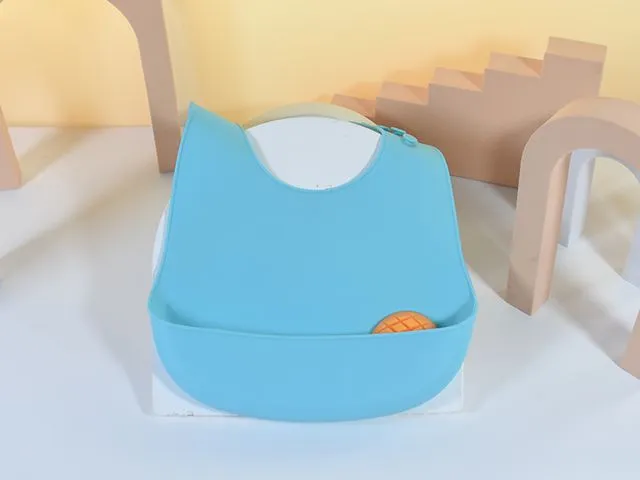
Modern silicone bibs are made with useful features that help with common eating problems. During self-feeding sessions, the deep 3D food catcher pocket successfully catches falling food particles, cutting down on mess and food waste. Clothing stays clean because it is waterproof and oil-resistant, and the flexible structure makes it comfortable to wear without getting in the way of movement. Neck straps that can be adjusted and buttons that can be used in multiple positions can fit babies and toddlers at all stages of growth.
Durability and Maintenance Advantages
The one-piece molding process makes a uniform structure that doesn't have any places where bacteria could grow, which is common in designs with multiple parts. This way of making silicone baby bibs OEM makes them about 78 grams heavy and 32 x 23.5 cm big, which is the right size for covering without being too bulky. The material doesn't tear, distort, or get damaged by high temperatures, so products last longer, which makes the cost of purchasing them worthwhile. Customers don't have to take as much care when products are easy to clean, such as by rinsing them with water or putting them in the dishwasher.
Custom Branding and OEM Manufacturing: What B2B Buyers Should Know
The market for baby goods is very competitive, so companies need to come up with unique branding strategies that set their products apart while still meeting quality standards. Buyers can make the most of customization possibilities when they know what OEM manufacturers can do.
Private Label Solutions and Brand Development
OEM makers with a lot of experience offer full private-label services that turn generic goods into branded goods. As part of these services, you can choose colors other than white, cherry pink, light blue, mint green, beige, and brown. Brands can use specific Pantone colors that match their current color palettes thanks to advanced color-matching tools. There are several ways to print logos, including screen printing and laser etching. This makes sure that the brand is clearly visible and lasts through many washings.
Manufacturing Flexibility and Customization Scope
Modern OEM facilities offer a wide range of personalization options, going beyond simple changes to colors and logos. Customizing packaging can be as easy as using poly bags or as complex as making designs that are ready for retail and look better on the shelf. With these features, brands can make slideshows of their products that look good and help them reach their marketing goals. Flexible minimum order amounts work for both new brands testing the market and established brands bringing out new lines of products.
Quality Assurance in Custom Manufacturing
Reputable makers use thorough quality control systems that make sure that all customized products are the same. These systems have procedures for functional testing, checking the accuracy of measurements, and verifying the materials. Customized products that meet foreign food safety standards are guaranteed by FDA and LFGB certifications. Documentation packages usually have test results, material certificates, and compliance statements that help with regulatory submissions in target markets.
How to Choose the Right Silicone Baby Bib Supplier for Your Business
To choose the right supplier, you need to carefully consider a lot of different factors that will affect both the success of the purchase and the relationship between the two companies in the long run. Selecting the right suppliers reduces risks and increases value creation.
Technical Capability Assessment
The first step in evaluating a supplier is to look at their manufacturing and professional skills. The ability to handle different order volumes, from small test batches to large-scale productions, is based on production capability. Modern shaping tools make sure that the dimensions are correct and the surface quality is always the same. Research and development skills show that new products and custom designs may be possible in the future. Quality management systems, like ISO certificates, silicone baby bibs OM OEMshow that you are dedicated to controlling quality in a planned way.
Financial and Commercial Considerations
To fully understand how pricing systems affect costs beyond unit prices, it's important to do a lot of research. Competitive makers have clear prices that include setup fees, tooling costs, and discounts based on volume. Credit rules and payment terms affect cash flow management, which is especially important for businesses that are growing. Delivery times and total landed costs are affected by shipping and logistics skills. Warranty policies and help policies after the sale protect you from quality problems.
Communication and Service Standards
Good contact channels make sure that projects run smoothly and problems are solved quickly. Customer service teams that are responsive and know how to do business internationally make teamwork easier. Language skills and cultural knowledge make it less likely that people will misunderstand each other in global supply relationships. Having access to technical support helps answer questions about production and improve product specs. Better inventory planning is possible with clear production schedules and regular reports on progress.
Procurement Guide: Making Bulk Orders for Silicone Baby Bibs
Strategic purchase management makes the best use of costs while still ensuring quality and on-time delivery. Understanding how markets work and how to negotiate greatly improves the results of buying.
Market Analysis and Pricing Strategies
The global market for silicone baby bibs is steadily growing. This is because parents are becoming more aware of safety issues and prefer ease. Price changes are caused by differences in the quality of the materials, the standards of production, and the level of service. When you buy in bulk, you usually get price breaks starting at 1,000 units, non-toxic silicone baby products, and you can get big savings for orders over 5,000 units. Prices and availability are affected by seasonal patterns of demand. Peak times happen before big holidays and back-to-school times.
Order Management and Logistics Coordination
To successfully buy in bulk, the shipping plans, production schedules, and quality checks must all be carefully coordinated. The lead time is usually between 15 and 30 days, but it depends on how customized the order is and how complicated it is. Pre-production samples let you give your final approval before starting mass production. Third-party testing services check the quality of the goods before they are shipped. You can ship things internationally by sea freight to save money or by air freight if you need to get things to someone quickly.
Risk Mitigation and Quality Assurance
Risk-reduction steps that protect against quality problems and supply delays are part of comprehensive procurement strategies. Detailed specs keep people from getting confused about what a product needs to do. Production monitoring tools let you see how the manufacturing process is going. Quality control checks at different stages of production find problems early on. Possible supply delays and other ways to get supplies are covered by backup plans.
Conclusion
Non-toxic silicone baby products are a great chance for brands that want to make useful, long-lasting, and safe baby feeding products. These goods are perfect for bulk purchases because they have great material properties, unique design features, and a lot of ways to make them your own. To be successful in this market, you need to work with manufacturers who have a lot of knowledge and who understand both technical needs and business goals. Good relationships with original equipment manufacturers (OEMs) are the key to long-term business growth and product excellence, which in turn builds customer trust and brand loyalty.
FAQ
1. What safety certifications do silicone baby bibs require for international markets?
Quality silicone baby bibs must meet FDA approval for the United States market and LFGB certification for European distribution. These certifications verify that materials are food-grade safe, BPA-free, and suitable for direct infant contact. Additional testing may include phthalate-free verification and heavy metal content analysis to ensure comprehensive safety compliance across different regulatory environments.
2. How do I determine the appropriate minimum order quantity for my business?
Minimum order quantities typically start at 500-1,000 units for standard products, while custom designs may require 1,000-3,000 units, depending on complexity. Consider your market testing needs, storage capacity, and cash flow requirements when determining order sizes. Many manufacturers offer flexible MOQ terms for first-time customers to facilitate business relationship development.
3. What customization options are available for private label products?
Customization options include color matching to specific Pantone colors, logo printing through screen printing or laser engraving, custom packaging design, and product size modifications. Advanced customization may include texture variations, special additives for enhanced properties, and unique design elements. Most manufacturers provide design consultation services to optimize customization choices for target market appeal.
4. How long does production typically take for bulk orders?
Standard production times range from 15-25 days for existing designs and 25-35 days for customized products. This timeline includes material preparation, molding, quality control, and packaging. Rush orders may be accommodated with expedited fees, while complex customizations might require additional time for tooling and setup. Clear communication about timeline requirements helps manufacturers prioritize production scheduling effectively.
Partner with Qosun for Premium Silicone Baby Bib Manufacturing Solutions
Ready to elevate your product portfolio with high-quality silicone baby bibs that combine safety, functionality, and custom branding excellence? Qosun stands ready to support your success with comprehensive OEM manufacturing services, competitive pricing, and flexible production capabilities. Our experienced team understands the unique challenges facing silicone baby bib suppliers and provides tailored solutions that meet your specific business requirements. Contact us today at qosun@qosun.com to discuss your project requirements, request product samples, and discover how our manufacturing expertise can accelerate your market success.
References
1. International Food Safety Standards for Silicone Baby Products: Regulatory Requirements and Compliance Guidelines, Food Safety Authority, 2023.
2. Global Baby Products Market Analysis: Trends in Silicone Feeding Accessories and Consumer Preferences, Market Research Institute, 2023.
3. OEM Manufacturing Best Practices in Baby Product Industry: Quality Assurance and Custom Branding Strategies, Manufacturing Excellence Journal, 2022.
4. Silicone Material Properties and Safety Assessment for Infant Feeding Products, Materials Science and Safety Review, 2023.
5. B2B Procurement Strategies for Baby Product Retailers: Supplier Selection and Risk Management, Procurement Professional Quarterly, 2023.
6. Custom Branding Success Stories in Baby Product Industry: Case Studies and Market Impact Analysis, Brand Development Review, 2022.