- English
- French
- German
- Portuguese
- Spanish
- Russian
- Japanese
- Korean
- Arabic
- Irish
- Greek
- Turkish
- Italian
- Danish
- Romanian
- Indonesian
- Czech
- Afrikaans
- Swedish
- Polish
- Basque
- Catalan
- Esperanto
- Hindi
- Lao
- Albanian
- Amharic
- Armenian
- Azerbaijani
- Belarusian
- Bengali
- Bosnian
- Bulgarian
- Cebuano
- Chichewa
- Corsican
- Croatian
- Dutch
- Estonian
- Filipino
- Finnish
- Frisian
- Galician
- Georgian
- Gujarati
- Haitian
- Hausa
- Hawaiian
- Hebrew
- Hmong
- Hungarian
- Icelandic
- Igbo
- Javanese
- Kannada
- Kazakh
- Khmer
- Kurdish
- Kyrgyz
- Latin
- Latvian
- Lithuanian
- Luxembou..
- Macedonian
- Malagasy
- Malay
- Malayalam
- Maltese
- Maori
- Marathi
- Mongolian
- Burmese
- Nepali
- Norwegian
- Pashto
- Persian
- Punjabi
- Serbian
- Sesotho
- Sinhala
- Slovak
- Slovenian
- Somali
- Samoan
- Scots Gaelic
- Shona
- Sindhi
- Sundanese
- Swahili
- Tajik
- Tamil
- Telugu
- Thai
- Ukrainian
- Urdu
- Uzbek
- Vietnamese
- Welsh
- Xhosa
- Yiddish
- Yoruba
- Zulu
When looking for the best baby silicone feeding set for their child, parents today look for one that is safe, durable, and useful. High-quality silicone baby feeding sets are better than standard plastic ones because they are made of BPA-free materials, are easy to clean, and are safer for babies 6 months and older. These all-in-one feeding solutions usually come with blankets, plates, bowls, cups, and tools, among other things. They're all meant to help babies learn to eat on their own while keeping them safe and comfortable.
Understanding Baby Silicone Feeding Sets: Key Benefits and Safety Considerations
Baby silicone feeding sets have changed the way parenting is done today because they are safer and easier to use than regular plastic feeding goods. The inclusion of multiple important feeding items in these complete sets is a big step forward in supporting infant nutrition. They are meant to make mealtimes safe and comfortable for babies.
Essential Components and Design Features
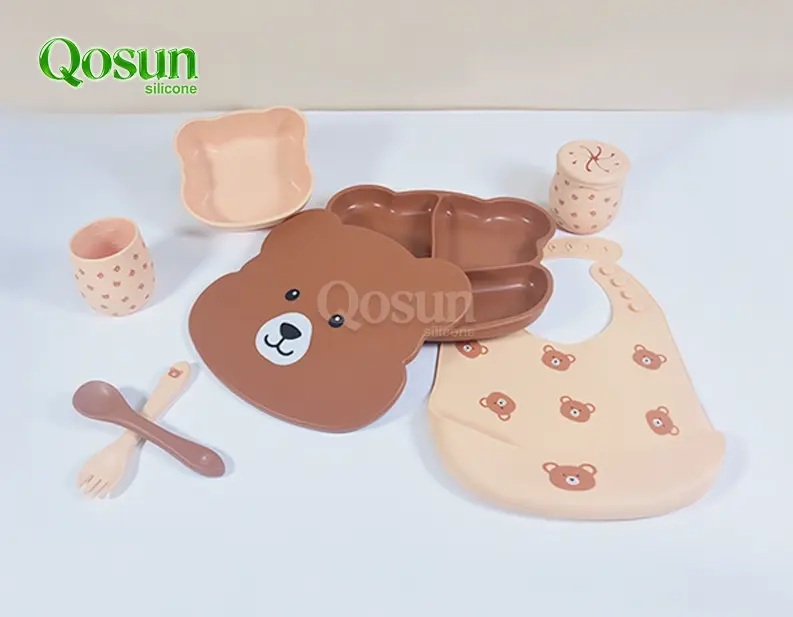
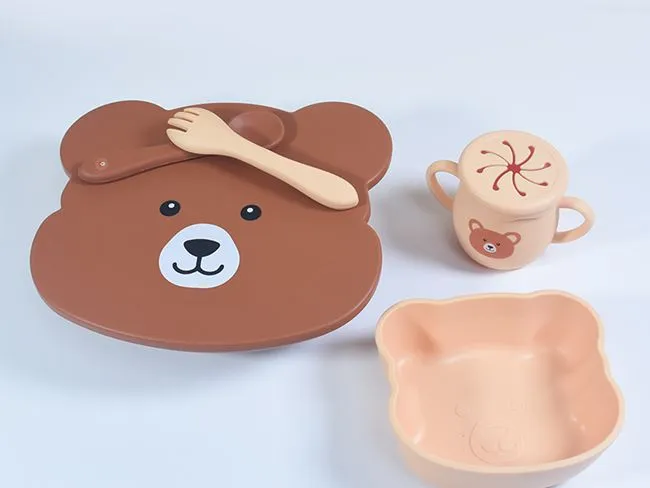
Modern silicone feeding sets are made up of many carefully designed parts that all work together to make a full feeding solution. A normal complete set comes with a plastic bib that is about 320 × 235 × 30 mm and weighs about 82 g. This bib is great for covering up and keeping the baby comfortable while they eat. The bear-themed dinner plate is 217 × 190.3 × 34.4 mm thick and weighs 303.5 g. It has separate parts that keep food from mixing and help you control your portions.
The bowl part, which is 129.4 × 113.4 × 51.7 mm and weighs 161 g, can hold a wide range of food types and temperatures. There are two cup choices in the drinking solutions. Cup A weighs 66.7 g and has an 18.7 g lid, and Cup B weighs 58 g. Each is made to help a different stage of development. The spoon and fork in the set are the right size for little hands and help them improve their motor skills. They are 140 × 32 × 10 mm and weigh about 26 g and 25 g, respectively.
Safety Standards and Material Composition
Quality silicone food items are built on the materials they are made of and how well they meet international safety standards. Premium silicone feeding sets for babies are made from 100% food-grade silicone that doesn't contain any BPA, PVC, or phthalates. This pacifier-grade silicone makes sure that the goods are completely safe, even if babies bite, chew, or touch them a lot while they are being used every day.
Parents and procurement workers looking for reliable feeding options can feel even more confident when products meet FDA and LFGB standards. These approvals show that the materials meet strict international standards for surfaces that come into contact with food and goods for babies. If you buy good silicone, you can use it safely in microwaves and dishes because it can handle temperatures from -20°C to 180°C without breaking down or releasing dangerous chemicals.
Durability and Maintenance Advantages
Silicone feeding sets last longer because they are made from a single piece of molding. This means that there are no parts or holes where bacteria could grow. This uniform design not only makes things cleaner, but it also keeps them from deforming and makes them last a lot longer. The feel is soft but strong, so it's gentle on lips and teeth that are still coming in, and it stays stable even after a lot of use.
Another important benefit is that silicone surfaces naturally don't stain or smell, which makes them easier to clean. Quality silicone doesn't have pores, so it can be rinsed off right away and cleaned thoroughly. This is great for busy parents who need reliable, low-maintenance feeding options. These qualities make them easy to clean, which is especially helpful in places like daycares and restaurants where cleanliness is very important.
Top Baby Silicone Feeding Set Brands and Their Market Positioning
Silicone products for baby feeding, like the Baby Silicone Feeding Set, have become very popular very quickly. Leading makers have carved out unique places through innovation, quality, and unique features. Parents and buying workers can make better choices based on their needs and goals when they know what the competition is like.
Market Leaders and Their Competitive Advantages
Well-known names in the silicone food industry have set themselves apart by using different ways to create new products and place themselves in the market. Some companies focus on using high-quality materials and getting a lot of safety certifications, while others focus on new design features like strong suction bases that stick to tables securely and help kids learn how to feed themselves.
Some of the most successful brands offer more than one benefit. For example, they might have goods with cute bear designs and warm color schemes that make mealtimes more fun for kids. When you combine these design elements with useful functionality, you get products that appeal to both parents who want good feeding solutions and kids who want visually appealing eating areas.
Companies that care about quality put a lot of money into research and development to make goods that can handle higher temperatures better, are easier to use, and last longer. These new ideas often lead to feeding sets that can be used every day by more than one child. This makes them very appealing to families with multiple kids or business childcare centers.
Sustainability and Environmental Considerations
Concern for the environment has a bigger impact on brand positioning in the baby food market. Leading makers stress that silicone goods are eco-friendly by pointing out that they can be used again and again and last longer than disposable options. Quality silicone doesn't break easily, so products keep working and looking good even after a lot of use, which means you don't have to replace them as often.
Sustainable packaging projects are also a key way for brands to stand out. Many of the best makers now offer gift box packaging choices that do away with extra waste and make items look nice in stores. This method helps the environment and makes money at the same time, making items that are good for giving as gifts and putting in high-end stores.
Manufacturing Excellence and Quality Control
Leading brands depend on their dedication to quality control and production excellence to keep their good names. Top makers use thorough testing methods to make sure that every production batch meets performance standards, material safety, and structural stability. This level of care makes sure that goods meet or go beyond safety standards and keep the same level of quality, no matter how big the order is or when it's made.
These brands can offer a range of personalization choices, such as printing logos, matching Pantone colors, and making changes to the design, thanks to their advanced manufacturing techniques. This versatility helps with both store branding and private labeling, so high-quality silicone feeding sets can be sold through a range of outlets and to a wide range of customers.
Choosing the Right Silicone Feeding Set for B2B Procurement Needs
To effectively buy baby silicone feeding sets, you need to carefully consider the different needs and wants of buyers and the market. Different groups of customers have different goals that affect the products they buy, how often they order, and how they work with their suppliers.
Understanding Buyer Segmentation and Requirements
Distributors usually choose tried-and-true, market-ready goods that don't need much customization and have a wide range of appeal for store buyers. These buyers are looking for stable supply chains, competitive prices, and goods that have been safety certified in the past, which makes it easy to follow the rules in many markets.
OEM partners look for makers that can help with custom design development, testing with flexible minimum order numbers, and making quick prototypes. Usually, these kinds of ties start with small test orders that get bigger over time as the market proves they work. To keep OEM relationships going strong, you need to be able to offer full help throughout the product development cycle.
Retailers put a lot of emphasis on goods that come in nice packages, have reasonable prices, and are very appealing to customers. They need sellers who can make sure they always have enough product, help with logistics, and offer quick customer service for any problems that might come up after the sale.
Product Specification and Customization Options
Knowing all the different ways a product can be configured helps buying workers match products to the needs of the market. There are two types of feeding sets: complete and individual. Complete feeding sets have everything you need for independent feeding growth, while individual components let you choose the right product for your needs or budget.
You can customize more than just the colors. You can also choose where to put the name, how the package looks, and even make small changes to the design that help your brand stand out. Working with makers that support Pantone color matching makes sure that private label goods have the same brand name across all lines of products and marketing materials.
For foreign shipping and planning store displays, weight specs and exact measurements become very important. Knowing that a full set might weigh around 880 g helps with planning operations, and knowing exact measurements helps with designing packing and making the best use of shelf space.
Quality Assurance and Compliance Verification
For buying to go well, strong quality control systems must be put in place to make sure that products meet performance and safety standards. This includes making sure that all the materials meet the safety standards that have been mentioned, checking the accuracy of the measurements against the specifications, and trying functional features like the performance of the suction base and how well it handles high temperatures.
Certificates of compliance, material safety data sheets, and quality control reports, such as for the top baby silicone feeding set, are some of the documents that are often needed to support regulatory applications and customer queries. Setting clear rules for how to talk to sellers makes sure that any problems with quality are dealt with quickly.
Market Trends and Innovations in Baby Silicone Feeding Sets
Baby feeding goods have changed over time to represent shifting customer goals, new technologies, and a greater understanding of health and environmental issues. These trends have a big effect on how the whole industry buys things and comes up with new products.
Shift Toward Premium Materials and Enhanced Safety
Advanced silicone formulations that offer better safety ratings and better performance traits have become widely used because consumers want high-quality feeding goods. Parents today want goods that go above and beyond basic safety standards. For example, they want feeding sets that have extra benefits like better temperature stability and better tactile qualities.
As people learn more about the possible health risks and environmental effects, the move away from standard plastic food products speeds up. Silicone options have strong benefits, such as better resistance to temperature changes, longer sturdiness, and better cleaning properties that support busy family lives.
Material science is always coming up with new ways to make silicone products that have better qualities, like being less likely to stain and more flexible. Because of these improvements, it will be easier to make food items that look good and work well for a long time.
Design Innovation and Functional Enhancements
Today's product designers focus on making designs that are useful and help kids grow while also meeting parents' realistic needs. One important new invention that makes mealtimes less messy and promotes independence is strong suction bases that keep the plate and bowl from moving while the person is trying to feed themselves.
When parents use modular design, they can change the food sets to fit their child's needs and stage of growth. For customers who like options that can be changed, this freedom helps products last longer and offer better value.
Aesthetic factors are becoming more important in product development, with companies making designs that look good and make people think of meals in a good way. Warm color schemes and products with bear themes make interesting settings that encourage healthy eating and good feeding experiences.
Technology Integration and Smart Features
New technologies are starting to have an effect on the growth of food products. For example, some companies are looking into temperature-sensitive materials that show you how hot or cold food is. Even though they are still in their early stages, these innovations point the way for future product development and ways to set yourself apart.
Parents who are good with technology will find smart packaging with QR codes that lead to feeding tips, cleaning directions, and safety information useful. These digital improvements help people connect with the company and give them useful tools that make using the product easier and make customers happier.
Procurement Insights: How to Buy Baby Silicone Feeding Sets Efficiently?
To buy silicone food sets for babies successfully, you need to come up with a plan that balances quality, cost, and source dependability. Knowing the best ways to do things helps buyers get the most out of their buying methods and build good, long-term ties with suppliers.
Supplier Evaluation and Selection Criteria
To find trusted sellers, you need to look at more than just the price and quality of the products. Assessing a provider starts with looking at their ability to make things, their quality control methods, and how well they follow international safety standards. Companies that have been making baby products for a long time usually offer more reliable relationships and better technical help.
Communication skills and timeliness have a big effect on how well a purchase goes, especially for buyers who need customization services or tight delivery dates. Clear communication lines, regular project reports, and problem-solving help from suppliers make the buying process go more smoothly and lower project risks.
Order amounts and production schedules that are flexible can work with a range of business models and market testing needs. Suppliers that allow small-batch trial sales lower the risk of releasing new products and make it easier to make successful goods bigger.
Cost Optimization and Value Engineering
For cost management to work well, you need to know the total cost of ownership, not just the unit price. The general economics of procurement are affected by things like shipping prices, minimum order requirements, and payment terms. Total value packages are often better when suppliers offer cheap shipping rates and a variety of payment options.
Long-term price deals and volume discounts can save buyers a lot of money when they know exactly how much they will need. Understanding how suppliers set prices helps buyers organize their orders in a way that saves them the most money while still keeping the right amount of goods on hand.
Costs for customization vary a lot between providers, so it's important to get specific quotes that include all fees for design changes, tooling, and setup. Having a clear knowledge of these costs helps with making better budgets for product development and coming up with better price strategies.
Quality Control and Risk Management
Putting in place thorough quality control procedures saves buyers from problems with the goods and problems with the rules. To do this, clear quality standards must be set, pre-production samples must be requested, and arriving inspection procedures must be put in place to make sure safety standards are met.
Supplier monitoring programs check the manufacturing skills and quality control methods on a regular basis. Regular reviews of the building and processes help find problems before they affect the quality of the products or the time they are delivered.
For regulatory applications and customer questions, you need to keep records like test results, certificates of compliance, and tracking records for the custom silicone teether OEM. Setting clear paperwork standards with providers makes sure that the needed information is available when it's needed.
Conclusion
The market for baby silicone feeding sets keeps changing toward higher safety standards, better usefulness, and longer life. Parents today are becoming more and more aware of the better benefits of silicone products. This is increasing the demand for all-in-one feeding options that support healthy growth and make life easier for busy families. By knowing about product specs, seller abilities, and market trends, you can make smart purchasing choices that balance cost, quality, and safety. Focusing on food-grade materials, new design elements, and customizable choices makes it possible for brands to set their products apart while meeting the needs of a wide range of customers around the world.
FAQ
1. What makes silicone feeding sets safer than plastic alternatives?
Silicone food sets are safer than other types because they don't contain BPA, PVC, or phthalates. Plastic goods may contain chemicals that are bad for you, but food-grade silicone stays the same when the temperature changes and doesn't give off dangerous chemicals even when heated or cleaned over and over again. The non-porous nature of the material stops germs from growing and takes away any worries about chemicals leaking into food.
2. How do I verify the quality of silicone feeding products?
As part of quality verification, FDA and LFGB certificates are checked, temperature resistance is tested, and the quality of building is judged by looking at the seams and finish. Reputable makers give out certificates of compliance and thorough material specs that show the results of safety tests. A physical check should show that the material is always the same thickness, has smooth surfaces, and is the right size according to the specs.
3. What are the typical minimum order quantities for custom silicone feeding sets?
Different suppliers have very different minimum order amounts, and many makers offer flexible choices to fit a range of business plans. Some suppliers will take trial orders as low as 100 to 500 pieces to test the market, while others need bigger amounts for special design work. Minimum order amounts are often affected by how complicated the personalization requests are and what tools are needed.
4. Can silicone feeding sets be safely used in microwaves and dishwashers?
Good silicone food items are made to be used in the microwave and washed without any problems. They can usually handle temperatures from -20°C to 180°C without breaking down or losing their shape. But making sure you check the temperature rates and usage instructions from the maker makes sure you use the product correctly and that it lasts a long time. Checking for signs of wear or damage on a regular basis helps keep the product safe for as long as it is used.
Partner with Qosun for Premium Baby Silicone Feeding Set Solutions
Qosun is a reliable company that makes silicone feeding sets for babies. Their goods are of the best quality and meet all international safety standards. Our full feeding sets are made from 100% food-grade silicone and don't contain any BPA, PVC, or phthalates, so your littlest customers will be completely safe. We help businesses from the beginning of product development all the way through large-scale production with our flexible small-batch production options, fast testing services, and wide range of OEM/ODM customization options. Because our prices are low, we can communicate quickly, and our shipping times are reliable, we are the best baby silicone feeding set provider for brands that want to get started quickly and grow efficiently. Get in touch with our team at qosun@qosun.com to talk about your unique needs and find out how our knowledge can help you improve your product line and keep up with changing market needs.
References
1. American Academy of Pediatrics. "Guidelines for Safe Feeding Practices in Infant and Toddler Care." Pediatric Nutrition Handbook, 8th Edition, 2020.
2. European Food Safety Authority. "Scientific Opinion on the Safety Assessment of Silicone Materials in Food Contact Applications." EFSA Journal, Vol. 18, Issue 3, 2020.
3. Consumer Product Safety Commission. "Federal Requirements for Children's Feeding Products: Safety Standards and Testing Protocols." CPSC Publication 2019-001.
4. International Organization for Standardization. "Child Care Articles - Safety Requirements for Feeding Equipment." ISO 14372:2018 Standard Documentation.
5. Global Market Research Institute. "Baby Feeding Products Market Analysis: Growth Trends and Safety Innovations 2020-2025." Industry Report Series, Volume 12.
6. Journal of Pediatric Gastroenterology and Nutrition. "Impact of Feeding Equipment Materials on Infant Nutrition and Development." Research Publication, Vol. 71, No. 4, 2020.