- English
- French
- German
- Portuguese
- Spanish
- Russian
- Japanese
- Korean
- Arabic
- Irish
- Greek
- Turkish
- Italian
- Danish
- Romanian
- Indonesian
- Czech
- Afrikaans
- Swedish
- Polish
- Basque
- Catalan
- Esperanto
- Hindi
- Lao
- Albanian
- Amharic
- Armenian
- Azerbaijani
- Belarusian
- Bengali
- Bosnian
- Bulgarian
- Cebuano
- Chichewa
- Corsican
- Croatian
- Dutch
- Estonian
- Filipino
- Finnish
- Frisian
- Galician
- Georgian
- Gujarati
- Haitian
- Hausa
- Hawaiian
- Hebrew
- Hmong
- Hungarian
- Icelandic
- Igbo
- Javanese
- Kannada
- Kazakh
- Khmer
- Kurdish
- Kyrgyz
- Latin
- Latvian
- Lithuanian
- Luxembou..
- Macedonian
- Malagasy
- Malay
- Malayalam
- Maltese
- Maori
- Marathi
- Mongolian
- Burmese
- Nepali
- Norwegian
- Pashto
- Persian
- Punjabi
- Serbian
- Sesotho
- Sinhala
- Slovak
- Slovenian
- Somali
- Samoan
- Scots Gaelic
- Shona
- Sindhi
- Sundanese
- Swahili
- Tajik
- Tamil
- Telugu
- Thai
- Ukrainian
- Urdu
- Uzbek
- Vietnamese
- Welsh
- Xhosa
- Yiddish
- Yoruba
- Zulu
Purchasing professionals have a lot of choices when they want to buy Reusable Silicone Food Bags in bulk. These companies offer a range of quality levels, licenses, and customisation options. Reusable Silicone Food Bags used to be a niche item, but now that eco-friendly storage options are in higher demand, brands that want to attract eco-conscious customers need to carry them. When looking for a partner, you should consider things like the supplier's reliability, production flexibility, and material safety certifications to make sure your business can start making goods with confidence. This way, you can keep prices low and quality high enough to appeal to your target market.
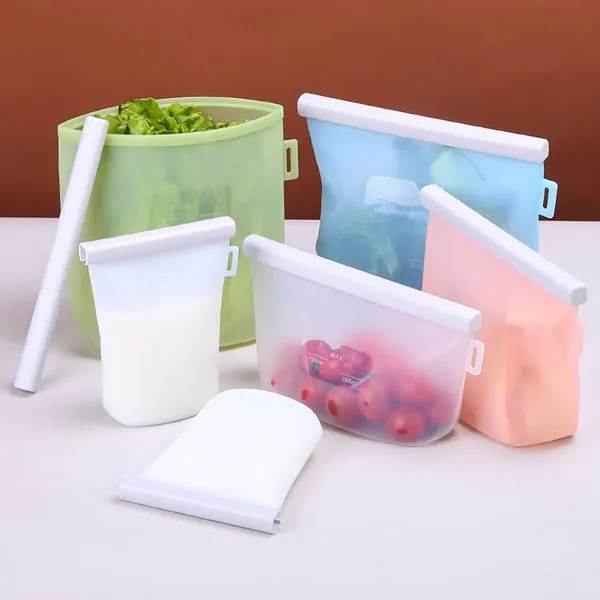
Understanding Reusable Silicone Food Bags for Bulk Procurement
More and more places need to use Reusable Silicone Food Bags because of the trend toward eco-friendly packaging. Instead of single-use plastic bags, these flexible storage options are a great choice for businesses because they last a long time and are good for the environment. When buying, teams know about the market's history and how it changes; they can make smart decisions that are in line with how the brand is positioned and what buyers want.
What Makes Silicone Food Bags Different?
Their design and performance make them unique food storage methods. These Reusable Silicone Food Bags contain FDA- and LFGB-approved food-grade material. They don't contain BPA, phthalates, or other food-contaminating chemicals. Due to its molecular structure, the material can withstand temperature variations of -40°C to 200°C. They may be frozen, cleaned with hot water, and microwaved.
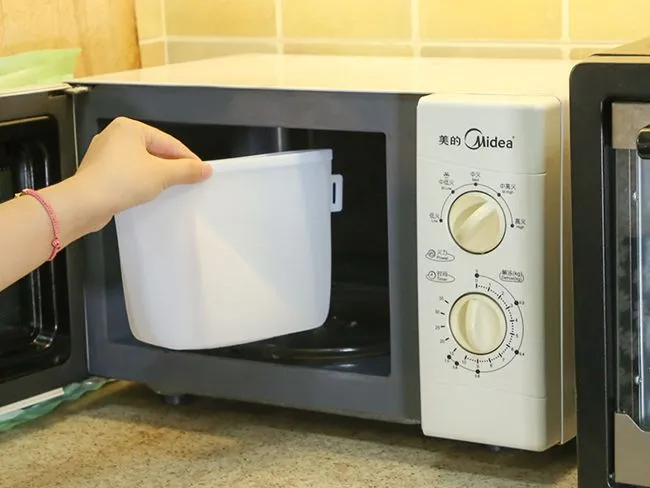
Building quality varies greatly amongst providers. Reusable Silicone Food Bags cost extra and are one-piece with no holes or water entry points. However, cheaper ones may contain unclosed gaps, making them weaker. There are several techniques to seal, from fold-over shuts to slider locks and magnetic seals. Each kind is easy to operate and blocks air differently.
Size Range and Application Scenarios
Buyers can better match commodities to market needs when they know volume alternatives. 240ml to 360ml Reusable Silicone Food Bags are good for snacking and portion control. Parents packing lunches for their kids and fitness lovers arranging meals like them. Most people find 500ml–1000ml containers best for sandwiches, leftovers, and organised ingredients.
More than 1500ml is used to store goods, soak meats, and cook sous vide. Chefs and food service firms prefer these professional-grade bags over vacuum-sealed bags because they last longer and can be reused. Because sizes vary, distributors may build comprehensive product lines that appeal to many buyers. They don't need to separate and rebrand their products.
Material Safety and Certification Standards
Approval shows which vendors and manufacturers to trust. When the FDA declares something is safe, it fulfils stringent food-contact safety criteria in the US. LFGB and other eco-certifications demonstrate a dedication to eco-friendly products. This is also guaranteed for European purchasers.
Smart purchasers check contaminant test findings in addition to food safety. Heavy metals, volatile organic compounds, and how it moves when heated or cooled are further safety indicators. Sellers who disclose all test paperwork are trustworthy and quality-conscious. This makes regulated market entry safer for brands, especially when dealing with LFGB silicone kitchen products.
Wholesale Supplier Comparison Criteria for Reusable Silicone Food Bags
When looking for a factory partner, there are a lot of things to think about that will affect the long-term growth of the business and the success of the buy. You can compare companies in a fair way by looking at more than just price. These factors will help you see what you're getting for your money.
Production Capacity and Lead Times
Making things well influences your ability to satisfy market demands and adjust to sales changes. Long-standing suppliers with factories can handle all orders, from test runs to cases. This gives brands the freedom to flourish. We consider the plant's tools, staff, and client responsibilities that may prevent it from being available at peak times when determining its capacity.
Professional firms and unreliable partners have various wait times. A realistic plan includes shipping, model-making, moulds for unique designs, manufacturing runs, and quality inspections. Supply chains that create basic commodities in two to four weeks are efficient. Complex requests that require new tools may take 6-8 weeks.
Customisation and OEM Services
More and more, businesses differentiate themselves by customising items beyond their names. Custom colour matching, customised sizes, new ways to shut the box, and labelling package solutions that make it look more valuable are OEM services. A supplier with a design staff can convert basic concepts into ready-to-build designs. This speeds up and ensures product production.
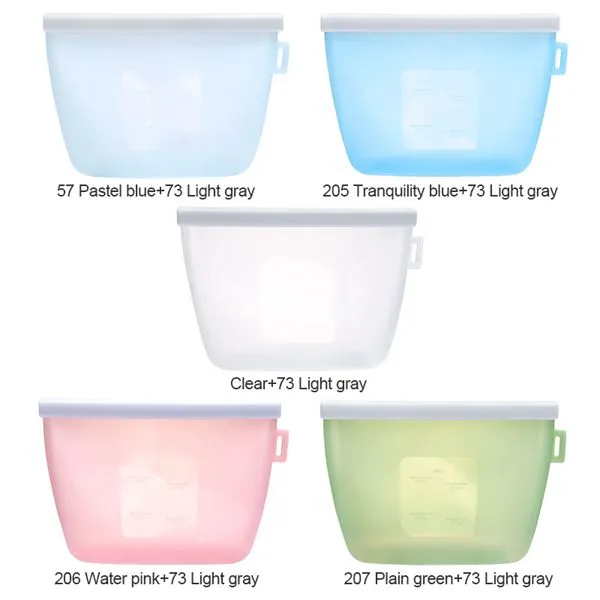
The Qosun Z6 Series is a flexible product. Clear, Pastel Blue, Plain Green, Tranquillity Blue, and Water Pink are among its colours. Five basic sizes are 240ml, 360ml, 500ml, 1000ml, and 1500ml. Brands may use pre-made designs to launch their items quickly on this basis. They can make further adjustments as order numbers climb. The ABS-HI121H plastic closure strip may be removed before microwave use, which is useful. Thus, the strip's leakproof function remains while stored.
Pricing Structure and Minimum Order Quantities
Cost analysis looks at the whole cost, not just per unit. With volume-based pricing, greater contracts mean lower prices, but purchasers must measure this against storage costs and cash flow. Being upfront with price quotes prevents unpleasant surprises. The bids should include ingredient costs, specific mould tooling expenses, packaging charges, and shipping costs.
Minimum order requirements make market testing difficult. Some brands spend a lot on Reusable Silicone Food Bags before they know they will sell. This raises financial risk. Smart sellers accept tiny test orders because they know a 500-unit sale might become a 10,000-unit order as companies expand.
Quality Control and Inspection Protocols
If the quality of a product doesn't change, it won't get returned, get bad reviews, or hurt the brand's reputation. Strict inspection systems find problems with goods before they reach customers. These systems include quality checks on materials as they arrive, final tests before shipping, and quality checks during production. Suppliers should be clear about quality standards, such as the smallest number of flaws that are allowed, the range of measurements that are acceptable, and the ways that performance will be checked.
Companies can keep track of batches of silicone as they are being made with material tracking systems. This makes it easier to act quickly if there are quality issues. This feature is very helpful for brands that work with controlled businesses that need to keep a lot of paperwork in case they need to return a product. When suppliers are willing to give inspection reports and audit results from a third party, it shows that they care about quality, which is a good reason to charge more.
How to Choose the Right Silicone Food Bag Supplier for Your Business?
After the first few deals, a supplier's skills need to match up with a business's wants for the relationship to last. Businesses of all kinds, from online stores to well-known brands, need different traits from their sources to help them reach their goals and grow.
Defining Your Procurement Priorities
FBA purchasers seek fast returns and reasonable rates to maintain financial margins under Amazon's fee regime. Goods must be transported in ready-to-sell cartons with the correct markings and quality to reduce returns. Smaller orders allow you to test your products on several items without spending much. You may also resolve issues immediately before they damage seller data.
When huge businesses develop private label items, they emphasise quality and customisation to maintain their reputation. They seek manufacturers who can fulfil their specific needs, maintain colour consistency between manufacturing runs, and increase output as demand develops. When buying bespoke moulds, secure your IP and make sure no one else can create an identical model.
Evaluating Supplier Communication and Responsiveness
Communication quality generally predicts relationship happiness more than professional skills. Respondent providers give you detailed answers to technical questions, keep you informed about how your order is going, and address your concerns quickly, before they get worse. Buyers and international producers must communicate via clear email protocols and open instant messaging lines due to time zone differences, as a silicone kitchen tools OEM supplier understands.
Language skills assist in ensuring requirements are right and that individuals don't misunderstand each other, which might cause production errors. Account managers who speak English reduce language gaps that cause costly mistakes. Companies that teach customer service staff are more serious about doing business abroad, prioritising quality, safety, and reliability.
Assessing Long-Term Partnership Potential
Single-order transactions hinder both sides' development. Strategic partners that want each other to succeed collaborate to create new products, exchange market expertise, and improve operations. Sellers may assist consumers to stay competitive by notifying them about new fashions, materials, and designs when they treat customers as partners.
Being flexible when business challenges emerge shows a good partnership. Knowing which providers may adjust delivery dates, order quantities, or speed up crucial shipments demonstrates devotion beyond the contract. In a volatile economy, these relationships hold up better than monetary ones. They help firms prepare with peace of mind.
Best Practices for Using and Maintaining Reusable Silicone Food Bags in Bulk
Customer happiness and how often they buy a product are directly linked to how well it works. Teaching people how to use goods correctly makes them last longer and cuts down on returns and bad reviews that hurt a brand's reputation.
Temperature Guidelines and Safe Usage
Silicone doesn't alter when hot or cold, thus it's versatile. Users require instruction on using mixed designs with plastic pieces. The Z6 Series contains food-grade silicone bottoms that can withstand -40°C to 200°C and ABS plastic closure strips that can withstand -20°C to 90°C. Remove the plastic strips before microwave or hot water usage. Put them back on once the object cools.
Good Reusable Silicone Food Bags won't shatter in the freezer and keep flexible even in extreme temperatures. It's great for meal planners since they can make a lot and freeze it. It helps moms conserve breast milk and infant meals. Products with detailed instructions cost extra. This prevents misuse and displays their value.
Cleaning and Maintenance Protocols
Food-contact surfaces must be cleaned to last and kept clean. Silicone is smooth and pore-free, so germs don't grow on it like plastic, but you should wash it after each usage. Putting it in the machine simplifies cleaning for busy folks. Handwashing in hot water saves time and energy.
Luxury goods are removable. This simplifies cleaning because you can reach all the food trash. Wet things hanging from holes may naturally dry off, preventing mould growth. These design features distinguish well-designed items from simple ones. This establishes prestige and customer trust.
Sustainability and Cost Benefits for B2B Clients
Companies' sustainability initiatives are influencing all company purchases. Reusable Silicone Food Bags reduce waste and provide environmental advantages that fulfil ESG reporting criteria. Reusable Silicone Food Bags can replace hundreds of single-use plastic bags over time. Being eco-friendly and reducing waste will boost a company's image.
Even though it costs more than disposable options, it has a decent ROI. Food service enterprises with reusable systems see material prices drop within months. Environmental messaging attracts price-conscious shoppers who are prepared to spend extra. Business arguments outperform cost comparisons because of these two factors.
Conclusion
When looking for the best bulk supplier for Reusable Silicone Food Bags, you need to think about a lot of things, such as the safety of the materials, the production skills, the freedom to make changes, and the reliability of the relationship. Successful buying teams don't just compare prices; they also look at the total value provided, which includes things like consistency in quality, ease of contact, and the chance to work together for a long time. More and more people want eco-friendly options. Because of this, companies that make smart Reusable Silicone Food Bags are becoming important partners for brands that want to stand out and keep customers happy. By carefully comparing a supplier's skills to the needs of the business, procurement workers set the stage for growth that can be scaled up. While doing this, they keep the high standards that are important for success in the market and a good reputation for the business.
FAQ
Q1: Are reusable silicone food bags truly safe for food storage?
Quality Reusable Silicone Food Bags that can be used more than once and are made from FDA-approved food-grade silicone don't contain any BPA, phthalates, lead, or other risky chemicals. Chemicals that aren't good for food don't get into the material because it stays stable at all temperatures. People who want to buy food should look at the licenses and test results to make sure it meets the safety standards. Companies that have a good name make sure that their materials are easy to understand and that they have systems in place to keep track of silicone batches as they are made.
Q2: What is the typical lifespan of commercial-grade silicone food bags?
Professional-grade Reusable Silicone Food Bags can be used hundreds of times if they stay in good shape. In a standard work setting, they can last for two to five years. Things last a certain amount of time depending on how often they are used, cleaned, and shown off. Hand-washed Reusable Silicone Food Bags that are only used for dry goods last longer than Reusable Silicone Food Bags that are cleaned in a machine every day and go through daily freeze-thaw cycles. Even though they cost more at first, they are cheaper in the long run because they last longer than disposable choices.
Q3: How do minimum order quantities affect small businesses?
Limits on MOQ make it hard to test the market and keep track of your cash flow. A minimum order of 5,000 to 10,000 units makes it hard for new brands to try their product ideas. Progressive manufacturers that let brands get into the market without taking too many chances let them order samples of 500 to 1,000 units. This way, brands can find out what people think before they go big. People who are open with MOQ show that they know how businesses grow and are ready to help clients at different stages of growth.
Partner with Qosun for Your Reusable Silicone Food Bag Supply Needs
Qosun is a good place for businesses to find a Reusable Silicone Food Bags manufacturer that has good products, low prices, and a lot of different order options. This is our Z6 Series. It comes in five sizes, is made of food-safe materials, has patterns that can be taken off and used for two different purposes, and can be changed in many ways, such as by adding a name or making a package that is unique. When it comes to businesses, we can work with them at any stage of growth, since our factories can handle both small test orders and large-scale market deals. You can get your goods to market faster with the help of our helpful communication team and quick development services. All of your orders will also meet the same high standards thanks to our strict quality control. You can email us at qosun@qosun.com to talk about your specific needs, get samples of our goods, or get full quotes that are made just for your business. We want to work with you for a long time so that we can help your business grow in the rising market for eco-friendly goods.
References
1. Peterson, J. & Martinez, R. (2023). "Sustainable Packaging Solutions: A Comprehensive Guide for B2B Procurement Professionals." Journal of Industrial Materials and Supply Chain Management, 45(3), 127-145.
2. Chen, L. (2024). "Food-Grade Silicone: Safety Standards and Quality Benchmarks in Global Manufacturing." International Journal of Polymer Safety, 18(2), 89-103.
3. Williams, K. & Thompson, S. (2023). "E-commerce Product Selection Strategies for Amazon FBA Sellers: Material Safety and Sustainability Trends." Digital Retail Quarterly, 12(4), 56-72.
4. Anderson, M. (2024). "Wholesale Supplier Evaluation Frameworks for Consumer Product Brands." Supply Chain Excellence Review, 31(1), 34-51.
5. Rodriguez, A. & Kumar, P. (2023). "Temperature Resistance and Durability Testing of Reusable Food Storage Solutions." Materials Performance and Testing Journal, 27(6), 201-218.
6. Blackwell, E. (2024). "Corporate Sustainability Initiatives: ROI Analysis of Reusable versus Disposable Product Systems." Business Environmental Strategy Magazine, 19(3), 78-94.