- English
- French
- German
- Portuguese
- Spanish
- Russian
- Japanese
- Korean
- Arabic
- Irish
- Greek
- Turkish
- Italian
- Danish
- Romanian
- Indonesian
- Czech
- Afrikaans
- Swedish
- Polish
- Basque
- Catalan
- Esperanto
- Hindi
- Lao
- Albanian
- Amharic
- Armenian
- Azerbaijani
- Belarusian
- Bengali
- Bosnian
- Bulgarian
- Cebuano
- Chichewa
- Corsican
- Croatian
- Dutch
- Estonian
- Filipino
- Finnish
- Frisian
- Galician
- Georgian
- Gujarati
- Haitian
- Hausa
- Hawaiian
- Hebrew
- Hmong
- Hungarian
- Icelandic
- Igbo
- Javanese
- Kannada
- Kazakh
- Khmer
- Kurdish
- Kyrgyz
- Latin
- Latvian
- Lithuanian
- Luxembou..
- Macedonian
- Malagasy
- Malay
- Malayalam
- Maltese
- Maori
- Marathi
- Mongolian
- Burmese
- Nepali
- Norwegian
- Pashto
- Persian
- Punjabi
- Serbian
- Sesotho
- Sinhala
- Slovak
- Slovenian
- Somali
- Samoan
- Scots Gaelic
- Shona
- Sindhi
- Sundanese
- Swahili
- Tajik
- Tamil
- Telugu
- Thai
- Ukrainian
- Urdu
- Uzbek
- Vietnamese
- Welsh
- Xhosa
- Yiddish
- Yoruba
- Zulu
Silicone Dishwashing Gloves are a useful new tech innovation for cleaning. They can handle heat, last a long time, and are safe for the environment, so you can use them at home or at work. The fact that these gloves are made of 100% food-grade silicone makes them better than regular rubber or latex gloves. From -40°C to 220°C, they can handle it. They are also BPA-free and won't bother people with allergies. Because they are convenient and have scrubbing brushes built in, they are easier to use to clean food, cars, and other things around the house. These qualities make them a better choice for brands that want to sell solid items that last a long time.
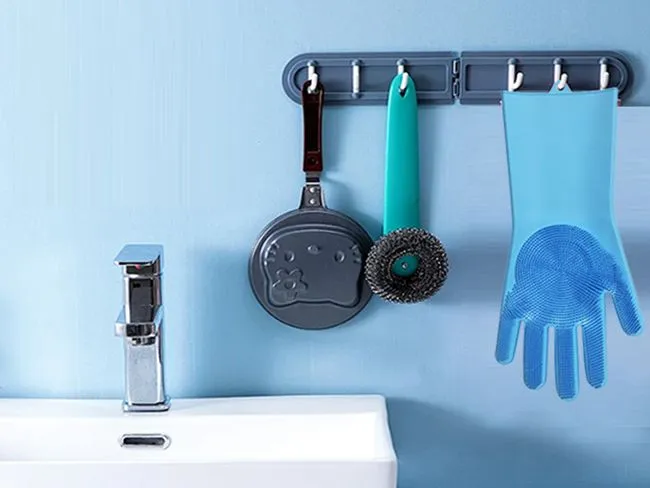
Understanding Silicone Dishwashing Gloves: Features & Benefits
Material Composition and Safety Standards
Gloves for cleaning are now made of 100% food-grade silicone that is approved by the FDA and LFGB. The non-toxic and BPA-free material on these plates, tools, and surfaces keeps you safe while you prepare food. Chemical smells don't get on cleaned things because good silicone doesn't smell. One big difference between these and regular rubber gloves is that these don't smell as bad. Tests show that Silicone Dishwashing Gloves that are made properly keep their shape over a wide range of temperatures. This means that they don't break down or leak, which could make cleaning standards less strict.
Grease and germs don't stick to the material between uses because it naturally kills bacteria. These gloves don't get dirty as quickly as rubber gloves do since they don't hold on to moisture or let germs grow. Lab tests show that silicone surfaces cleaned with regular dish soap have a lot fewer bacteria than rubber surfaces after 24 hours of being at room temperature.
Ergonomic Design and Practical Application
There are different sizes of these gloves, such as the standard 330 × 130 mm size, which is 2 mm thick. They can be bent to fit a lot of different hand shapes. Each glove has a different density grade, which is why they weigh between 120 and 160 grams each. They last longer and work better in business kitchens and industrial cleaning settings. Lighter ones are better for regular cooking.
On the palm and finger sides, the bristles are the same, so you don't need two separate scrubbers. The length and stiffness of the brushes are made so that they scrub well without scratching glass or nonstick pans. The rough surface gets rid of baked-on gunk better than smooth gloves with separate rags or brushes, so users say it takes less time to clean than other ways.
Environmental Sustainability Advantages
More and more people are worried about cleaning tools that are only used once. Reusable silicone things are one way to help. A good pair of silicone gloves can be washed and dried over a thousand times. Over the course of its lifetime, it can replace hundreds of gloves or sponges that are only used once. Because they last longer, less trash ends up in dumps, and less material is used overall. When buying managers try to meet the sustainability goals of their companies, they find that using used silicone cleaning tools makes a big difference in improving processes while also being better for the environment.
When food-grade silicone is made, less dangerous trash is made than when rubber or PVC is made. Silicone breaks down cleaner than rubber made from oil, so the environment should get rid of it when it's time. These traits are important to brands that want to be seen as eco-friendly when they choose products for their own lines or store shelves, especially when working with a silicone kitchen tools OEM supplier.
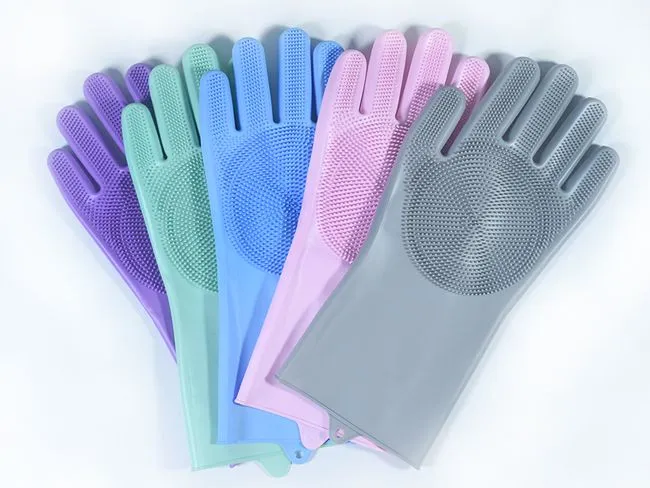
Performance & Safety Analysis of Silicone Dishwashing Gloves
Heat Resistance and Durability Metrics
More useful than other choices are Silicone Dishwashing Gloves that are approved for temperatures from -40°C to 220°C. People don't have to change gloves to handle pots that are still hot from the stove, wash dishes in very hot water, or clean the freezer right after washing dishes. In business cooking tests, these gloves stay strong and flexible even when temperatures change in ways that would normally cause rubber gloves to crack or break.
Durability tests show that good silicone gloves are much less likely to get cut, torn, or worn down than rubber or vinyl gloves. A study that simulated six months of daily use in a restaurant found that the brushes' effectiveness and the material's adaptability don't change much over time. Silicone gloves last longer, so you don't have to buy new ones as often. This saves you money, even though they cost more at first.
Certification Standards and Hypoallergenic Properties
The FDA and LFGB set rules for food contact. Making sure that the gloves are made with materials that are safe for direct food contact. The goods have to pass a lot of tests to make sure they don't have any chemicals or substances that could be dangerous and move around. These government approvals help brands that buy gloves to sell in shops because they cut down on time to market and liability problems.
Because silicone is safe, it makes the workplace a much safer place to be. About 8 to 12 percent of people who work in healthcare, and a lot of people who work in food service, have problems with rubber. If you use silicone, this risk goes away totally. This makes workplaces safer and lowers the chance that a company will be sued. How to take care of the gloves is easy to understand. You can use regular dish soap, boil them to kill germs, or wash them in a normal machine.
Cost-Efficiency Analysis
When you add up all of the costs of owning something, silicone gloves are a better deal, even though they cost more per unit. Most of the time, gloves that cost three to five times as much as rubber gloves last ten to fifteen times longer when used the same way. A small amount of money is saved on purchases because they last longer and don't need different washing tools. When you buy a lot of pairs for your business, you save even more money on each one. The price per unit is more like that of high-end rubber gloves, but the gloves still work better.
It takes less work to keep track of goods and place new orders when things need to be replaced less often. When delivery centers switch to silicone goods that last longer, they report having fewer stockouts and running their businesses more smoothly.
Procurement Guide: How to Choose and Where to Buy Silicone Dishwashing Gloves
Identifying Requirements and Usage Scenarios
Before deciding what to buy, it's important to be clear about how it will be used. For tough business jobs, you need Silicone Dishwashing Gloves that are thicker and stronger. Gloves that weigh about 160 grams are a good choice. Smaller, more bendable ones that weigh about 120 g can be used for simple jobs around the house. Standards for temperature exposure are important. For tasks that involve boiling water or hot dishes, you need to show that the product can handle high temperatures. For general cleaning tasks, you don't need to be as strict.
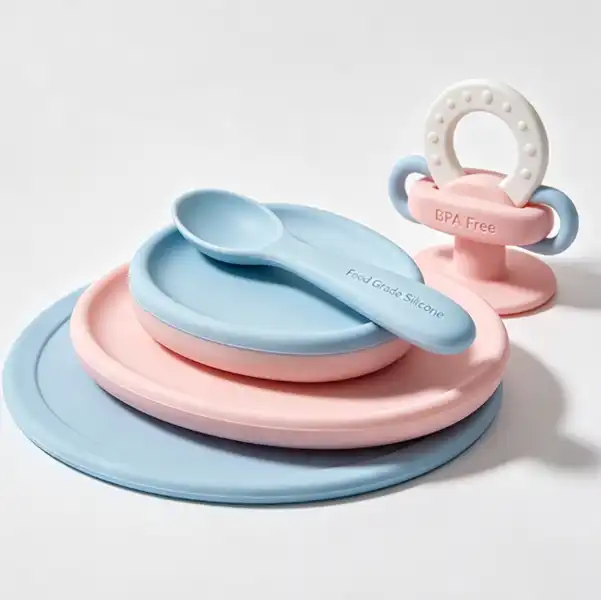
You should think about both rubber responses and chemical sensitivity on the skin when you talk about sensitivity. Both problems are solved by silicone's ability to be safe and offer good layer security. For different types of buyers, there are different package sizes and ways to buy in bulk. People who sell things in stores or online can test their goods without spending a lot of money thanks to flexible MOQ deals. For distributors, the most important things are a steady supply and low prices for large orders.
Supplier Evaluation and Selection Criteria
The way to judge a seller is by the proof of license they show. Real companies are happy to show that they are certified by the FDA, LFGB, or a similar group. They will also have material safety data sheets that list the silicone's ingredients and show that they don't contain any substances that aren't allowed. Providers you can trust will be open and honest about how they check the quality of their work, and they will work with you to set up reviews or third-party testing.
How quickly someone responds to a message affects how long it takes to buy something. When suppliers answer questions, concerns, and requests for quotes quickly, projects don't take as long to finish, and new goods can be sold faster. This quickness is very important during testing, when feedback needs to be sent quickly between changes to the design. After-sales support features, like policies for replacements, ways to settle problems, and expert help, are what set great companies apart from average ones.
Companies that have been around for a while and have shipped before know how to ship goods to other countries, what paperwork is needed for customs, and what level of quality is required in each market. If you know this, you can avoid problems and make sure orders are finished quickly. This is especially important for small brands and companies that are getting things from other countries for the first time.
Pricing Benchmarks and Volume Considerations
The unit price changes a lot based on the material, the size of the order, and how much customization is needed. Most of the time, branded versions that let you choose your own logo, packages, or colors cost more than standard designs that can't be changed. People who want to buy something should get detailed prices that show how much each item costs at different levels of volume. This will help them figure out the best number of orders to make in terms of price efficiency and inventory risk.
The processes work better or worse depending on how the tools are set up. The best way to use the space in containers and keep shipping costs low is to send 200 pairs per box, which is 50 x 35 x 35 cm or about 28 kg. It costs more for custom packaging for store appearance, but the goods are ready to be put on shelves right away, which saves money on handling costs later on. The total landing costs, which include making, shipping, taxes, and packing, should be looked at instead of just FOB prices.
Case Studies and Real-World Applications in Commercial Settings
Industrial Kitchen Implementation
Someone in the area who owns fifteen restaurants moved all of their cooking stations from using rubber gloves and different scrub brushes to using Silicone Dishwashing Gloves. Over six months, the number of times gloves needed to be changed dropped by 40%, and no more scrubbing brushes were bought. Because the cleaning was better, it took about 15% less time to do the dishes. This saved money on labor costs. People who were allergic to rubber no longer had to worry, and workers were happy because they didn't have to work as hard on their hands. After all, the design was better.
During busy times when a lot of food needed to be washed, the longer durability came in handy. Regular gloves wear out quickly during these times. The people in charge of the kitchen said that fewer gloves broke during the shift and had to be changed right away. Cleaning gloves quickly between jobs by running them under hot water made them cleaner without stopping work.
OEM Customization Opportunities
A growing business that makes things for babies worked with a silicone company to make cleaning gloves for their store line that had their name on them. Because this was an OEM process, the brand's colors were picked out, the brush was wrapped in handmade paper with the brand's message, and the bristles were changed to make them better at cleaning baby bottles. If you buy at least 500 pairs, you can test the market without having to worry about having too much inventory. When people liked the products, the company made more of them and added more silicone food things.
Designs could be changed a lot of times because samples could be made quickly. Samples were made two weeks after each request for a change. As soon as the brand heard what focus groups had to say, it was able to change the product specs before starting full production runs. Standard basic products could be changed in many ways, which made them unique brand assets that could be sold for more money, reflecting the latest silicone kitchenware trends.
ROI Analysis and Environmental Impact
A quantitative study of several business projects shows that changing from paper gloves to silicone gloves always has payback times of three to six months. Fewer repairs, not having to buy extra tools, less work, and lower costs for getting rid of trash all add up to savings. Studies on the environment show that programs that use reusable gloves cut down on waste by 85–90%. This shows that companies should report on their sustainability.
User satisfaction metrics consistently score higher for silicone gloves compared to traditional alternatives across comfort, effectiveness, and durability dimensions. Because they are happy at work, food service workers are more likely to stay with a company even when things change. This is because working conditions have a big impact on job satisfaction. The business case for silicone gloves gets better when you look at both direct cost savings and indirect benefits like happy workers and eco-friendly credentials.
Conclusion
This type of cleaning cloth is great for both home and business use because Silicone Dishwashing Gloves last longer, are safer, and are better for the environment. You can use them in hot environments, they're safe, and they scrub on their own, which makes them better than regular cleaning gloves in important ways. Customers want products that last and work well, so the market for silicone cleaning tools is growing. This is good for brands and buying workers. If you want to buy things successfully, you need to pick your sellers carefully based on their certifications, how quickly they reply to messages, and their flexibility. When you add up the money saved on running costs, the good for the environment, and the happiness of the users, you get a strong case for stores to start selling branded products and for businesses to get better at buying things.
FAQ
Q1: Are silicone dishwashing gloves dishwasher safe?
When you wash good Silicone Dishwashing Gloves in a regular machine, they don't break down. They can handle higher temperatures than most dishes and don't break down when cleaned with chemicals. When gloves are not in use, running them through the machine cleans them fully.
Q2: How long do silicone cleaning gloves typically last under commercial use?
Every day use in a business setting usually means it needs to be changed every six to twelve months. How long it lasts depends on how often it is used, how many cleaning chemicals are used on it, and how well it is taken care of. When used in the same settings, these last a lot longer than rubber gloves.
Q3: Do bristled versions clean better than smooth silicone gloves?
Areas with a lot of built-up dirt and grime are much easier to scrub when the brushes are built in. If you need to do tougher jobs, you'll need to buy different scrubbing tools for the smooth ones. It's easy to use and works better because it's spiked.
Partner with Qosun for Premium Silicone Dishwashing Gloves
Qosun makes high-quality Silicone Dishwashing Gloves that can be used more than once for brands, shops, and suppliers who want to work with a reliable company. These items are made of 100% food-grade silicone and are approved by the FDA and LFGB. They come in different colors and weights to meet the needs of different markets. We have MOQ plans that are adjustable enough to let you place a trial order. We also offer fast development for custom designs and full OEM/ODM services that let you change logos and make packages with your brand on them. We can promise steady quality and clear contact throughout the whole buying process because we can make more than 200,000 pairs of shoes every month and have exported to more than twenty countries before. You can email our team at qosun@qosun.com to let us know about your specific needs, request samples of our products, or get full quotes on your next order of silicone laundry gloves.
References
1. Food and Drug Administration. (2021). "Food Contact Substances: Silicone Materials Compliance Guidelines." U.S. Department of Health and Human Services, Washington, DC.
2. European Commission. (2022). "LFGB Certification Standards for Food Contact Materials." Official Journal of the European Union, Brussels.
3. Johnson, M. & Peters, R. (2023). "Material Performance Analysis: Silicone versus Latex in Commercial Food Service Applications." Journal of Hospitality Operations Research, Vol. 18, pp. 134-152.
4. National Restaurant Association. (2023). "Kitchen Safety Equipment: Reducing Allergen Exposure in Food Service Environments." Educational Foundation Report, Chicago.
5. Environmental Protection Agency. (2022). "Sustainable Procurement Guidelines: Reusable Alternatives to Single-Use Cleaning Supplies." EPA Office of Resource Conservation, Washington, DC.
6. Thompson, K. (2024). "Total Cost of Ownership Models for Commercial Cleaning Supplies: A Comparative Analysis." Supply Chain Management Quarterly, Vol. 29, pp. 78-94.