- English
- French
- German
- Portuguese
- Spanish
- Russian
- Japanese
- Korean
- Arabic
- Irish
- Greek
- Turkish
- Italian
- Danish
- Romanian
- Indonesian
- Czech
- Afrikaans
- Swedish
- Polish
- Basque
- Catalan
- Esperanto
- Hindi
- Lao
- Albanian
- Amharic
- Armenian
- Azerbaijani
- Belarusian
- Bengali
- Bosnian
- Bulgarian
- Cebuano
- Chichewa
- Corsican
- Croatian
- Dutch
- Estonian
- Filipino
- Finnish
- Frisian
- Galician
- Georgian
- Gujarati
- Haitian
- Hausa
- Hawaiian
- Hebrew
- Hmong
- Hungarian
- Icelandic
- Igbo
- Javanese
- Kannada
- Kazakh
- Khmer
- Kurdish
- Kyrgyz
- Latin
- Latvian
- Lithuanian
- Luxembou..
- Macedonian
- Malagasy
- Malay
- Malayalam
- Maltese
- Maori
- Marathi
- Mongolian
- Burmese
- Nepali
- Norwegian
- Pashto
- Persian
- Punjabi
- Serbian
- Sesotho
- Sinhala
- Slovak
- Slovenian
- Somali
- Samoan
- Scots Gaelic
- Shona
- Sindhi
- Sundanese
- Swahili
- Tajik
- Tamil
- Telugu
- Thai
- Ukrainian
- Urdu
- Uzbek
- Vietnamese
- Welsh
- Xhosa
- Yiddish
- Yoruba
- Zulu
Finding the right partner to make silicone lunchware for your brand can completely change the products you sell overnight. Custom Silicone Bento Boxes that meet international safety standards and give modern brands the design freedom they need are what we do best at Qosun. Since 2017, our factory has been making new silicone products for customers in North America, Europe, and other places. These customers are looking for trusted production partners with flexible minimum order amounts and the ability to make prototypes quickly. Working with an experienced maker will make sure that your Silicone Bento Box meets both government standards and customer expectations, whether you're introducing a new line of eco-friendly products or adding to the ones you already have.
Understanding Silicone Bento Boxes and Their Market Potential
As people move toward eco-friendly, reusable food containers, Silicone Bento Boxes have become necessary items for health-conscious customers and brands that care about the environment. These flexible lunchbox options combine classic compartmentalised design ideas with new material science, making products that meet modern worries about chemical leaching, single-use plastics, and making it easier to make meals.
Material Composition and Safety Standards
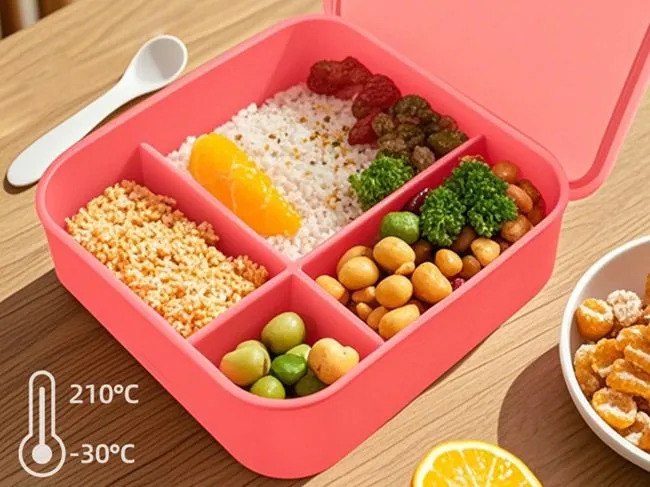
Our bento boxes are made from FDA- and LFGB-approved 100% food-grade silicone. By using medical-grade material, the structure is BPA-free, eliminating the hormone-disrupting toxins found in normal plastic bottles. The material is sturdy at -40°C to 230°C, so you may freeze food and microwave it without damaging it.
Silicone's flexibility has uses beyond safety. Silicone containers are flexible but strong enough to safeguard their contents during shipping, unlike rigid containers that crack when pressured or heated. Since items survive longer, they need to be changed less often. It fosters green themes that appeal to eco-conscious customers.
Design Versatility and Market Differentiation
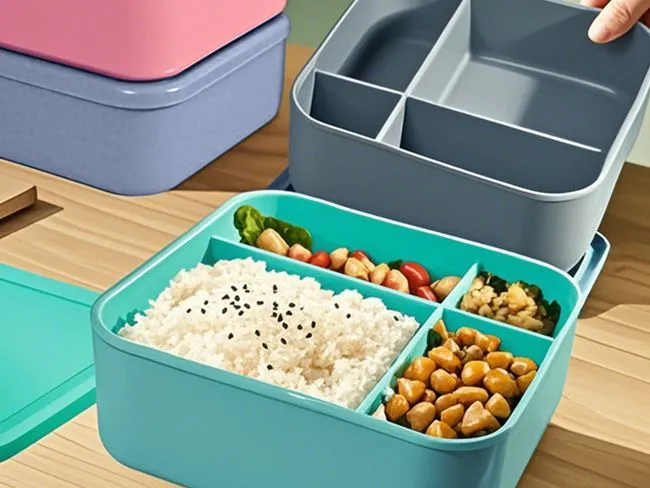
Our four-compartment structure illustrates how careful design may increase use and keep food fresh. The layout has one big compartment that holds about 780 ml, two middle sections that hold 342.5 ml each, and a smaller section that holds 125 ml. These portions accommodate 1590 ml. This setup works for main courses, side dishes, snacks, and sauces, and flavours don't transfer.
The leak-resistant construction and strong closure methods prevent leaks even when containers are turned upside down or carried in bags and backpacks. This technological detail solves a significant issue customers have with alternative lunchware options, reducing returns for customer-focused firms. Pink, light grey, light blue, and mint green are our current colours for this design. Our bespoke colour matching services may help companies with customised colour palettes.
Growing Market Demand Across Regions
Reusable food containers are selling well, according to market research. Single-use plastics are tougher to utilise in North America and Europe due to environmental laws. Silicone lunchware producers could target parents searching for safe lunch alternatives for their kids, workers preferring healthy meal prep, and outdoor enthusiasts wanting robust, portable containers.
When B2B customers enter this market, they may place their products at the crossroads of health, sustainability, and convenience, which consumers prioritise when buying. Brands may differentiate themselves with specific colour schemes, room layouts, and other characteristics that promote their market positioning while satisfying practical objectives thanks to OEM manufacture.
How to Choose the Right Silicone Bento Box OEM Manufacturer?
One of the most important choices you can make for your product's quality, launch date, and long-term success is choosing a manufacturing partner. The evaluation process needs to be done in a planned way, looking at many factors that affect both the instant results of the production and the long-term viability of the relationship, as silicone bento box OEM partners understand.
Certification Compliance and Material Verification
Legal food-contact items must demonstrate local safety compliance. FDA certification implies that items fulfil US food-contact surface requirements. They satisfy European market requirements with LFGB certification. REACH compliance proves a corporation meets European chemical safety laws. Brands that sell internationally need this.
Procurement managers should get silicone material specification documents with filler and colourant levels in addition to certifications. Premium food-grade silicone seldom contains fillers, which cut costs but may compromise safety or performance. We get materials using explicit ways and provide full confirmation of compliance. This eliminates concerns that might hinder market entrance or generate regulatory issues.
Production Capabilities and Quality Control Protocols
Well-established quality processes, not random tests, provide production reliability. Quality tests at our factory begin with raw material testing and continue through moulding, assembly, and final inspection. This rigorous approach reduces waste and ensures product uniformity and compliance by finding errors fast.
When calculating production capacity, consider the greatest throughput and adjustable batch size. We offer small-batch trial sales so businesses may gauge market response before stocking up. New firms and online sellers with modest inventory levels require this independence to manage cash flow.
MOQ Flexibility and Pricing Structure
New brands struggle to test new product concepts due to minimum purchase volumes. Traditional manufacturers create large MOQs to cover startup expenses, forcing customers to accept inventory risks that strain operational cash. We believe that partnerships function best when individuals can see outcomes, not when they must make promises. That's why our MOQ standards may accommodate varied business and testing stages.
Price transparency creates confidence and simplifies financial planning. Our detailed quotations include material, tool, manufacturing, and customisation costs. Customers may easily calculate total landing costs and set realistic selling prices that maintain the product's competitiveness while satisfying the margin needed to be in business.
Communication Efficiency and Lead Time Management
Launch dates get thrown off by production delays, and market chances are lost. This is especially true in fast-moving industries like e-commerce, where seasonal timing and following trends are key to success. Our team puts a high value on quick communication. Usually, we reply to questions within 24 hours with useful information instead of computerised responses that make real interaction take longer.
Managing lead time starts with making accurate time estimates that take into account the level of customisation, the need for tools, and the production schedule. We give clients regular updates based on set goals during the manufacturing process. This way, they can see how things are going and plan things like marketing campaigns and sales with trust that the product will arrive on time.
Customisation and Design Solutions Offered by Silicone Bento Box Manufacturers
Customising a product turns mass-produced goods into unique items that help a company's place in the market and help customers recognise it. We offer OEM and ODM services that can be used for a wide range of customisation needs, from small naming changes to major design changes that make each product unique.
Branding Integration and Visual Identity
Most product customisation requests involve logos. This enables brands to manage the product and standardise its appearance. We may imprint using numerous processes depending on design difficulties and budget. Debossed logos are a gentle technique to brand anything that won't fade after many uses and cleanings.
To suit your brand, we may modify colours outside our range. Pantone matching services provide colour accuracy and brand compliance. This unifies your consumer interactions visually. Brands that offer many distinct items benefit from colour homogeneity since it makes them easier to recognise.
Functional Design Modifications
Changes to compartment design are made for specific use cases or quantity control. Some clients desire larger main sections for salads, while others demand smaller pockets for snacks or vitamins. Before creating production tools, our design team collaborates with customers to verify concepts, develop technical drawings, and build prototypes, offering Silicone Customization Services throughout the process.
Different lid designs affect functionality and user satisfaction. Standard compression-fit lids seal most of the time, but snap-lock features make them safer for hectic travel. Adding integrated utensil storage is another common improvement, especially for school-age or outdoor recreational items, where taking separate utensils is difficult.
Packaging Customisation for Market Positioning
Packaging influences customers' purchases and conveys brand values before they touch the goods. As usual, we package each product individually. Choose from custom-branded boxes, sleeve packaging, or eco-friendly options that reflect our environmental perspective. Window packaging allows purchasers to view the product's colours and quality, making them less likely to hesitate to buy something hidden.
We discuss your needs, determine if the design is technically feasible, and provide ideas based on prior projects in a design meeting. A prototype is authorised after the original design agreement. Before creating the decision, you may view real models and request adjustments. Through the above control mechanisms, scalable manufacturing maintains quality. Ongoing support handles product line changes.
Comparing Silicone Bento Boxes with Alternative Materials to Support Procurement Decisions
Material choice has a big effect on how well a product works, how safe it is, how it affects the world, and how much it costs. Knowing the pros and cons of each choice helps you make decisions that are in line with your brand's ideals and the expectations of your target market.
Silicone Versus Plastic Containers
Because they were affordable and portable, plastic food containers dominated the market for decades. As individuals learn about chemical leaks, especially when materials are repeatedly heated, they choose safer materials. BPA-free plastics solve certain concerns, but they employ chemicals that we don't know how they'll harm our health.
Silicone's chemical safety prevents it from entering food at normal temperatures, eliminating these concerns. The material doesn't degrade in microwaves or dishwashers, ensuring food safety throughout longer product lifespans. Brands targeting health-conscious consumers often justify the higher material cost per unit due to their extended lifespan and perceived value.
Performance Comparison with Stainless Steel
People who appreciate natural materials and safety choose stainless steel containers since they endure and don't react with chemicals. The hard construction protects the contents during shipping, yet doesn't collapse like silicone when the cases are empty, saving space. Weight disparities matter when transporting kids or heavy items daily.
Different materials maintain temperatures differently. Handle hot things and substances carefully because stainless steel transfers heat fast. Silicone conducts less heat than other materials, keeping the interior warm and the exterior cold. This makes the product safer, especially for youngsters. Our Silicone Bento Boxes' leak-resistant seal rivals most similar-priced stainless steel choices.
Environmental Impact Considerations
Silicone has complicated trade-offs in life-cycle analysis compared to other materials. Silicone requires more energy than plastic but less than glass or stainless steel. Durability affects the globe broadly. Long-lasting products replace hundreds of single-use cases, regardless of material.
End-of-life dumping is another thing to think about. While there aren't as many recycling facilities for silicone as there are for plastic, glass, or metal, the inert nature of the material means it doesn't do as much damage to the environment in dumps as plastic does, which breaks down into tiny bits and may release additives. Some companies will recycle used silicone goods, and we expect that more companies will be able to do this as the market for silicone products grows.
Best Practices for Using and Maintaining Silicone Bento Boxes
How well you use and take care of a product can affect how long it lasts and how happy the user is with it. These things are important for B2B clients to know so that they can use them to create customer education tools, solve common problems, and set reasonable performance standards.
Suitable Food Types and Preparation Methods
Our Silicone Bento Boxes can hold almost any kind of popular food, so you can make a wide range of meals. When containers are properly covered, hot foods stay hot for several hours, which makes them useful for packed lunches that are eaten several hours after they were made. Acidic foods, like citrus fruits or tomato-based meals, don't affect the chemical stability of silicone. This is different from reactive metals, which can give food metallic tastes.
For foods that contain liquid, it's important to pay attention to the filling level and the closing. While our leak-resistant design keeps spills from happening during regular handling, overfilling makes the seal less effective and raises the risk of leakage during shipping. Leaving about one centimetre of room below the lid lets the seal work right and allows for the volume to expand when liquids heat up or freeze.
Cleaning and Hygiene Maintenance
The fact that it can go in the dishwasher makes cleaning easier and encourages good health. Putting containers on the top rack keeps them away from the hot elements and makes sure they get a good cleaning. Because the silicone surface isn't porous, germs can't grow on it like they can on scratched plastic, which keeps food safe even after multiple uses.
Pigmented foods like curry and tomato sauce can leave stains on clothes, but this is more of a cosmetic issue than a real health risk. Soaking damaged containers in a baking soda solution overnight usually brings back their original look without using strong chemicals that could damage the seals. Some scented foods can cause smells to stick around, but this can be fixed by treating them with baking soda or putting them in the sun for a few hours.
Temperature Tolerance and Safety Guidelines
Direct microwave reheating is possible if the food is resistant to heat up to 230°C. However, taking off the lids before heating stops pressure building and makes sure the food heats evenly. Freezer storage down to -40°C lets you plan meals ahead of time by making multiple servings and freezing them. During busy weeks, you can thaw and reheat them as needed. This temperature range makes the product more valuable because it lets containers be used for a variety of tasks instead of just one.
A common misunderstanding is that silicone goods can hold germs or release chemicals when heated over and over again. Researchers have found over and over that food-grade silicone keeps its safety and cleanliness properties for a long time after it has been used. No matter what the material is, keeping it clean between uses is important for cleanliness, and our FDA-compliant silicone mixture protects against chemical migration issues that can happen with other materials.
Conclusion
Choosing the right Silicone Bento Box maker affects the quality of the product, how well it does in the market, and how long the business will last. Material safety, the ability to customise, the flexibility of production, and the speed with which contact is responded to are some of the most important factors that set great partners apart from adequate providers. Our way of making things puts these factors first while keeping costs low enough to support profitable business models for names in a range of market positions. More and more people want eco-friendly and safe food containers. This opens up big possibilities for brands that make well-thought-out goods and work with dependable manufacturers.
FAQ
Q1: Are silicone bento boxes completely BPA-free and safe for microwave use?
Our Silicone Bento Boxes are made from 100% food-grade silicone that meets FDA safety standards and doesn't contain any BPA or related chemicals. When heated in a microwave up to 230°C, the material stays solid, so chemicals don't get into the food. We suggest taking off the lids before putting the food in the microwave so that the steam can escape and the food cooks evenly.
Q2: What customisation options are available for OEM orders?
We offer full customisation, which includes adding logos by debossing or printing, matching colours exactly to Pantone references, changing the layout of compartments, and creating labelled packing solutions. Our design team works with clients to make sure that ideas are practical and that prototypes are built before making promises to make production tools. This way, we can be sure that the finished products meet all requirements and standards for performance.
Q3: How can I verify the silicone material quality before placing orders?
Ask for material specification sheets that list the amounts of silicone and filler used, as well as copies of FDA, LFGB, and REACH licenses that show the product meets regional safety standards. Physical samples let you directly check how flexible the material is, how well it seals, and how well it was built. Companies with a good reputation provide clear paperwork and welcome questions that show they want to buy.
Partner with Qosun for Your Custom Silicone Bento Box Manufacturing Needs
Qosun offers complete Silicone Bento Box production options that are made to fit the needs of brands, startups, and online sellers in North America and beyond. As a Silicone Bento Box provider that has been around since 2017 and specialises in baby goods, pet supplies, and kitchen tools, we offer flexible small-batch production, fast prototyping, and cost-effective price structures that help businesses grow at all stages. Our OEM and ODM services make it easier to make products from the idea stage to delivery. Tough quality controls and quick communication help keep projects on track. Email our team at qosun@qosun.com to talk about your personalised lunchware needs and get a quote that takes into account your exact number, customisation, and time frame requirements.
References
1. Brown, M. & Patterson, K. (2022). Food Contact Materials: Safety Assessment and Regulatory Compliance. International Food Safety Publishing.
2. Chen, L. (2021). "Comparative Life Cycle Assessment of Reusable Food Container Materials." Journal of Sustainable Product Design, 15(3), 287-304.
3. European Food Safety Authority. (2023). Guidelines for Food Contact Silicone Products. EFSA Technical Report Series.
4. Harrison, J. & Thompson, R. (2023). Material Selection in Consumer Product Development. Manufacturing Excellence Press.
5. Roberts, S. (2022). "Market Analysis: Growth Trends in Reusable Food Storage Products." Consumer Products Quarterly, 28(2), 45-62.
6. United States Food and Drug Administration. (2023). Food Contact Substances: Silicone Polymers Regulatory Framework. FDA Compliance Guidelines.