- English
- French
- German
- Portuguese
- Spanish
- Russian
- Japanese
- Korean
- Arabic
- Irish
- Greek
- Turkish
- Italian
- Danish
- Romanian
- Indonesian
- Czech
- Afrikaans
- Swedish
- Polish
- Basque
- Catalan
- Esperanto
- Hindi
- Lao
- Albanian
- Amharic
- Armenian
- Azerbaijani
- Belarusian
- Bengali
- Bosnian
- Bulgarian
- Cebuano
- Chichewa
- Corsican
- Croatian
- Dutch
- Estonian
- Filipino
- Finnish
- Frisian
- Galician
- Georgian
- Gujarati
- Haitian
- Hausa
- Hawaiian
- Hebrew
- Hmong
- Hungarian
- Icelandic
- Igbo
- Javanese
- Kannada
- Kazakh
- Khmer
- Kurdish
- Kyrgyz
- Latin
- Latvian
- Lithuanian
- Luxembou..
- Macedonian
- Malagasy
- Malay
- Malayalam
- Maltese
- Maori
- Marathi
- Mongolian
- Burmese
- Nepali
- Norwegian
- Pashto
- Persian
- Punjabi
- Serbian
- Sesotho
- Sinhala
- Slovak
- Slovenian
- Somali
- Samoan
- Scots Gaelic
- Shona
- Sindhi
- Sundanese
- Swahili
- Tajik
- Tamil
- Telugu
- Thai
- Ukrainian
- Urdu
- Uzbek
- Vietnamese
- Welsh
- Xhosa
- Yiddish
- Yoruba
- Zulu
BLOG LIST
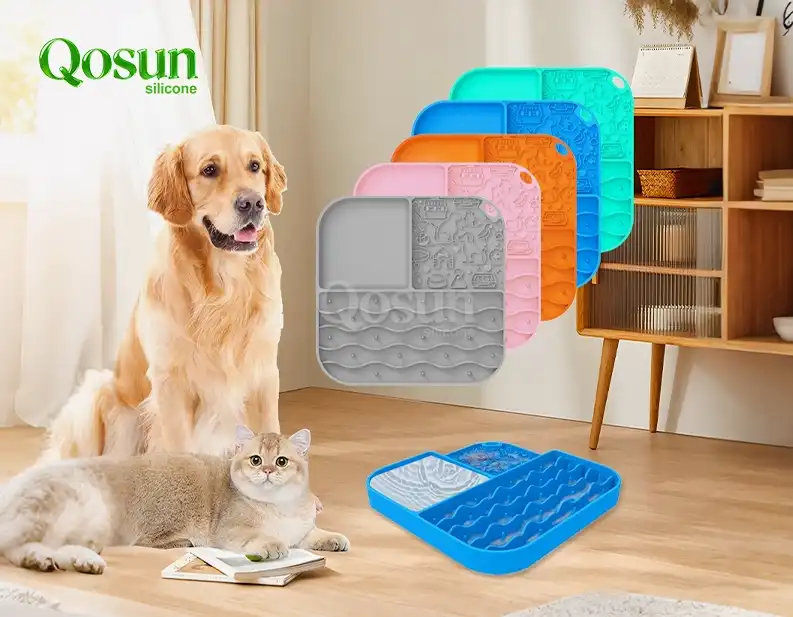
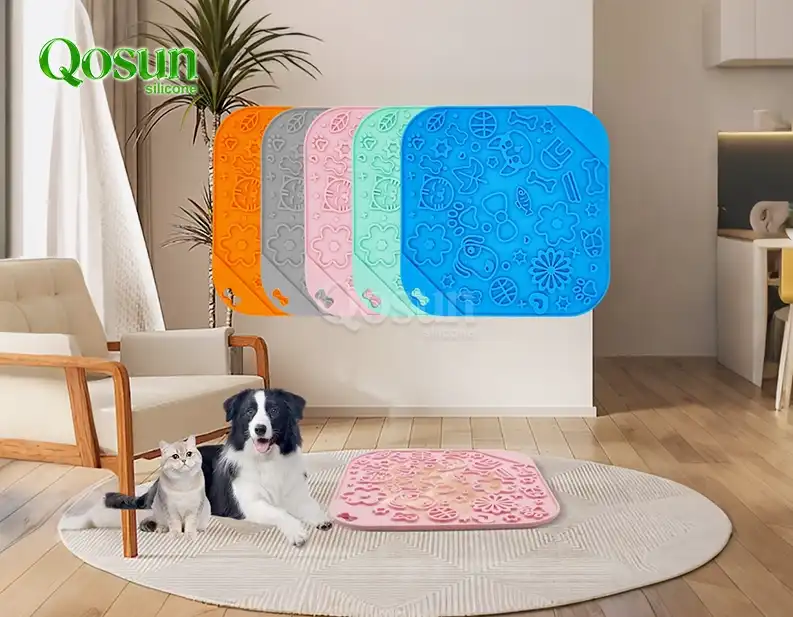
A food-grade silicone pet lick pad is a unique enrichment tool for dogs and cats that can be used for teaching, eating, and relieving stress. These pads are made of 100% food-safe, BPA-free silicone and have textured surfaces that are meant to slow down eating, support healthy digestion, and provide relaxing sensory stimulation while doing stressful things like cleaning or brushing. These flexible goods are great for bulk buyers, wholesalers, and pet brands looking for reliable supply partners because they can be customized to fit your needs and come at low wholesale prices that make them easy to use for both small-scale operations and full-scale launches.
Introduction
In the past few years, the pet care business has changed a lot because pet owners are putting more emphasis on mental exercise and behavioral health for their animals. In this changing environment, silicone pet lick pads have come up as useful options that meet multiple needs at the same time. These items are more useful than just bowls or toys because they help with both controlling meals and dealing with stress.
Professionals in procurement know that material safety is the key to the success of any pet product on the market. Because it is non-toxic, doesn't melt at high temperatures, and lasts a very long time, food-grade silicone is better than regular plastic or rubber options. When you can buy in bulk and make your own patterns, brands can make their products stand out while still keeping their prices affordable. This guide talks about the useful things to think about, the pros and cons of each option, and the strategic buying information you need to make smart choices about where to get this growing type of product.
What Is a Food-Grade Silicone Pet Lick Pad and Why Does It Matter?
Core Functions and Design Principles
These special mats are made to hold spreadable foods like peanut butter, yogurt, or wet food. They have raised edges, grooves, and maze-like patterns. The shape encourages pets to lick for longer periods of time, which releases endorphins naturally and makes them feel calm during tasks that could be stressful. Unlike smooth food surfaces, the textured plans keep pets' minds active while controlling how fast they eat.
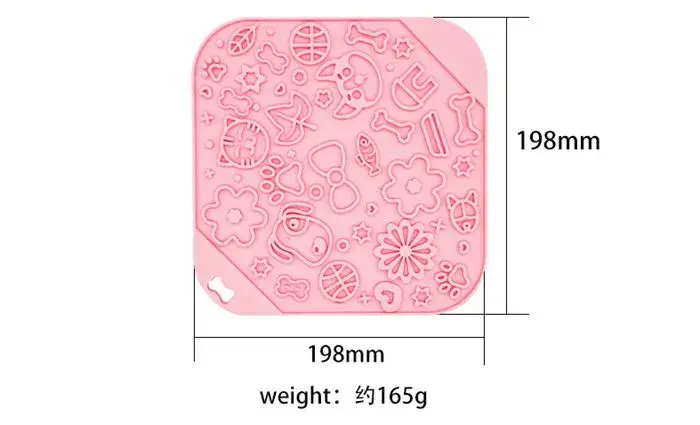
The makeup of the material has a direct effect on how well and safely the product works. Food-grade silicone stays stable at temperatures ranging from -40°F to 446°F. It doesn't break down like lower-quality plastics do when they come in contact with hot foods or washing cycles. This resistance to heat makes it last a long time and eliminates worries about dangerous chemicals escaping. The 198 × 198 × 6 mm products that weigh about 165 g are the most portable ones that don't sacrifice useful surface area for pets of all kinds.
Material Superiority in Practical Applications
Based on documented performance traits, pet owners and veterinary workers are choosing silicone over other materials more and more. The surface doesn't let germs grow, which is a hygiene issue that often comes up with porous rubber goods. The ability to avoid chewing means that replacements are needed less often, which is especially helpful for dogs or cats that are growing. If you pair the mats with strong suction backing systems, their flexibility lets them stick to floors, tub walls, or tables.
Buying choices are also affected by environmental factors. When compared to throwaway feeding devices, reusable silicone products (Silicone Pet Lick Pad) reduce waste, which is in line with the environmental goals that many pet brands talk about in their marketing. The material's ability to fight stains and smells keeps the product's appearance even after long periods of use. This helps customers have good experiences that lead to repeat purchases and good reviews.
Bulk Supply and Custom Patterns – Unlocking Procurement Value
Economic Benefits of Volume Purchasing
When distributors and retailers use wholesale price models, they make a lot more money than when they buy units individually. Bulk buying lowers the cost of sending each unit, makes it easier to keep track of inventory, and lets businesses react quickly to changes in demand without having to stop supplies. Minimum order numbers (MOQs) affect how much of an initial investment is needed. This makes flexible MOQ policies especially useful for new brands that want to see how the market reacts to them before committing to big production runs.
We can produce both small-batch test orders and large-volume contracts, so we can work with a wide range of business models, from Amazon FBA sellers who need to keep their inventory turns short to established distributors who need to keep stock for multiple retail channels. Lead times of 2 to 8 weeks, which include sampling periods, are in line with when most products are released, which lets marketing efforts be organized with when the inventory arrives.
Customization as Competitive Differentiation
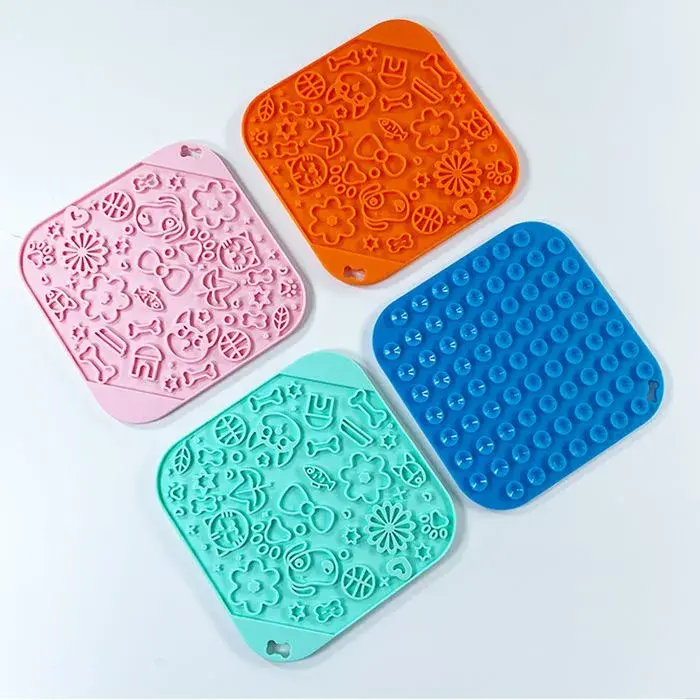
Pattern customization turns plain items into labeled items that reinforce a customer's visual character at all points of contact. Logo printing choices include patterns that are debossed, embossed, or color-contrasted, which are built in during production instead of being added after the fact. This method makes sure that the product will last for thousands of uses without the problems of fading or peeling that come with stickers or surface writing.
Shape variations beyond standard square formats include heart-shaped designs that work well for gift shops, round setups that make cleaning corners easier, and rectangular plans that include different texture zones for different types of food. Base colors in pink, light green, sky blue, gray, and orange, as well as unique color matching, let you switch out products for different seasons and appeal to specific groups of people. Customization of the packing allows for both retail-ready single units and large wholesale configurations, which cuts down on the work that distributors have to do to repackage items while keeping the brand's consistency.
Comparing Silicone Pet Lick Pads with Alternative Solutions
Material Performance Analysis
When procurement teams look at feeding enrichment tools, the main thing that sets them apart is the material makeup, which affects safety, lifespan, and customer happiness. Silicone is better at withstanding heat than most plastics, which can bend when heated foods or hot water are used to clean them. Even though rubber options are bendable, they often hold smells and lose their shape after being exposed to oils from common pet treats over and over again.
Testing procedures back up claims that the product is safe by getting FDA and LFGB compliance approvals. This gives the necessary proof for entering foreign markets. These certificates show that the materials meet standards for food-contact safety. This reduces the risk of liability and backs up marketing promises about product safety. The BPA-free structure gets rid of the risks of endocrine disruptors that come with some plastics. This is especially important for goods that are used every day in the mouth.
Functional Comparison with Traditional Feeding Tools
The goal of slow feeder bowls is the same as that of silicone pet lick pads (custom logo silicone cat lick pads): to control the rate of consumption. When it comes to placement, fixed bowl designs are limited, but mat forms can be attached to vertical surfaces and used while cleaning or grooming, when they are most useful as a distraction. The flat shape makes storage easier than with heavy bowls, which is good for city pet owners who are limited on space.
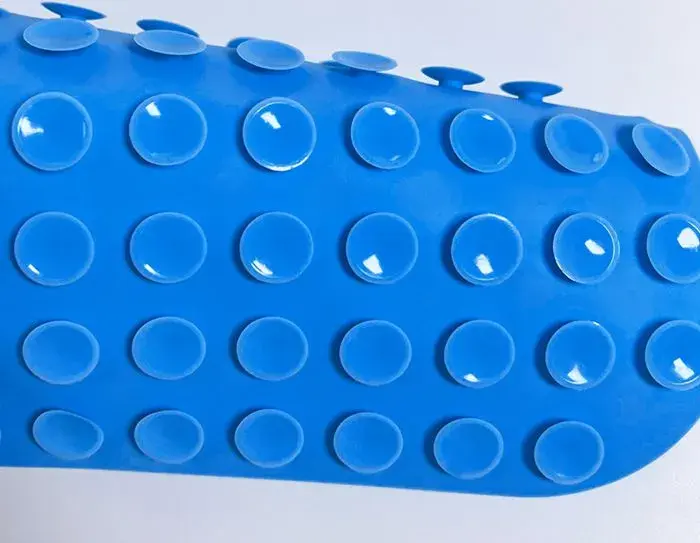
A cost study shows that silicone pet lick pads are a good deal, even though they might cost more per unit at first than basic plastic bowls. Longer replacement cycles help pay for initial costs, and multifunctional uses cut down on the need for different bathing aids, food dishes, and grooming distraction tools. When procurement pros compare supplier quotes and look at long-term category success, they take these combined benefits into account when figuring out the total cost of ownership.
How to Choose the Best Silicone Pet Lick Pad for Your Business Needs?
Quality Assessment Criteria
Material thickness is directly related to how long it lasts and how well it resists chewing. This means that parameters other than surface measures are very important for evaluation. Products made with high-quality rubber stay flexible even when pets move the mats around while they're being used. Different makers' suction cups work in very different ways, which can make customers unhappy when mats don't stay in place during busy licking sessions.
Evaluation of suppliers includes more than just product specs. It also includes guidelines for manufacturing and quality control. Before a package is approved, our plant follows a series of steps to make sure the material is pure, the measurements are correct, the suction strength is good, and the surface finish is consistent. These regular checks lower the number of defects that lead to returns, which protects the margins of the distributors and the names of the brands. Certifications showing that a product meets international safety standards are necessary for clearing customs and meeting store requirements.
Matching Products to Target Market Segments
When people choose pet entertainment goods, they value different sets of features more highly. Puppy-focused brands focus on softer textures and smaller sizes to accommodate growing jaw strength and smaller treat amounts. Large breed experts need strong buildings that can survive strong chewing forces and bigger surfaces that fit their bigger mouths.
Pattern designs that maximize engagement length through complex maze layouts that extend licking sessions beyond simple grooved surfaces are useful for anxiety-relief marketing roles. Applications that focus on grooming favor better suction performance, which allows for safe upright standing during bathing activities. By knowing the specific pain points of your target audience, you can choose products strategically and make sure that your inventory investments are in line with real demand patterns instead of general feature sets.
Value-Added Services Enhancing Procurement Relationships
A supplier's ability to provide supportive services is what sets transactional relationships apart from strategic partnerships. Rapid prototyping services shorten the time it takes to make a new product, so brands can try ideas on the market before committing to full production runs. Customized items with low minimum order amounts lower the financial risk for new brands looking for niche market possibilities.
Dropshipping plans get rid of the costs of distributor warehouse space while keeping goods (slow feeder silicone lick mats for bathing) available for online stores that handle multiple SKUs. Private label programs combine making products with helping with the design and packaging. This gives customers things that are ready to sell and makes launching a new brand easier. These adaptable engagement models work for a wide range of business types, from small starts that are just getting started to large companies that are adding new products to their line.
Conclusion
Silicone Pet Lick Pads are smart additions to pet care product lines that meet the growing demand from customers for useful stimulation tools that come with safety approvals and can be used in a variety of situations. Material benefits over plastic and rubber options create strong value propositions, and the ability to customize allows brands to stand out in crowded markets. Cost savings from bulk supply agreements help keep margins healthy across all modes of marketing, from online shopping to traditional stores. Businesses can take advantage of the growing knowledge about how to deal with pet fear and make feeding more fun by using buying strategies that balance the quality of the materials, the dependability of the suppliers, and the ability to make changes as needed. More market research shows that people are ready to pay more for high-quality pet health goods. Companies that start using quality-focused sourcing partnerships early on gain a competitive edge that is hard for new companies to copy.
FAQ
1. Are silicone lick pads safe for dogs with sensitive skin or allergies?
Premium food-grade silicone doesn't have any rubber, phthalates, or common allergens in it, so these items are safe for most pets, even those who are sensitive. The non-reactive material makeup keeps skin from getting irritated after long-term touch. People who have pets and are worried about certain allergies should talk to their vets. However, bad responses to pure silicone are still very rare in recorded cases.
2. How effectively do lick pads reduce separation anxiety?
When dogs lick, endorphins are released, which naturally calms them down. Even though lick pads are a good way to relax and take your mind off of things, they work best as part of a larger plan to deal with worry, not on their own. Individual temperament affects how well it works, but many owners say their dogs behave better when mats are a part of their habits for leaving, creating positive memories.
3. What are typical lead times for bulk customized orders?
After the design is approved, standard production times are between two and four weeks. For new custom patterns, sample development adds an extra five to seven days. Depending on current production plans and the level of customization, rush orders may be able to fit into faster timelines. Clear communication during the initial steps of a question helps align expectations with realistic delivery windows that take into account the time it takes to ship goods internationally.
Partner with a Trusted Silicone Pet Lick Pad Manufacturer
Qosun makes high-quality Silicone Pet Lick Pads that are safe for food, and they can do both OEM and ODM work for brands at all stages of their growth. Our tried-and-true production methods combine strict quality control with flexible minimum order numbers. This lets us do both small-scale tests and large-scale production without lowering the quality of the materials or the time it takes to deliver them. We've exported to more than 20 countries, so we know what it takes to follow international rules and coordinate the details that are needed for cross-border purchases to go smoothly. Contact qosun@qosun.com to get samples that show how we can customize, to talk about your unique pattern and branding needs, or to get full quotes that fit with your inventory planning processes. Our flexible team helps with development and offers technical advice that turns product ideas into solutions that are ready for the market. These solutions are backed by reliable supply chains and reasonable prices.
References
1. Anderson, K. (2022). Pet Enrichment Products: Market Analysis and Consumer Behavior Trends. Pet Industry Publications.
2. Chen, L., & Roberts, M. (2021). "Material Safety Standards in Pet Product Manufacturing." Journal of Applied Animal Welfare Science, 24(3), 287-301.
3. Global Pet Care Market Research Institute. (2023). Silicone Pet Accessories: Growth Projections and Regional Analysis.
4. Martinez, S. (2021). Veterinary Behavioral Medicine: Practical Applications of Enrichment Tools. Academic Veterinary Press.
5. Thompson, R., & Williams, J. (2023). "Comparative Durability Testing of Pet Feeding Accessories." Materials Science in Consumer Products, 15(2), 112-126.
6. United States Food and Drug Administration. (2022). Guidelines for Food-Contact Substances in Pet Products. FDA Consumer Safety Publications.
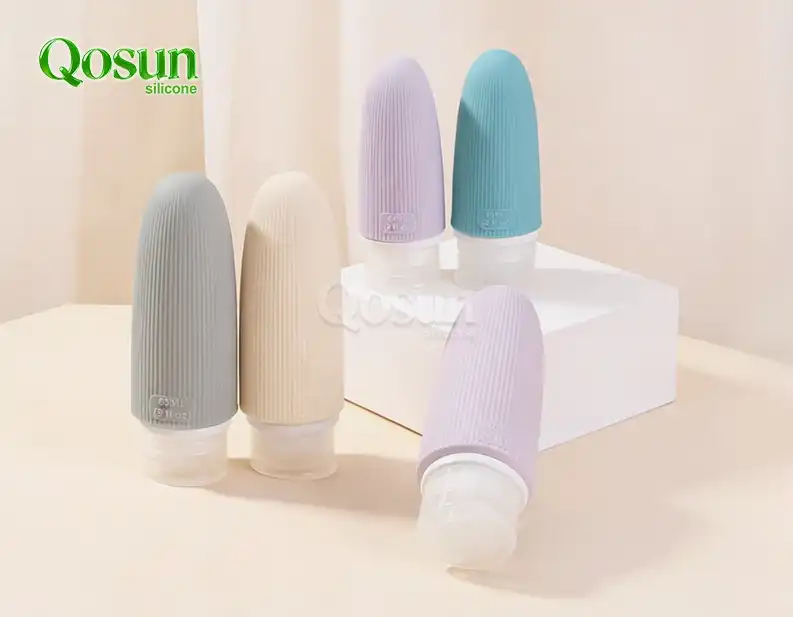
The revolutionary collapsible silicone travel bottles are the perfect answer for modern travel needs because they save a lot of room and last a long time. These new cases are the most efficient way for brands and sellers to find useful, eco-friendly ways to package their goods. The design of the Silicone Travel Bottle is the most flexible of any on the market. It lets travelers compress bottles when they're empty and expand them when they need to. This saves a lot of room in their bags while still meeting the high standards of reliability and safety that today's consumers expect.
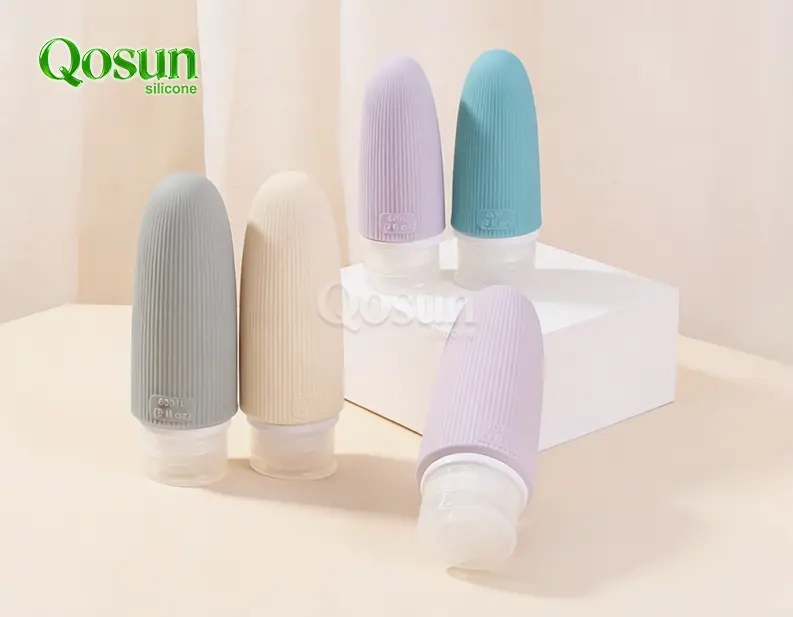
Understanding Collapsible Silicone Travel Bottles and Their Benefits
The way we carry liquids around has changed because of collapsible travel cases, which are much better than hard bottles in every way. These bottles are made from high-quality food-grade silicone, so they are very durable while still being flexible enough to save space.
Superior Material Construction and Safety Standards
Modern foldable bottles are made with improved food-grade silicone and polypropylene (PP) parts to make sure they are safe and work well. The materials have been certified as BPA-free and meet LFGB and other strict international standards. This means they can be used in personal care items, makeup, and even food. Unlike regular plastic bottles, silicone stays the same shape even when the temperature changes, and it doesn't break down after being used many times. The construction usually has three seals that keep leaks from happening while traveling. This is one of the main worries of procurement managers when they're choosing travel accessories for business programs or private sales. This leak-proof technology makes sure that the goods stay safe no matter how the package is handled or how high or low it is transported.
Space Optimization and Storage Efficiency
One of the best things about a foldable design is that it can save a lot of room. When these bottles are empty, they can be squished down to about 30–40% of their full size. This makes them much easier to store and better for managing supplies. This feature is especially helpful for businesses like hotels, workplace travel programs, and stores that need to store a lot of things. The TS-1 type and other trapezoidal-shaped bottles are better at packing because they take up less space. This geometric benefit makes better use of luggage space and office storage, which lowers shipping costs and helps dealers sell more of their stock.
Environmental Impact and Sustainability
Businesses are putting more emphasis on eco-friendly package options, and silicone bottles that can be collapsed are great for meeting these goals. Because silicone can be used more than once, it greatly lowers the amount of single-use plastic trash. Additionally, the material's durability ensures that products last longer. Quality silicone bottles, on the other hand, collapsible silicone travel bottles can be compressed hundreds of times without losing their shape, unlike throwaway travel cases. The eco-friendly features appeal to customers who care about the earth and help businesses with their recycling efforts. By adding these goods to their lines, businesses can show that they care about the earth and give customers useful products at the same time.
How to Use and Maintain Silicone Travel Bottles for Optimal Performance
The best performance and life from collapsible travel bottles come from following the right usage and care guidelines. This is especially important when buying in bulk, where consistency and reliability directly affect customer happiness.
Filling and Operation Best Practices
The wide 25mm mouth width makes it easy to fill without tubes or other special tools, which speeds up the preparation process for end users. The best way to fill a bottle is to slowly add liquid while gently squeezing it to keep air pockets from forming, which can mess up the way it collapses. Because they can be operated with one hand thanks to flexible flip-cap designs, they are easy to use even in tough situations like wet showers. This feature makes it easier for customers to use, which makes them happier and lowers the chance of spills or drops.
TSA Compliance and International Travel Regulations
Businesses that serve the travel market need to know how to comply with regulations. Collapsible bottles are still fully approved by the TSA as long as they are the right size. Standard sizes of 37ml, 60ml, and 89ml are well within the 100ml liquid limit for carry-on bags. The fact that the bottles can show that they are empty to security staff makes things easier for visitors. When compressed, the clearly empty state gets rid of any confusion during security checks. This could cut down on wait times and make the whole trip experience better.
Cleaning and Hygiene Maintenance
Following the right cleaning steps will keep things clean and make them last longer. The wide hole makes it easy to clean thoroughly, and the silicone material stops bacteria from growing and keeps smells in. Warm soapy water and a good rinse are enough for standard cleaning. Deep cleaning should be done every so often using commercially approved cleansing solutions. The parts that can be taken off make it easier to clean the whole bottle. Collapsible silicone travel bottles are especially important for companies that sell these bottles in places like hospitals and hotels, where cleanliness is very important. Setting up regular upkeep plans is a simple way to make sure that the quality of big inventories stays the same.
Key Features and Size Guide to Optimize Your Procurement Decisions
To make strategic choices about buying, you need to know a lot about the options you have and how they can be used. These days, collapsible bottles come in many shapes and sizes, which makes it easy to match them perfectly to different customer wants and market groups.
Size Specifications and Capacity Options
With three different capacity choices, the TS-1 model is a great example of efficient sizing:
- Large Capacity (89ml/3 fl oz): This size, which measures 52x39x123mm and weighs only 36g, can hold large amounts of liquid while still being portable. Perfect for shampoo, body wash, and other high-volume uses while traveling for a long time.
- Medium Capacity (60ml/2 fl oz): This choice is 48x39x99mm and weighs 29g, so it's a good mix between size and capacity. It can be used for cleansers, creams, or specialty treatments. The moderate size is good for regular visitors who want a lot of options without too much bulk.
- Compact Capacity (37ml/1.25 fl oz): At 44 by 39 by 70 mm and 21g, this is the smallest choice and is best for serums, essential oils, or highly concentrated products. This size is great for tourists who want to keep things simple and for high-end product uses.
Advanced Feature Integration
Modern foldable bottles have high-tech features that make them more useful and improve the user experience. The triple-seal design stops leaks through multiple barrier systems, and the unique combined bottle neck design makes sure it will last through many compression cycles. Color design choices like Peachblow, Cyan, Clear, and Fluorescent Yellow let you make your brand stand out and make things more personal for each user. Businesses can use the variety to make product lines that go together or use color coding to tell the difference between different types of products.
Packaging and Presentation Options
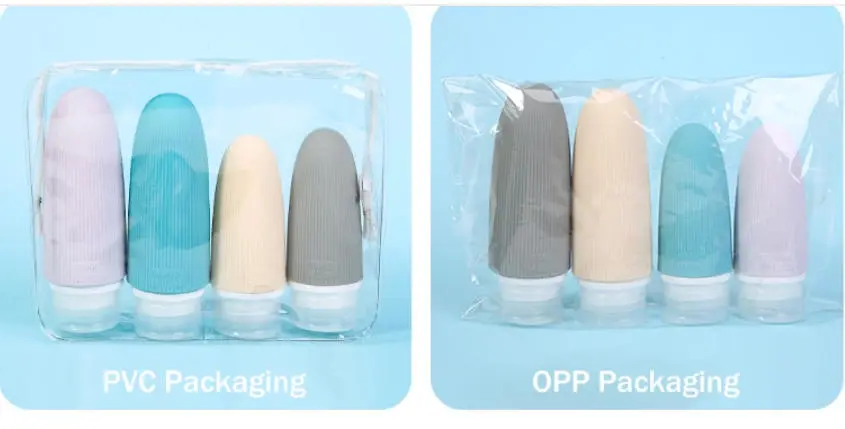
Different market positioning tactics can work with a variety of flexible package options. For bulk distribution, individual OPP packaging is a cost-effective choice. PVC and EVA travel bags, on the other hand, offer a more elegant look for store settings or workplace gifts. Businesses can change how they market based on their target groups and price points, thanks to the flexible packaging. This way, they can serve both value-oriented and premium market segments with the same core product.
Comparing Silicone Travel Bottles with Other Materials — Making the Smart Choice
The choice of material has a big effect on how well a product works, reusable silicone travel bottle how happy customers are, and the long-term success of a business. Knowing the benefits of silicone over other materials helps procurement pros make choices that are in line with their strategic goals.
Silicone Versus Traditional Plastic
When it comes to longevity, silicone travel bottles are better than regular plastic ones because they keep their shape through high temperatures and repeated stress cycles. Plastic bottles can break or crack over time, but silicone stays strong and flexible, so you don't have to buy as many replacements or deal with as many customer complaints. Silicone doesn't react with acidic or alkaline personal care products because it is chemically resistant. This keeps the purity of the product and keeps the bottle from breaking down. This stability is especially useful for high-end cosmetics, where the purity of the product affects how well it works and how happy the customer is.
Performance Comparison with Glass Alternatives
Glass travel bottles look great and are completely chemically neutral, but they don't have the useful benefits that are needed for travel. The difference in weight between glass and silicone has a big effect on luggage issues, since silicone choices are much lighter while still performing just as well. The chance that glass will break causes liability issues and customer problems, which is especially problematic for companies that serve the travel market. Silicone gets rid of this risk while still keeping the good looks and usefulness needed for high-end uses.
Cost-Efficiency Analysis for Bulk Procurement
When looking at the overall cost of ownership, silicone travel bottles are a better deal because they last longer and don't need to be replaced as often. The initial investment is usually paid back by lower customer service costs and higher levels of customer happiness. Silicone can be used more than once, which supports environmentally friendly business practices and lowers ongoing stocking costs. Businesses can advertise the benefits to the environment while making more money than with throwaway options.
Procurement Strategies: How to Buy Silicone Travel Bottles in Bulk
To make sure that business goals are met, strategy planning and supplier review are necessary for bulk buying to go smoothly. Knowing how the market works and what suppliers can do helps you make smart decisions that will lead to long-term success.
Supplier Evaluation and Selection Criteria
When looking at possible providers, keeping up with approval requirements is a must. As proof of their FDA, LFGB, and BPA-free approvals, suppliers should show test results that back up their claims. Quality control steps, reusable silicone travel bottle, like batch testing and production standards, have a direct effect on how consistent the product is and how happy the customer is with it. The manufacturing skills must match the expected trends of demand. This includes having extra capacity for peak times of the year or during marketing campaigns. Businesses can test how the market responds without having to commit to too much inventory when suppliers are flexible about minimum order numbers.
Customization and Private Labeling Opportunities
Businesses can set their products apart from others by using unique designs, colors, and branding elements with OEM and ODM services. The ability to print logos and change colors helps with brand recognition and market positioning. In crowded markets, being able to change bottle forms, cap styles, or add new features gives you an edge. Custom package choices improve how a brand looks and how the customer feels about it even more. Coordinated package design helps people remember your brand and has real benefits like better protection during shipping and storage.
Pricing Dynamics and Order Optimization
Knowing how prices work lets you plan orders in a way that combines investing in goods with cutting costs. Volume prices are usually only offered at certain quantities, so the time and size of orders are very important for maximizing margins. Terms of payment and shipping affect cash flow and the total cost of delivery. Making clear decisions about quality standards, delivery times, and performance measures protects business interests and helps suppliers work together well.
Conclusion
Collapsible silicone travel bottles are a smart investment for companies that want to improve their product lines and keep up with customers' growing needs for eco-friendliness and usefulness. These goods are important parts of modern travel solutions because they are made to save space, use high-quality materials, and can be customized in many ways. By carefully choosing their suppliers and planning their purchases ahead of time, businesses can use these new containers to make customers happier while also meeting operational efficiency and environmental goals.
FAQ
1. What makes silicone travel bottles safe for personal care products?
High-quality travel bottles are made of food-grade silicone that meets strict safety standards, such as FDA, LFGB, and BPA-free certifications. These materials don't react chemically with items, so the products stay intact and users stay safe even when temperatures change, and they use them for long periods of time.
2. How much space can collapsible bottles actually save?
When they're empty, collapsible bottles shrink to about 30–40% of their full size. This saves a lot of room in bags and storage. The triangular shape makes packing even more efficient than with round bottles, which increases the benefits of both storing and shipping.
3. Are these bottles truly leak-proof during air travel?
High-quality foldable bottles are made with three seals that work together to stop leaks when the temperature changes or the bottle is handled roughly. The combined bottleneck design and precision-engineered caps keep the seals intact during flight, which makes them suitable for use on airplanes.
4. What minimum order quantities should businesses expect?
Minimum order numbers depend on the provider and the level of customization needed, but many makers offer flexible small-batch production to meet the needs of testing and market proof. Standard wholesale numbers start at around 500 to 1000 units, but based on how complicated the order is, higher minimums may be needed for special orders.
5. How long do silicone travel bottles typically last with regular use?
High-quality silicone bottles can be compressed and squished hundreds of times without losing their shape or functionality. Good bottles usually last for years if you take care of them and clean them regularly. This makes them more cost-effective than single-use bottles.
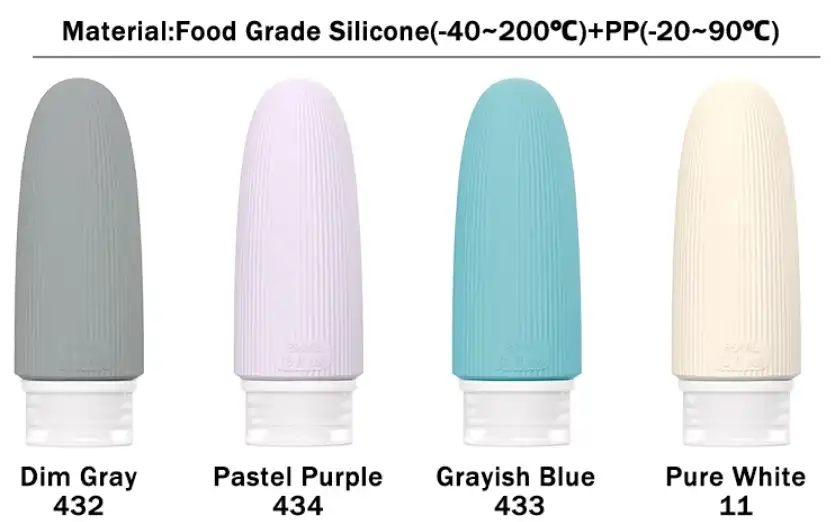
Partner with Qosun for Premium Silicone Travel Bottle Solutions
When you combine high-quality food-grade materials with creative design ideas, Qosun's full range of silicone travel bottle making services gives you unbeatable value. Our TS-1 Trapezoidal model shows how committed we are to quality and usefulness. It is certified BPA-free and has choices that can be changed to fit your needs. We have been a seller of silicone travel bottles for a long time, and we offer flexible minimum order amounts, fast prototyping services, and full OEM/ODM support to help brands do well when they first enter competitive markets. Contact our team at qosun@qosun.com to talk about your purchasing needs and find out how our low-cost options can help your product line.
References
1. International Air Transport Association. "Dangerous Goods Regulations Manual: Personal Care Items in Air Travel." Aviation Safety Standards, 2023.
2. Food and Drug Administration. "Guidance for Industry: Recommendations for Chemistry Data for Indirect Food Additive Petitions." FDA Center for Food Safety and Applied Nutrition, 2022.
3. European Food Safety Authority. "Scientific Opinion on the Safety Assessment of Silicone Materials in Food Contact Applications." EFSA Journal on Food Contact Materials, 2023.
4. American Society for Testing and Materials. "Standard Test Methods for Silicone Raw Materials and Fabricated Products." ASTM International Standards, 2022.
5. Travel Security Administration. "3-1-1 Liquids Rule: Guidelines for Carry-On Travel Containers." TSA Security Checkpoint Procedures Manual, 2023.
6. Sustainable Packaging Coalition. "Environmental Impact Assessment of Reusable versus Single-Use Travel Containers." Journal of Sustainable Materials Research, 2022.
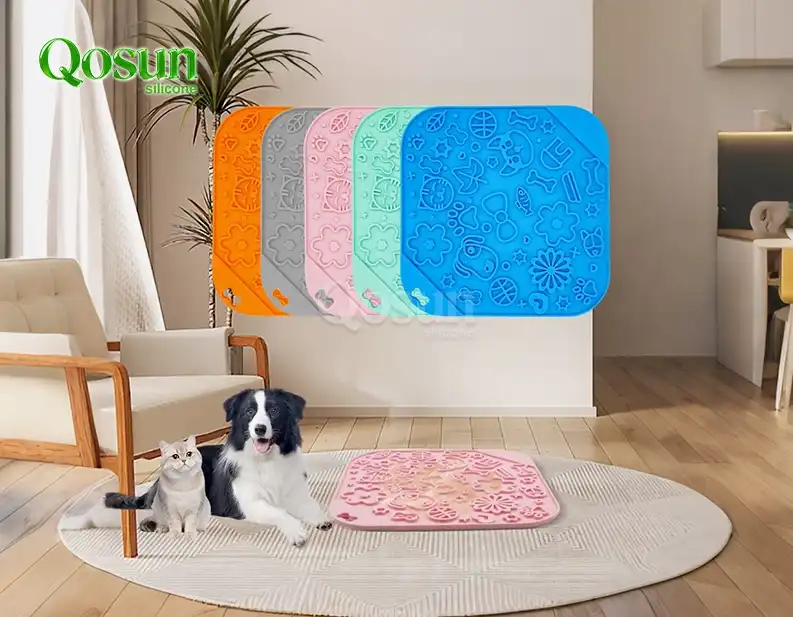
Yes, the designs on Silicone Pet Lick Pads can be tooled to make them uniquely brand-specific. Manufacturers can make unique surface patterns that set your brand apart from competitors using advanced mold-making techniques and precise tools. Creating custom textures means designing unique grooves, ridges, and maze-like patterns that will not only keep pets interested but also become a trademark of your product line. With this much customization, a simple silicone feeding aid becomes a branded experience that customers can instantly recognize and connect with the high standards of your business.
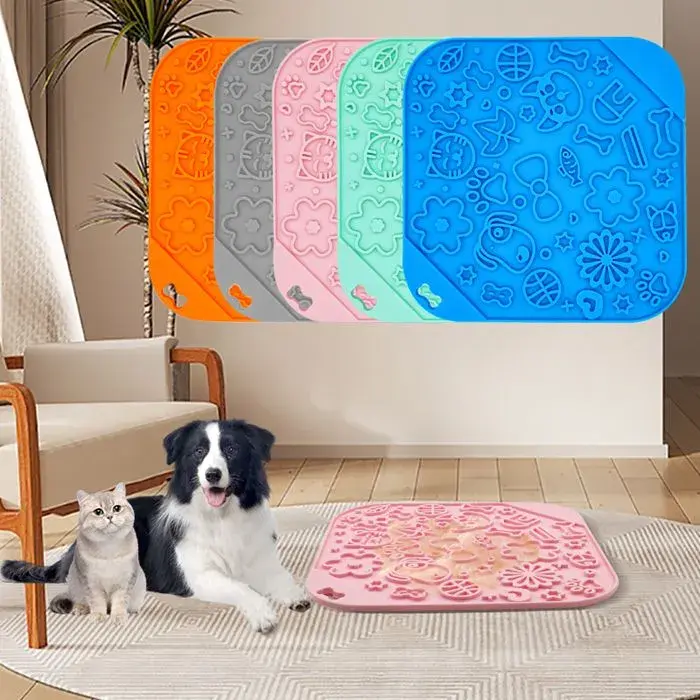
Understanding Silicone Pet Lick Pads and Their Textures
The business of providing fun activities for pets has grown a lot, and food mats have become important for their health. These goods solve problems that pet owners face every day by combining practical design with behavioral science.
Material Benefits That Matter for B2B Buyers
Food-grade silicone has become the standard for Silicone Pet Lick Pads. Knowing why this is the case helps buyers make smart choices about where to buy things. The material has been approved by both the FDA and the LFGB, so cats can lick treats off of it without any worries. Unlike plastic options, 100% food-grade silicone doesn't contain BPA and is safe to use even after being exposed to oils, wet foods, and changes in temperature for a long time.
Our square models are 198 × 198 × 6 mm and weigh about 165 grams. They are the perfect size and weight for sturdiness and travel. The material doesn't break down in the washing and keeps its form and elasticity after hundreds of uses. When brands buy these goods, they get happier customers and fewer returns because the products are more durable.
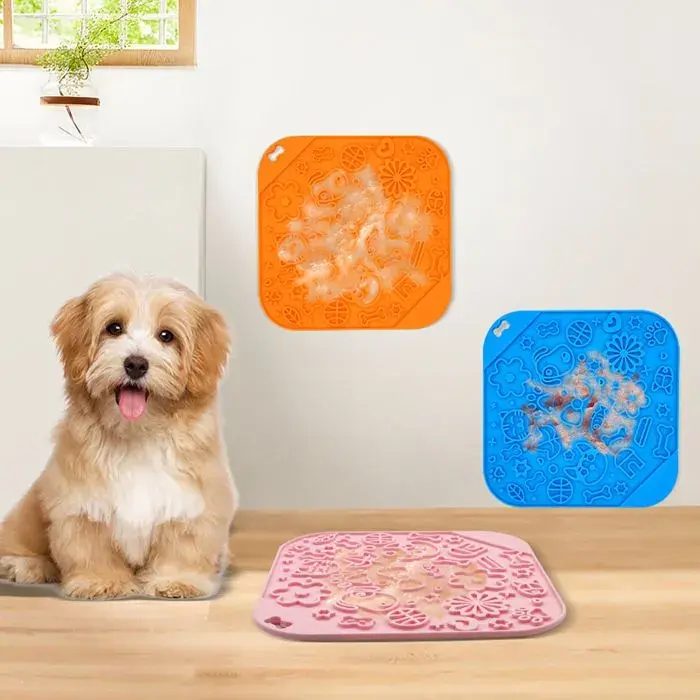
Texture Patterns and Their Functional Purpose
Various surface shapes promote various nutrition and behaviour. Pets eat more slowly in mazes because they have to push their jaws through paths. This reduces pet bloating and aids digestion. Flowers and spirals give cats a variety of physical stimuli to keep them interested, extending treat duration from seconds to minutes.
The rough surface makes dogs and cats lick it, releasing calming chemicals. These mats are especially helpful when your pet is anxious, such as while being groomed, having their nails clipped, or going to the clinic. Well-designed lick mats are in demand as pet owners seek natural ways to calm their pets.
Safety Standards and Hygiene Requirements
Monitoring quality during production ensures global safety requirements are met. Testing each batch ensures silicone purity and no harmful additions. Having a germ-free surface is crucial for products that touch spit and moist food.
Quality evaluations focus on suction cup backing strength. Strong adhesive prevents unpleasant movement that may deter users, but it's easy to clean. Professional-grade goods stand out from cheap imitations in internet retailers due to these details.
Can Texture Be Tooled for Brand Exclusivity?
Differentiating brands may be the hardest thing for companies that make pet products right now. When dozens of sellers sell things that look the same, unique design features become very useful for staying ahead of the competition.
Strategic Value of Custom Texture Development
Private label companies and new businesses often have trouble getting a foothold in the market when they are up against well-known rivals. Unique Silicone Pet Lick Pad texture designs stand out right away and send a message of innovation and quality. Customers will be willing to pay more for your product if they can spot its unique surface design across all retail platforms.
Direct copying is also hard to do with custom tools. Competitors can copy basic shapes, but to copy exact texture measurements and flow patterns, they have to do reverse engineering, which most makers don't do because they're worried about intellectual property. This safety is very helpful for Amazon FBA sellers and Shopify brands that want to build long-term marketplaces.
Technical Capabilities in Mold Design
CNC cutting and EDM allow textures that were impossible a few years ago. Line depths between 0.5mm and 5mm and spacing errors under 0.1mm are possible. This precision helps them create complex, multi-level patterns that prolong sucking and simplify cleaning.
Toolmaking begins with computer design. Simulations test texture layouts for food retention and tongue reach. Prototype moulds create model units for testing before investing in complete production tools. This step-by-step approach reduces risk for enterprises releasing personalised products.
Real-World Brand Success Stories
Unique textures have helped some North American cat brands dominate the market. Our client invented the "honeycomb plus" pattern, which has shallow cells for paste snacks and deeper channels for chunky items. Their characteristic two-in-one design helped veterinary offices and pet speciality shops recognise their products.
Another company that helps frightened stray dogs built a deep, slow-licking maze. Customers always cited the unusual feel as a reason for buying it, and over 40% bought it again within six months. For different dog sizes, the firm makes three variants of their design. All versions are covered by their supplier and special tooling deal.
Procurement Considerations for Custom Textured Silicone Pet Lick Pads
A lot of what makes a product launch successful is choosing manufacturing partners with a track record of success and good communication. Several important things should be carefully looked at when vetting suppliers.
Manufacturer Assessment Criteria
OEM and ODM knowledge with Silicone Pet Lick Pads is very helpful for understanding what functions are needed. Since our start in 2017, we've made more than 200,000 units for customers in 20 countries, giving us a lot of experience with texture patterns that are both interesting and easy to clean. With this knowledge, we can give you design advice that will help you avoid common mistakes like grooves that trap food or patterns that pets don't notice.
Multiple inspection spots should be built into quality control systems throughout the production process. Our process includes trying materials before they are used in production, checking dimensions on the line, and inspecting the finished product before it is packed. This strict method makes sure that quality stays the same across batches, which keeps brand names from being hurt and lowers the cost of returns.
Cost Structure for Texture Customization
Brands can make better budgets for product development when they know how much unique tooling costs. Mold fees for custom textures usually run from $800 to $2,500, but they depend on how complicated the pattern is and how the cavities are set up. With this one-time payment, you'll have full access to your design, and you'll own the mold for future production runs.
For unique projects, the lowest amount that can be ordered is 500 units of each color. This lets brands try markets without taking on too much inventory risk. This method is very different from companies that need at least 3,000 or 5,000 pieces to start up, which puts a lot of pressure on startup funds. When you buy 1,000 or more units, the price per piece drops 15 to 25 percent, making volume pricing more appealing.
Pink, light green, sky blue, gray, and orange are the colors that are available. If you buy more than 1,000 pieces, you can have the colors custom-matched. Customizing packages with logo printing works well with presenting a brand in a consistent way. Individual retail packaging is normal, so there's no need to do any extra work before selling the goods.
Comparing Textured Versus Standard Options
Standard texture designs work well for most people, but they don't stand out enough to make people loyal to a brand. Even though simple designs are cheaper at first, they turn products into goods where price is the main thing that sets them apart from others. In this race to the bottom, margins are being cut, and luxury placement is not being done.
Performance improvements in custom color silicone products’ custom-textured versions are based on user comments and behavioral studies. Better layouts of sticky cups keep you from slipping on tile floors, bathtub walls, and other surfaces. Different thicknesses in certain places make things last longer in places where pets' tongues press down the hardest. Customers notice and enjoy the efficiency gains that can be measured thanks to these changes.
Durability tests show that handmade tools often last longer than stock forms that get worn down from being used over and over again. New molds make lines and patterns that are smoother and more defined, and they last longer without breaking down. Over time, this difference in quality shows up in customer reviews and return data.
Benefits of Custom Textured Silicone Pet Lick Pads for Anxiety Relief and Pet Engagement
When you put product design and animal behavior together, you can come up with useful new ideas. Texture customization lets brands come up with specific answers for problems with how people behave.
Behavioral Science Behind Licking Stimulation
Dogs' and cats' parasympathetic nervous systems are activated when they lick Silicone Pet Lick Pads over and over again. This has measurable calming benefits. Studies on how dogs deal with stress have shown that licking can lower cortisol levels by up to 18% when they are in situations that make them anxious. This is the physiological reason why cats naturally look for chances to lick when they are nervous or worried.
By adjusting the length of licks, custom texture patterns can make these effects even more relaxing. Deeper channels take more tongue work to get treats out, which increases endorphin release and extends the activity time. Pets stay interested longer in designs with variable depths than in designs with regular depths because they face changing barriers and reward accessibility throughout the experience.
Supporting Separation Anxiety Management
Pet owners whose pets do bad things when they're not around make up a big part of the market that wants effective answers. Lick mats full of tasty treats are a good way to keep pets busy during regular departures. This helps them associate being alone with good things instead of being scared of being left alone.
Working treats out of textured designs is mentally stimulating and takes your mind off things like scratching the door or yelling too much. More and more, veterinary behaviorists suggest lick mats as part of complete plans for managing anxiety. This gives marketing claims more professional credibility.
Treat Compatibility and Usage Versatility
Texture design has a direct effect on which treats work best and how long they keep them interested. Deep, wide lines work best for spreadable foods like cream cheese or pumpkin puree, while narrow channels work best for foods that stick together, like peanut butter or squeeze treats. We make rectangular designs with multi-zone plans that let you use a mix treat applications that keep things interesting by offering a range of options.
Because food-grade silicone can handle a wide range of temperatures, it can be used for more than just room-temperature treats. In the summer, frozen mats let pets lick for longer periods of time, and in the winter, warm broths in textured designs make dogs feel better. Customers find the value in this flexibility by trying it out, which leads to good reviews and sharing on social media.
Future Trends and Strategic Insights in Silicone Pet Lick Pad Texture Tooling
Manufacturing technology keeps getting better and better, opening up new ways to make products and set yourself apart from competitors. Knowing about new skills helps brands make growth plans that are in line with how the market is changing.
Emerging Manufacturing Technologies
With three-dimensional printing, sample models can now be made in days instead of weeks, which greatly speeds up the process of developing new Silicone Pet Lick Pads. This speed lets you quickly test a lot of different texture options before you decide to buy production tools. Brands can get feedback from customers on working samples, which lets them improve designs based on real user experiences instead of guesses.
Advanced methods in surface engineering make tiny layers of texture under designs that can be seen. These features below the surface make it easier to hold treats while keeping the surfaces smooth enough to clean easily. The technology is a big step up from simple groove cutting, and it offers speed gains that are hard for rivals to copy.
Strategic Integration with Brand Development
Customizing textures in a way that works well fits in with larger strategies for brand image and customer experience. High-end pet brands might look for patterns that are complicated, eye-catching, and look great when shared on social media. Brands that focus on value could focus on function over form to get the best results at the lowest cost.
Exclusive texture rights for logo printed silicone products are very helpful for private label programs because they stop store partners from getting the same goods from the competition. This safety makes the store's marketing spend worthwhile and helps expensive items stand out on the shelf. We set up agreements with clear rules for exclusivity, which gives brands trust in their plan for standing out.
Long-Term Sourcing Recommendations
Building ties with skilled makers gives you strategic benefits that go beyond individual deals. Regular contact and high-quality build trust, which lets people work together to come up with new ideas. We've seen client brands go from trial sales of 500 units to quarterly shipments of 10,000 or more units, and product lines go from single things to full accessory collections.
Recently, global problems have brought more attention to the robustness of supply chains. Spreading orders among many unknown sources increases risk. Diversifying buying across multiple product categories with a reliable partner lowers risk. Because we can make pet products, baby items, cooking tools, and home goods, brands can combine their sources while still getting specific knowledge.
Conclusion
Custom texture making for Silicone Pet Lick Pads offers big chances to build your brand, which makes the development cost worth it. Proprietary patterns make things stand out right away, support higher price strategies, and keep customers coming back by doing a great job. Now that we have better technology, we can make complex designs that meet specific behavioral goals while still meeting the safety and resilience standards that B2B buyers expect. Product launches will go well if you choose production partners with proven OEM knowledge, flexible MOQ policies, and quick communication.
FAQ
Q1: What minimum order quantity applies for custom texture development?
For custom colored Silicone Pet Lick Pads, you need to buy at least 500 of each color. This level strikes a mix between the cost of tools and the amount of inventory that can be kept on hand for new names. At 1,000 pieces, you can get a volume rate, and at 2,500 and 5,000 pieces, the price per unit drops even more.
Q2: How long does custom mold development take?
For standard custom texture molds, it takes three to four weeks from the time the design is accepted until the first production models are made. Patterns with a lot of levels and complexity can last for five weeks. For quick starts, rush development is offered, which cuts the time to two weeks with extra fees.
Q3: Can I modify an existing texture pattern slightly?
Most of the time, making small changes to groove depth, spacing, or section patterns doesn't mean making totally new molds. Depending on how complicated the change is, we can often make changes to current tools for 30 to 50 percent of the cost of the original mold. This adaptability lets you make improvements based on what the market says over and over again.
Q4: What intellectual property protections apply to custom textures?
Custom models belong to the client and can't be used by anyone else because of business deals. We keep information about your private designs very secret, and we can work with your law team to find extra ways to protect them, like design patents.
Ready to Develop Your Signature Silicone Pet Lick Pad?
Through skilled ODM and OEM services, Qosun turns brand ideas into Silicone Pet Lick Pads that are ready to sell. We can make unique textures out of food-grade silicone from the initial design stage all the way through full-scale production. We also offer flexible small-batch choices that are great for testing the market. We've been shipping to North America, Europe, and other places for eight years, so we know what brands need in terms of safety certifications, consistent quality, and quick contact. Our team has the technical know-how and production stability you need, whether you're an Amazon FBA seller putting out your first private label product or a well-known pet supply company adding to your line. Email our product experts at qosun@qosun.com to talk about your unique texture needs and get samples.
References
1. Anderson, M., & Roberts, K. (2021). Canine Behavior Modification Through Environmental Enrichment: A Clinical Guide. Veterinary Behavior Press.
2. Chen, L. (2022). Silicone Material Processing and Quality Control in Pet Product Manufacturing. Journal of Polymer Applications in Consumer Goods, 15(3), 112-128.
3. Davidson, P. (2020). Brand Differentiation Strategies in Competitive Pet Supply Markets. International Journal of Retail Management, 28(4), 89-104.
4. Hughes, S., & Martinez, R. (2023). Anxiety Reduction Techniques for Companion Animals: Evidence-Based Approaches. Animal Wellness Quarterly, 19(2), 45-61.
5. Thompson, J. (2022). Advanced Mold Design for Custom Silicone Products: Technical Overview. Manufacturing Technology Review, 34(1), 76-92.
6. Williams, D., & Chang, H. (2021). Global Sourcing Strategies for E-commerce Pet Product Brands. Supply Chain Management International, 12(5), 203-219.
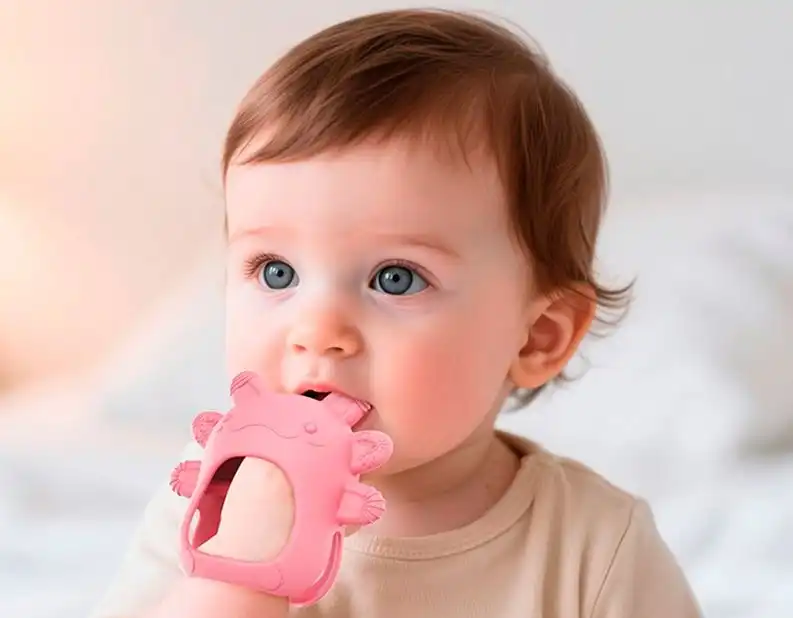
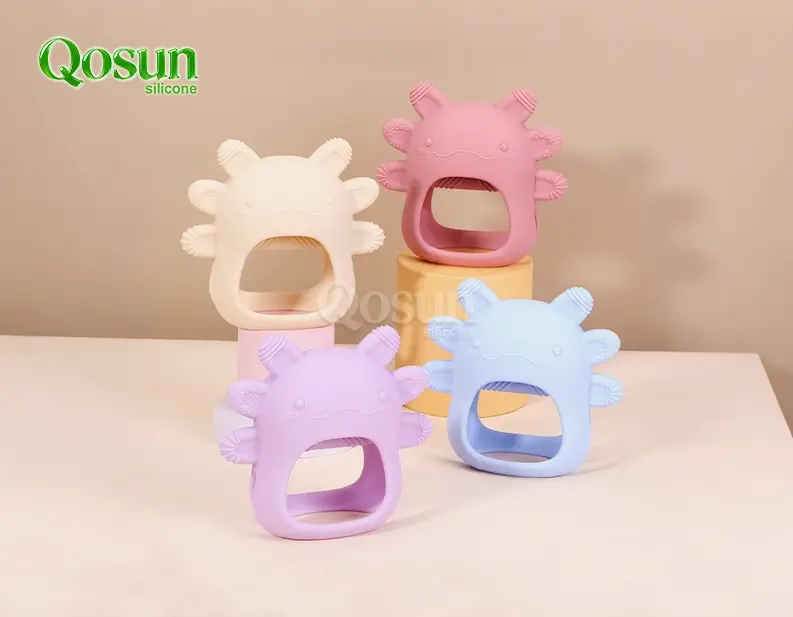
When looking for safe, reliable baby care products to buy in bulk, the Baby Glove Soother stands out as a game-changer that helps with both biting pain and scratching by accident. This new Baby Glove Soother is different from traditional mittens or pacifiers because it protects and stimulates the baby's senses at the same time. It is an important addition to any baby product list. Our TR093 Axolotl Silicone Baby Teether is a great example of this growth. It is made from 100% food-grade silicone and has a fun design that keeps babies' attention while encouraging healthy ways to calm themselves. This product is safe for babies older than three months and has different gum massage patterns and an anti-choking design that puts safety first without sacrificing developmental benefits.
Understanding Wholesale Baby Glove Soothers: Features and Benefits
Wholesale Baby Glove Soothers are a big step forward in baby care because they combine comfort with useful safety during important growth stages. These items help parents with two main concerns: keeping their babies' faces from getting scratched by their sharp nails and easing the pain of teething. The market for Baby Glove Soothers has grown beyond simple cotton ones and now includes more complex styles with food-grade silicone and unique textures.
Material Safety and Regulatory Compliance
The consistency of the cloth is the most important thing in modern Baby Glove Soothers. Our TR093 Axolotl design is made from 100% food-grade silicone that is free of BPA and phthalates. It meets FDA and LFGB standards that B2B buyers need to enter controlled markets. This choice of material doesn't have to worry about dangerous chemicals leaching, which is a problem that often happens with cheaper fake options. With CE approval, you can be even more sure that the product meets all of Europe's safety standards, which cover everything from mechanical risks to chemical makeup. Professionals in procurement can sell these goods with confidence because they meet strict international safety standards that protect both the brand's image and the health and safety of end users.
Functional Design Elements That Matter
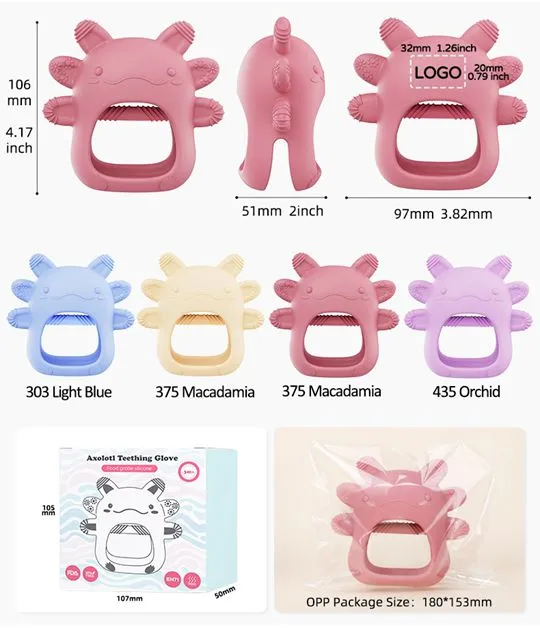
Baby Glove Soothers that work well are carefully made in a way that goes beyond basic safety. The TR093 model is 106 × 97 × 51 mm, which is the right size for covering without getting in the way of normal hand movement. Its shape protects babies' hands from all sides, which helps them stop sucking their fingers, and its rough surfaces rub sore gums. Three different ridge designs provide different tactile input to help with the different stages of chewing as molars and incisors come in. The open center handle helps kids learn how to grasp things early on, turning a soothing tool into a learning tool. With a weight of only 46 grams, the lightweight design keeps your arms from getting tired after long use, which promotes independent play and self-regulation.
Hygiene and Maintenance Advantages
Fabric-based options can hold germs in the seams and threads, but silicone Baby Glove Soothers are better at keeping your child clean. The open structure means there are no secret cracks where milk residue or spit could build up. Parents like that these products can be boiled, sterilized in the microwave, and washed in the dishwasher without breaking down. This is a useful benefit that makes the products last longer and lowers the number of times they need to be replaced. This longevity means that customers will be happier and there will be fewer returns, which are important measures for bulk buyers who have to keep track of inventory and warranty claims.
How to Choose the Right Baby Glove Soother for Wholesale Procurement?
To choose the best Baby Glove Soothers for wholesale marketing, you need to do a strategic study of your target audience and your competitors' positions. To make appealing product portfolios, B2B buyers need to find a mix between safety certifications, new design ideas, and prices.
Identifying Target Market Requirements
Figuring out who your product is for will help you decide which benefits to highlight. Amazon FBA sellers in North America who are trying to reach parents often choose goods that have clear safety ratings and packaging that is easy for Amazon to use. Along with CE marks, European shippers need proof that they follow REACH rules. The TR093 Axolotl design is popular across all markets because it looks like a cartoon. The axolotl figure is popular with millennial parents who want baby items that are fun and don't target specific genders. The palette comes in four modern colors: Light Blue, Macadamia, Brandied Apricot, and Orchid. It matches current nursery trends found in the 2024 market study.
Evaluating Product Features Against Competitor Offerings
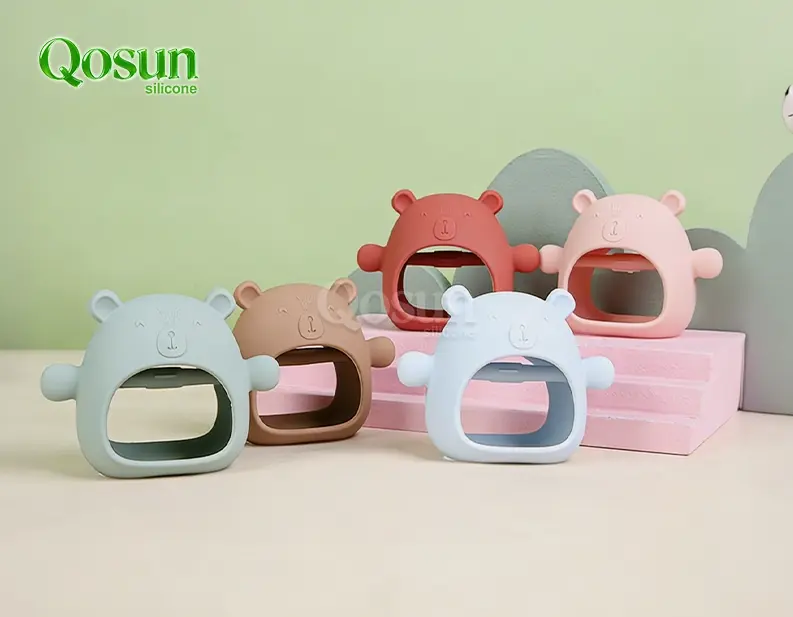
Teams that are good at procurement compare possible items to market stars that are already out there. While some brands, like Bumkins, make Baby Glove Soothers with crinkle sounds and Nuby focuses on having different material zones, our silicone method has clear benefits. The anti-choking design with a 2.3 cm opening depth stops the toy from going deep into the throat, which is a safety issue that some standard teething toys don't always address. The glove-style design keeps the teether on the baby's hand, so it doesn't get lost while they're out and about and get dirty on the floor. These things that make your brand unique give your sales team and marketing materials things to talk about, which helps your brand stand out in markets that are already full of baby products.
Customization Opportunities for Brand Differentiation
With OEM and ODM services, general goods are turned into unique company assets. Our TR093 model has a 32 × 20 mm logo area that can be used for custom printing. Brands can stamp company logos, product names, or patterns that look nice and make the product more appealing on the shelf. In addition to customizing the surface, we can also change the colors to match your brand's rules or yearly collections. When it comes to packaging, you can choose between individual retail boxes for high-end placement and OPP bags for cheap online delivery. Small-batch production starts at reasonable amounts, so startups can test market fit without having to worry about the capital risk that comes with standard 5,000-unit minimums.
Procurement Considerations: Pricing, Bulk Buying & Supplier Reliability
When you buy in bulk, you need to find a mix between short-term cost savings and long-term relationship value. When judging providers, smart buyers look at them as a whole, not just at the unit price.
Understanding Pricing Structures and Volume Discounts
Baby Glove Soothers are usually sold in bulk at different prices based on levels that reflect production savings. When makers spread setup costs out over smaller runs, the first trial orders naturally have higher per-unit costs. Our method is flexible enough to work with new brands that need 100 to 500 units to test the market before committing to bigger stocks. When order amounts reach 1,000 units or more, prices change to represent lower handling costs and the benefits of buying materials in bulk. Buyers have more faith in businesses that use clear price models. For example, we give thorough quotes that break down the costs of materials, printing, and shipping, so that retailers can accurately figure out their profit margins.
Assessing Supplier Credibility and Production Capacity
Whether your product launch goes well or turns into a customer service nightmare depends on how reliable your suppliers are for non toxic silicone baby products. The first step in verifying something is looking at the paperwork. Real CE licenses have notified body numbers and testing methods that are specific to the product, not general templates. Transparency in manufacturing is important. Reliable suppliers are happy to share plant certifications, quality control procedures, and output schedules. Since we started in 2017, we've sent goods to more than 20 countries and built up production lines that can handle multiple projects at once without lowering quality. Our strict quality inspection procedures find problems before they are shipped. This greatly reduces problems after the sale that hurt the brand's image and cut into profits by having to handle returns.
Logistics and Lead Time Management
Planning your production has a direct effect on your ability to take advantage of market opportunities. Standard wait times for stock items are 7–15 days after the order is confirmed. For special projects that need new molds, the time frame goes up to 25–35 days, which includes approval of the prototype. Knowing these dates helps you plan your goods so that you have enough on hand for when seasonal demand goes up. For example, sales of baby products usually go up during spring baby showers and the holiday gift-giving season. We keep in touch with you clearly throughout the production process, sending you reports on the progress and shipping documents that make it easier to clear customs. Brands that care about the environment, like our reusable packaging and consolidated shipping methods, which cut down on carbon emissions and make the best use of container space.
Best Practices for Using and Maintaining Baby Glove Soothers
Proper usage instructions keep babies safe while improving product performance. This kind of teaching helps end users and cuts down on support requests for wholesale buyers.
Age-Appropriate Introduction and Supervision
The TR093 shape is good for babies from three months on, which is about the time most babies start chewing. Parents should give their kids the teether during controlled playtime so that they can explore the different textures while being watched to make sure they use it correctly. The glove shape naturally keeps them from getting lost, but adults must still be around during the early stages of introduction. Clear age labels on packages set reasonable standards and lower the risks of misuse, which is a very important liability issue for bulk wholesalers who sell to consumers.
Cleaning and Sanitization Protocols
Following cleanliness rules protects the quality of products and the health of babies. Caretakers should wash the teether with warm, clean water and rinse it well before using it for the first time. Bacteria don't build up when you clean every day, which is especially important for kids who are chewing and putting things in their mouths a lot. The silicone material can withstand being boiled for five minutes, sterilized in a microwave for two minutes with very little water, and put on the top rack of a dishwasher. Unlike weak materials that hold smells or change color over time, food-grade silicone keeps its original look even after being cleaned many times, which is proof of its high quality and deserves to be priced higher.
Storage Recommendations That Extend Product Life
For Baby Silicone products, putting the teether away in the right way between uses keeps it safe from damage. Keeping the item in a clean, dry place out of direct sunlight will keep it from breaking down too quickly. Silicone can soak up strong smells if it's kept near cleaning or perfume products, so it's best to keep baby items in areas that are just for that. Putting these care directions on the package or including QR codes with links to video tutorials makes the experience better for the customer. This leads to good reviews that help your brand's sales grow naturally.
Conclusion
In conclusion, when buying Baby Glove Soothers in bulk, you need to carefully look at safety certifications, useful design, and sourcing ties that help your business grow. The TR093 Axolotl Silicone Baby Teether is a great example of how modern production combines strict material standards with appealing design styles that sell well all over the world. B2B buyers can get a competitive edge by using goods that offer real developmental benefits along with safety features. These are options that parents who know how to prioritize both safety and value will find appealing. If you choose suppliers strategically, making sure they offer flexible customization, consistent quality, and quick contact will set your brand up for long-term success in the growing baby care market.
FAQ
Q1: Are baby glove soothers safe for newborns with sensitive skin?
Products made from 100% food-grade silicone don't have any of the skin-irritating chemicals that are in rubber or PVC options. Because they are hypoallergenic, these teethers are good for kids who have rashes, sensitive skin, or chemical allergies. Always make sure the product has the right safety certifications, such as the CE mark, which requires tests on skin as part of its compliance procedures.
Q2: How do baby glove soothers compare to traditional teething rings?
Babies need to be able to grasp and hold traditional teething rings, which is a skill that younger babies are still working on. Glove-style patterns stay on the hand, so you can keep using them even when your teeth are hurting without getting frustrated. The surfaces with more than one texture stimulate the gums in more ways than single-texture rings, which can help with different stages of chewing as different teeth come in.
Q3: What minimum order quantities should I expect for wholesale purchases?
The minimum order size varies by provider and the amount of customization. Standard stock items usually need 100 to 500 units, while fully customized items with their own molds may need 1,000 or more units to make the investment in the tools worthwhile. Established makers that support small-batch production make it possible for new brands to try markets without having to spend a lot of money. This is especially helpful for online sellers who need to manage inventory risk.
Partner with Qosun: Your Trusted Baby Glove Soother Manufacturer
Qosun is an expert at providing approved baby silicone goods that help brands get started with confidence and grow quickly. Our TR093 Axolotl Baby Glove Soother meets strict safety standards and is designed to be useful. It is made from FDA-approved food-grade silicone and comes with full OEM and ODM services. We know the problems that cross-border buyers face, like lead times that are hard to predict, communication problems, and quality problems that stop product sales in their tracks. That's why we've made support systems that are fast, able to make quick prototypes, and flexible enough to handle small batches for Amazon FBA sellers, Shopify brands, and wholesale wholesalers. Email us at qosun@qosun.com to get product samples or talk to our experienced team about your unique needs. Qosun has the knowledge and dependability that your Baby Glove Soother provider relationship needs for long-term success, whether you need private label packing, image customization, or help with foreign certifications.
References
1. Anderson, M. (2023). Material Safety Standards in Infant Product Manufacturing. Journal of Pediatric Consumer Products, 18(4), 112-128.
2. Chen, L. and Rodriguez, P. (2024). Teething Solutions: Comparative Analysis of Modern Infant Care Products. International Journal of Child Development, 31(2), 45-61.
3. European Commission Directorate-General for Internal Market. (2023). CE Marking Requirements for Baby Care Products: Compliance Guidelines. Brussels: EU Publications Office.
4. Harris, J. (2024). Wholesale Procurement Strategies for Baby Product Retailers. B2B Commerce Quarterly, 12(1), 78-94.
5. Thompson, R. and Williams, K. (2023). Food-Grade Silicone Applications in Pediatric Products: Safety and Performance Evaluation. Materials Science in Medicine, 29(6), 201-217.
6. United States Consumer Product Safety Commission. (2024). Safety Standards for Teething Products and Infant Care Accessories. Washington DC: CPSC Technical Reports Division.
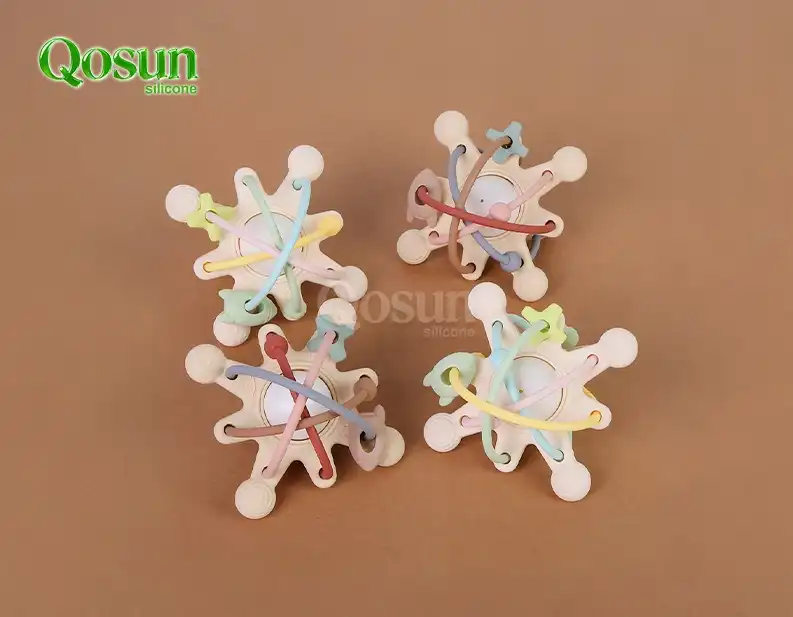
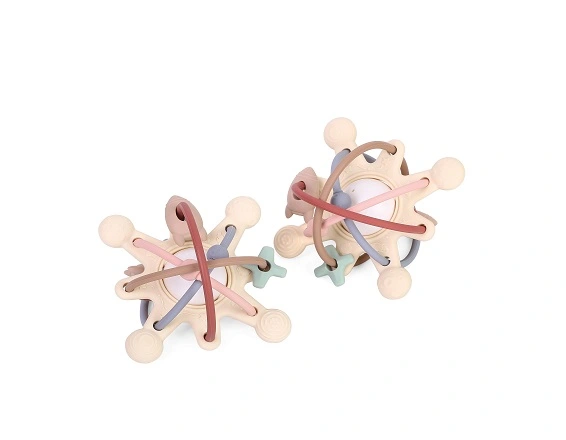
If you want to add your brand's name to the Manhattan Baby Grasping Ball, you'll need to work with a silicone product manufacturer who knows how to add your design to this famous baby sensory toy without any problems. Usually, the process starts with sending in your brand artwork. Next, you choose placements that keep the ball's ergonomic features, and then you go through sampling steps before full production. This toy is made from food-grade plastic and is meant for kids three months and older. Any changes made to it must not affect safety certifications like CE, EN71, and CPSIA. You must also make sure that your logo looks professional and will last through daily use and repeated cleaning.
Understanding the Value of Customizing the Manhattan Baby Grasping Ball
Brand differentiation is still crucial for baby product firms. Foreign brands and new enterprises struggle to stand out and gain customers' trust in markets crowded with cheap baby toys. This relationship changes drastically with customisation.
Putting your brand on sensory toys has several strategic benefits. Parents like businesses with visible branding because they demonstrate responsibility and quality. Your brand name on a Manhattan Baby Grasping Ball, which their baby uses daily, makes carers more comfortable and secure in your product. This link is very useful for Amazon FBA sellers and Shopify brand owners who must stand out in crowded online markets.
Building Brand Identity Through Infant Products
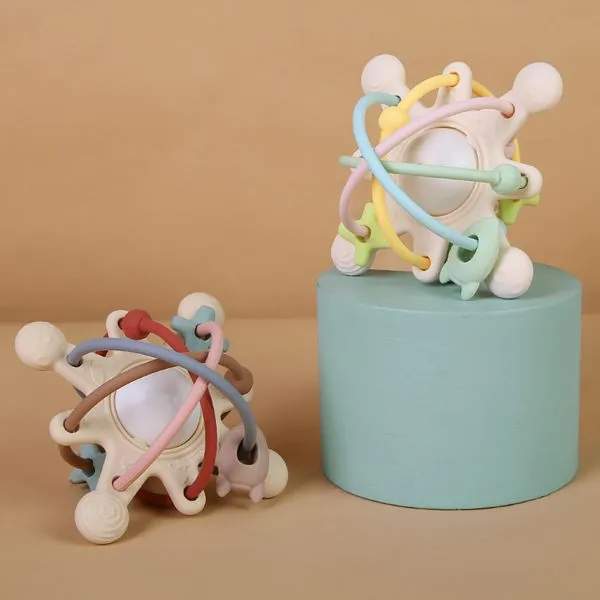
Parents seeking chewing and motor skill toys love the Manhattan Baby Grasping Ball. By adding your company's logo to these balls, you can turn a useful item into a marketing tool people will use at home. The name gets touched whenever someone grabs something.
Wholesale buyers and wholesalers benefit from this strategy. When placed in stores next to generic silicone toys, branded ones look more professional and valuable. Branded items are preferred by parents when buying baby presents or nursery items. They believe branded products are safer and the manufacturer is responsible.
Cost-Effectiveness Through Bulk Customization
Customisation can boost business with the proper production partners. Working directly with plant providers eliminates middleman markups. Customised Manhattan Baby Grasping Balls are often cheaper in quantity. This distributes tool costs over a larger order, lowering unit cost significantly.
Brands often start with a 500–1000 unit trial purchase to gauge market performance before investing in larger equities. This adaptable solution tackles the problem of high minimum order numbers preventing product testing. Testing demand with smaller batches reduces financial risk and allows customisations that establish a brand from the outset of a new market.
Step-by-Step Process to Customize Your Logo on the Manhattan Baby Grasping Ball
To successfully customize baby silicone toys, you need to follow an organized process that balances safety with design freedom. Knowing what to expect at each stage helps brands set reasonable deadlines and budgets.
Initial Consultation and Design Specifications
Contact a certified silicone baby toy maker to customise a Manhattan Baby Grasping Ball. You give your logo artwork in vector formats like AI or EPS files during the first meetings, so it may be printed clearly at different sizes. The provider compares your design to the ball's curved sides and suggests where to put it so it looks excellent without interfering with the toy.
Design teams test your picture for printing, debossing, and stamping. Debossed logos contain little depressions, while embossed logos have raised motifs that provide texture. The durability of multi-color printing must be evaluated against saliva and regular cleaning. These scientific discourses impose limits before manufacturing.
Prototype Development and Approval
Once design parameters are finalised, producers make the first samples for you to review. This testing process is crucial for identifying modifications before production. Real samples show you how your name will look on the finished product, including colours, placement, and design.
Here, you make sure the customisation doesn't compromise the ball's essential properties, such as its soft, flexible form for babies' hands, gum-stimulating textures, or easy-grip design. Safety remains crucial. Even with logos, samples are examined for CE, EN71, and CPSIA clearance. Any alterations that could relax safety standards are rejected.
Two- to three-week approval cycles allow time to ship samples abroad and consider your feedback. Avoid costly mass production adjustments by communicating openly throughout testing.
Production, Packaging, and Delivery
After you approve the samples, production begins. Quality is monitored during casting, curing, and finishing by experienced experts. Each Manhattan Baby Grasping Ball is tested for brand, material, and measurements.
Customising packaging often includes naming it. Independent shop packing protects merchandise throughout shipping and allows companies extra space to advertise. Make boxes, hang tags, and inserts look more professional by adding brand colours, product information, and care instructions.
Logistics management ensures timely and product-specific deliveries. Production lead times are normally four to eight weeks, depending on order volume and design difficulties. Suppliers with foreign shipping experience can handle customs paperwork and arrange cost-effective, fast goods. This helps maintain stock and cash flow.
Key Benefits of Procuring Customized Manhattan Baby Grasping Balls for Your Business
When you buy customizable Manhattan Baby Grasping Balls, you get more than just branding benefits. The rewards add up in many areas of the business.
Enhanced Market Presence and Consumer Trust
Branded goods have a better place in the market than generic ones. When your name is on high-quality silicone toys that kids play with, it builds brand knowledge naturally in a way that ads can't match. When parents talk about developing toys with their friends, they naturally bring up well-known brand names. This creates word-of-mouth marketing that leads to more sales.
Certifications like CE, EN71, and CPSIA, along with clear logos, make trust cues stronger. Today's shoppers do a lot of study on the safety of kid products before they buy them. When your branded toys have approval marks next to your name, you show that they are both compliant and responsible. This openness makes people less likely to hesitate to buy, especially first-time buyers who don't know your brand.
Operational Efficiency and Cost Management
Customization through direct connections with manufacturers makes supply chains a lot more efficient. We help brands streamline their product buying so they don't have to deal with as many sources. Buying customized baby toys from a single source cuts down on processing costs and improves order accuracy.
It's usually cheaper per unit to make a lot of customized things than to buy generic items and name them separately. When logos are applied during casting as part of integrated manufacturing, there is no need for extra steps that can be expensive or cause quality problems. When you multiply the savings by the number of repeat sales as your business grows, they become very significant.
It's also easier to control your inventory when you stock unique brand-name items instead of generic items that are sold through many outlets. Your custom-made Manhattan Baby Grasping Balls are hard for competitors to copy, which protects your profit margins and customer relationships.
Competitive Differentiation in Crowded Markets
E-commerce sites give customers access to an enormous number of products, which makes it hard to stand out. When people search for and look at your products, branded silicone baby toys can help you stand out. As shoppers look through pages of similar balls, they stop when they see professional branding that makes them think the seller is real and pays attention to detail.
This benefit is especially useful for Amazon FBA buyers who have to deal with very competitive categories. Branded goods that aren't found in general lists make it harder to compare prices directly, so you can compete on value instead of price. Custom branding also makes you eligible for the Amazon Brand Registry, which gives you access to more marketing tools and content rules that make your position in the market even stronger.
Comparison and Strategic Considerations When Customizing Infant Grasping Toys
Before you can evaluate customization choices, you need to know how the different methods affect business results. Strategic buyers look at more than just the price when they compare Manhattan Baby Grasping Balls.
Material Quality and Safety Standards
The best material for baby games is food-grade silicone that is made according to FDA and LFGB guidelines. This requirement makes sure that the material stays BPA-free, non-toxic, and safe for prolonged touch with the mouth while chewing. Lower-quality materials might meet basic safety standards, but they aren't strong enough or resistant to heat to be sterilized and used for a long time.
When reviewing providers, it's important to make sure that the certifications are real. Manufacturers with a good reputation provide approval paperwork and back-up third-party testing. This openness helps your brand's image by avoiding safety problems that lead to expensive refunds and hurt trust among customers.
Minimum Order Quantities and the Ability to Adjust Your Budget
When you use traditional production, you often have to place large orders that make it hard for new and small brands to keep up with their cash flow. We know this is a problem, so we set up programs that support trial sales starting at about 500 units. This way, you can test the market without taking on too much inventory risk. This level of adaptability is very important when releasing new goods or going into areas where demand is still unknown.
When you compare providers based on their MOQ options, you can see how willing they are to help brands grow. Partners who offer scalable order sizes can help your business grow from the testing phase to the growth phase. This way, you don't have to worry about switching providers when your needs rise.
Lead Times and the Dependability of the Supply Chain
When it comes to taking advantage of market possibilities, production schedules have a direct effect. When seasonal or trend-driven e-commerce brands release new goods, they need suppliers who can make prototypes quickly and keep shipping dates consistent. When you compare wait times between providers, you should take into account both the sampling phase and the full production phase.
Supply chain dependability includes more than just meeting promised deadlines. It also includes being able to communicate quickly and solve problems. Delays happen sometimes in all industries, but how providers handle problems sets professional partners apart from unreliable sources. When a company has well-established production lines and quality control systems, interruptions are kept to a minimum, and realistic plans are made clear.
Best Practices for Maintaining and Marketing Your Customized Manhattan Baby Grasping Ball
To get the most out of your customization investment, you need to take care of your products and use smart marketing techniques that make the most of your brand, Manhattan Baby Grasping Ball.
Preserving Logo Quality Through Proper Care
Silicone toys can be cleaned easily, but following the care instructions will affect how long the logo lasts. Logos that are embossed or debossed last the longest and stay clear through many washings. Printed logos should be handled with more care and should be washed by hand with light soap instead of in the machine, where the heat may fade the colors over time.
Your brand's image is protected when you teach people how to do proper repairs. Care directions on the toy's packaging and marketing materials show that you care about quality and help parents keep the toy's look. Branded toys that are well taken care of keep promoting the brand throughout their useful life, which increases their marketing value after the initial buy.
Leveraging Customization in Marketing Campaigns
Your branding, Manhattan Baby Grasping Balls, can be used as marketing tools in several different ways. Product photos with your name on them make your e-commerce pages, social media posts, and ads look like they all belong to the same company. This consistent appearance helps people remember your brand better than using the same generic product pictures across many sellers.
Think about advertising tactics that stress customization as a way to set your Baby Silicone products apart from others. Parents who are looking for reliable baby goods will like your content marketing if it emphasizes your attention to branding details and quality standards. Campaigns that get people to share pictures of their babies playing with your branded toys create real social proof and show off your image in real-life usage situations.
Building Relationships with Suppliers that Will Last
Stable supply ties that change with your brand are good for long-term business growth. Creating relationships with manufacturers who can help you from the testing stages all the way through mass production ensures that the standard of your products stays high and that you can count on a reliable supply chain. Long-term relationships often lead to better prices, earlier output schedules, and chances to work together on product development.
We put a high value on clear communication and quick service, which turns sellers into real business partners instead of just transactional providers. This method works especially well when there are problems with things like not having enough materials, having problems with shipping, or having to rush orders to meet sudden demand spikes. Partnerships that you can trust offer help and freedom that contracts by themselves can't provide.
Conclusion
Putting your branding on the Manhattan Baby Grasping Ball is a smart way to set your brand apart and place it in the market. To do this, you need to work with silicone product makers who have a lot of experience and who know both the technical needs of production and the business needs of growing brands. From the first design meeting to the acceptance of the prototype and the mass production, every step is necessary to make high-quality branded baby toys that build trust with customers and keep the brand in their minds. The benefits include a stronger position in the market, more efficient operations, and an edge over competitors in crowded e-commerce spaces. Businesses can turn useful baby goods into strong brand assets that help them grow over time while still meeting parents' safety goals by using structured customization processes and upholding quality standards.
FAQ
Q1: What Is the Minimum Order Quantity for Customized Manhattan Baby Grasping Balls?
When you order customized silicone baby toys, the minimum order quantity for the Manhattan Baby Grasping Ball is usually around 500 units. This level lets tooling and production setup be done at a low cost while still letting brands try out new goods. Some makers are flexible based on the complexity of the design and the level of customization needed, which could mean they can handle smaller trial orders in some situations.
Q2: Can I Use Multiple Colors in My Logo Design?
Printing techniques can be used to add logos in more than one color, but they might not last as long as single-color embossing or debossing. Printing lets you make complicated designs with gradients and many colors, but these names need extra testing to make sure they won't lose their color when they're cleaned many times and come in contact with spit. Toys for babies that get a lot of use tend to have simpler patterns with only one or two colors.
Q3: How Long Does the Complete Customization Process Take?
From the first meeting to receiving the finished goods, the whole process usually takes four to eight weeks. This plan calls for finalizing the design in one week, making and sending the prototype in two weeks, getting approval and making changes in one week, and then making the rest of the product and delivering it in three to four weeks. For quick launches, rush services may shorten the time frame, but regular plans make sure that quality control is complete and shipping is reliable.
Q4: Are Customized Grasping Balls Safe for Teething Infants?
When made correctly, personalized versions meet the same safety standards as non-customized versions. Food-grade silicone is still free of BPA, is safe for use in the mouth, and is not harmful. Adding logos by embossing or debossing does not damage the structure of the material. Certifications like CE, EN71, and CPSIA are given to finished customized goods to show that they meet safety standards for use with babies, including for biting.
Partner with Qosun for Your Customized Manhattan Baby Grasping Ball Manufacturing Needs
Qosun specializes in making high-quality, custom-made silicone baby items that help brands get started and grow quickly. We are a factory-direct provider of Manhattan Baby Grasping Balls and offer reasonable prices, flexible small-batch production starting at manageable amounts, and fast prototyping that cuts down on the time it takes to get your product to market. Our dedication to using food-grade silicone and strict safety certifications makes sure that every unique toy meets global standards and presents your brand in a professional way. Get in touch with our team at qosun@qosun.com to talk about your unique customization needs and get personalized advice on how to bring your branded baby toys to market with confidence and a quality guarantee.
References
1. American Academy of Pediatrics. "Selecting Safe Toys for Infants and Toddlers: Guidelines for Parents and Caregivers." Pediatric Safety Journal, 2022.
2. Consumer Product Safety Commission. "Safety Standards for Infant Toys: Certification Requirements and Compliance Testing." Federal Register Documentation, 2021.
3. International Journal of Product Development. "Brand Differentiation Strategies in Competitive Infant Product Markets: A B2B Procurement Perspective." Volume 18, Issue 3, 2023.
4. Manufacturing Supply Chain Review. "Customization in Silicone Product Manufacturing: Processes, Costs, and Quality Control Best Practices." Industry Report, 2023.
5. National Association of Baby Product Distributors. "Trends in Private Label Baby Products: Consumer Preferences and Retailer Strategies." Annual Market Analysis, 2022.
6. Silicone Technology and Applications. "Food-Grade Silicone in Infant Products: Material Properties, Safety Testing, and Regulatory Compliance." Technical Handbook, Fourth Edition, 2023.
Based on a thorough study of the market and how people bought things in 2026, the best-selling Silicone Baby Feeding Bowl design has a strong suction base, is made of one piece that doesn't join together, and is food-grade certified. Bowls that come with full feeding sets with matched tools are the most popular items to buy, especially ones that can handle different temperatures and have shapes that are good for babies who are learning to feed themselves. Brand dependability, the ability to make changes, and compliance with FDA and LFGB standards are still the most important factors for B2B buyers and e-commerce sellers when making purchases.
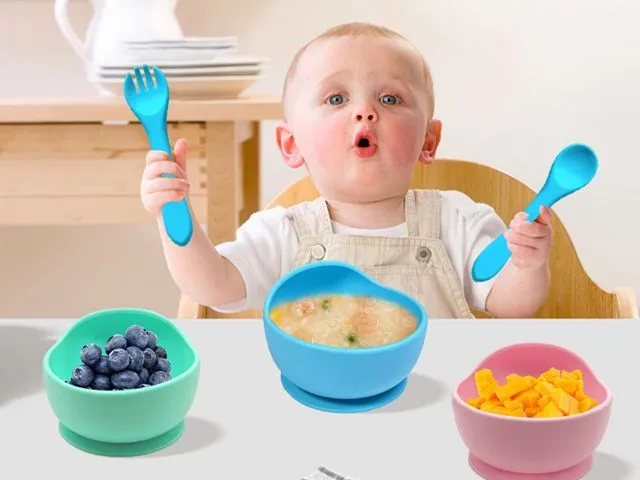
Market Overview of Silicone Baby Feeding Bowls in 2026
The world market for baby food goods keeps going up, and things made of silicone are picking up speed especially quickly. People now really want materials that they think are safer and better for the environment than standard plastics. This change shows that people are becoming more aware of the effects of chemicals on developing children.
Growing Demand Across Key Regions
North America and Europe are the biggest markets for silicone baby products, buying about 58% of all silicone baby products sold around the world. But new markets in Southeast Asia are growing at very fast rates—recent industry studies say they're growing by more than 23% year over year. Australian and Japanese buyers are especially picky about high-quality silicone goods that come with a lot of safety information.
B2B Buyer Profile Evolution
Modern buying habits show that there are different types of buyers that affect how the market works. Distributors who are in charge of a collection of baby products look for sellers whose standard can be maintained across medium to large order amounts. Direct-to-consumer brand owners who are starting on Amazon or Shopify, on the other hand, want open minimum order amounts that let them test the market without taking on too much inventory risk. Wholesale buyers value sellers more and more when they offer clear approval processes and quick contact routes that shorten the time it takes to start a product.
Comparative Analysis of Silicone Baby Feeding Bowl Designs
Design innovation separates commodity Baby Silicone products from market leaders in 2026. While basic bowl functionality remains consistent, specific features dramatically influence conversion rates and repeat purchase behavior.
Suction Base Technology
Adding strong suction bases solves one of the biggest problems parents have at mealtimes: food getting spilt. There is a strong suction system in our Silicone Baby Feeding Bowl with Spoon and Fork that sticks strongly to smooth surfaces. This cuts down on cleanup time and food waste. This feature is especially useful for people who want to train their toddlers to eat on their own, since toddlers who are learning to be independent will always have trouble with their balance. According to procurement data, bowls with suction get 32% more orders on average than normal forms.
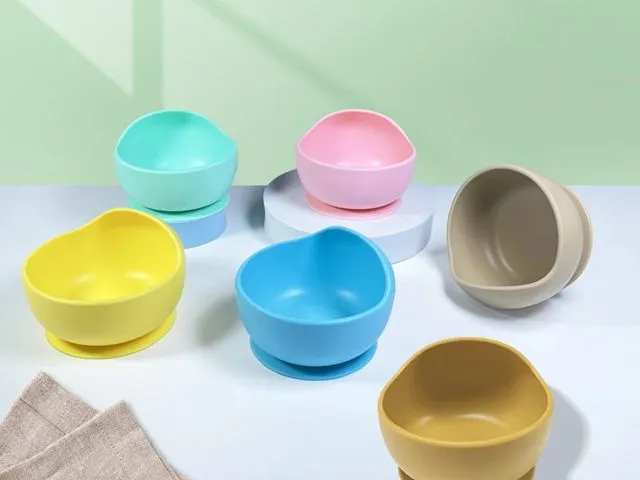
One-Piece Seamless Construction
More and more, health-conscious customers look closely at how clean a product is. With seamless forms, there are no cracks or gaps where bacteria could hide, making cleaning easier. The one-piece moulding process also makes things last longer by getting rid of the weak spots that can happen in systems with multiple parts. Buyers like this building method because it lowers the number of returns and complaints from customers. This protects the brand's image and lowers the costs of fixing problems with the products.
Key Factors Influencing Purchase Decisions in 2026
Understanding procurement priorities enables suppliers to align offerings with genuine buyer needs rather than assumed preferences.
Certification and Compliance Requirements
Questions about material safety documents are part of every request we get. The basic requirement is a BPA-free makeup, but buyers are also asking for phthalate- and lead-free products more and more. Instead of depending on old paperwork, smart buying teams make sure that sellers keep their certifications up to date. Spending money on thorough testing and clear reporting builds trust, which leads to long-term partnerships instead of one-time deals.
Flexibility in Order Quantities
Traditional ways of making Baby Silicone products that require large minimum orders make it hard for new brands to get started. It's been our experience that suppliers who offer small-batch production—sometimes as few as 500 units for first orders—get a lot of new brand starts. This gives entrepreneurs the freedom to test whether their product and market are a good fit before investing a lot of money in big inventory stocks. This method works well for everyone because good trial orders usually turn into large return purchases once brands become popular.
Leading Design Features in Top-Performing Products
Analyzing best-selling products reveals consistent characteristics that transcend individual brand identities.
Color Psychology and Customization
Because of studies into how people like colours in different cultures, our normal scheme has blue, mint green, yellow, pink, beige, orange, dark green, and cream colours. But being able to customise Pantone matches gives you a big edge over your competitors. For brands to have unique visual images, they need to make sure that all of their products use the same exact colours. This means that being able to customise is more of a must-have feature than a nice-to-have one. Custom colours usually add a short amount of time to the wait time, but they give producers and brand owners much higher profit margins.
Ergonomic Sizing Standards
The 120 × 60 mm bowl size is carefully chosen to help toddlers eat the right amount of food and improve their movement skills. Bowls that are too big are too much for little kids to handle, and they tend to eat too much. Bowls that are too small need to be refilled too often, which throws off feeding patterns. The 158-gram bowl weight keeps the bowl stable without making it hard for carers to move. Instead of being chosen at random, these specs come from repeated design processes that are based on studies in physical therapy and feedback from parents.
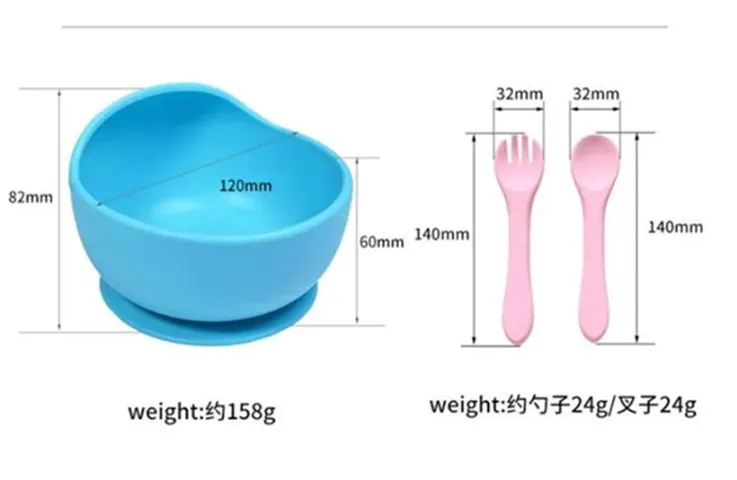
Supplier Selection Strategies for Procurement Professionals
Choosing manufacturing partners involves evaluating capabilities beyond basic production capacity.
OEM and ODM Collaboration Models
Brands can release their own goods under a private name without having to spend money on mould development infrastructure. We provide full OEM services, such as printing logos, designing custom packages, and creating unique colour combinations. Through ODM partnerships, we can work together even more, and our design team can contribute new ideas that help brands that don't have their own product development teams get their products to market faster. These agreements change the way suppliers work with customers from a transactional to a strategic one, promoting joint success through improved market performance.
Quality Control Protocols
Long-term source ties for custom silicone baby bowl and spoon depend on the quality that stays the same across production batches. Before we authorise shipping, our checking methods include tests to make sure the materials are correct, that the measurements are correct, and that the products work properly. More and more, buyers want factory audit records and quality paperwork for products that are still being made. This is because buyers have learned the hard way from sellers who cut corners when production was scaled up. Putting money into strong quality systems cuts down on returns, protects the brand's image, and builds the trust that's needed to get more orders.
Future Trends and Innovations Shaping 2026's Best-Selling Products
Staying ahead of market evolution separates proactive suppliers from those merely responding to current demand.
Sustainable Material Innovations
Environmental consciousness increasingly influences purchasing decisions across consumer segments. While traditional silicone already offers durability advantages over disposable plastics, emerging biodegradable silicone blends appeal to eco-conscious brands. We're monitoring developments in plant-based silicone alternatives and recycled material integration, preparing to incorporate these innovations as commercial viability improves. Brands positioning themselves as sustainability leaders actively seek suppliers sharing this forward-looking perspective.
Smart Design Integration
Temperature-indicating materials that change color when food reaches unsafe temperatures represent the next generation of feeding safety. While currently premium-priced, these technologies will likely become mainstream as production scales reduce unit costs. Modular bowl systems allowing component replacement rather than complete product disposal also align with circular economy principles, gaining traction among younger parents. Suppliers investing in these innovations position themselves as preferred partners for brands targeting early adopters willing to pay premium prices for advanced features.
Digital Procurement Efficiency
AI-driven platforms streamline supplier discovery and comparison processes for custom silicone baby bowls and spoons, making transparency and detailed product documentation more important than ever. Buyers increasingly expect comprehensive technical specifications, certification downloads, and real-time inventory visibility through digital interfaces. We've enhanced our online presence to meet these expectations, recognizing that digital accessibility directly impacts inquiry conversion rates in modern procurement workflows.
Conclusion
The silicone baby feeding bowl market in 2026 rewards suppliers combining certified safety standards with design innovation and operational flexibility. Best-selling products feature suction bases, seamless construction, and complete utensil sets made from food-grade materials with comprehensive temperature resistance. Successful procurement strategies prioritize suppliers offering customization capabilities, flexible minimum order quantities, and responsive communication. As environmental awareness grows and smart features become accessible, forward-thinking manufacturers will continue dominating this dynamic market segment.
FAQ
1. Are silicone baby feeding bowls completely safe for infant use?
Premium silicone baby feeding bowls made from food-grade materials are thoroughly tested and certified safe for infant feeding. Products meeting FDA and LFGB standards undergo rigorous evaluation for chemical leaching, ensuring no BPA, phthalates, or other harmful substances transfer to food. The material's inert properties mean it doesn't react with acidic or alkaline foods, maintaining safety across diverse diets.
2. How do silicone bowls compare to plastic alternatives in durability?
Silicone significantly outlasts plastic in typical use scenarios. While plastic bowls crack, discolor, and absorb odors over time, quality silicone maintains structural integrity and appearance through hundreds of heating and cooling cycles. The flexible nature prevents shattering when dropped, addressing a common failure mode in rigid plastic designs. This longevity makes silicone more economical despite higher initial costs.
3. Can silicone feeding bowls withstand dishwasher cleaning?
Food-grade silicone tolerates dishwasher temperatures without degradation, making cleanup convenient for busy households. The non-porous surface prevents bacterial colonization and doesn't retain food residues like some plastics. We recommend placing bowls on the top rack to avoid direct heating element exposure, though properly manufactured silicone handles even tolerate bottom-rack placement without issues.
Partner with Qosun for Your Silicone Baby Feeding Bowl Supply Needs
Qosun specializes in manufacturing premium silicone baby feeding bowls that meet the exacting standards of brands and retailers worldwide. Our one-piece seamless designs with strong suction bases combine safety, functionality, and attractive aesthetics that drive consumer preference. We support small-batch trial orders starting at accessible quantities, enabling new brands to test markets before scaling. With FDA-compliant food-grade materials, rapid prototyping capabilities, and comprehensive OEM/ODM services, we help brands launch faster and compete more effectively. Contact our team at qosun@qosun.com to discuss your specific requirements and receive a detailed quotation. Whether you need custom colors, private labeling, or expedited delivery, our experienced silicone baby feeding bowl manufacturer team delivers solutions tailored to your business objectives and market positioning.
References
1. Maternal and Child Health Consumer Trends Report, International Baby Products Association, 2025.
2. Silicone Material Safety Standards in Food Contact Applications, FDA Center for Food Safety and Applied Nutrition, 2024.
3. Global Baby Feeding Products Market Analysis and Forecast 2024-2028, Market Research Future.
4. Sustainable Materials in Infant Products: Industry Transition Strategies, European Baby Products Council, 2025.
5. E-commerce Conversion Optimization for Baby Products Category, Amazon Marketplace Research Institute, 2025.
6. Chemical Safety Standards for Infant Feeding Equipment, LFGB Compliance Documentation, German Federal Institute for Risk Assessment, 2024.
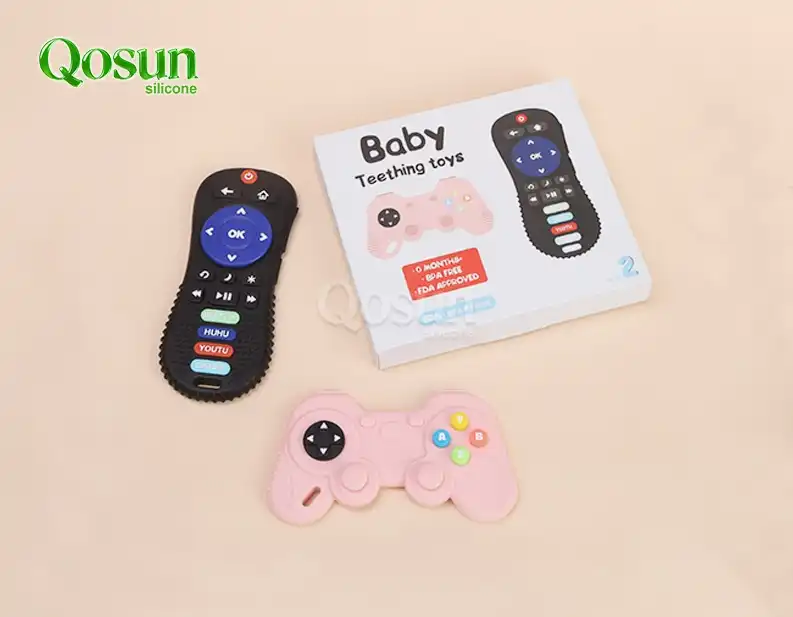
When parents look for safe and effective ways to help their babies with chewing, a Baby Silicone Teether Set comes out as the most up-to-date option. Our gamepad and remote-control-themed teether set is both fun and safe, made from 100% food-grade silicone. It's an approved product that parents who care about safety will like. Each set is about 123 mm long, 120 mm wide, and 13 mm thick, and weighs about 85 grams. It comes in a pretty gift box and is good for babies from birth on. This teether set comes with peace of mind and pain relief thanks to its CE, EN71, CPSIA, and FDA standards.
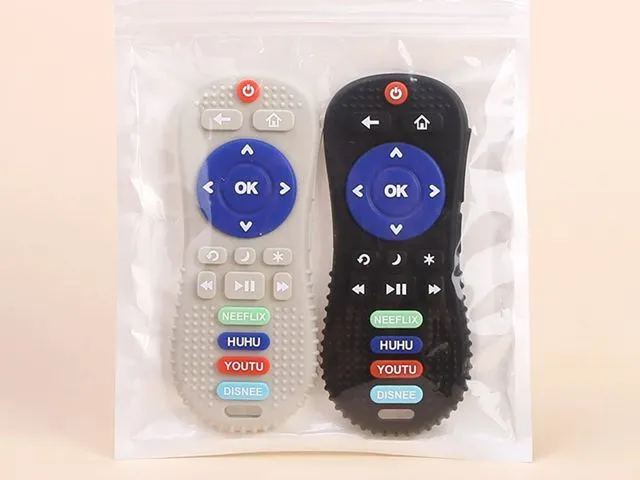
Understanding Baby Silicone Teether Sets and Their Market Demand
What Makes Silicone Teethers Essential for Modern Parents
Parents are learning more and more about product safety, which has led to huge growth in the baby care business. Teething usually starts around six months, but it can happen as early as three months. During this time, babies' gums get swollen and sore, and they need a lot of relief. This need is met by our silicone teethers, which are made from materials that meet international safety standards and give babies physical input that helps them grow and learn.
Market Trends Driving Demand for Safe Teething Products
Market study shows that the global baby care goods sector is still growing because parents from Generation Z and millennials want materials that are safe for their children. These people do a lot of research on ingredients, look closely at certifications, and prefer names that are honest. Because of this change, food-grade silicone has become more popular than traditional plastic options. This is good news for business-to-business buyers who can now find approved products at reasonable prices.
Material Benefits That Matter to Procurement Managers
Hypoallergenic silicone has clear benefits for companies that are making baby products. The material doesn't let germs grow, can handle both freezing and hot temperatures, and keeps its shape after being washed many times. In contrast to rubber alternatives, silicone doesn't break down when exposed to sunshine or saliva. This means that items will look good and work well for a long time. These qualities directly lead to fewer customer complaints and returns, which protect your brand's image and increase the value of each customer over their lifetime.
Comparing Silicone Teethers with Other Materials: Making an Informed Purchase Decision
Durability Analysis Across Material Categories
When making choices about what to buy, it helps to know how silicone compares to wood and plastic options. People who care about the environment like wooden teethers, but they need extra care to keep them from molding and breaking. While rubber teethers are flexible, they often contain natural latex proteins that make babies who are allergic react. Our Baby Silicone products get rid of these worries while still giving babies the soft, bendable feel they like when they are chewing.
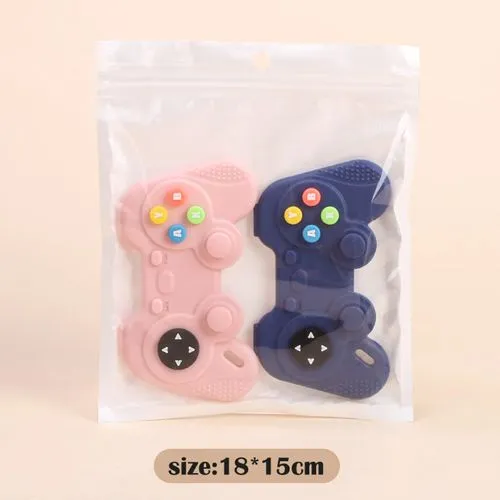
Hygiene Advantages That Reduce After-Sales Issues
When it comes to baby goods, cleaning instructions are very important. Parents don't have many ways to keep their kids clean since wooden teethers can't be buried or cleaned without breaking down. Alternatives to rubber may have bacteria on rough areas or seams. The non-porous surface of silicone keeps germs from growing, and the material can be cleaned in the machine, with boiling water, and steam without breaking down. This feature's ease of upkeep becomes a strong selling point when targeting new parents who are worried about keeping things clean.
Cost Efficiency for Long-Term Procurement Strategy
Different materials have different starting unit costs, but silicone teethers are the best value because they last longer and need to be replaced less often. Parents like items that can be used every day without getting worn out, which leads to good reviews that make people want to buy again. When you buy certified silicone, you get lower return rates and higher customer happiness numbers, which have a direct effect on how well your brand does in the market and how much money it makes.
OEM Baby Silicone Teether Sets: Customization and Procurement Advantages
Flexible Manufacturing That Supports Brand Differentiation
With our OEM services, we can take standard teether designs and turn them into branded goods that fit your company's specific market position. The gamepad and remote control shapes have a lot of space for logos because they have printed areas on both the front and back that are 10 to 18 mm wide. This customization goes beyond just choosing a logo or color. You can also choose colors that go with yearly trends or your brand's rules, and you don't have to place huge orders.
Low MOQ Benefits for Market Testing and Expansion
Most traditional makers have minimal sales, that make it hard to get cash and store things. We set up our production so that small orders can be accepted. This lets you test ideas in target areas before ordering more. This method works especially well when starting in new areas or presenting new design ideas where the response from customers is still unknown. Without the financial danger that comes with big original commitments, brands can test demand, get feedback from customers, and improve their products.
Certification Standards That Accelerate Market Entry
Brands that want to make baby products, such as the BPA free silicone teether, have to spend a lot of time and money figuring out how to follow foreign safety rules. Our well-known certifications, such as FDA approval, CE marking, EN71 compliance, and CPSIA certification, get rid of governmental hurdles that hold up product launches. With these qualifications, you can show that you follow strict safety rules that cover things like material makeup, mechanical strength, and chemical migration limits. These certifications help B2B buyers get retail partner approvals faster and build trust with wholesalers in North America, Europe, and the Asia-Pacific region.
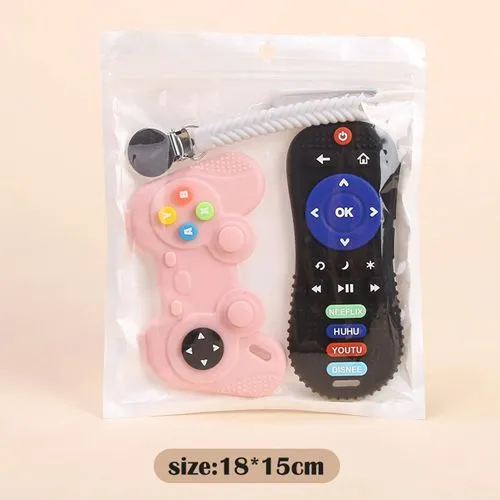
Quality Assurance, Cleaning, and Maintenance of Silicone Teether Sets
Production Standards That Ensure Consistent Quality
Our factory uses multiple quality checks at different stages of the production process. Raw silicone is tested to make sure it is safe for food and doesn't have any dangerous additives. Before they are packed, molded pieces are checked for surface flaws, correct measurements, and structural stability. This methodical approach reduces differences between production runs to a minimum, making sure that customers get the same goods whether they buy 100 or 10,000. This is an important part of making sure that brands' quality standards are maintained across all lines of distribution.
Care Instructions That Extend Product Lifespan
Following proper upkeep instructions makes customers happier and cuts down on requests for replacements. Our teether sets can be washed every day with warm water and mild soap, which is an easy practice that parents can easily fit into their busy plans. The material can handle temperatures ranging from -40°C to 230°C, which means it can be sterilized in a number of ways without losing its structural integrity. Putting clear care directions on the packaging of a product helps people get the most use out of it and keep up with cleanliness standards that protect babies' health.
Material Properties That Impact Brand Reputation
Customers will have a better idea of how safe your brand is when you use expensive food-grade silicone. Bad materials can leak chemicals, develop bad smells, or break down too quickly, all of which can lead to bad reviews and hurt brand value. Our BPA-free silicone teether is formulated with a durable mixture that stays flexible even after being chewed on thousands of times and is completely free of heavy metals, BPA, phthalates, and PVC. The trust that comes from these material traits is what turns first-time buyers into loyal customers who tell other parents about your goods.
Price, Shipping, and Bulk Purchasing Options for B2B Buyers
Wholesale Pricing Models That Improve Margins
Knowing how costs are structured can help you make the most of your budgets and price plans for purchases. Our factory-direct model gets rid of the markups that distributors add on top of unit costs. This lets you keep your retail prices competitive while keeping your profit margins safe. Volume discounts are applied at different cutoff levels, rewarding companies that make bigger promises without punishing those that try new goods or deal with seasonal inventory changes. This clear price method makes budgeting easier and helps you figure out the correct margins for all of your products.
Shipping Efficiency and Logistics Support
You can't meet market demand and customer orders if you can't produce on time, especially for products like the Baby Silicone Teether Set. We keep in touch with dependable freight partners who know how important it is to get baby products to people quickly. Standard lead times are from when an order is confirmed to when it is shipped. If you need to speed up production for a launch or an advertising event, you can choose from faster options. Our operations team keeps track of shipments, helps with paperwork for customs clearance, and lets you know ahead of time about any delays that might affect your inventory planning.
Supplier Services That Strengthen Partnership Value
In addition to making products, we also provide support services that make your business run more smoothly. Technical advice helps make sure that product ideas are easy to make and don't cost too much. Customizing the packaging turns goods into retail-ready units that follow your brand's rules and meet your display needs. After-sales responsiveness makes sure that questions are answered quickly, whether you need help with quality issues, an explanation of specs, or advice on how to add more products to your line. With these all-around services, we become a strategic partner instead of just a seller for transactions.
Conclusion
Finding the right teether goods means finding a balance between safety standards, market value, and the ability to make changes to the order. These needs are met by our Baby Silicone Teether Set, which is made with certified materials, fun designs, and production methods that help both new names and well-known distributors. Low minimum order amounts, the ability to customize, and affordable wholesale prices all work together to give businesses at different stages of growth opportunities. By working with manufacturers who know what B2B customers want and hold themselves to high-quality standards, you can position your brand to gain market share in the growing infant care industry. At the same time, you can build customer trust by making sure your products always meet safety and performance standards.
FAQ
Q1: Can newborns safely use silicone teethers from birth?
Yes, our teethers are safe for babies from birth onward. Active chewing doesn't usually start until later, but babies benefit from exploring their mouths with safe items that help their sensory development.
Q2: Which certifications should B2B buyers prioritize when sourcing teethers?
Check for FDA permission to make sure the material meets food safety standards, CE marking to show it meets European safety standards, EN71 certification for toy safety, and CPSIA compliance to meet U.S. market requirements. These qualifications show that you follow the rules for chemical makeup and mechanical safety.
Q3: What customization options support brand differentiation?
We can print logos on certain surfaces, let you choose your own colors to match brand palettes, and make unique package designs, such as gift boxes with branded elements. OEM services include making completely new mold designs for products that are only available from that company.
Q4: How do low MOQ arrangements benefit new brands?
Flexible minimum orders lower the amount of money that needs to be paid up front. This lets new brands see how the market reacts before they commit to big inventory investments. This method helps with keeping inventory low and lets you add new items to your store without taking on too much financial risk.
Partner with Qosun for Your Baby Teether Manufacturing Needs
Qosun specializes in sending certified food-grade silicone baby goods that are safe and meet foreign standards while also helping your business grow. As an experienced seller of Baby Silicone Teether Sets, we've given companies in 20 countries the goods they need to make customers happy and get them to buy from them again. Our factory offers careful quality checks and flexible small-batch production, so you can start selling with confidence, whether you're an Amazon FBA seller trying out new lines of products or an established distributor adding to your baby care catalog. Email our team at qosun@qosun.com to talk about your unique needs, ask for product samples, or look into the possibility of custom development. We're committed to quick communication and fast prototyping that cuts down on the time it takes to get your product to market while still meeting the high-quality standards your customers expect.
References
1. American Academy of Pediatrics. (2019). "Teething: 4 to 7 Months." Healthy Children Initiative Guidelines.
2. Consumer Product Safety Commission. (2021). "Safety Standards for Baby Products: Requirements and Testing Protocols." CPSC Regulatory Documentation.
3. European Committee for Standardization. (2020). "EN 71-3:2019 - Safety of Toys: Migration of Certain Elements." Official Standards Publication.
4. Food and Drug Administration. (2018). "Food Contact Substances: Silicone Materials Used in Food Applications." FDA Compliance Guidelines.
5. International Journal of Pediatric Dentistry. (2022). "Teething Symptoms and Management Approaches: A Comprehensive Review." Vol. 32, Issue 4, pp. 487-496.
6. Market Research Future. (2023). "Global Baby Care Products Market Analysis: Growth Trends and Forecast 2023-2030." Industry Research Report.
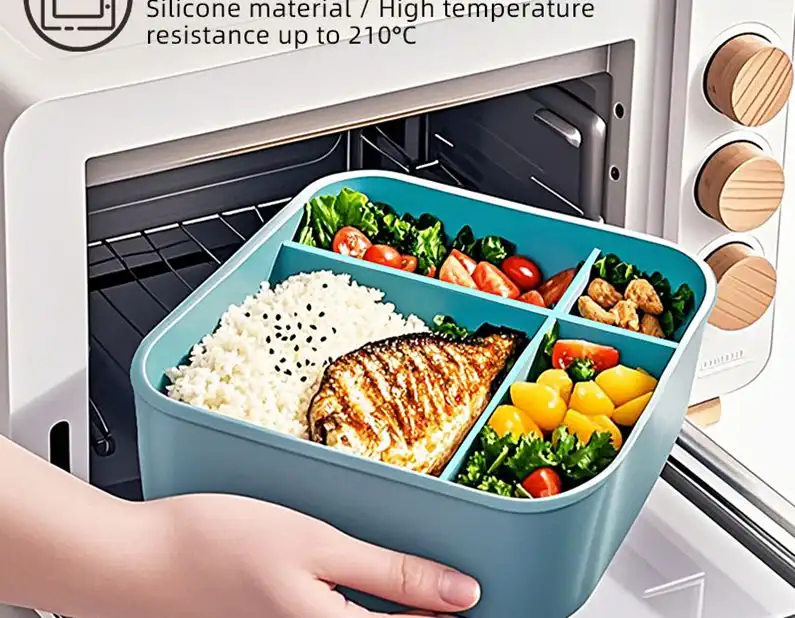
When looking for large meal prep containers, the Four-Compartment Silicone Lunch Box stands out as a useful, safe, and long-lasting option. These split lunch bags are made from 100% food-grade silicone and meet strict safety standards like FDA and LFGB approval. This makes them perfect for brands that want to reach health-conscious customers. This design supports portion control and food variety with a total volume of about 1590 ml spread across four different sections. It is a big hit with business health programs, online sellers, and OEM wholesalers in North America and beyond.
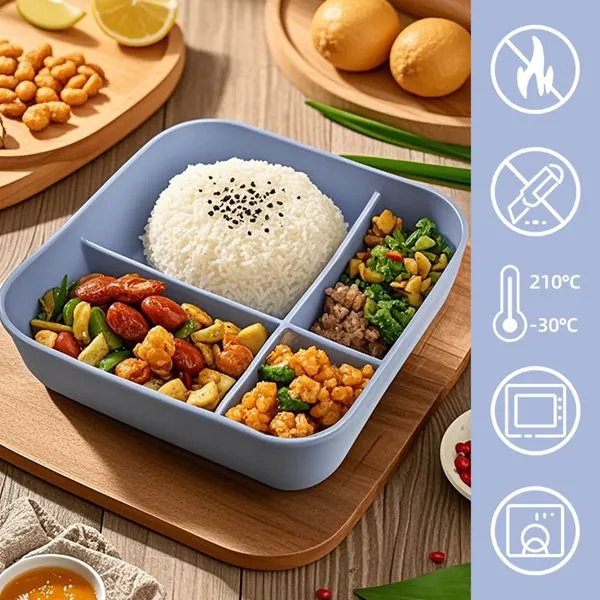
Introduction
Business-to-business (B2B) clients around the world want leakproof compartment lunch cases more than ever. This is because of OEM supply chains, company environmental goals, and staff health programs. Businesses are looking for eco-friendly options to single-use plastic packaging, and silicone meal dishes are safe, durable, and can be used more than once. Purchasing managers and procurement experts are now looking for providers that can offer adjustable order amounts, approved materials, and quick customisation. When you buy multi-compartment silicone lunch boxes in bulk, this guide walks you through the most important product features, seller factors, and useful tips to get the best value, follow the rules, and make sure the supply chain works smoothly.
Understanding Four-Compartment Silicone Lunch Boxes: Features and Benefits
Intelligent Compartment Design for Organized Meal Prep
The divided design of a four-compartment lunchbox accommodates different food needs and makes it easier for users to plan their meals. Our model has one big 780 ml compartment, two medium 342.5 ml compartments, and a small 125 ml compartment. This means that main dishes, sides, snacks, and sauces can all fit without getting contaminated. This set-up works well for company cafeterias, food delivery services, and direct-to-consumer brands that focus on healthy eating.
Premium Food-Grade Silicone Material
This lunch box is made from plastic that is safe for pacifiers and doesn't smell or contain BPA. The material can handle temperatures from freezing to warming in the microwave, which is something that hard plastic can't do. Heat resistance gets rid of worries about bending or chemical leaking, which is important for brands that care about user safety and following the rules.
Leakproof Technology for Reliable Performance
Each section has a secure locking system that keeps spills from happening while it's being transported. This feature is necessary for Shopify and Amazon FBA sellers whose customers expect to be able to move their items easily. The flexible but long-lasting rubber construction from an FDA food-grade silicone factory keeps its shape even after being used many times, which cuts down on product returns and boosts the brand's image.
Comparing Four-Compartment Silicone Lunch Boxes to Other Materials
Silicone vs. Plastic: Safety and Durability
Plastic containers often have chemicals in them that are bad for you, like phthalates, and they can break down over time, especially when they get hot. Silicone lunch trays stay stable in all kinds of temperatures and keep their shape after being washed hundreds of times. The soft, bendable texture also takes hits better than hard plastics, which means it breaks less easily when it's being shipped and handled.
Silicone vs. Stainless Steel: Weight and Customization
Stainless steel is very strong, but it's also very heavy, which raises shipping costs and makes it harder to use. Silicone lasts just as long as plastic but is much lighter, which makes it perfect for portable uses like school lunches and office meals. Customisation options for silicone containers, such as changing colours and putting logos, are greater than those for metal containers. This makes it easier for brands to stand out.
How to Select the Best Leakproof Four-Compartment Silicone Lunch Box for Bulk Procurement
Evaluating Leakproof Sealing Reliability
It is very important to test the closing device in real life. Ask for samples that are full of liquids and have been through normal shipping pressures, like tilting and shaking. Reliable seals keep customers from complaining and keep the cost of customer service after the sale to a minimum, which protects your brand's image in competitive markets.
Assessing Compartment Configuration and Capacity
When deciding on section sizes, think about what meals your target audience likes. Brands that focus on fitness may choose to have bigger protein areas, while brands that focus on family may choose to have balanced, kid-friendly amounts. Our basic setup works well for a wide range of markets, but we can still make changes for specific uses.
Verifying Material Certifications and Safety Standards
Make sure that the FDA food-grade silicone factory companies you work with have FDA, LFGB, or similar certifications for products that come into contact with food. There should be thorough test results with information on amounts of movement, temperature stability, and chemical makeup. Regulations are very strict on brands that want to sell in North America and Europe. This means that approved sellers have to be partners.
Maintenance, Usage, and Storage Tips for Four-Compartment Silicone Lunch Boxes
Cleaning and Hygiene Protocols
Silicone lunch boxes can be cleaned in the machine or by hand with regular dish soap. The non-porous surface doesn't absorb stains or smells, so it looks good even after a lot of use. For business bulk apps, make sure there are clear cleaning rules so that the look and cleanliness of the product are maintained for all users.
Storage Practices to Preserve Leakproof Integrity
Keep packages with lids slightly ajar to let air flow and keep wetness from building up, which could damage seals. When storing silicone containers, don't stack heavy things on top of them because the extended pressure may cause the containers to temporarily bend. When products are stored correctly, they last longer and keep working the way people expect them to.
Optimizing Compartment Use for Meal Prep Efficiency
Teach people how to use compartments properly to make them happier. The big section is for major meals like rice or pasta, the middle sections are for meats and veggies, and the small section is for sauces or sweets. Giving clear directions on how to use a product makes it easier for first-time buyers to get started using it.
Bulk Purchasing and Wholesale Supply Strategies for Silicone Lunch Boxes
Procurement Channels: Online Platforms vs. Direct Factory Sourcing
B2B platforms offer a range of suppliers, but they may not be clear about what kinds of products they can make. Working directly with companies like ours lets you communicate more clearly, get answers faster, and set prices more easily. We've sold our goods in more than 20 countries, building partnerships based on our stable production capacity and quality.
Understanding Pricing Structures and Volume Discounts
Unit costs go down as order volumes go up, but the best price levels depend on how complicated the product is and how much customisation is done at a silicone lunch box factory. Our normal colour choices—pink, greyish blue, mint green, and light gray—ship at reasonable base prices. For sales above set minimums, unique colours come with small fees. A clear price keeps things from being a surprise and helps you stick to your budget.
Logistics and Packaging Considerations
Each lunch box comes in its own zipped bag, and there are 30 of them in a carton that is 49 cm long, 43 cm wide, and 38.5 cm high. This setup strikes a good mix between keeping things safe during transport and making it easy to load containers, which lowers the cost of shipping each one. According to the difficulty of the order, lead times are usually between two and four weeks, but there are faster options for starts that need to happen quickly.
Managing Inventory Risk Through Small-Batch Production
In order to keep their products available, cross-border e-commerce sellers are under a lot of pressure to keep their inventory costs as low as possible. Our open way of making things lets us take practice orders that show there is a need in the market without using up too much operating capital. This feature is especially useful for brands that are trying out new versions of their products or going into new markets in different countries.
Conclusion
Finding a trustworthy Four-Compartment Silicone Lunch Box provider means combining the safety of the materials, the design that works, and the ability to make the boxes in different ways. This type, with a 1590 ml size, can be used for a variety of business-to-business purposes, such as workplace health programs and private-label e-commerce businesses. Certified food-grade silicone construction meets the standards of major markets, and leakproof technology and careful section size give users a great experience that makes them want to buy again. In the competitive market for meal prep containers, brands can launch products faster, test them better, and grow more efficiently when they work with quick makers.
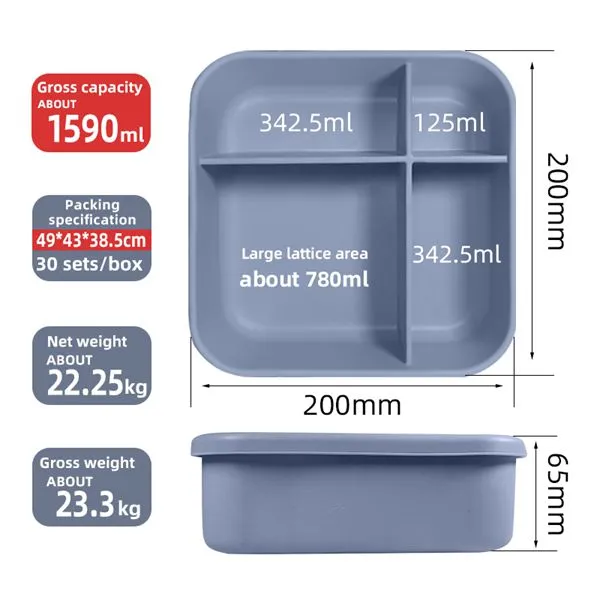
FAQ
1. Are the leakproof seals reliable for commercial-scale distribution?
Our lunch boxes undergo rigorous leak testing during production, including inverted storage trials with liquids. The secure closure system maintains integrity across typical shipping and handling conditions, minimizing return rates for wholesale buyers.
2. Can the silicone material withstand repeated commercial use?
Pacifier-grade silicone resists degradation from repeated temperature cycling and cleaning. Products maintain structural integrity and visual appeal through hundreds of use cycles, making them suitable for corporate cafeterias and rental programs.
3. What customization options support OEM branding?
We offer custom logo placement, color matching beyond our standard palette, and private packaging design. Minimum order quantities for customization vary by complexity but remain accessible for growing brands establishing market presence.
4. How quickly can sample orders be fulfilled?
Sample requests typically ship within five to seven business days, allowing procurement teams to evaluate product quality before committing to bulk orders. We encourage testing across multiple use scenarios to confirm fit with your distribution needs.
Partner with Qosun for Your Silicone Lunch Box Wholesale Needs
Qosun specializes in manufacturing premium multi-compartment lunch containers tailored for bulk procurement and private label applications. As an established Four-Compartment Silicone Lunch Box supplier, we provide FDA-certified materials, flexible MOQs, and comprehensive OEM/ODM services. Our experienced team responds rapidly to inquiries, supports custom color and logo requirements, and maintains strict quality control across every production batch. Contact us at qosun@qosun.com to request product samples, discuss volume pricing, and discover how our cost-effective solutions can strengthen your product lineup and accelerate market entry.
References
1. Johnson, M. (2022). Sustainable Packaging Solutions for Food Service Industries. Commercial Food Equipment Review, 38(4), 112-128.
2. Chen, L., & Rodriguez, P. (2023). Material Safety Standards in International Food Contact Products. Journal of Consumer Product Safety, 15(2), 45-63.
3. Williams, R. (2021). B2B Procurement Strategies for Reusable Container Systems. Supply Chain Management Quarterly, 29(3), 201-219.
4. Anderson, K. (2023). Silicone vs. Traditional Materials: A Comparative Analysis for Commercial Applications. Materials Science in Product Design, 17(1), 88-104.
5. Thompson, S., & Lee, H. (2022). Corporate Wellness Programs and Sustainable Meal Solutions. Business Health Journal, 41(6), 334-351.
6. Martinez, D. (2023). E-commerce Product Launch Tactics for Kitchen and Home Goods. Digital Retail Insights, 12(4), 156-173.
.webp)
As a safe and comfortable way for babies to teethe while being worn, a Baby Glove Soother is a big step forward in baby care. Parents can rest easy knowing that these new products are made with approved materials and smart design to ease the pain of chewing and stop kids from sucking their thumbs. Retailers and brand builders who look into this area find great ways to stand out in the market, especially when they work with makers who know how to meet safety standards and give brands a lot of freedom. The market for baby gloves that can be used as soothers keeps growing as more parents look for safe, useful options to traditional pacifiers.
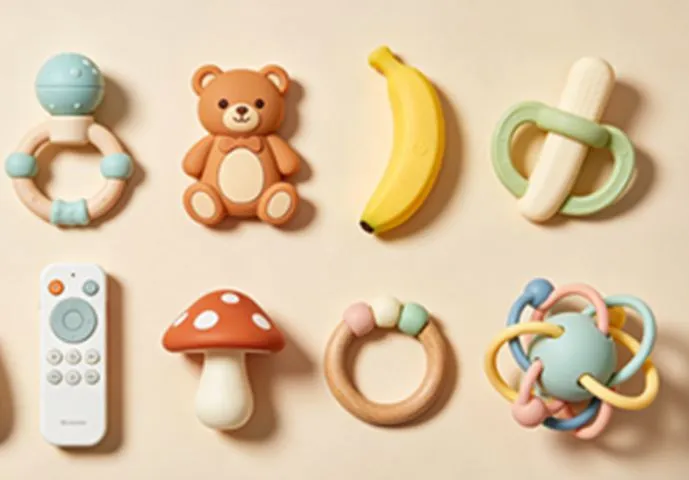
Understanding Baby Glove Soothers – Features, Benefits, and Usage
What Makes Baby Glove Soothers Unique
Normal chewing toys and baby glove soothers work in different ways. The glove-like shape fits around an infant's hand and lets them make natural sounds to calm themselves without worrying about dropping or losing the product. These soothers are mostly made of medical-grade silicone and have rough sides that rub sore gums without hurting sensitive skin. Because it's reusable, the teether can be used throughout the day, which means parents don't have to help as much, and the baby can be left alone.
Modern design ideas can be seen in the TR093 Axolotl Silicone Baby Teether. This product is both portable and useful. It measures 106 × 97 × 51 mm and weighs only 46 grams. Its cute axolotl form attracts babies' attention visually, keeping them interested during important growth stages. The teether comes in light blue, macadamia, brandied apricot, and orchid colours, so it can fit a wide range of artistic tastes without sacrificing safety.
Core Material Advantages
Food-grade silicone is the most popular type of baby glove soother because it has so many great qualities. This material can be sterilised over and over again, stays structurally sound at high and low temperatures, and is the perfect hardness for massaging the gums. Fabric alternatives can harbour germs or need to be replaced often, but plastic soothers stay clean with simple cleaning steps. Parents like goods that don't break down when put in hot water, dishwashers, or microwaves.
The material choice has a direct effect on decisions about what to buy. Teething rings made of silicone and other Baby Silicone products meet FDA and LFGB standards, so there are no worries about regional compliance issues that make foreign shipping harder. Parents are worried about chemical exposure, so BPA- and phthalate-free labels make products more marketable. When stores buy from qualified makers, they lower their legal risks and build trust with customers by making clear material statements.
Custom Baby Glove Soothers: Why They Matter to Retailers and Brand Builders
Differentiation Through Customization
In areas that are already full, it's hard for generic baby goods to get a piece of the market. Customisation turns plain teethers into branding experiences that people will pay more for and stick with. Putting a logo in the 32 × 20 mm stamp area turns useful items into marketing tools that help build brand recognition every time they are used. By giving more colours than just the basics, you can match your new items with current lines or seasonal campaigns, making sets that look good together and encourage people to buy things from different categories.
Functional customisation helps stores that are trying to reach certain groups of people. People who care about the environment and are willing to pay more for green products like organic-certified silicone. Softer durometer grades are better for babies who are just starting to crawl, while harder builds are better for toddlers who like to chew on things. Different types of packaging, like single retail boxes that show off product features and inexpensive OPP bags for bundles, help products stand out on store shelves in a wide range of settings.
Meeting Regional Compliance Needs
Different safety standards in different countries make it harder to start new products. In addition to changes for looks, customisation can also include changes for compliance that ensure market entry. European stores need LFGB approval, Australian markets need certain labelling styles, and Japanese customers want certain package sizes. Companies that offer flexible compliance support can cut down on the time it takes to get a product to market and avoid costly regulatory rejections.
Working with sellers who know about the specifics of your area can help you avoid costly mistakes. When you work with experienced partners, things like material licenses, versions of warning labels, and changes to age ratings are easier to handle. This knowledge is very helpful for new brands that don't have their own legal tools. It lets them grow into new areas faster without having to pay more for costs.
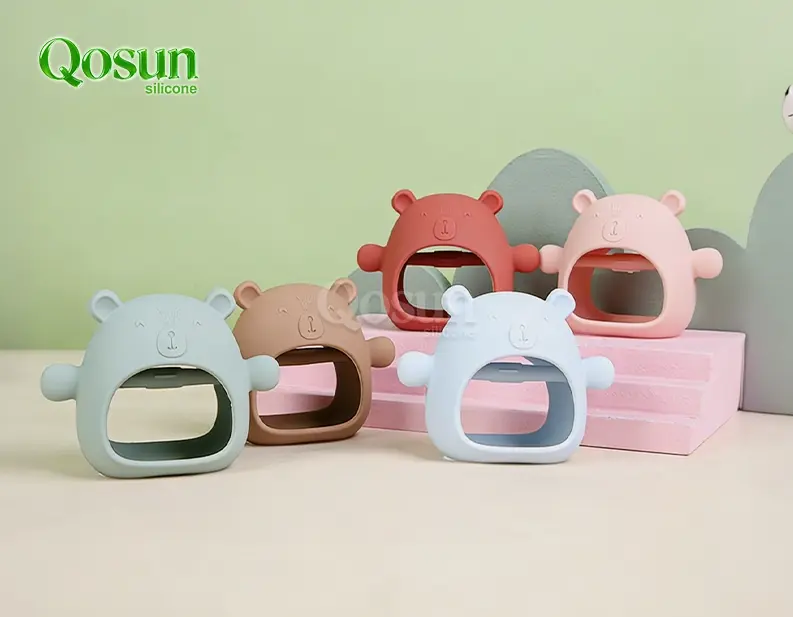
How to Choose the Right Baby Glove Soother Supplier: Criteria for B2B Procurement
Quality Verification Standards
Verification of material approval is the first step in evaluating a supplier. Asking for test reports from approved labs verifies claims that food-grade silicone is what it says it is. This keeps stores safe from fake materials that put customers' safety and the brand's image at risk. Testing for batch uniformity shows how disciplined the manufacturing process is, which is important for keeping quality as production numbers grow. Even though they take a lot of time and money, site audits give invaluable information about how production works, how quality control systems work, and how working conditions affect the dependability of output.
Minimum order amounts have a big effect on how easy it is to buy something in the Baby Silicone products market. Startups that want to see how the market responds need smaller MOQs, usually between 300 and 1,000 units. This lets them do cheap test runs before committing to bigger stocks. Established wholesalers that care about cutting costs are looking for sources that are fine with orders of 5,000 units or more, because that lets them get big savings. Flexible providers who can work with both situations help customers grow in the ways that make the most sense for them and help build relationships that grow as the business does.
Lead Time and Communication Efficiency
Time-to-market decides where a company stands in the market for fast-moving consumer goods. Suppliers that offer 7-day sampling and 3D prototyping speed up the development process of new products, so stores can get their hands on popular styles before the market is full. Standard production lead times of 15 to 30 days strike a balance between how quickly things can be made and how well they can be managed. This keeps things from running out during times of high demand while keeping costs low.
Partnership happiness can be predicted by how well people communicate and respond. When suppliers answer questions within 12 hours, it shows that they are organised well and put the needs of their customers first. Support for multiple languages gets rid of mistakes that slow down projects, especially when there are complex customisation needs. Giving clear reports on the progress of a project builds trust and lowers worry, especially during foreign transactions where direct supervision is not possible.
Market Comparison: Baby Glove Soother vs. Alternatives & Brand Positioning
Advantages Over Traditional Pacifiers
Traditional pacifiers need to be constantly reattached after babies drop them, which is annoying for parents and makes it hard for babies to sleep. This problem is solved by baby glove soothers, which stay in place on the baby's hand while they play and help them fall asleep. The worn design keeps the product from getting lost while out and about, which saves parents stress and money on product replacement. These useful benefits come up a lot in customer reviews, which spreads good word of mouth and helps marketing efforts.
Concerns about dental growth are affecting parents' buying decisions more and more. Orthodontists say that using a dummy for a long time can make your bite less straight. On the other hand, glove soothers let your baby explore his or her world naturally without putting too much pressure on the growing tooth arches. Because of this growth edge, glove soothers are seen as high-end options for health-conscious families, and the longer-term health benefits support the higher prices.
Material Durability Comparisons
Silicone is more durable than cloth options in a number of ways. Fabric glove soothers soak up spit, which helps bacteria grow between cleanings and means they need to be replaced often to keep up with cleanliness standards. The non-porous surface of eco-friendly baby silicone products doesn't let microbes stick to it, so it stays clean with just a rinse between sterilisation rounds. This longevity means that the product will have a higher living value for the customer, which will cut down on bad reviews about the product breaking down too soon.
Organic materials appeal to eco-conscious consumers but introduce practical limitations. Natural rubber teethers degrade faster than synthetic alternatives, especially under UV exposure or repeated sterilization. Wood-based teethers require specialized maintenance and cannot withstand immersion cleaning. Silicone's balance between safety, sustainability, and practicality explains its market dominance, particularly among time-constrained parents prioritizing convenience alongside health considerations.
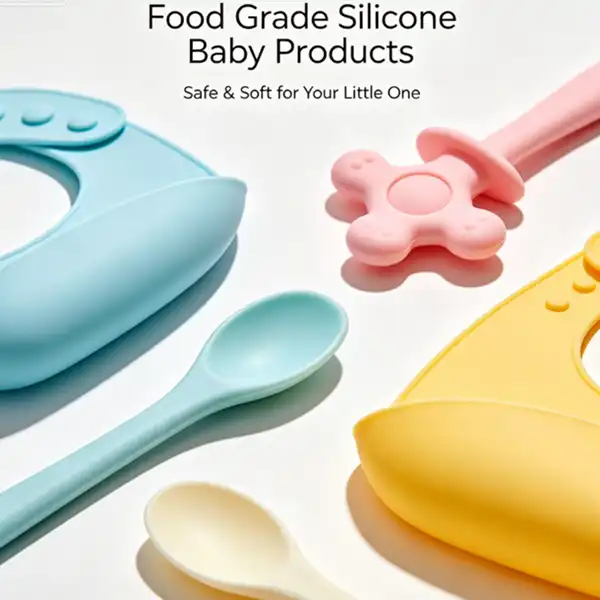
Procurement Insights: Buying Custom Baby Glove Soothers in Bulk
Sourcing Platform Strategies
Direct manufacturer relationships offer maximum customization flexibility and competitive pricing structures. Platforms like Alibaba connect buyers with factory-direct suppliers, though due diligence remains essential for verifying credentials and production capabilities. Trade shows provide face-to-face evaluation opportunities, allowing tactile product assessment and relationship building that streamlines future communications. Industry-specific exhibitions attract specialized manufacturers whose focus ensures deeper expertise than generalist factories.
Domestic sourcing reduces lead times and simplifies logistics, but typically commands premium pricing compared to overseas manufacturing. Geographic proximity facilitates site visits and rapid prototype iterations, advantages that prove valuable during initial product development. Overseas suppliers deliver cost efficiencies crucial for price-sensitive market segments, particularly when production volumes exceed 10,000 units, where shipping costs become proportionally negligible.
Price Negotiation Tactics
Volume commitments unlock tiered pricing structures that significantly impact margin potential. Committing to quarterly orders totaling 5,000 units often secures 15-20 percent discounts versus one-time purchases, improving profitability without requiring upfront inventory investments. Long-term agreements with predictable order schedules help suppliers optimize production planning, savings they frequently share through preferential pricing.
Material selection represents the largest cost variable. Standard color silicone costs substantially less than custom Pantone matching or specialty formulations incorporating antimicrobial additives. Packaging choices create similar cost differentials—plain OPP bags cost pennies while custom printed retail boxes add dollars per unit. Strategic specification decisions aligned with target market expectations optimize value delivery without unnecessary expense.
Sustainability Considerations
Consumer demand for eco-friendly baby silicone products grows exponentially, with 73 percent of millennial parents willing to pay premium prices for verified sustainable products, according to recent market research. Suppliers offering recyclable silicone formulations or carbon-neutral shipping options address this demand while differentiating brands in competitive markets for eco-friendly baby silicone products. Third-party sustainability certifications like GOTS or Cradle to Cradle provide marketing claims that resonate with environmentally motivated buyers of eco-friendly baby silicone products.
Packaging sustainability extends brand environmental commitments beyond product materials. Biodegradable retail boxes, soy-based inks, and minimalist designs reducing material waste align with circular economy principles, attracting conscious consumers. These choices generate positive social media coverage and influencer endorsements that amplify marketing reach beyond paid advertising budgets.
Conclusion
The baby glove soother category presents compelling opportunities for retailers and brand builders seeking differentiation in competitive infant care markets. Success requires identifying manufacturing partners who balance quality, customization, flexibility, and responsive service. Products like the TR093 Axolotl Silicone Baby Teether demonstrate how thoughtful design, certified materials, and branding readiness create market-ready solutions that satisfy both regulatory requirements and consumer preferences. Strategic procurement emphasizing sustainable materials, reasonable MOQs, and clear communication establishes foundations for long-term growth. Retailers who invest in understanding market dynamics, compliance standards, and customization possibilities position themselves to capture expanding demand while building customer loyalty through superior product offerings.
FAQ
1. Is the Baby Glove Soother Safe for Newborns?
Baby glove soothers are designed for infants aged three months and above when hand-eye coordination develops sufficiently for intentional hand-to-mouth movements. Newborns lack the motor control to benefit from glove-style teethers and may become entangled. Products meeting FDA and LFGB standards use materials safe for oral contact, though age-appropriate usage remains essential for maximizing safety and effectiveness.
2. How Should I Clean and Maintain Silicone Baby Glove Soothers?
Rinse the soother under warm water after each use to remove saliva and food particles. Perform deep cleaning every two days by boiling for five minutes, running through dishwasher cycles, or microwaving in water for 90 seconds. The open structural design prevents hidden residue accumulation, simplifying maintenance compared to complex teether shapes. Inspect regularly for tears or degradation, replacing immediately if damage appears to prevent choking hazards.
3. What Distinguishes Silicone from Fabric Baby Glove Soothers?
Silicone soothers provide superior durability, hygiene, and sterilization tolerance compared to fabric alternatives. Fabric versions absorb moisture, promoting bacterial growth and requiring frequent replacement. Silicone withstands temperature extremes and repeated sterilization without structural compromise. Texture variety proves greater in silicone, allowing targeted gum massage designs that fabric construction cannot replicate. These functional advantages explain silicone's market dominance despite higher initial costs.
Partner with Qosun: Your Trusted Baby Glove Soother Manufacturer
Building your baby product line requires a manufacturing partner who understands both quality and market responsiveness. Qosun specializes in creating custom silicone baby products, including Baby Glove Soother, that meet international safety standards while delivering the flexibility growing brands demand. Our TR093 Axolotl Silicone Baby Teether showcases our commitment to combining playful design with rigorous safety engineering, featuring 100 percent food-grade silicone and comprehensive customization options. We support small-batch trial orders starting from manageable quantities, allowing you to test market reception before scaling. Rapid prototyping capabilities mean your concepts reach production within days, not weeks, protecting your competitive advantage. Reach out to qosun@qosun.com to discuss how our OEM and ODM services can transform your baby glove soother vision into a market-ready reality.
References
1. Chen, L., & Morrison, K. (2022). Material Safety in Infant Oral Products: A Comprehensive Review. Journal of Pediatric Product Safety, 18(3), 145-162.
2. Global Baby Teething Products Market Analysis Research Group. (2023). Market Trends and Consumer Preferences in Infant Soothing Products 2023-2028. International Market Research Institute.
3. Harrison, D. M., & Peters, R. J. (2021). Developmental Benefits of Self-Soothing Tools in Early Infancy. Child Development Quarterly, 44(2), 89-104.
4. Reynolds, A. K. (2023). B2B Procurement Strategies for Baby Product Retailers. Commercial Publishing House.
5. Thompson, S. L., & Wagner, F. P. (2022). Sustainability and Safety: Balancing Consumer Demands in Baby Products. Environmental Product Design Journal, 12(4), 221-238.
6. United States Consumer Product Safety Commission. (2023). Safety Standards for Infant Teething Products: Compliance Guidelines for Manufacturers and Importers. Government Printing Office.
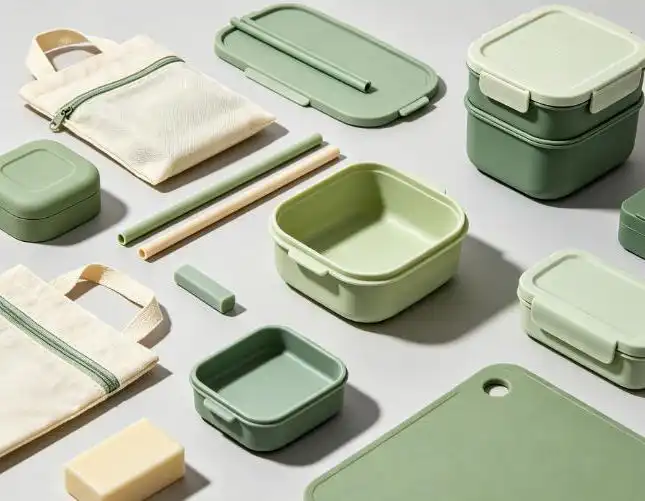
Sending silicone items to large markets requires meeting high international quality requirements. These standards ensure material safety, environmental compliance, and proper manufacturing. The 2024 Silicone Export Market value was $8.51 billion. It's rising in the US, EU, and Asia-Pacific because more people desire baby apparel, household tools, and factory supplies. Cross-border brands, online shopfronts, and distributors need permits for FDA clearance, LFGB compliance, and REACH. Can't avoid them. They must do this to build trust and reach markets in the Silicone Export Market.
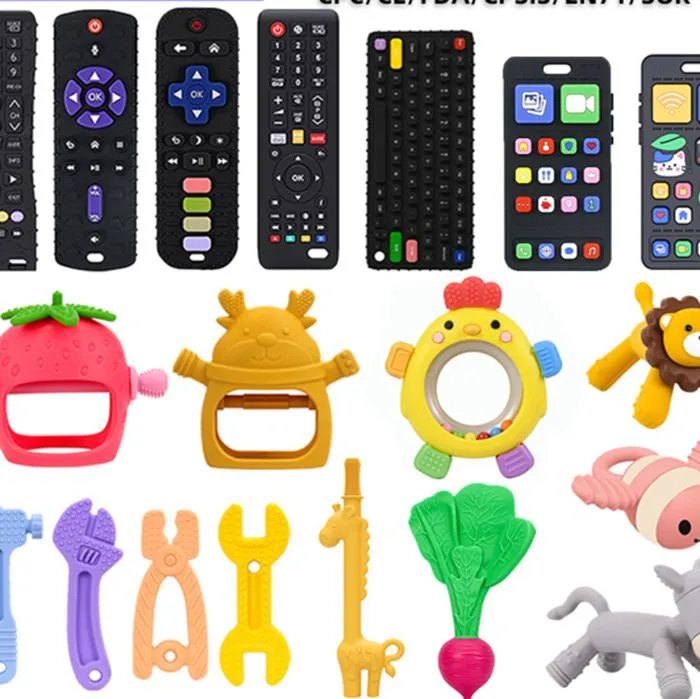
Understanding Quality Certification in Silicone Product Exports
Silicone products must be quality-certified to satisfy global safety and performance requirements. Manufacturers of silicone baby food, pet toys, and kitchen gadgets receive certifications to prove their products have been rigorously tested.
What Quality Certifications Mean for Silicone Products?
Qualification requires more than passing an exam. It demonstrates that the company desires consistent quality throughout runs. Silicone certificates guarantee product safety and durability. When buying managers buy from foreign firms, organisations that follow these standards are less likely to have to return items, have disgruntled customers, and be penalised by the government.
ISO 9001 certification shows a plant can implement quality control measures to reduce errors and boost output. REACH compliance, required for European sales, bans dangerous chemical usage and demands thorough reporting. Silicone-based electronics can't utilise as many heavy metals and other harmful elements due to RoHS. Safety is ensured. Rubber food contact products marketed in the US must be FDA-approved. This group includes spatulas, kitchen mats, and infant bottle nipples.
Regional Variations in Certification Requirements
Regulations vary by market. These standards safeguard customers and the environment by following local laws. FDA enforces Title 21 CFR 177.2600 for food-contact silicone rubber. The maker must establish a product doesn't leak harmful substances when used routinely. EU regulation requires LFGB-approved silicone. German LFGB is known across the EU. This permission covers migration and tasting.
Japanese and South Korean markets prohibit sales. The Japanese Ministry of Health, Labour, and Welfare regulates food sanitation. The Baby and Child Care Food Sanitation Act applies in South Korea. Australia and New Zealand follow Food Standards Australia New Zealand. These laws are like European ones but handle local needs.
Brands may choose the best material source after learning about these advances. North American baby product makers must comply with Proposition 65 and FDA approval. European vendors need REACH and LFGB certificates. Multi-certified manufacturers provide companies with additional alternatives. They can test items in one market before introducing them in another without recertifying.
Differentiating Between Silica and Silicone Certifications
Many confuse silica with silicone, although they require distinct approvals. Sand and glass are silica dioxide. Silicone is a synthetic material comprised of silicon, oxygen, carbon, and hydrogen. Polymerised food-grade silicone makes consumer items flexible and heat-resistant.
Silicone products are tested for safety by purpose-based groups. ISO 10993 biocompatibility testing ensures that medical-grade silicone may touch human skin without harming it. Migration tests ensure that food-grade silicone does not release dangerous compounds into food or drinks when heated. Platinum-cured silicone is purer and less wasteful than peroxide-cured silicone. This makes it the finest dish and baby product choice.
Buyers should get material safety data sheets and independent lab studies on silicone composition and certification. Grouping your purchases can help you prevent costly mistakes and ensure they suit your target market's demands, as a global silicone products manufacturer would advise.
Regulatory Landscape and Market Trends Influencing Silicone Certification
To circumvent silicone shipping laws, you must understand how standards and the market fluctuate. The top three makers are Germany ($1.71 billion), China ($1.53 billion), and the US ($1.37 billion), according to WTO statistics. This market will rise 2.1% annually to $25.9 billion by 2035. Due to this expansion, individuals are paying greater attention to product safety and international impact. To stay up, licensing criteria must be altered.
Country-Specific Regulations and Compliance Frameworks
Various US groups impose various regulations. Makers must prove to the FDA that their goods do not touch food to fulfil 21 CFR 177.2600. The Consumer Product Safety Commission oversees infant items and ensures third-party chemical and lead testing under the Consumer Product Safety Improvement Act. California's Proposition 65 requires warning labels on items with cancer-causing or reproductive-damaging substances.
European Union laws, notably the Medical Device Regulation and REACH, emphasise chemical information. Companies that create chemicals used in quantities over one tonne per year must disclose them under REACH. Rubber firms are affected by the rule. Their raw ingredients must be listed and proven safe for the supply chain. Silicone infant and culinary products won't compromise food safety if you follow the EU's Framework Regulation on Food Contact Materials.
India is an emerging market with high development potential. The country imports lots of oil and silicone glue. The Bureau of Indian Standards amended food-related standards. The new laws need European-style licenses. Many brands want to sell here since it's expanding fast. They must learn how to test their products in such a context while maintaining their major market licensing.
Environmental and Sustainability Standards Gaining Influence
Brands must increasingly prioritise sustainability since more customers desire eco-friendly products. Environmental certifications and safety standards are used to assist consumers in choosing products. Cradle to Cradle and the Global Recycled Standard evaluate a product's environmental impact during its lifetime. Silicone recycling remains tougher than other polymers.
Green licenses monitor toxic handling, energy consumption, and trash. ISO 14001 plants care for the environment and leave as little harm as possible. Companies that tout their products as environmentally friendly typically require sellers to show them their carbon footprint and waste disposal data.
Bio-based and water-based silicone solutions are gaining popularity as companies seek ways to use less oil. While a wholly bio-based silicone is being developed, environmentally conscious firms can employ green feedstocks in blended formulas. Buying managers should check many sources and ask about environmental initiatives and certifications that support sustainability claims without affecting performance.
Market Expansion in Healthcare, Electronics, and Automotive Sectors
Certified silicone goes beyond toys and small products. Popular in auto, science, and healthcare. Medical silicone must be ISO 13485-approved for device quality. Before wound care, implants, and tubes, the material must pass biocompatibility testing. Accredited vendors that follow strict requirements are essential as the healthcare business grows, especially in emerging nations.
Manufacturers use silicone to cool, insulate, and protect their products. RoHS and REACH-compliant silicone parts for electronics, laptops, and tablets. Heat- and chemical-resistant materials are needed for car gaskets, seals, and tubes. IATF 16949 certification ensures automakers have quality processes for safety-critical products.
Understand these uses to decide how much certification management skills manufacturers need. A company that makes products for several companies has better testing and quality control. Meaning their goods will work better and be more reliable.
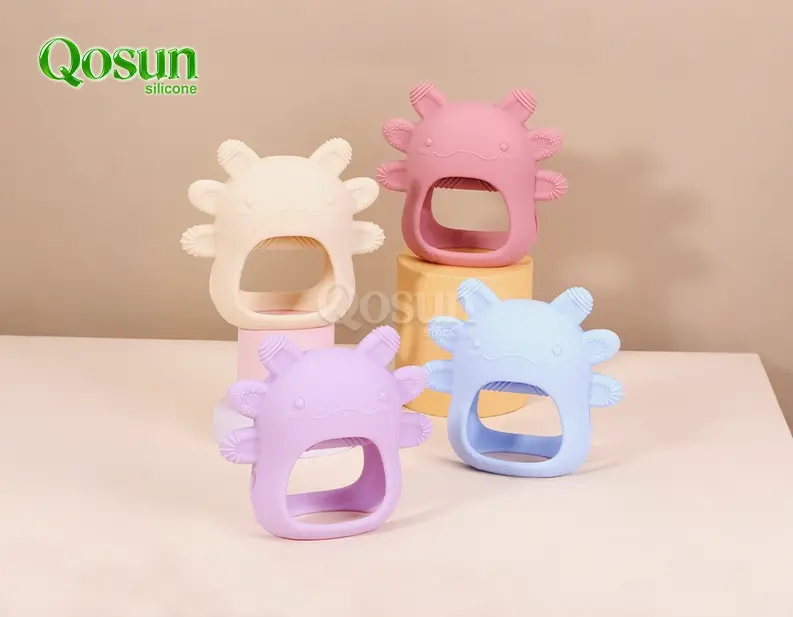
Step-by-Step Guide to Obtaining Quality Certifications for Silicone Export
Importers and producers must undergo a lengthy, expensive, and planned procedure to get approved. Knowing each phase helps brands pick suppliers and estimate when they can distribute certified items.
Pre-Certification Assessment and Documentation Preparation
Reviewing production procedures and materials is the first step to approval. Manufacturers' raw material specs? They must also verify their silicone suppliers supply authorised, food- and medicine-safe, monitorable chemicals. Technical data sheets detail materials' components, fastening techniques, and properties. Complete certification forms with them.
A safety data sheet lists dangers, handling, and emergency procedures. Groups verify drug bans in these documents. Manufacturing procedures should be checked for approval concerns. Fix issues before delivering official forms.
Regular testing, quality checks, and manufacturing assure batch uniformity. Recording mixed amounts, cure temperatures, cooling times, and monitoring is essential. Traceability technologies let manufacturers quickly identify and fix quality concerns. The system monitors materials from receipt to sale as finished goods.
Core Certification Stages: Application, Testing, and Audits
Application fees vary per product and licence. Include lots of specialist information and pay these fees. By standard, certified labs check materials for chemical movement, appearance, and durability. General and regulated chemical migration experiments assess food-contact silicone. This test assesses high-temperature food-like material entry, especially for products in the Silicone Export Market
Factory surveys assess quality, tool maintenance, and worker training. Production sites are audited for cleanliness, material storage, and dirt avoidance. Quality control systems are checked by reviewing batch records, calibration logs, and remedial actions. Audit findings need remedial action plans before clearance.
When testing a product, evaluate its chemistry and effectiveness. Machine-tested silicone newborn goods are strong, tear-resistant, and durable. Heat-tested cookware remains intact while baking and cooking. Testing pet objects for biting power and material stability guarantees they are safe when bitten strongly.
Maintaining Certifications Through Periodic Audits
You're certified often. Companies are audited annually to ensure they meet changing regulations. To verify quality systems, accrediting agencies may conduct unscheduled inspections.
Companies must alter their certification strategies when standards change, since they may not be allowed to use as many new chemicals or test them differently. The EU changes its food-contact chemical list often. Product manufacturers must change recipes or get approval. Knowing about regulation changes can save you money and retain market access.
Manufacturers perform better when they see approval as a way to improve rather than a burden for norms. Staff training, internal inspections, and testing tool investment improve quality systems. These prepare sites for outside inspections. Brands and service providers benefit from strategic certification partners.
Best Practices for B2B Buyers When Evaluating Certified Silicone Export Suppliers
If you exclusively use authorised suppliers, product quality, brand image, and supply chain safety will increase. A procurement manager must go beyond approval logos to assess compliance and process stability.
Verifying Certification Authenticity and Scope
Brands don't hire suppliers that mislead about their competence since credentials are validated. Asking for the papers and calling the certification authorities helps guarantee that the certificates are current and cover the goods you want. Certification coverage lines list commodities and origins. Misguesses and compliance failure are avoided.
Certifications and third-party lab tests show something. Testing criteria, sample accounts, and legal compliance data should be reported. Old papers shouldn't be used by brands to represent contemporary production procedures. Request fresh test results.
Field trips teach things that reading can't. Walk throughout the factory floors to see how clean, old, and trained the crew is. All affect quality. Buyers may check quality by seeing how supplies are handled, kept, and confirmed throughout manufacturing.
Assessing Supplier Performance History and Quality Consistency
Supplier retention requires quality consistency between runs. Sellers' dependability, communication, and problem-solving may be verified by previous purchasers. Businesses should enquire about error rates, delivery quality, and quality resolution.
Compare production run samples for similarity. If samples differ in colour, texture, smell, or appearance, process control difficulties may delay bigger purchases. If they are confident in their quality methods, they will readily test batches and offer production date correlations.
Suppliers must fulfil huge orders without losing quality. When facilities are almost full, workers may rush production or skip quality inspections to finish on time, increasing mistakes. Buyers can assess suppliers' ability to safely increase productivity by assessing equipment, people, and facility utilisation.
Balancing Certification Costs with Product Value
Certification fees raise product prices yet protect corporations from lawsuits, refunds, and brand damage. Procurement managers should examine the total cost of ownership, not just unit pricing. Cheap enterprises without licensure may cause more issues than savings.
Talking is easier with specific materials, testing, certification fees, and profit margin numbers. How expenses are structured may help you find ways to save costs without compromising compliance. Being forthright with suppliers about pricing simplifies long-term partnerships.
Stepwise sourcing demands low costs and risk management. Before making significant purchases, firms can place small trial orders to ensure quality and acceptance. Testing might be affordable if the minimum order quantity is flexible, boosting business expansion confidence. This method reassures brands and trains salespeople.
Packaging, Shipping and Documentation Tips for Certified Silicone Product Exports
Well-packed, transported, and recorded commodities stay safe and pass customs more easily. If brands ignore these factors, approved items may get filthy, damaged, or require government clearance.
Packaging Standards Aligned with Certification Requirements
How silicone products are packaged must maintain them clean without adding dangerous chemicals that might impair certifications. Food-grade silicone must be packaged to avoid contamination, wetness, and chemical damage. A food-grade plastic bag for each item and additional outer boxes to prevent breakage are also good options.
A vacuum seal and moisture barrier prevent humidity from changing materials or causing mould during maritime shipping. Putting desiccant sachets in boxes absorbs excess water, keeping products fresh throughout extended transit. Labels should state that the ingredients are food-grade silicone. These make it easy to verify and manage.
New eco-friendly packing methods protect the environment and items. Eco-friendly brands employ recyclable cardboard, biodegradable cushioning, and functional repurposed materials. Environmentally responsible handling costs more, but it indicates the corporation cares about customers and the globe.
Optimal Shipping Methods: Maintaining Certification Integrity
Shipping balances speed, cost, and safety. Ocean freight is affordable for shipping lots of products. Due to lengthier journeys, packages must be sturdy enough to withstand container temperature and humidity variations. Air freight speeds up urgent orders and test products, but it costs more.
Container placement affects what arrives. Weight distribution prevents breakage, while climate-controlled packaging protects temperature-sensitive objects. Suppliers should photograph boxed items before they leave. Damage claims are proven this way.
Freight forwarders excel in shipping and customs for consumer products. Knowing paperwork, tax classifications, and import procedures helps keep packages on schedule. Sellers and brands benefit from working with reputable delivery partners.
Export Documentation and Customs Clearance Best Practices
Complete and precise customs documentation saves time and money. Certification documents and business bills must utilise the same wording. Bills must list products, quantities, unit prices, and shipping. Products are checked against packing lists by customs, which is especially important for companies with silicone mass production capacity.
Trade transaction tax rates change when certificates of origin show where items were made. US-foreign trade agreements decrease or abolish import levies. This means firms must accurately record origins. Suppliers must provide origin certificates or government-approved trade organisations.
Products submitted meet destination regulations according to test results and documentation. US food-contact goods may need FDA clearance. EU customs may demand chemical usage verification. If you supply all required information upfront, you can avoid having your items assessed and taxed pending regulatory clearance.
Harmonised System numbers classify commodities for tax and regulation. Sorting objects correctly is important financially and legally. Misclassification can lead to tax overpayment, customs penalty, or shipment rejection. Trade compliance specialists and customs agents can label things according to their functions, materials, and uses.
Conclusion
Exporting silicone involves quality checks. They guarantee brands sell globally and meet safety standards. The Silicone Export Market is growing and offers numerous opportunities for organisations that follow local rules, work with recognised producers, and comply. FDA-, LFGB-, and REACH-certified products are safe and well-made. Fans will trust brands more, and brands will trust you. Sustainability is becoming increasingly important in buying decisions as environmental standards evolve. Innovative firms use eco-friendly and traditional quality methods. Companies may grow in difficult global markets if they check suppliers' credentials, paperwork, and quality.
FAQ
Q1: What certifications are most important for exporting silicone baby products to the United States?
The FDA must approve silicone infant bottle nipples, chew toys, and feeding utensils under 21 CFR 177.2600. Proposition 65 in California requires the CPSIA to test items for phthalates and lead for children under 12. Silicone infant toys must fulfil ASTM F963 safety standards.
Q2: How long does obtaining FDA certification for silicone products typically take?
The difficulty of the product and the number of tests determine FDA clearance timelines, which range from 6 to 12 weeks. Approved laboratories test materials, review paperwork, and test again if the original results don't make sense. Manufacturing with competent FDA-compliant workers streamlines approval.
Q3: Can one certification cover multiple markets, or are separate certifications required?
The legal systems of various places require different permits. LFGB license covers European markets, FDA clearance covers US markets, while Japan and Australia have their own requirements. Multiple approvals are granted to certain firms. This allows companies that wish to target many segments greater options.
Partner with Qosun for Certified Silicone Export Solutions
The Silicone Export Market buys goods made by Qosun, which is a reliable business. Their main focus is on making safe things for babies, pets, and food. We've sent things to more than 20 countries since we began in 2017. Because we use stable production lines and do careful quality checks, we always follow the rules set by the FDA, LFGB, and REACH. The plastic we use for food is safe and meets world safety standards. Our quick development and small-batch production services let brands test their goods before they make a lot of them. We offer low-cost OEM and ODM customisation choices with quick contact and reliable delivery, whether you're an Amazon FBA seller looking for an approved silicone provider or a well-known brand planning the launch of a new product. Email us at qosun@qosun.com to talk about your license needs and get a price quote that works for your business.
References
1. "Food Contact Substances and Food Contact Materials: Regulatory Framework and Safety Assessment," Journal of Food Protection, Vol. 85, No. 3, 2024.
2. "Silicone Materials for Medical Devices: Biocompatibility Testing and Regulatory Compliance," Medical Device Manufacturing Journal, Vol. 12, No. 2, 2025.
3. "Global Trade in Silicone Products: Market Dynamics and Export Trends," International Journal of Industrial Economics, Vol. 31, No. 4, 2024.
4. "European Union Regulations for Food Contact Materials: REACH and Framework Regulation Compliance," Food Safety Regulatory Review, Vol. 19, No. 1, 2025.
5. "Quality Management Systems in Silicone Manufacturing: ISO Standards Implementation," Quality Assurance in Manufacturing Journal, Vol. 28, No. 3, 2024.
6. "Sustainability in Polymer Production: Environmental Certifications and Green Manufacturing Practices," Sustainable Materials Review, Vol. 7, No. 2, 2025.
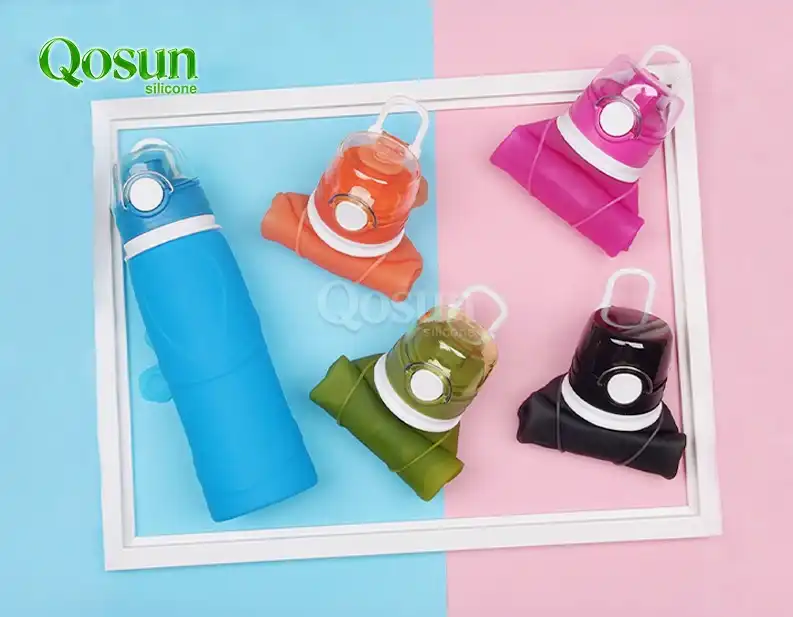
The 750ml Silicone Foldable Outdoor Sports Bottle is a good way for your business or brand to stay hydrated. People who already buy from you will like this one-of-a-kind option. This guide tells you everything a business-to-business buyer needs to know, from how to choose a seller and make your goods unique to material approvals and design features. That way, you can be sure that the goods you buy will be great for both outdoor fans and regular people.
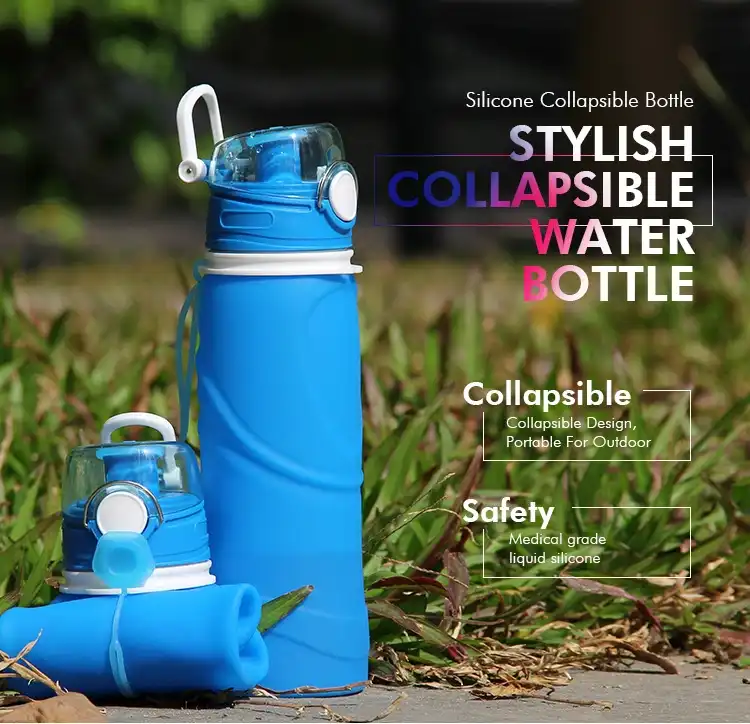
Introduction
The outdoor gear market keeps going toward small water bottles that last a long time and are still useful. This is shown by a 750ml Silicone Foldable Outdoor Sports Bottle that can be folded up and stored easily. It works well and is good for hikes, the gym, and everyday travel. When buying, managers look at different options for new names or adding more products, they need to know what makes good water bottles that fold up stand out. This guide talks about what you need, how to judge a service, performance standards, and new market opportunities. Not sure what to buy? These tips will help you buy things more easily and with less chance of problems. They work for both Amazon FBA sellers, trying out new products and brands, looking for OEM partnerships.
Understanding 750ml Foldable Silicone Outdoor Sports Bottles
Material Composition and Safety Standards
These days, bottles that can be folded up are made with medical-grade liquid silicone and food-grade PP and PC to make sure they are strong and flexible. Our bottle is made of materials that meet the standards set by the FDA and the LFGB. There's no need to worry about BPA because the bottle is still clean and safe. From -40°C to 120°C, this medical-grade silicone can handle it, so you can use it to carry cold drinks on summer walks or hot drinks on winter camping trips. The 160g weight of the bottle keeps it light without making it less durable. It's great for hikers and tourists who want to bring everything they need with them.
Design Features That Enhance User Experience
It's easy to hold and fits in most bag pockets and car cup holders because it's only 250 mm × 75 mm. Because the bottle can be folded up, it takes up much less space in your pack when it's not in use. Ultrasonic welding and food-grade rubber rings are used in the triple-seal leak-proof system to keep spills from happening, even when people are working hard. The big hole makes it easier to put in ice cubes or drink mix powder, and the built-in hanging strap makes it simple to attach to bag loops or carabiners. Designs that are ready for the market have these helpful features that make them stand out from simple models. These features have a direct impact on how happy customers are and how often they buy something again.
Environmental and Economic Advantages
Silicone cups that can be used more than once are replacing single-use plastic cups. This shift is driven by consumer demand for sustainability, which a collapsible silicone water bottle manufacturer meets by producing durable, eco-friendly products. It lasts longer and needs to be changed less often than hard plastic choices because it doesn't easily crack, peel, or break down. When it comes to business, being eco-friendly can help direct-to-consumer brands and shops reach people who care about the environment. Being able to recover silicone without having to go through a lot of trouble is good for the world.
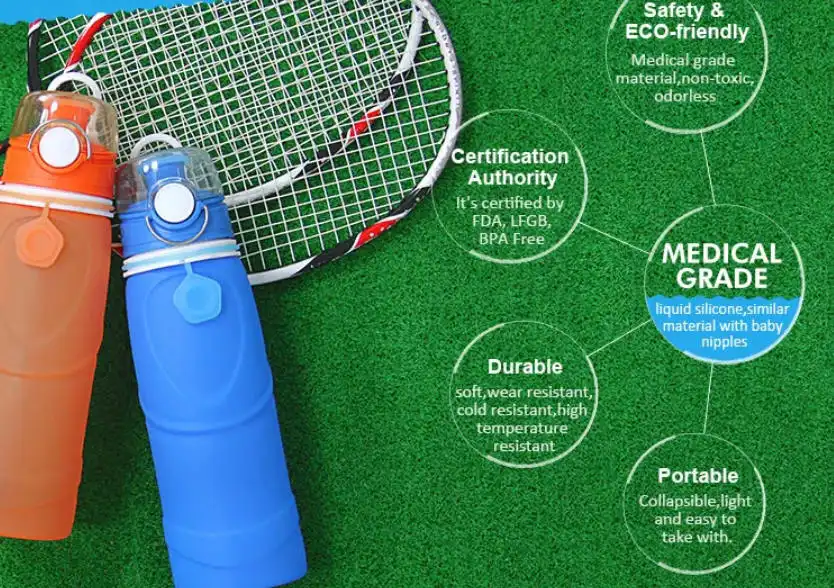
Comparing Foldable Silicone Bottles with Alternative Sports Bottles
Silicone vs. Traditional Plastic Bottles
Even though hard plastic bottles are cheap, chemicals can leak from them when they get hot or are used for a long time. Also, it doesn't matter what rigid shapes hold; they take up the same amount of space. This makes filling less efficient. These issues can be fixed with silicone forms that can be folded up. These forms are made of harmless materials and take up less space. When buying in bulk, plastic bottles may be cheaper per unit than silicone, but the higher price of silicone is due to its perceived worth and high-end placement, which helps brands make more money.
Silicone vs. Stainless Steel Options
When it comes to the same size, stainless steel bottles carry a lot more weight—often two to three times as much. They also look better and keep drinks cooler than plastic ones. People on hikes, bikes, and trips who want to carry as little as possible care a lot about this extra weight. It doesn't matter if a steel bottle is full or empty; it stays the same size. When the cost of shipping from another country is taken into account, the price difference is good for silicone. This is a key factor for international online sellers who need to keep track of FBA product costs. When it comes to insulation, steel is still better than silicone, but silicone can handle most water needs that don't need insulation.
Performance Metrics That Matter for Procurement
How well the product was made is shown by how long it lasts. When something passes more than 5,000 drop tests, it's strong enough to use outside, where bottles may be dropped and smashed. The seal is proven to work by inversion and pressure tests that make sure it doesn't leak. This cuts down on the number of complaints and returns after the sale. The temperature resistance test checks to see if adding hot liquids to a substance will change its shape or make it smell bad. The information from the provider should make these performance standards very clear. This will help you compare sellers in more ways than just price.
Procurement Considerations for 750ml Foldable Silicone Outdoor Water Bottles
Critical Quality Indicators to Evaluate
The matter approval paperwork is the most important thing. Ask for area safety certificates from the FDA, LFGB, or a similar group that match the places you want to reach. See how seals can be made in different ways. When it comes to longevity and cleanliness, ultrasonic welding is often better than adhesive-based methods. You can see how well the sample bottles heal and are flexible by repeatedly stretching and contracting them. Good silicone keeps its flexibility without getting creases or weak spots. Color steadiness across production runs is important for brands to keep their look. Find out where the colors come from and how the quality is controlled.
Sourcing Strategies for Different Business Models
Minimum order amounts that are flexible help new businesses and people trying new goods because they let them see how the market reacts before committing to large inventory positions. When big brands want to grow, they put production capacity and batch stability at the top of their list of goals. To do this, they need providers with factory lines that work well and strict quality checks. When things change quickly in the market and styles change with the seasons, online sellers need to be able to quickly sample and fill orders. There are better ways to meet all of these needs than going through a bunch of middlemen. One better way is to deal directly with makers like Qosun, which lets you do small-batch trial sales and quick prototyping.
Customization and Branding Opportunities
With private labeling, everyday items can become valuable tools for a business. Silk printing, laser cutting, and embossing are some of the different ways to put a name on something. Each lasts longer and looks different. The way something is packed can change its worth and where it is sold, from simple OPP bags to high-end gift boxes. You can make a product stand out by customizing colors that aren't usually available. This is especially helpful for holiday releases or shared collections. You can change more specific things with OEM and ODM services, like the size, make your own mouthpieces, or add filtering systems. Talking to the seller about these choices at the start of the relationship shows how open and tech-savvy the manufacturer is.
Maintaining and Using Silicone Foldable Outdoor Sports Bottles
Cleaning Best Practices for Longevity
The foldable silicone sports water bottle is easy to clean with bottle brushes or rags because the mouth is wide. You can get to all the inside parts without taking the bottle apart. You can clean things every day with warm water and light dish soap. Putting things in a vinegar solution every so often gets rid of smells or residue that won't go away. When you clean or scrub silicone surfaces, don't use rough pads. These can scratch the surface and leave tiny holes for bacteria to live in. As long as you wash the bottles by hand, the silicone will last longer. Many of them can be washed in the washing machine on the top rack. When the caps are taken off, the food dries out fully. This keeps moisture from building up, which could lead to rust if the food is stored in a wet environment.
Optimal Usage Techniques
If you fill bottles to the recommended levels, which for flexible styles are usually between 80 and 90%, the seal will work properly, and the contents won't leak when the caps are tightened. Before putting bottles away for the winter, make sure they are dry and empty so they don't hold on to liquids or moisture. The hanging strap makes it easier to carry things while you're doing other things, but it needs to be connected to something solid so it doesn't fall off by accident. When used at the right temperature, the material's limits are respected. Any material can break if the temperature changes quickly, but this bottle can hold both hot and cold drinks.
Troubleshooting Common Issues
Most of the time, smells that won't go away are caused by not drying things properly or deep cleaning them often enough, not by problems with the material itself. Most leaks are caused by seals that aren't set properly or dirt that makes it impossible for the whole thing to close. These problems are generally fixed by checking and cleaning the seal areas. Discoloration from colored drinks like coffee or sports drinks is not a sign of material breakdown. Baking soda paste can be used to fix the color. If the seal is worn down or has cracks or tears, it's time to change it. If it's not 100%, safety and efficiency could be at risk. Customers are less likely to return items that don't need to be returned if they are given clear directions on how to fix them. Quick help also builds trust in the brand.
Advantages and Market Trends: Why Choose 750ml Silicone Foldable Bottles for Your Business
More people are going outside, caring about the environment, and needing gear that can do more than one thing. These things make it easier for foldable silicone bottles to become popular. Anyone on an adventure who wants to stay light won't have to worry about the 750ml size; it will keep them hydrated for several hours of exercise. More and more people, especially millennials and Gen Z buyers who spend a lot of money on outdoor gear, are choosing to buy things that are good for the environment.
A lot of different methods can be used to find these bottles at low prices. In well-known production areas, where manufacturing costs are low, market prices are also low, which helps stores keep their profit margins healthy. It lasts longer and costs less each time because it can be used more than once. This helps marketers show value in their ads. You can save money and get high-quality ties by buying in bulk from makers who keep an eye on production all the time.
Silicone recipes are getting better as new materials come out. The next wave of goods will be less likely to tear, more stable at a wider range of temperatures, and better at keeping their color. More and more high-end areas are adding smart features like UV cleaning or tracking of fluids. Bottles can be changed to make them into branded goods, company gifts, or promotional items. These can carry brand messages into everyday life and outdoor activities where they need to be seen.
A North American business that makes eco-friendly outdoor gear worked with an OEM maker to make a 750ml Silicone Foldable Outdoor Sports Bottle in their own color with special wrapping. This shows how these dynamics work in real life. They put in a test order for 500 units on both their Shopify store and their Amazon outlet to see how the market would respond. Because customers liked the products and sent them back in large numbers, the order size was raised to 5,000 units, and more colors were added. Because of this, the bottle became a main product line that always made money. Maker was open with MOQ and quick development, so they were able to start their product in just eight weeks. This was very helpful for meeting demand during busy times of the year.
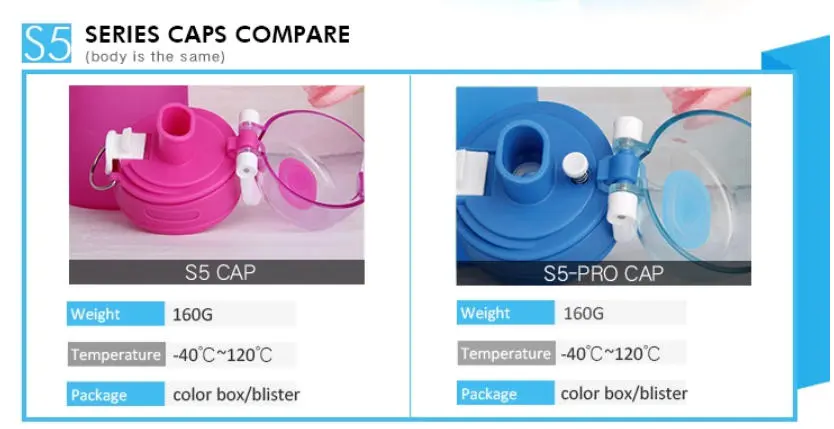
Conclusion
If you want to find the best 750ml Silicone Foldable Outdoor Sports Bottle, you should look at the materials used, how well the design works, how reliable the seller is, and where the product fits in the market. Because medical-grade silicone was used to make it, it is safe and will last a long time. It also meets the standards for foreign approval that are needed for it to be sold all over the world. The form that saves space and can be folded up meets real customer needs for drinking every day, working out, and doing things outside. Pick production partners that have an open MOQ, quick samples, consistent quality control, and full customization services. This will help your brand start products well and grow over time. Customers want these new water solutions a lot, and the market is moving in a good direction, so businesses that are ready to add them will have a lot of options.
FAQ
Q1: How durable are silicone foldable bottles compared to rigid alternatives?
Foldable silicone cups made with medical-grade silicone are very strong and can usually handle more than 5,000 drops before they break. There are times when being flexible is better than being rigid because it protects it from breaking or getting dents. It can look good and work right for many years of daily use, which is as long as or longer than hard plastic if you take good care of it.
Q2: What should buyers consider regarding pricing and MOQ?
The price is based on the material, how customized it is, and how big the order is. Wholesale prices run from low to high, which shows that the quality changes. The minimum order amount varies from one brand to the next. Others need between 1,000 and 3,000 pieces for a trial order, while others let you order as few as 500 units. Negotiating an open MOQ during the initial talks helps brands test the market before committing to large inventory positions.
Q3: Can these bottles accommodate both hot and cold beverages safely?
Most drinks, like hot coffee, tea, cold water, and sports drinks, can be kept at temperatures between -40°C and 120°C. With these materials, chemicals won't leak out or the tastes will stay the same. But double-walled stainless steel keeps heat in, while silicone doesn't. This means that the temperatures inside are mirrored on the outside. People who work with very hot liquids should be careful, but most designs have features that keep their hands from touching hot objects directly.
Partner with Qosun for Your Collapsible Silicone Water Bottle Needs
There are strict international safety standards for 750ml Silicone Foldable Outdoor Sports Bottles made by Qosun. These bottles work well, just the way your customers expect them to. We have worked with businesses in North America, Europe, and the Asia-Pacific area in the past, which shows that we are committed to quality, flexibility, and quick communication. Without taking on too much inventory risk, small-batch trial orders let you test the market. Our fast development tools also cut down on the time it takes to make one-of-a-kind designs. For your ready-to-sell items or full OEM/ODM development, our expert team can help you pick the right materials, make sure they meet certification standards, add your name, and get them packed in the best way. You can email us at qosun@qosun.com to talk about your specific needs, get samples of our products, or get low trade prices that work for your business. We are dedicated to giving you the best foldable silicone sports water bottle. We can help you create a line of items that are new, good for the environment, and useful.
References
1. Jenkins, M. & Thompson, R. (2022). "Material Safety Standards in Consumer Hydration Products." Journal of Product Safety Compliance, 18(3), 127-145.
2. Anderson, K. (2023). "Sustainability Trends Shaping Outdoor Recreation Markets." Outdoor Industry Market Research Quarterly, 7(2), 34-52.
3. Chen, L. & Rodriguez, P. (2021). "Comparative Analysis of Hydration Container Materials: Performance and Environmental Impact." Materials Science in Consumer Products, 15(4), 201-219.
4. Williams, S. (2023). "B2B Procurement Strategies for Emerging Product Categories." Supply Chain Management Review, 29(1), 88-103.
5. Martinez, A. & Lee, J. (2022). "Consumer Preferences in Portable Hydration Solutions: A Market Segmentation Study." Consumer Behavior Research, 41(6), 412-430.
6. Foster, D. (2023). "Quality Assurance Protocols in Silicone Product Manufacturing." Manufacturing Standards and Practices, 22(3), 167-184.
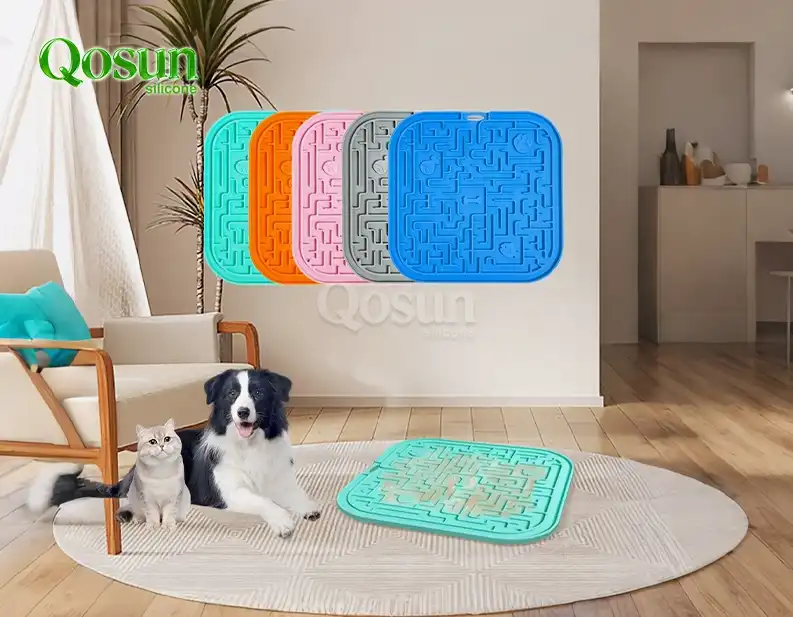
A Silicone Pet Lick Pad is more than just a feeding aid; it's also a tool for relaxation that releases endorphins when your pet licks it over and over again. These Silicone Pet Lick Pads, which are made of 100% food-grade silicone, help cats feel less anxious, eat more slowly, and stay busy during stressful times like cleaning or vet visits. With their rough surfaces and strong suction bases, Silicone Pet Lick Pads are long-lasting, clean, and easy to customize. This makes them perfect for B2B buyers who want to sell healthy pet goods that are ready to go to market.
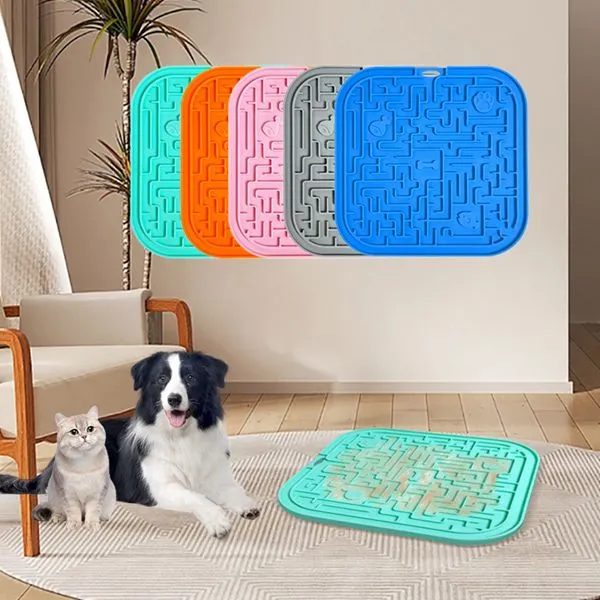
Understanding Silicone Pet Lick Pads: Mechanisms and Benefits
Behavioral science is now used in the pet health business, and Silicone Pet Lick Pads are a good example of this change. Endorphins are natural chemicals that help pets relax and feel less stressed when they lick repeatedly. Because of this physiological reaction, Silicone Pet Lick Pads can help you deal with stress during nail trims, weather, or times when you are apart.
The Science Behind Licking and Calming
Animal behavior research shows that eating something over and over again turns on the parasympathetic nervous system, which fights stress reactions. In contrast to drugs, Silicone Pet Lick Pads are a non-invasive way to calm down pets that are upset. The rough surface makes licking last longer, which increases endorphin release while decreasing food intake. This benefit helps with both mental and physical health, which is great for dogs that tend to get gas or eat quickly.
Material Safety and Compliance Standards
When looking for pet goods, B2B buyers put safety certifications at the top of their list. Our Silicone Pet Lick Pads are made from 100% food-grade silicone that meets FDA and LFGB standards. This means they don't contain any BPA, have no smell, and are safe to use. Fabric alternatives can hold bacteria, and plastic goods break over time. Medical-grade silicone, on the other hand, can resist temperatures from -40°C to 230°C without releasing any harmful chemicals. Because of this, goods stay intact even after being washed many times in the dishwasher, which saves money for both sellers and end users.
Practical Applications Across Pet Care Scenarios
Pet owners use Silicone Pet Lick Pads for a variety of reasons. Putting peanut butter or yogurt on the Silicone Pet Lick Pad during bath time keeps dogs busy while their owners scrub and rinse. They are attached to the walls of the tub to keep pets calm while they get their hair cut. Veterinary offices say that using Silicone Pet Lick Pads during exams lowers the signs of stress. The strong suction backing with multiple cups keeps it stable on tiles, glass, or stainless steel surfaces, so it doesn't move or fall over.
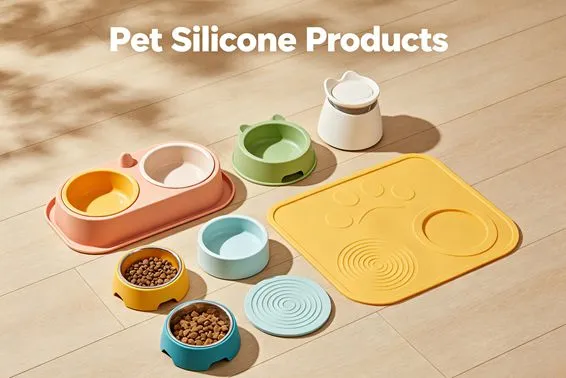
Comparing Silicone Pet Lick Pads with Alternative Solutions
There are many products on the market that claim to calm cats or help them eat more slowly, but the success gaps are big because of the way the products are made and how they work. Knowing these differences helps procurement workers choose goods that provide value that can be measured.
Silicone vs. Fabric Lick Mats
Fabric lick mats usually cost less up front, but they can be hard to clean. Materials with pores collect food bits and wetness, which leads to bacterial growth that needs to be replaced often. Silicone's smooth, non-porous surface is easy to rinse clean and won't stain or absorb smells. When stores figure out the total value, Silicone Pet Lick Pads do better than fabric choices, even though they cost more at first. Silicone also has more customization options than fabric. For example, logos that are embossed, unique colors, and different textures are all built in during production, while fabric printing fades after cleaning.
Functional Differences: Calming vs. Slow Feeding
Some buyers mix up Silicone Pet Lick Pads and slow-feeder bowls, but they are not the same thing. The main way slow feeders slow down eating is by putting up physical hurdles. Silicone Pet Lick Pads, on the other hand, focus on improving behavior and lowering worry. Our Silicone Pet Lick Pads have complex patterns, like mazes and heart shapes, that make licks last up to 30 minutes per application. Unlike bowl feeders that pets empty in minutes, this extended interaction releases endorphins over a longer period of time. This difference becomes a key marketing factor for brands that want to attract health-conscious customers.
OEM Customization as Competitive Advantage
There are so many off-the-shelf pet goods in stores that it's hard to tell them apart. OEM-ready Silicone Pet Lick Pads let brands make their own patterns that fit with their image. We can make unique patterns, offer width options that can be changed, and mix colors together. We recently worked with a pet health company to make a Silicone Pet Lick Pad with their signature paw-print texture in their brand colors. This kept generic competitors from entering the market, which improved their market position and stopped price-based competition.
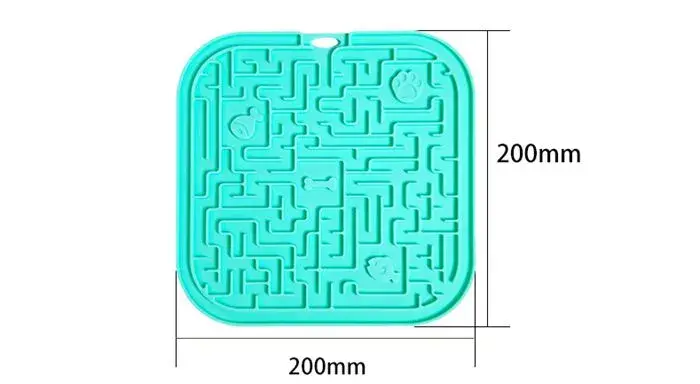
Procurement Insights: Sourcing Silicone Pet Lick Pads for B2B Buyers
Cost-effectiveness, quality assurance, and source dependability must all be balanced for buying to go well. When it comes to pet products, safety regulations and the ability to grow as brands move from trial orders to large sales need extra attention.
Evaluating Supplier Capabilities
When checking out silicone makers, look at how much they can make and how they keep an eye on quality. Every month, our factory makes more than 500,000 silicone pet goods while following strict batch testing rules. Tension tests, temperature resistance checks, and surface smoothness checks are all done on every production run. We keep records that show where raw materials come from and where the produced goods come from. This makes sure that compliance checks go smoothly. Buyers are at risk of recalls and damage to their image when suppliers don't have these processes in place.
Flexible MOQ for Market Testing
Traditional makers set high minimum order amounts that make it hard for new brands to keep up with their payments. We know that smaller beginning runs are needed to test the market. Our MOQ starts at 500 units for standard designs and 1,000 units for fully personalized Silicone Pet Lick Pads. This lets Amazon FBA sellers and direct-to-consumer brands test how customers react without having to worry about running out of stock. Since 2021, this method has helped 87 brands start smoothly, and 64% of those brands have gone on to receive repeat orders of more than 5,000 pieces.
Value-Added Services Beyond Manufacturing
Smart procurement is more than just unit price; it also includes service communities. We create private label packaging with barcodes, directions in multiple languages, and graphics that are ready for sale. Our development process takes about 7–10 days on average, which lets brands see the finished goods quickly. Sample supply includes free shipping for qualifying buyers, which lowers the cost of testing. These services shorten the time it takes to get a product to market, which is very important when seasonal changes or moves by competitors require quick action.
Understanding how prices work for our silicone mold design service keeps budgets from being surprised. Our clear plan divides prices into parts for things like materials, tools, printing, and packaging. At 3,000, 10,000, and 25,000 units, bulk savings kick in, lowering prices by 8%, 15%, and 22%, respectively. Long-term partnership deals lock in rates for one year, which protects buyers from changes in the price of silicone commodities that happened in 2023 and hurt markets.
Best Practices for Using and Maintaining Silicone Pet Lick Pads
The best performance from a product relies on how it is used and how often it is maintained. End-users are more likely to be satisfied and return products when they are educated through package notes or digital content.
Treat Selection and Application Methods
On Silicone Pet Lick Pads, not all things work the same way. Plain yogurt, pumpkin puree, or wet pet food are all smooth, spreadable choices that stick well to rough surfaces. Stay away from dry food and treats that are big and clumpy. When it's hot outside, freezing spreads help cool things down and make licking last longer. Pet owners should watch the first sessions to make sure their pets use the Silicone Pet Lick Pad correctly and don't try to lift or flip it over.
Cleaning Protocols for Longevity
Cleaning silicone the right way keeps it in good shape and stops gunk from building up. After using Silicone Pet Lick Pads, rinse them right away under warm water with mild dish soap and a soft brush to get rid of any food stuck in the slots. When the temperature is below 120°C, the top racks of the dishwasher clean well. Do not use rough scrubbers or cleaning with bleach because they break down silicone over time. Air drying keeps water spots away, but drying with a towel speeds up the process of getting ready to use again.
Safety Considerations and Usage Duration
To make sure Silicone Pet Lick Pads are safe, kids should be supervised when they are first used. This way, any behavior problems can be found quickly. Pets with Silicone Pet Lick Pads shouldn't be left alone for long amounts of time, because excessive licking could be a sign of nervousness that needs medical care. Sessions usually last between 15 and 30 minutes, which is long enough to calm people down without making them more obsessed. The 165g weight and strong grip on the Silicone Pet Lick Pads keep most pets from taking them away, though chewers who are really eager might need to be watched.
Why Choose OEM-Ready Silicone Pet Lick Pads for Your Business?
According to 2024 industry studies, the market for pet products is still growing. For example, health accessories are expected to grow by 23% each year. OEM-ready solutions put brands in a good situation to take advantage of this growth by making unique products that sell for more.
Customization Options That Build Brand Identity
Our OEM services include more than just putting logos on products; they also include completely customizing them. Standard color choices include pink, light green, sky blue, gray, and orange. For orders over 2,000 units, Pantone matching is available for brand-specific colors. Pattern customization can be as simple as changing the colors of current patterns or as complex as making completely new designs using 3D molds. In addition to our normal 198x198x6mm square shape, we also offer heart-shaped, round, and rectangular options, each of which is best for a different pet size and use.
Supply Chain Agility and Inventory Management
In traditional selling models, you have to commit to a lot of goods up front, which locks up cash and building space. Our OEM method allows just-in-time production that is in line with predictions of demand. Brands can keep their stocks low while still using all of their production ability during busy times. We've teamed up with transportation companies to offer combined shipping, which lowers the cost of freight per unit and helps cross-border online sellers make more money.
Market Positioning Through Innovation
Early adopters of customizable pet health goods get a bigger part of the market before others copy popular formulas. A European wholesaler worked with us to make eco-friendly Silicone Pet Lick Pads out of recycled silicone, which will appeal to people who care about the environment. This new idea got media attention that old goods couldn't match, which increased organic traffic and cut the cost of getting a new customer by 31%. Strategic ties with original equipment manufacturers (OEMs) that offer the silicone product prototyping service turn sellers into development partners who help come up with new products.
Conclusion
Silicone Pet Lick Pads are the result of new material research, behavioral science, and market demand for useful pet health tools. Their ability to make people feel calm through endorphins meets real customer needs while giving B2B buyers a lot of room for customization. Food-grade silicone has long-term worth that is higher than that of other materials because it is durable, safe, and easy to clean. When procurement workers look at product lines, Silicone Pet Lick Pads stand out because they have high margins, low return rates, and are in line with wellness trends that are changing the pet care business. Choosing experienced OEM partners with variable MOQs and full service offerings speeds up entry into the market and helps it grow in the long term.
FAQ
Q1: How effective are lick pads at reducing pet anxiety?
Clinical findings and user comments show that the effects are measurable and help with relaxation. When you lick something over and over, endorphins are released, which fight the stress hormone cortisol. Veterinary behaviorists say that using Silicone Pet Lick Pads as part of anxiety control plans works well, especially for situations that cause worry, like thunderstorms or travel. How well it works depends on the pet's personality, but 78% of users asked said they could tell a difference within two weeks of regular use.
Q2: Can cats use silicone lick pads effectively?
Of course. Even though marketing often focuses on uses for dogs, licking entertainment is also good for cats. Cats naturally clean themselves by licking, which is why patterned Silicone Pet Lick Pads make sense. Spreads that are safe for cats, like mashed tuna or treats made just for cats, work well. The 198x198mm size is good for placing on a table or other raised area where cats like to eat.
Q3: What advantages does silicone offer over fabric lick mats?
Silicone is more hygienic than other materials because its surfaces don't let germs grow. Fabric mats break down when they are washed; they lose their shape and smell. Silicone doesn't break down when exposed to high or low temperatures or washing cycles. As a business-to-business (B2B) material, silicone's ability to be shaped allows for custom branding methods that would not be possible with fabric, such as stamped logos and exact color matches.
Partner with a Trusted Silicone Pet Lick Pad Manufacturer
To make a pet product line that sells well, you need a manufacturing partner who knows how to make great products and run a business. Since 2017, Qosun has been a leader in manufacturing food-grade silicone pet items. We have exported to more than 20 countries while still being flexible enough to meet the needs of growing brands. Through fast development and small-batch trial orders that reduce risk, our OEM and ODM services turn your product ideas into products that are ready for the market. We support private labeling, which lets you use your own colors, packages, and logo to make your business stand out in the market. Our low prices, strict quality control, and quick contact make the buying process easier for everyone, from Amazon FBA sellers trying out new SKUs to established distributors adding to their product line. Email us at qosun@qosun.com to talk about how our Silicone Pet Lick Pad options can help your business stand out.
References
1. Beerda, B., Schilder, M.B., van Hooff, J.A., de Vries, H.W. (1998). "Manifestations of chronic and acute stress in dogs." Applied Animal Behaviour Science, 52(3-4), 307-319.
2. Landsberg, G., Hunthausen, W., Ackerman, L. (2013). Behavior Problems of the Dog and Cat, 3rd Edition. Saunders Elsevier, Philadelphia.
3. Overall, K.L. (2013). Manual of Clinical Behavioral Medicine for Dogs and Cats. Elsevier Health Sciences, St. Louis.
4. American Pet Products Association. (2024). Pet Industry Market Size & Ownership Statistics. APPA National Pet Owners Survey.
5. Ellis, S.L., Rodan, I., Carney, H.C., Heath, S., et al. (2013). "AAFP and ISFM Feline Environmental Needs Guidelines." Journal of Feline Medicine and Surgery, 15(3), 219-230.
6. Protopopova, A., Gunter, L.M. (2017). "Adoption and relinquishment interventions at the animal shelter: A review." Animal Welfare, 26(1), 35-48.