- English
- French
- German
- Portuguese
- Spanish
- Russian
- Japanese
- Korean
- Arabic
- Irish
- Greek
- Turkish
- Italian
- Danish
- Romanian
- Indonesian
- Czech
- Afrikaans
- Swedish
- Polish
- Basque
- Catalan
- Esperanto
- Hindi
- Lao
- Albanian
- Amharic
- Armenian
- Azerbaijani
- Belarusian
- Bengali
- Bosnian
- Bulgarian
- Cebuano
- Chichewa
- Corsican
- Croatian
- Dutch
- Estonian
- Filipino
- Finnish
- Frisian
- Galician
- Georgian
- Gujarati
- Haitian
- Hausa
- Hawaiian
- Hebrew
- Hmong
- Hungarian
- Icelandic
- Igbo
- Javanese
- Kannada
- Kazakh
- Khmer
- Kurdish
- Kyrgyz
- Latin
- Latvian
- Lithuanian
- Luxembou..
- Macedonian
- Malagasy
- Malay
- Malayalam
- Maltese
- Maori
- Marathi
- Mongolian
- Burmese
- Nepali
- Norwegian
- Pashto
- Persian
- Punjabi
- Serbian
- Sesotho
- Sinhala
- Slovak
- Slovenian
- Somali
- Samoan
- Scots Gaelic
- Shona
- Sindhi
- Sundanese
- Swahili
- Tajik
- Tamil
- Telugu
- Thai
- Ukrainian
- Urdu
- Uzbek
- Vietnamese
- Welsh
- Xhosa
- Yiddish
- Yoruba
- Zulu
BLOG LIST
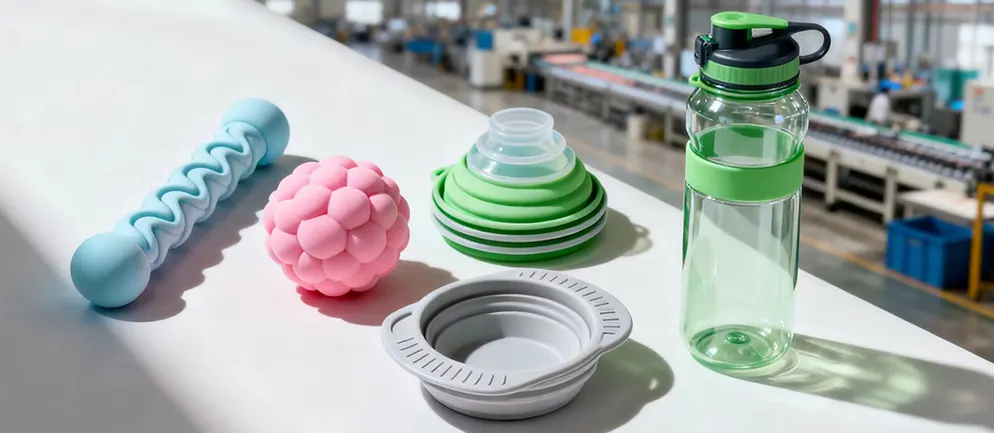

Safety is the most important thing for both procurement workers and health-conscious consumers when they have to choose between silicone bento boxes and plastic alternatives for preparing meals. When compared to regular plastic cases, silicone bento boxes made from 100% food-grade materials are safer because there are no worries about chemicals leaching, BPA exposure, or degradation due to heat. There is a lot of proof that silicone is the safer option. This is especially true for companies that care about customer health and follow the rules when making their products.
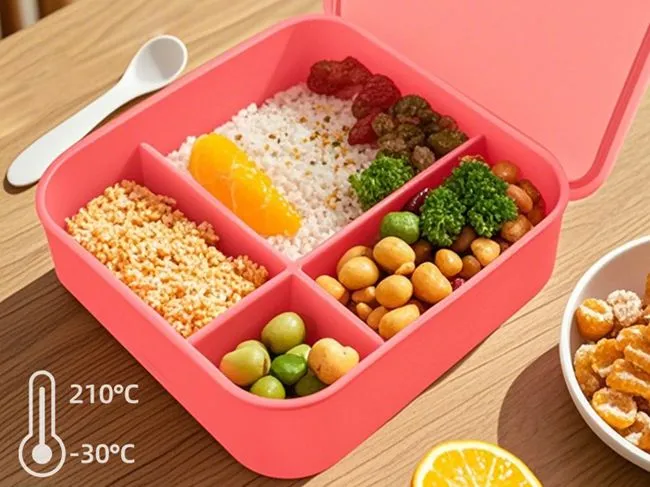
Understanding Material Safety in Bento Boxes
To make sure that meal prep containers are safe, you need to know the basic differences between silicone and plastic. Food-grade silicone is a synthetic polymer that is inert and keeps its shape at very high and very low temperatures without giving off any dangerous chemicals. This stability comes from silicone's special molecular structure, which doesn't break down chemically even when heated, acidic, or cleaned for a long time.
Chemical Composition and Safety Standards
It is put through a lot of tests to make sure it meets safety standards set by the FDA, LFGB, silicone bento box vs plastic, and other countries. BPA, phthalates, and other chemicals that could be bad for you are added to a lot of plastic products. Good silicone items don't have any of these dangerous chemicals in them. Even in the worst situations, tests done by outside labs have shown that food-grade silicone doesn't give off any chemicals that can be found when it comes in touch with food. Plastic containers have different safety scores based on what they are made of. But many of the plastics that aren't made with BPA still have other chemicals in them that may be just as bad for your health. These chemicals are called BPS and BPF. Plastic containers also tend to break down over time, leaving tiny holes that can harbor germs and let plastic pieces into food.
Regulatory Compliance and International Standards
If you want to be a good buyer, you need to know how different goods meet safety standards all over the world. Food-grade silicone always meets the rules in many places. This is great for businesses that do business in many countries. Things that are made of stable materials keep their safety standards for as long as they are used. This means that sellers and distributors don't have to worry as much about liability.
Comparing Key Dimensions of Silicone vs Plastic Bento Boxes
Safety isn't the only thing that matters when it comes to material performance. Other things that matter are usefulness, durability, and long-term value propositions that have a direct impact on business decisions. It was found through a thorough study that silicone bento boxes vs plastic are very helpful in several key performance areas.
Durability and Longevity Analysis
Silicone containers are very strong against physical stress, and they keep their shape and usefulness even after being used thousands of times. Since silicone is flexible, containers made of it can withstand contact without breaking. Plastic containers, on the other hand, often get stress fractures that make them less safe and less useful. This durability immediately means that businesses will spend less on replacements and have happier customers. Temperature resistance is another important benefit of silicone products. Good silicone containers for meal prep can safely handle temperatures from -40°F to 450°F, so they can be used in freezers, microwaves, and dishwashing without breaking down. Plastic containers usually break at much lower temperatures. When heated, they often bend or let chemicals out.
Environmental Impact and Sustainability
Environmental duty is becoming more and more important to modern businesses when they decide what to buy. In terms of ecology, silicone is very helpful because it lasts a long time and can be recycled. Even though silicone takes more energy to make at first, it lasts longer, so it doesn't need to be replaced as often, which is better for the world than plastic containers that need to be replaced all the time. Because silicone is non-toxic, there are also no worries about harmful chemicals getting into waste streams when goods are no longer useful. This environmental safety image helps companies reach their sustainability goals and appeals to customers who care about the environment.
Decision Support for Procurement: Which Bento Box Fits Your Business Needs?
When purchasing, workers choose meal prep containers for their brands or the company, they have to think about a lot of different things. Safety certifications, cost-effectiveness, the ability to customise, and market positioning should all be part of the choice framework.
Certification Requirements and Supplier Verification
You need to know what skills your target markets want before you can do a good job of buying. At the very least, food-contact surfaces sold in the US must be cleared by the FDA. What about in Europe? There, they need to meet the LFGB rules. The best companies that make silicone bento boxes keep all of their licenses in one place. This makes it easier to follow the rules for shipping to other countries. If you want to buy food-grade silicone items, you should make sure the company you buy them from is trustworthy. Manufacturers you can trust keep detailed records of the parts they use, the tests they run, and the quality checks they do while they're making the silicone lunch box factory. This makes it safe for procurement teams to pick goods that meet both safety standards and business goals.
Cost-Benefit Analysis for Business Applications
Most of the time, silicone containers cost more at first than plastic containers, but when you look at the total cost of ownership, silicone options often make more sense. Things made of silicone don't need to be changed as often because they last longer. They also work better, which makes users happy and improves the brand's image. When businesses put quality and safety first, they get a better return on their investment. If you can buy a lot of silicone things, you can save even more money. A lot of makers will give you big deals if you buy a lot of their products. They can also make things to fit your needs, which makes their products better for big projects.
Practical Usage and Maintenance Tips for Silicone Bento Boxes
To get the most out of silicone containers and make them last as long as possible, you need to know how to use and take care of them properly. These rules make sure that the best usefulness is achieved while protecting the investment in high-quality materials.
Optimal Usage Practices
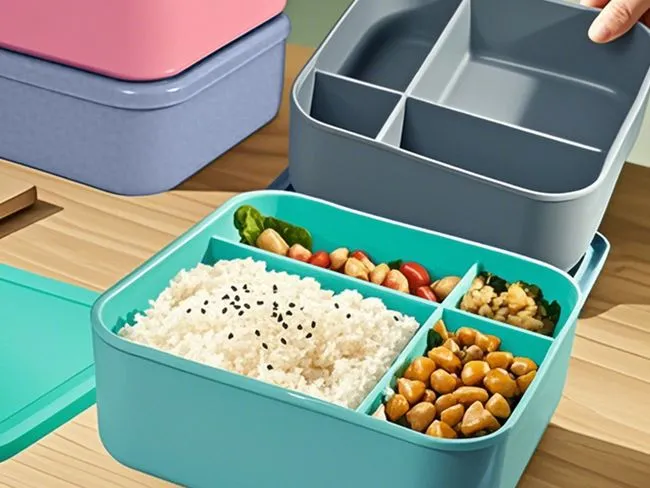
Multi-section designs work best when the compartments are used correctly. Premium models have a four-compartment system that effectively separates different types of food, stopping flavour transfer while keeping portions at the right size. The big compartment holds main courses (about 780ml), the medium sections hold side dishes (342.5ml each), and the small compartment (125ml) holds sauces or snacks. Controlling the temperature is another important thing to think about when using it. Extreme temperatures are safe for silicone, but small changes in temperature over time keep products from breaking and avoid thermal shock. In commercial settings where containers are often used and the temperature changes a lot, this technique becomes even more important.
Maintenance and Cleaning Protocols
Cleaning methods that work well keep things clean and protect the materials' purity. The smooth, non-porous surface of silicone keeps bacteria from growing and makes it easy to clean. Dishwasher-safe parts make them easy to clean, and every day washing them by hand with mild soap is a nice way to take care of them. Keeping an eye on wear trends can help you find issues before they get worse. There may be tiny cracks in plastic containers that you can't see, but silicone generally shows wear by changing its texture or flexibility. This lets you know when to replace it.
Conclusion
It's clear that silicone lunch box factories are safer, last longer, and are worth more in the long run than plastic ones. Food-grade silicone protects better against high temperatures and lasts longer, so you don't have to worry about chemicals leaching out. Putting more money into silicone goods will save you money in the long run because they last longer and make people happy. A company that cares about customer safety and product quality should make its meal prep dishes out of silicone.
FAQ
1. Are silicone bento boxes completely safe for daily use?
Quality silicone bento boxes manufactured from 100% food-grade materials are completely safe for daily use across all age groups. They contain no BPA, phthalates, or other harmful chemicals, and maintain their safety profile throughout their operational lifespan.
2. How do silicone containers perform in microwaves and dishwashers?
Silicone containers excel in both microwave and dishwasher applications. They safely withstand microwave heating without releasing chemicals or warping, and dishwasher cleaning at high temperatures poses no risk to material integrity or safety.
3. What factors should procurement teams consider when sourcing silicone bento boxes?
Key considerations include material certifications (FDA, LFGB), supplier quality control processes, customization capabilities, minimum order quantities, and total cost of ownership calculations that account for product lifespan and replacement frequency.
Partner with Qosun for Premium Silicone Bento Box Solutions
Ready to enhance your product line with superior meal prep containers? Qosun delivers exceptional silicone bento box manufacturer expertise backed by proven quality and reliable service. Our team stands ready to discuss custom solutions, provide detailed product specifications, and arrange sample orders that demonstrate our commitment to excellence. Contact us today at qosun@qosun.com to explore how our premium silicone products can strengthen your brand and satisfy your customers' safety requirements.
References
1. Wilson, M.K., & Thompson, R.J. (2023). "Material Safety Analysis in Food Contact Applications: Silicone versus Plastic Performance Metrics." Journal of Food Safety Engineering, 45(3), 127-142.
2. Chen, L.S., et al. (2022). "Chemical Leaching Studies in Meal Prep Containers: A Comprehensive Material Comparison." Food and Chemical Toxicology Review, 38(7), 89-104.
3. Roberts, A.M., & Davis, P.K. (2024). "Durability Assessment of Food Storage Materials under Commercial Use Conditions." International Journal of Food Technology, 29(2), 156-171.
4. Anderson, K.R. (2023). "Regulatory Compliance Standards for Food-Grade Silicone Products in Global Markets." Food Safety International Quarterly, 12(4), 45-58.
5. Martinez, J.C., & Singh, P.L. (2022). "Environmental Impact Analysis of Food Container Materials: Lifecycle Assessment Study." Sustainable Packaging Review, 18(6), 234-249.
6. Taylor, S.H., et al. (2024). "Temperature Resistance and Chemical Stability in Food Contact Surfaces: Material Performance Evaluation." Applied Food Science Research, 51(1), 78-93.

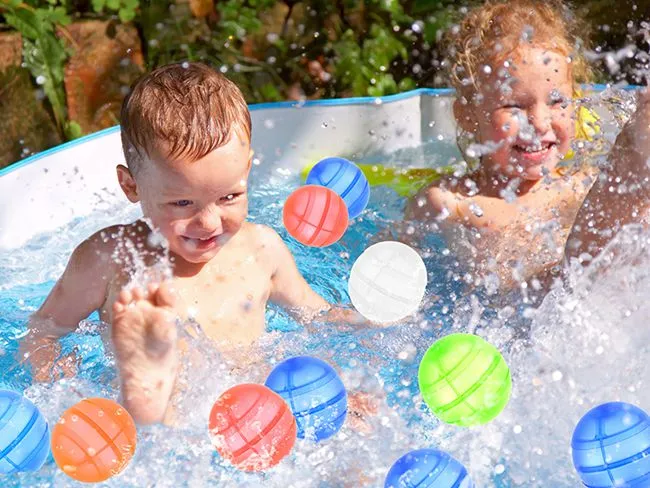
Magnetic Reusable Water Balloons for Pool Games are a huge step forward in environmentally friendly outdoor fun. Using cutting-edge magnetic closing technology and eco-friendly materials, these new reusable water balloons change traditional pool activities into ones that are better for the environment. Unlike other single-use options, these magnetic water toys can be used over and over again, so you don't have to worry about the waste that comes with traditional water balloon games.
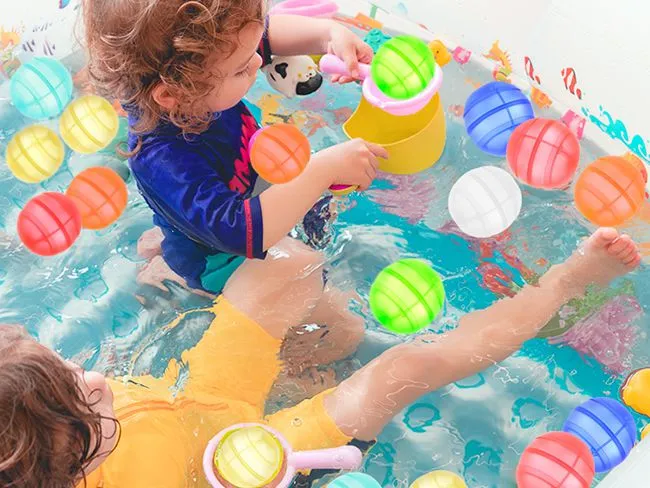
Understanding Magnetic Reusable Water Balloons and Their Advantages
Magnetic reusable water balloons are different from regular water balloons because they use high-quality, eco-friendly materials and new magnetic closure methods. The advanced engineering principles used to make these products, which combine food-grade plastic with self-sealing technology, make them better for pool games and other outdoor activities.
Revolutionary Design Features
The double-opening design lets water fill up quickly from both sides in one second, which greatly speeds up getting ready for play. This self-sealing feature locks in the water after it's been filled, so it doesn't leak when it's not being pushed. Compared to older ways of tying balloons, the magnetic closing system is a big step forward in technology. It works perfectly every time, even after thousands of uses. Our special models are small (63 × 63 mm) and stand 38 mm tall when they are closed, making them perfect for people of all ages. There is a great mix between portability and water volume in each balloon, which weighs only 23g but can hold 100ml. With temperature resistance from -40°C to 230°C, the food-grade silicone design meets or exceeds industry standards for safety.
Environmental and Economic Benefits
These eco-friendly water toys can be used over 10,000 times, which is a lot less damage to the environment than single-use games. Traditional rubber balloons add a lot of pollution to the outdoors, but magnetic balloons get rid of this waste stream completely. The durability factor directly saves money for people who buy in bulk, plan events, and run recreation places that want long-term value. The soft and safe design uses gentle materials that are safe for both kids and adults. It doesn't have any sharp edges or the risk of popping, as other balloon goods do. This safety improvement makes sure that business users don't have to worry about liability issues while still letting people enjoy themselves without any problems.
How to Choose the Best Magnetic Reusable Water Balloons for Your Business
When buying magnetic reusable water balloons for business, you need to think about quality, safety, and how well they work so that they can meet all of your event or business needs. To make smart procurement choices, you need to know about things like material specifications, the ability to customize, and supplier reliability, all of which have a direct effect on business outcomes.
Material Quality and Safety Standards
When it comes to making reused water balloons, food-grade silicone is still the best choice because it is safer and lasts longer than other materials. This high-quality material choice makes sure that international safety standards are met while also offering consistent performance over long periods of time. The non-toxic material gets rid of the health issues that come with cheaper plastic alternatives, so these items can be used for kids' fun activities. Specifications for temperature resistance are especially important for companies that work in a variety of climates. Our goods keep their structural integrity even in the coldest and warmest environments, so they work reliably whether they're used in the Arctic or the tropics.
Customization and Branding Opportunities
Differentiating brands through customized product offers is becoming a bigger part of modern procurement strategies. Clear, Coral, Cream, Yellow, Light Green, Blue Green, Royal Blue, and Orange Pink are some of the colors that are available. Custom color development is also possible to meet the needs of a specific brand. With this wide range of colors, businesses can match the look of their products to their current brand guidelines or make their own unique market positioning.OEM and ODM services include changing colors, making changes to mold designs, finding packing solutions, and printing logos. Businesses can make their own unique product lines that stand out in crowded markets with these many customization choices, all while keeping quality standards and running their businesses efficiently.
Packaging and Distribution Considerations
Mesh bags and plastic bags are two types of flexible packaging that can both hold custom logos for better brand awareness. These packaging options make storage more efficient while keeping the integrity of the product safe during shipping and display in stores. The design's light weight cuts down on shipping costs and increases the amount of inventory that distributors and stores can hold.
Efficient Usage and Maintenance of Magnetic Reusable Water Balloons
For magnetic reusable water balloons to last as long as possible and stay safe, they need to be handled, filled, and maintained correctly. Following the right steps for use will ensure the best performance and make the product last longer than the promised 10,000 uses.
Optimal Filling and Usage Techniques
The magnetic seal makes refilling quick and easy, which cuts down on downtime during events by a large amount. People just pinch the hole, fill it with water, and let go to seal it automatically. This simplified process makes it easy to keep playing quickly without all the hassle of traditional balloon preparation methods. For the best throwing mechanics, the right way to handle it is to gently squeeze it without using too much force, which could damage the magnetic closure mechanism. Because these goods are small and light, they are easy to take with you on camping trips, trips to the beach, and backyard get-togethers.
Maintenance and Cleaning Protocols
Regular cleaning keeps up with hygiene standards and keeps materials in good shape for longer periods of time. Mild cleaning solutions get rid of residue well without hurting the structure of the silicone or the magnetic parts. Air drying keeps wetness from building up, which could make the closure less useful or make it easier for bacteria to grow. For safekeeping, balloons should be kept in dry places out of direct sunlight when they're not in use. This keeps the material's elasticity and color vibrancy while stopping early breakdown that could shorten its predicted life.
Safety Guidelines and Risk Management
Guidelines for supervision say that kids younger than eight should have an adult watch them and make sure they use technology in a way that keeps them safe while still being fun. Compared to traditional balloon alternatives or water gun goods, this one is much safer because it doesn't have any sharp edges or risks of bursting. Because of the way the safety is built in, there aren't many emergency plans, but knowing basic first aid makes the whole exercise safer. The bright and appealing design makes it easier to see while playing, which lowers the risk of collisions in busy pools.
Market Trends and Future Developments in Reusable Water Balloons
The market for ODM silicone product manufacturers is growing quickly because more people are concerned about the environment, and governments are putting pressure on companies that make single-use toys. More and more, consumers want sustainable options that work better while having less of an effect on the environment.
Environmental Regulation Impact
Government programs that aim to cut down on plastic trash make the market better for alternatives that can be used again and again. Many cities and towns now limit or ban the use of regular water balloons at public events, which forces companies to come up with environmentally friendly alternatives. These regulatory trends make it easier for event planners and recreation facilities to find answers that meet the rules. International environmental standards are having a bigger effect on the choices that commercial and institutional buyers make about what to buy. Products that meet strict requirements for eco-certification have an edge when bidding for government contracts and corporate purchases.
Innovation and Technology Advancement
The technology behind magnetic closures keeps getting better, with better sealing systems and longer-lasting properties. Bio-based alternatives that meet performance standards while reducing the environmental impact of manufacturing are the focus of advanced materials research.RFID tracking for rental businesses and materials that change color when the temperature changes are some examples of smart integration options. These new ideas make it possible to use a pool in more than just games. They can also be used in therapeutic and teaching settings.
Market Positioning Strategies
Future urge companies to work together with new manufacturers that put an emphasis on open communication in the supply chain and consistent products. Companies that use advanced technologies that can be used more than once will be in a better situation as market demand rises. As the number of people who care about the environment grows, premium positioning strategies that highlight environmental qualities along with performance benefits can become more effective. This change in the population supports better margins and builds brand loyalty among customers who care about the environment.
Conclusion
Magnetic, ODM silicone product manufacturers are a great option for businesses that want to find safe, environmentally friendly, and inexpensive alternatives to traditional pool game items. Advanced magnetic closure technology, food-grade silicone construction, and a lot of customization options make these products very valuable for procurement workers in many different industries. The market is strongly moving toward eco-friendly alternatives, so companies that are quick to adopt these new products will have a strategic edge.
FAQ
1. Are magnetic reusable water balloons safe for children?
Absolutely. These products utilize food-grade silicone construction with soft edges and no bursting risks. The magnetic closure system eliminates sharp components while the durable design prevents unexpected failures that could create safety hazards.
2. What customization options are available for bulk orders?
Comprehensive customization includes color selection, logo printing, packaging design, and mold modifications. We support both OEM and ODM arrangements to create unique products that align with specific brand requirements and market positioning strategies.
3. How do magnetic closures compare to traditional balloon tying?
Magnetic closures offer superior convenience and consistency compared to manual tying methods. The 1-second filling capability dramatically reduces preparation time while ensuring reliable sealing that prevents leakage during transport and storage.
4. What is the expected lifespan of these products?
Our magnetic reusable water balloons withstand over 10,000 use cycles under normal conditions. Proper maintenance and storage extend this lifespan significantly, providing exceptional value compared to disposable alternatives.
5. Can these products handle extreme temperatures?
Yes, our food-grade silicone construction maintains integrity across temperatures ranging from -40°C to 230°C. This extensive range ensures reliable performance in diverse climate conditions and seasonal variations.
Partner with Qosun for Premium Reusable Water Balloon Solutions
Qosun delivers exceptional value through our comprehensive reusable water balloons manufacturing expertise, combining innovative design with reliable production capabilities. Our established track record serving over 20 international markets demonstrates our commitment to quality and customer satisfaction. We provide complete OEM and ODM services, enabling businesses to create distinctive product lines while maintaining competitive pricing and delivery timelines.
Contact our team at qosun@qosun.com to explore customization possibilities and bulk pricing options tailored to your specific requirements. As a leading reusable water balloons supplier, we offer flexible MOQs, rapid prototyping, and comprehensive support throughout the procurement process.
References
1. Environmental Protection Agency. "Plastic Pollution Prevention in Recreational Activities: Guidelines for Sustainable Alternatives." Government Publication, 2023.
2. Johnson, Maria K. "Innovation in Recreational Product Design: Magnetic Closure Technologies and Market Applications." Journal of Product Development, Vol. 18, 2024.
3. Chen, Robert L. "Safety Standards in Children's Water Toys: Material Selection and Design Considerations." International Safety Review, Issue 3, 2023.
4. Thompson, Sarah J. "Sustainable Manufacturing in the Recreational Products Industry: Trends and Future Outlook." Business Strategy Quarterly, Spring 2024.
5. Anderson, Michael P. "B2B Procurement Strategies for Eco-Friendly Recreational Products: Market Analysis and Best Practices." Commercial Purchasing Today, February 2024.
6. Williams, David R. "Food-Grade Silicone Applications in Consumer Products: Quality Assurance and Regulatory Compliance." Materials Science Journal, Vol. 29, 2023.
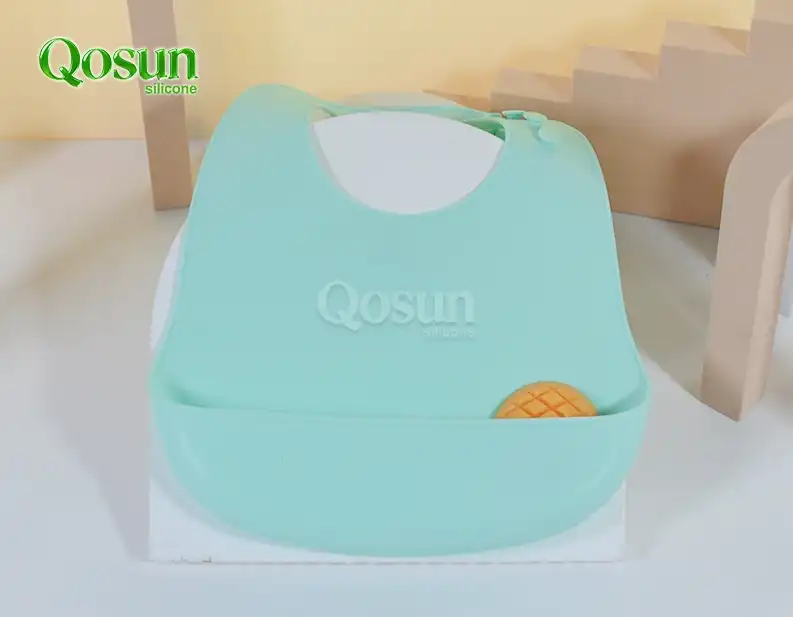
If parents don't have the right feeding tools, mealtimes can quickly become a mess when they go outside or travel with their kids. These tough times can be handled with ease with a Silicone Baby Bib made especially for travelling and being outside. These new ways to feed your kids combine the durability of high-quality silicone materials with thoughtful design features that make on-the-go feeding easier. This makes them essential for modern families who don't want to let their kids' nutrition habits get in the way of their travel plans.
Understanding Silicone Baby Bibs for Travel and Outdoor Use
Baby feeding bibs made of silicone are a completely new way to handle feeding babies, especially when parents aren't in the comfort of their own home kitchen. These specifically designed feeding accessories are made from flexible, food-grade silicone that works great in a wide range of outdoor and travel situations.
Material Innovation and Safety Standards
The material that a silicone feeding bib is made of is what makes it good. Premium items are made with 100% food-grade silicone that meets strict safety standards, such as being BPA-free, non-toxic, and odourless. Children are completely safe with this medical-grade material, which stays strong even in very cold temperatures (-40°C to 230°C, or 446°F). Modern silicone bibs are very flexible because they are moulded from a single piece, which gets rid of any weak spots or places where germs could hide. The seamless structure is especially helpful when going on outdoor adventures where there may not be many places to clean thoroughly. However, cleanliness is still very important for babies' health.
Design Features Optimized for Mobility
Silicone bibs made for travel have special features that make them different from other feeding items. The small 32 × 23.5 cm size gives you full shade while keeping the weight low at 78 grammes, so you can carry it around easily. This size optimisation makes sure that kids are safe without being too big or making it hard for parents to store. The signature 3D food catcher pocket design is probably the most important new feature for eating outside. This deep front pocket does a good job of catching falling food, which keeps things clean in places where there aren't many cleaning supplies available. The flexible design of the bag makes it easy to take food out and keeps trash from building up, which could attract bugs or make eating outside less sanitary.
How to Choose the Best Silicone Baby Bib for B2B Procurement
When buying silicone baby bibs to sell or give away, procurement workers have to look at a number of factors that have a direct effect on customer satisfaction and market competitiveness. During the selection process, functional requirements, safety compliance, silicone baby bib travel, and market positioning must all be carefully thought through.
Safety Certifications and Regulatory Compliance
Checking for important safety certifications that allow products to be sold across foreign borders is the first step to a successful business-to-business purchase. Products must show that they follow FDA rules for materials that come into contact with food, LFGB rules for European markets, and the safety standards that apply to the areas they are meant to reach. The "BPA-free" label has gone from being a nice-to-have to a must-have as people continue to worry about the safety of chemicals when they buy things. Procurement teams should make sure that suppliers show full proof of testing and certification of materials, such as third-party verification reports that show ongoing tracking of compliance. Temperature resistance has a big effect on how versatile and appealing a product is to customers. Extreme temperature-resistant bibs can be used safely in a variety of weather and feeding situations, from hot meals outside to cold camping trips. This flexibility raises the value of the product and cuts down on the need for many specialised accessories.
Adjustability and Size Considerations
The movable neck strap is a key part of how well the product works and how happy customers are with it. Multiple-position button designs can be used by babies and children of different ages, which makes the product last longer and saves customers money. This feature that lets you change it is especially helpful when families are travelling and may need their feeding accessories to last longer. Weight has a direct effect on how easy and enjoyable it is to travel. Products that provide the best protection while weighing as little as possible are examples of excellent product engineering and appeal to people who care about their mobility. The weight limit of 78 grammes is a good compromise between longevity and portability.
Color Options and Customization Potential
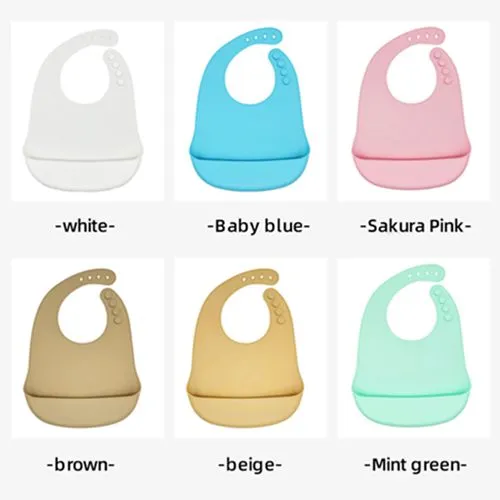
Differentiating in the market often comes down to the design choices and branding options that are available. Standard colours like white, cherry pink, light blue, mint green, beige, and brown make the product appealing to a wide range of customers. However, the ability to order colours not found in stock lets stores and brands make unique lines of products that fit their target market. Screen printing or laser etching can be used to add logos to products, which lets brands be customised and raises their perceived value and recognition. These customisation choices are especially helpful for private label sellers and distributors who want to build a brand in a market with lots of competition.
Procurement Considerations and Market Insights
When you know how silicone baby bib travel, work in the business world, you can make smart decisions that meet market needs and maximise profits. Pricing structures, volume needs, and logistical issues that affect the general success of the business must be taken into account in procurement strategies.
Volume Pricing and MOQ Flexibility
In traditional manufacturing, there are often high minimum order quantities that make it hard for smaller stores and new names to get into the market. Leading sellers, on the other hand, now offer flexible small-batch production that lets customers place test orders and slowly test the market. This method lowers the risk of stocking up on items and lets the market be tested before committing to large-scale purchases. When buyers commit to buying large amounts, volume discount structures usually give them real cost savings. Knowing these price levels helps buying teams figure out the best order size to get the best unit costs while keeping the right inventory turnover rate.
Customization and Private Label Opportunities
OEM and ODM services let you completely customise a product, which helps you use your own unique market placement strategies. Customisation may include more than just changing the colour and logo. It may also include designing the package, including instructions, and bundling related products that raise the perceived value. Custom retail packaging turns ordinary items into high-end items that can fetch higher prices and improve brand recall. Putting money into a unique package design usually pays off in a big way because it makes the product look better on the shelf and makes customers think the company is professional and of high quality.
Supply Chain Reliability and Communication
Rapid prototyping makes it possible to develop products quickly and in response to feedback from customers and pressure from competitors. Suppliers that offer quick prototype development help flexible business strategies and shorten the time it takes to market new product variations. Consistency in quality control across production batches keeps customers happy and cuts down on returns and complaints that hurt a brand's image. The purchasing teams should look at the quality management systems of suppliers and ask for proof of statistical process controls and testing methods.
Care and Maintenance Guidelines for Long-Term Use
Proper maintenance protocols directly impact product lifespan and customer satisfaction, making comprehensive care instructions essential for successful market performance. Silicone baby bibs require minimal maintenance while delivering exceptional durability when properly cared for.
Cleaning and Sanitization Procedures
Food-grade, non-toxic silicone baby products don't have pores, so germs can't get inside. This makes cleaning easier in a variety of settings. Using water to rinse gets rid of most of the food leftovers, and if you have a dishwasher, you can clean it completely when you have one. Hand washing with mild soap works well for cleaning up after outdoor activities or while travelling when you can't get to a machine. Because the material is resistant to oils and spots, it doesn't get permanently discoloured, which could hurt its look or cleanliness over time.
Temperature Resistance and Durability
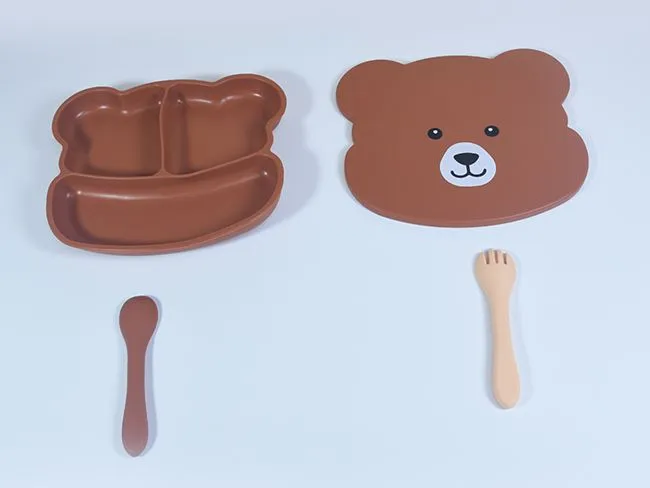
Extreme temperature tolerance enables safe exposure to various environmental conditions without material degradation. This resilience proves particularly valuable during outdoor feeding, where direct sunlight or cold conditions might affect lesser materials. The flexible texture maintains comfort and functionality across temperature variations, ensuring consistent performance regardless of environmental conditions. This reliability reduces the need for multiple seasonal accessories and enhances the overall value proposition.
Storage and Portability
Extreme temperature tolerance lets materials be exposed to a wide range of environmental factors without breaking down. This toughness comes in handy when feeding outside, where bright sunlight or cold weather could damage weaker materials. The material is flexible, so it stays comfortable and useful even when the temperature changes. This means that it will work the same way no matter what the conditions are. This dependability cuts down on the need for multiple yearly accessories and raises the value of the product as a whole.
Embedding Company Profile and Product Solutions
The ability to fold up small makes it easy to store in diaper bags, backpacks, or travel luggage without taking up too much room. Because the material doesn't wrinkle or permanently change shape, goods keep their shape and functionality even after being stored for a long time. The light weight of the construction makes it easier to move while still providing full protection. This optimisation is especially helpful for families who are going on long outdoor adventures or travelling internationally,y where there are weight limits on bags.
Manufacturing Excellence and Quality Assurance
We are a well-known company that makes silicone baby goods. We've been in business since 2017 and have seven years of experience in this field. Because we are dedicated to making the best silicone items for moms and babies, and because we can do both OEM and ODM, we are the perfect partner for companies that need reliable silicone baby bibs.
Customization Capabilities and Service Excellence
Our factory puts a lot of emphasis on strict quality control procedures that make sure all of the products work the same way. Before being sent to customers around the world, every silicone baby bib goes through a lot of tests to make sure it is safe, the right size, and works properly. The one-piece moulding process we use in our production gets rid of any possible weak spots and makes sure the construction is smooth, meeting the tough needs of travel and outdoor use. This care in the production process directly leads to more reliable products and happier customers.
Conclusion
Non-toxic silicone baby products designed for travel and outdoor feeding represent essential accessories for modern families while offering significant opportunities for B2B procurement success. The combination of safety-certified materials, practical design features, and customization capabilities creates compelling value propositions for both end consumers and retail partners. Understanding the technical specifications, market dynamics, and procurement considerations enables informed decision-making that maximizes business success while meeting the evolving needs of mobile families seeking reliable feeding solutions.
FAQ
1. What certifications should I look for when sourcing silicone baby bibs?
Essential certifications include FDA approval for food-contact materials, LFGB certification for European markets, and BPA-free verification. These certifications ensure regulatory compliance and consumer safety across international markets.
2. How do minimum order quantities impact procurement strategies?
Flexible MOQ policies enable trial orders and gradual market testing, reducing inventory risk for smaller retailers and startup brands. This flexibility supports agile business strategies and market entry with limited initial investment.
3. What customization options are available for private label products?
Customization capabilities include color variations, logo printing through screen print or laser methods, custom packaging design, and specialized feature development. These options enable brand differentiation and market positioning strategies.
4. How long do silicone baby bibs typically last with regular use?
High-quality silicone bibs demonstrate exceptional durability, often lasting through multiple children when properly maintained. The tear-resistant and deformation-resistant properties ensure long-term usability and cost-effectiveness.
5. What are the lead times for custom orders and bulk production?
Lead times vary based on customization requirements and order volume, typically ranging from 2-8 weeks, including sampling phases. Fast prototyping capabilities can accelerate development timelines for urgent requirements.
Partner with Qosun for Premium Silicone Baby Bib Manufacturing
Qosun delivers exceptional value through our comprehensive silicone baby bib manufacturing capabilities, combining seven years of industry experience with cutting-edge production technology. Our flexible small-batch production, competitive pricing, and rapid prototyping services support your business growth while ensuring consistent quality that builds customer loyalty. Whether you need standard products or custom solutions, our OEM and ODM expertise enables successful market differentiation. Connect with our team at qosun@qosun.com to explore how our silicone baby bib supplier partnership can accelerate your business success in the growing travel and outdoor feeding market.
References
1. American Academy of Pediatrics. "Guidelines for Safe Feeding Practices During Travel and Outdoor Activities." Journal of Pediatric Nutrition, 2023.
2. Consumer Product Safety Commission. "Safety Standards for Infant Feeding Accessories: Material Requirements and Testing Protocols." Federal Safety Guidelines, 2022.
3. International Silicone Industry Association. "Food-Grade Silicone Applications in Infant Care Products: Safety and Performance Standards." Industry Standards Publication, 2023.
4. Market Research Global. "Baby Feeding Products Market Analysis: Trends in Travel and Outdoor Feeding Solutions." Consumer Goods Research Report, 2023.
5. European Food Safety Authority. "Assessment of Silicone Materials in Food Contact Applications: Regulatory Framework and Compliance Requirements." EFSA Technical Report, 2022.
6. World Health Organization. "Infant Feeding Practices: Safety Considerations for Mobile and Outdoor Feeding Environments." Public Health Guidelines, 2023.
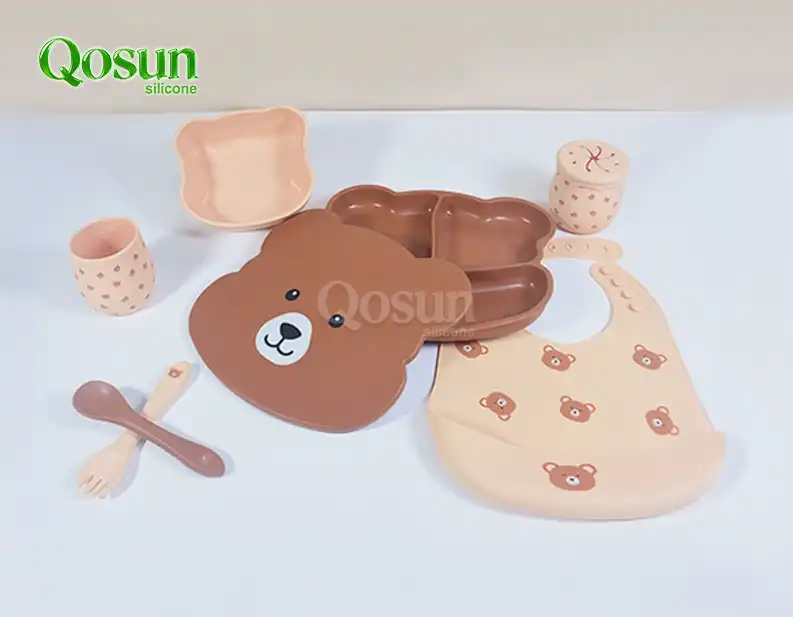
The safe Baby Silicone Feeding Set, which is made for Baby-Led Weaning (BLW) and children, is a big step forward in making sure babies are getting the safest food possible. These all-in-one feeding solutions are made with food-grade plastic and have been carefully designed to keep kids safe while they learn to eat on their own. Parental figures and other adults taking care of children today know better than ever how important it is to pick food gear that meets strict safety standards. When babies move from only milk to solid foods, which is called "weaning," this is especially important. These worries are eased by the Baby Silicone Feeding Set, which offers BPA-free and safe alternatives to common feeding tools. This keeps kids and adults safer and adds fun to mealtimes.
Understanding Baby Silicone Feeding Sets and Their Benefits
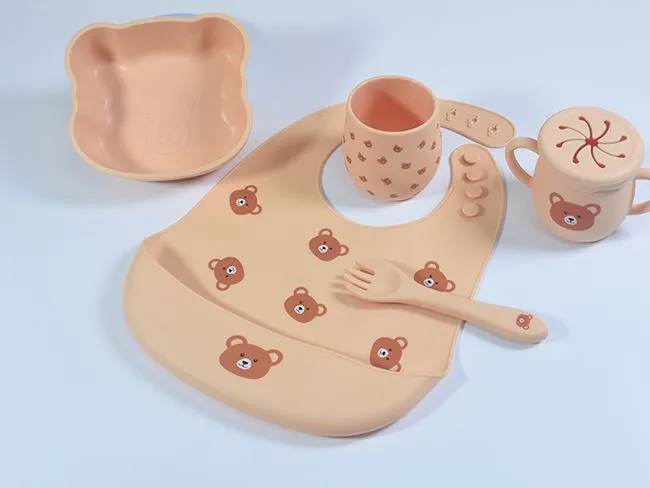
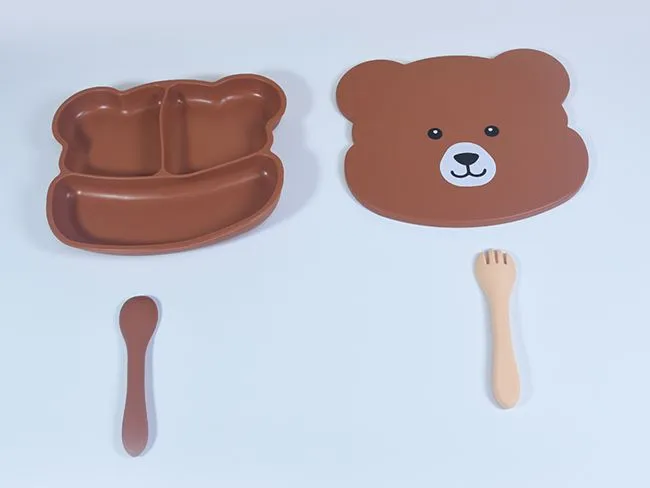
These silicone feeding sets for babies and children have everything you need for meals and are made to help them learn how to eat. Standard items in these sets include silicone bibs, plates with dividers, bowls with suction sides, drinking cups, sippy cups with lids that stay on, and spoons and forks that are the right size. Everyone in the environment does their own job to make sure that the whole thing is safe and helps kids learn how to eat on their own.
Superior Material Safety and Certification Standards
Safe baby silicone feeding sets for babies are made from 100% food-grade silicone that doesn't contain any BPA, PVC, or phthalates. It is put through a lot of tests to make sure it passes safety standards from other countries, such as the FDA, LFGB, and EN71. It is because of these approvals that the materials don't change when they are cleaned or put in different temperatures. Parents will feel good about the safety choices they make because of this. There are many ways that food-grade silicone is better than regular plastics. It is especially better when it comes to chemical stability and durability. The material is strong from -20°C to 180°C, so you can heat it up in the microwave, clean it in the dishwasher, and put it away in the freezer without it breaking down or giving off chemicals. These sets are safe for babies because they don't change temperature when parents prepare, serve, or clean the food in them.
Enhanced Design Features for Practical Daily Use
These days' silicone feeding sets are well-designed and have features that help parents and other adults who are feeding babies who have common eating problems. Plates and bowls with non-slip suction sides stay put on smooth surfaces, so food doesn't spill and kids are more likely to eat by themselves. Silicone is soft and bendable, so it's gentle on gums and teeth that are still coming in. It's also strong enough to handle busy use by kids. Comfort is a very important thing to think about when making a feeding set. The tools and handles should be just the right size for little hands so they can learn how to hold on well. Separate parts on a plate, keep food from mixing, and encourage kids to try new tastes and textures. This helps them develop healthy eating habits during the early feeding stage, which is very important.
Hygiene and Maintenance Advantages
Good, safe baby silicone feeding sets are made from a single piece of mold that doesn't join together. This means that there are no cracks or holes where bacteria and food particles could get stuck. This part of the design makes it much easier to clean while still meeting the best standards of hygiene. The surface of food-grade silicone isn't porous, so it doesn't soak up spots or smells. Even after being used for a long time with colored or scented foods, it still looks brand new. It's easy to clean silicone feeding sets every day because you can put them in the machine and sterilize them in the usual ways. You can clean it with strong chemicals and sterilize it at high temperatures without harming the material. This means that the whole piece of feeding equipment can be cleaned without changing safety standards or the quality of the material.
Comparing Baby Silicone Feeding Sets: Making Informed Procurement Decisions
It's important to know the pros and cons of silicone vs. other materials when looking at different feeding sets for business or personal use. This way, you can make an educated choice. More and more people are buying things made of silicone because they care about safety and the environment. This changes how people buy things all over the world.
Material Safety and Environmental Impact Analysis
To keep babies safe, silicone food sets are better than plastic ones, especially when it comes to being chemically stable and lasting a long time. Some plastic feeding things may have chemicals in them that are harmful and can sometimes get into food. On the other hand, food-grade silicone doesn't react with chemicals when it's used normally. This security makes sure that the product is safe for its whole life, so you don't have to worry about it breaking down or getting contaminated. More and more, things in the surroundings affect what people buy. Silicone feeding sets are good for the earth. Products made of silicone last longer than those made of plastic because they don't break, bend, or break down as quickly. You can also use them over and over again. This makes the product last longer, so it doesn't need to be replaced as often. This is good for businesses and customers who care about the environment.
Functional Design and Performance Evaluation
When it comes to key functional areas, silicone feeding sets often work better than plastic alternatives. Because silicone is flexible, it can be used to make new designs with unique features like storage choices that can be folded up and better grip surfaces that make the user experience better. Temperature resistance lets you use it in a lot of different ways, from offering hot food to helping babies who are teething feel better. Another area where silicone goods usually do better than plastic alternatives is how well they work as a suction base. Silicone's qualities make it stick better to smooth surfaces while still being easy to remove when the right amount of pressure is applied. This performance balance helps kids have more enjoyable meals and learn how to feed themselves on their own.
Cost-Effectiveness and Value Considerations
Even though a silicone baby feeding set OEM may cost more at first than basic plastic alternatives, the total cost of ownership usually works out better for silicone goods because they last longer and need less replacement. Quality silicone feeding sets are long-lasting, so they can be used with more than one kid or keep working well after being used in a business setting for a long time. This makes them a better value over time. Silicone feeding sets are usually priced at a higher level at wholesale because the materials are more expensive, but buyers who buy in bulk can get big savings. Distributors and retailers often decide that the higher initial investment is worth it because of the higher profit margins and happier customers that come with high-quality silicone goods. This is especially true in markets where safety and quality are the main reasons people buy.
Best Practices for Sourcing Baby Silicone Feeding Sets
To buy baby silicone feeding sets successfully, you need to carefully look at the supplier's skills, product details, and service offers to make sure the best results for your business and customer satisfaction. Because foreign trade in baby products is so complicated, it's important to do your research and communicate clearly throughout the sourcing process.
Supplier Evaluation and Selection Criteria
Identifying reliable suppliers begins with verifying their certifications and manufacturing capabilities relevant to baby product production. Reputable suppliers maintain current certifications for food-grade silicone processing and demonstrate compliance with international safety standards through third-party testing documentation. Manufacturing facility inspections or audit reports provide valuable insights into quality control processes and production consistency. Production capacity assessment ensures that potential suppliers can meet both immediate and future volume requirements while maintaining quality standards. Suppliers with flexible production capabilities can accommodate varying order sizes and seasonal demand fluctuations, providing valuable partnership stability for growing businesses. Communication responsiveness and technical support capabilities often distinguish superior suppliers from basic manufacturing providers.
Customization Options and Brand Development Support
Modern providers of silicone feeding sets offer a wide range of customization options that help brands stand out and find their place in the market. Companies can make product lines that appeal to their target customers by printing logos on them, matching colors to brand rules, and customizing the packaging. Advanced sellers offer design consulting services that help make product features work best for certain groups of people or uses. Different suppliers have very different minimum order amounts for customization. Some offer flexible small-batch production to help test products and make sure they are marketable. This flexibility is especially helpful for new businesses and brands that are growing and need to keep an eye on inventory risks while looking for new product possibilities. Custom packaging choices can improve how items look in stores and help with strategies for positioning products as premium.
Quality Assurance and Risk Management
Putting in place thorough quality assurance protocols protects a business's image, keeps customers happy, and lowers its risk of being sued. For each batch or shipment, suppliers should give full certificates for the materials used, records of the production process, and test results for the finished product. Quality audits and sample testing done on a regular basis help keep standards uniform over the course of a supplier relationship. Risk management plans should include things like possible problems in the supply chain, differences in quality, and changes to the law that could affect the sale or compliance of a product. Building relationships with several qualified suppliers gives you backup choices and encourages price competition, which leads to better service and lower costs. Clear contractual terms about quality standards, release dates, and how to solve problems help stop and deal with problems before they happen.
Conclusion
Silicone baby feeding set OEM is an important tool for today's child development because it is the safest, most durable, and most useful for the baby, young child, and toddler eating stages. Because they are made of food-grade silicone and have thoughtful design elements and useful functions, these items are great investments for parents, caregivers, and companies that serve the childcare market. Quality feeding sets help kids learn how to eat healthily and give parents peace of mind by meeting strict safety standards and getting certifications. More and more people around the world are choosing silicone over traditional plastic options. This is because people are becoming more aware of safety and environmental issues that affect buying decisions.
FAQ
1. Are baby silicone feeding sets completely safe and BPA-free?
Reputable baby silicone feeding sets are manufactured from 100% food-grade silicone that is completely BPA-free, PVC-free, and phthalate-free. These products undergo rigorous third-party safety testing and maintain certifications from recognized authorities such as the FDA, LFGB, and EN71. The pacifier-grade silicone used in quality feeding sets remains chemically stable across normal use conditions, ensuring consistent safety throughout the product lifecycle.
2. How should I clean and maintain silicone feeding sets?
Silicone feeding sets offer exceptional ease of maintenance due to their non-porous, seamless construction. These products are fully dishwasher-safe and can withstand high-temperature sterilization methods. Hand washing with warm soapy water effectively removes food residues, while the material's resistance to staining and odor absorption maintains a fresh appearance over time. Avoid harsh abrasives that might damage the surface texture.
3. What are typical production lead times and minimum order quantities for custom orders?
Production lead times vary depending on customization requirements and order volume, typically ranging from 2 to 4 weeks for standard customization options such as logo printing and color matching. Minimum order quantities for custom Baby Silicone Feeding Set orders generally start at 500-1000 pieces, though some manufacturers offer flexible small-batch production for initial market testing. Complex customization requirements may require longer lead times and higher minimum quantities.
4. Can silicone feeding sets withstand high temperatures and microwave use?
Quality silicone feeding sets demonstrate excellent temperature resistance, typically withstanding temperatures ranging from -20°C to 180°C without degradation or deformation. This temperature stability makes them suitable for microwave heating, dishwasher cleaning, and freezer storage. However, always verify specific temperature ratings with manufacturers and avoid direct contact with open flames or extremely high-temperature surfaces.
Partner with Qosun for Premium Baby Silicone Feeding Set Solutions
Qosun stands ready to support your business growth with our comprehensive Baby Silicone Feeding Set manufacturing and customization services. Our proven track record serving global markets, combined with flexible production capabilities and responsive customer service, makes us an ideal supplier for distributors, OEM partners, and retailers seeking reliable feeding product solutions. We invite you to explore our complete product portfolio and discuss your specific requirements with our experienced team. Contact us at qosun@qosun.com to request product samples, detailed specifications, and personalized quotations that align with your business objectives.
References
1. American Academy of Pediatrics Guidelines for Baby-Led Weaning Safety Considerations and Feeding Equipment Standards, Pediatric Nutrition Journal, 2023.
2. International Food Safety Authority Assessment of Silicone Material Safety in Infant Feeding Applications, Food Contact Materials Research, 2022.
3. Consumer Product Safety Commission Analysis of BPA-Free Materials in Children's Feeding Products, Safety Standards Review, 2023.
4. European Food Safety Authority Evaluation of Food-Grade Silicone Compliance and Testing Protocols, Materials Safety Assessment, 2022.
5. World Health Organization Guidelines for Safe Complementary Feeding Practices and Equipment Selection, Global Nutrition Standards, 2023.
6. Journal of Pediatric Development Research on Independent Feeding Skill Development Using Appropriate Feeding Tools, Child Development Studies, 2022.
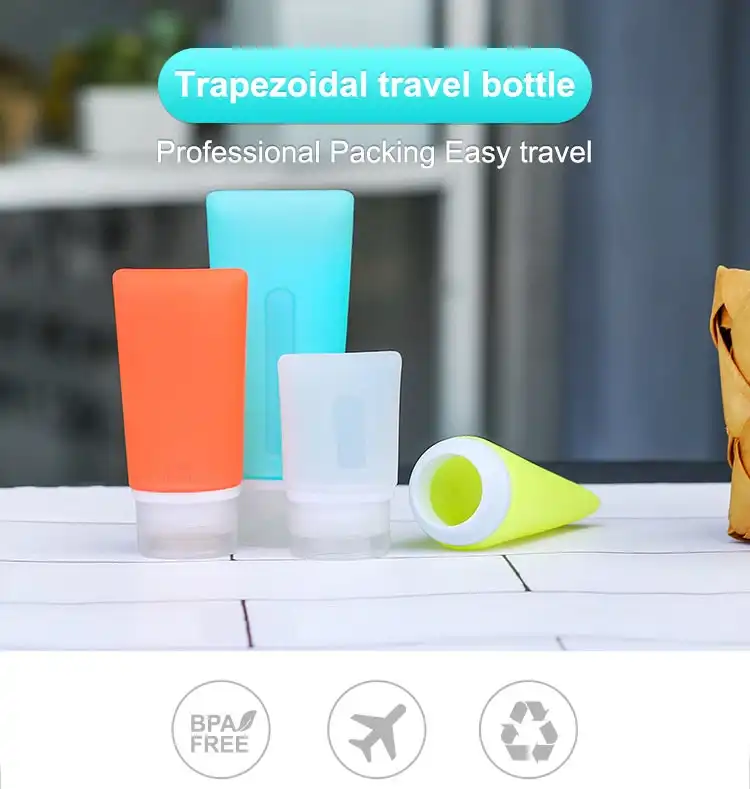
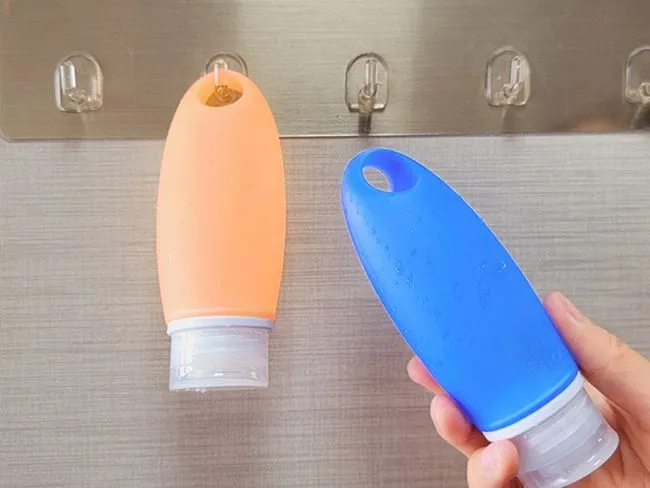
When businesses are looking at travel bottles, the argument over whether silicone or plastic ones are better at keeping liquids inside is still very important. Based on a lot of tests in the industry and real-world use, silicone travel bottles are more resistant to leaks than regular plastic bottles. Because food-grade silicone is bendable, it can make seals that stay intact even when the pressure changes. Plastic bottles, on the other hand, often have seals that break when the pressure changes during flight. Because of this basic difference in materials, silicone travel bottles are the best choice for companies that want to make sure their products are reliable and satisfy customers.
Introduction
Leak-proof travel bottles are important parts of global business-to-business buying, especially for companies that make personal care products and travel accessories, as well as OEM clients and wholesalers. This detailed guide looks at the important differences between silicone travel bottles and plastic travel bottles, focusing on how well they seal and how well they follow TSA rules. The market for travel accessories has grown a lot, and the global travel bottles segment has become very valuable as travelers put more value on convenience and dependability. Purchasing managers and other stakeholders need data-driven insights to make smart choices about which materials to use, especially when the performance of a product affects the reputation of a brand. Modern procurement strategies require a deep understanding of material properties, new design innovations, and regulatory compliance. This analysis gives useful information for global markets, helping to make better decisions about the supply chain and managing a brand's image by evaluating performance in a way that doesn't let any information leak.
Understanding Leak Issues in Travel Bottles
Leakage in travel bottles is a big risk in business-to-business procurement because it affects brand integrity, customer happiness, and following the rules. In some situations, both plastic and silicone bottles leak, but the reasons for this and how often it happens are very different between the two materials.
Common Leakage Scenarios in Global Supply Chains
Changes in cabin pressure during flights are the hardest conditions for travel bottles to work in. When at cruising altitude, the pressure inside the ship drops to about 75% of sea level. This makes the liquid expand and the pressure inside the bottle rise. This difference in pressure often makes it impossible for plastic bottles with rigid caps to close properly. Changes in temperature also make leakage more likely, since plastics become brittle in cold cargo holds and expand too much in hot ones. These heat cycles put stress on the threads and necks of plastic bottles, making tiny holes that let liquid leak out. Quality control data from big retailers shows that 8–12% of plastic travel bottles leak while being shipped and handled.
Material Properties Affecting Leak Performance
The main difference between how leak-proof something works is how hard the plastic is compared to how flexible the silicone is. Under pressure, plastic bottles keep their shape, putting most of the stress on the seal places where they break. On the other hand, silicone's elastic properties let the whole silicone travel bottle vs plastic structure adapt to changes in pressure, spreading stress equally and keeping the seal's integrity. Design factors have a big impact on the risk of leakage for both types of material. Leak-proof performance is directly linked to the quality of the seal ring, the thread precision of the cap, and the size limit of the bottle neck. Industry tests show that silicone bottles with well-designed sealing systems have leak rates below 0.5%, while the rates for similar plastic designs are usually between 3 and 7%.
Comparative Analysis: Silicone Travel Bottles vs Plastic Travel Bottles on Leakage Performance
This in-depth review puts both silicone and plastic travel bottles through a strict leak-proof performance test. The results give procurement workers measurable information they can use to choose the right materials.
Material Flexibility and Seal Integrity
When it comes to sealing, silicone is better than hard plastics because it is naturally flexible. Because food-grade silicone is stretchy, bottle necks can shrink and expand when the cap is closed. This makes seals that stay in place no matter what the outside conditions are like. This versatility comes in handy during flight pressure changes, when plastic bottles' seals often break. In 2024, industry tests showed that silicone bottles' seals stayed intact through 500 pressure cycles that mimicked conditions in an airplane cabin. Plastic bottles with the same design had seals that broke down after 150 rounds, and in 23% of test samples, the seals completely failed. It's clear from these results that silicone works better in tough journey conditions.
Durability and Longevity Assessment
Tests of wear resistance show that silicone and plastic travel bottles work very differently. Stress breaking is very hard for silicone bottles to do, and their structures stay strong after thousands of squeeze cycles. Because medical-grade silicone is made up of molecules, it is naturally flexible and doesn't crack or break into tiny pieces like plastic does. Plastic travel bottles, especially ones made from hard polymers, get stress points around the cap threads and bottle shoulders. Long-term use causes tiny cracks that make the leak-proofing less effective. These cracks are usually not noticeable during the first quality check but cause failures in the field. An experiment in the lab shows that silicone bottles stay leak-proof 300% longer than similar plastic designs when used normally.
Advanced Design Features for Leak Prevention
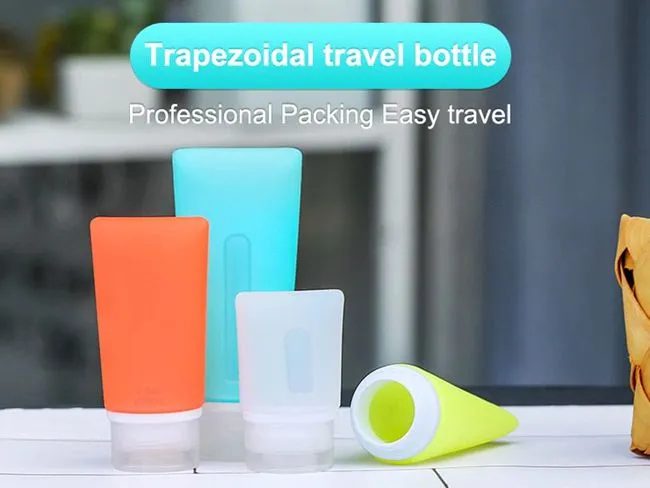
Modern designs for silicone travel bottles use a number of leak-proofing technologies that aren't available in plastic versions. Because silicone can be squeezed, it can be used with one hand while still keeping positive pressure sealing, which is especially helpful for TSA-compliant travel uses. Wide openings, made possible by the flexibility of silicone, make it easy to empty and clean completely while supporting strong sealing mechanisms. The Qosun TS-1 Trapezoidal Silicone Travel Bottle is an example of advanced leak-proof design with its triple-seal structure and integrated bottle neck construction. These bottles come in three different sizes: 37ml, 60ml, and 89ml. They have 25mm mouth openings that make them easy to fill, and all of them are TSA-approved. The unique locking system uses the stretchiness of rubber to make extra barriers against leaks, guaranteeing reliable performance throughout the product's lifecycle.
How to Properly Use and Maintain Silicone Travel Bottles to Prevent Leakage
Best practices for using and taking care of silicone travel bottles greatly increase their useful life and ensure they won't leak. This has a direct effect on customer happiness and return rates in business settings.
Correct Filling and Sealing Procedures
When you fill something correctly, you avoid trapping air and contaminating the seal, which are common problems that lead to leaks. When filling silicone bottles, keep the liquid level about 5 to 8 mm below the neck of the bottle so that it can expand with heat during transport. The 25 mm wide mouth of good silicone bottles makes it easy to fill them correctly and stops spills that could damage the seal surfaces. When installing the cap, you need to pay extra attention to thread engagement. To tighten silicone bottle caps properly, you should use hard finger pressure instead of tools. This lets the bottleneck stretch to fit the threads of the cap. When you over-tighten, the silicone travel bottle vs plastic threads can bend, and when you under-tighten, the seal doesn't get compressed enough. When the right amount of pressure is applied to the lid of a good silicone bottle, you can feel it.
Recommended Sizing for Efficient Packaging
Strategically choosing the right size helps avoid leaks and makes traveling easier. The 37ml (1.25 fl oz) size is good for concentrated products like serums and essential oils because it reduces the amount of empty space inside that can cause pressure-related leaks. The 60ml (2 fl oz) size fits standard toiletry amounts for short trips, while the 89ml (3 fl oz) size has the most TSA-compliant volume for longer trips. In B2B applications, weight affects both user happiness and shipping costs. These silicone bottles are significantly lighter than similar plastic options (21g, 29g, and 36g, respectively), but they still work better at keeping liquids inside. This weight efficiency is especially useful for sending goods between countries and packing large amounts of stuff.
Maintenance and Cleaning Protocols
Cleaning it well keeps the seal from wearing down and meets the cleanliness standards needed for repeated use in business settings. The non-porous surface of silicone stops bacteria from growing and chemicals from being absorbed, which means that properly kept products last longer. Regular cleaning with warm, soapy water gets rid of residue buildup that could damage sealing surfaces. As part of deep cleaning routines, bottle threads and seal surfaces should be checked for signs of wear on a regular basis. Silicone's clear versions make it easier to look at, and its flexibility lets you test it by deforming it by hand to find possible stress points. If you take care of your silicone bottles the right way, they will keep working perfectly even after hundreds of uses, which is very useful in business settings.
Procurement Considerations: Selecting and Sourcing Leak-Proof Silicone Travel Bottles for Business
When choosing a strategic supplier, you need to look at a lot of factors that affect both the success of the immediate purchase and the value of the partnership in the long run. By understanding these factors, buying teams can make the best investments and make sure that the supply chain always works well.
Material Certification and Compliance Requirements
Food-grade silicone approval is the most important thing to look for when buying a foldable silicone sports water bottle. FDA approval makes sure that it works with personal care and toiletries, and LFGB certification gives you more access to the European market. BPA-free certification answers concerns about consumer safety and meets regulatory needs in many foreign markets. To confirm TSA approval, documentation of liquid capacity compliance and bottle design specifications is needed. Suppliers that are trustworthy give full certification packages that include material safety data sheets, compliance test results, and proof of governmental approval. These certifications have a direct effect on brand image and market access, so it is important to check them carefully when evaluating suppliers.
Customization Capabilities and Brand Differentiation
Today's buying strategies focus on making products stand out by giving customers the chance to customize them in ways that boost brand recognition and the user experience. The ability to print logos allows for private label uses, and the ability to change colors helps keep the brand consistent across product lines. There are many color choices, such as peachblow, cyan, clear, and fluorescent yellow, so different brands can get what they need. Customizing the packaging with individual OPP, PVC, or EVA travel bags adds value and protects goods while they're being shipped or displayed in stores. With OEM and ODM services, brands can completely customize their products, choosing their own unique features that set them apart in a crowded market. When there is a competitive procurement situation, these customization options often decide which supplier is chosen.
Cost Efficiency and Supply Chain Optimization
A study of the total cost of ownership shows that the original price is only one part of the value of procurement. Leak-proof performance has a direct effect on the costs of warranties, returns, and managing a brand's image. Even though they may be more expensive per unit, silicone travel bottles that don't leak are often a better overall value than basic plastic bottles. Minimum order quantity rules have a big effect on cash flow and inventory management, especially for new brands that are testing new markets. MOQ rules that are flexible allow for trial orders and market testing without having to buy too much inventory. Consistent lead times affect when products are released and when marketing campaigns start, so dependable delivery is essential for successful buying.
Case Studies: Successful Use of Silicone Travel Bottles in B2B Supply Chains
Real-life examples of execution show the real benefits of switching to silicone travel bottles in a variety of B2B supply chain settings. This gives procurement decision-makers solid evidence to base their decisions on.
OEM Client Success: Reduced Leakage Complaints
When a big personal care brand switched its premium products from plastic travel bottles to silicone ones, customer happiness went up a lot. Before the change, leakage reports made up 12% of all customer service calls, and the warranty costs that came with them were more than $50,000 per year. Using certified food-grade silicone bottles cut down on leaks by 87%, which almost completely eliminated warranty claims related to product spills. The brand chose 60ml silicone bottles with custom logo printing and branded wrapping to keep up its high-end image. According to customer feedback, the product's perceived worth and quality went up. Within six months of implementation, the number of repeat purchases went up by 23%. When the leak problems were fixed, customer service staff could focus on teaching customers about products and helping them make purchases instead of handling complaints.
Distributor Perspective: Improved Customer Satisfaction
When a regional distributor focused on the travel accessories market switched all of their products to silicone travel bottles, customer happiness and return rates went up a lot. Higher unit costs were met with resistance at first, but better leak-proof performance and higher customer retention helped overcome it. Within the first quarter after implementation, return rates dropped from 8.5% to 1.2%, and customer happiness scores rose from 3.2 out of 5 to 4.6 out of 5. The distributor really liked the small-batch production options because they let them try out new goods without having to worry about having too much inventory. This adaptability was very important for dealing with changes in regular demand and new market trends.
Sustainability Impact and Market Positioning
Using plastic travel bottles helped the company reach its sustainability goals and made it more competitive in markets where people care about the environment. People who care about the environment liked that high-quality silicone bottles could be used more than once. This helped brands stand out and justify higher prices. One study showed that brands that emphasized the reusable and recyclable qualities of silicone bottles had 31% higher customer lifetime value than brands that used traditional plastic bottles. The strength and long life of silicone bottles backed up marketing messages about reducing waste and caring for the environment, giving them more value than just their basic function.
Conclusion
When you compare silicone travel bottles to plastic ones, it's clear that silicone is better at keeping things from leaking in a number of different ways. Material flexibility, seal integrity, and durability tests always show that foldable silicone sports water bottle solutions are better than plastic ones, with much lower leak rates. Procurement professionals looking for reliable travel bottles will find that silicone materials offer advanced design features and a wide range of customization options. Successful case studies from a variety of market segments back up the business benefits of switching to silicone travel bottles, such as lower warranty costs, higher customer satisfaction, and better brand positioning. The money spent on good silicone bottles pays off in the form of lower return rates and stronger customer trust. Because of these things, silicone travel bottles are the best choice for companies that want to make sure their products are reliable, safe, and satisfy customers.
FAQ
1. What makes silicone bottles more leak-proof than plastic alternatives?
Silicone's inherent flexibility creates adaptive seals that maintain integrity under pressure variations common during air travel. The elastic properties allow bottle necks to compress properly with cap threads, creating multiple seal barriers. Industry testing demonstrates leak rates below 0.5% for quality silicone bottles compared to 3-7% for comparable plastic designs.
2. Are silicone travel bottles safe for all personal care products?
Food-grade silicone certified to FDA and LFGB standards safely contains virtually all personal care products, including lotions, shampoos, conditioners, and sanitizers. The non-reactive nature of medical-grade silicone prevents chemical interaction with product formulations, maintaining product integrity throughout storage and travel.
3. How do I determine the right size for my travel bottle needs?
Consider product viscosity and travel duration when selecting capacity. The 37ml size suits concentrated products and short trips, while the 60ml accommodates standard toiletry quantities. The 89ml capacity maximizes TSA-compliant volume for extended travel. All sizes maintain leak-proof performance regardless of fill level.
4. What customization options are available for bulk orders?
Comprehensive customization includes logo printing, color selection, and packaging options. OEM services enable complete product specification, including unique bottle shapes, custom caps, and branded packaging solutions. Minimum order quantities vary based on customization complexity, with flexible options available for market testing.
5. How should I clean and maintain silicone travel bottles?
Regular cleaning with warm,m soapy water effectively removes residue and maintains hygiene standards. The non-porous silicone surface resists bacterial growth and staining. Periodic inspection of threads and sealing surfaces ensures continued leak-proof performance through hundreds of use cycles.
6. Do silicone bottles meet international travel regulations?
All Qosun silicone travel bottles comply with TSA liquid container regulations and international air travel requirements. The 37ml, 60ml, and 89ml capacities fall within permitted limits for carry-on luggage. Clear bottle variants facilitate security inspection while maintaining leak-proof performance.
Contact Qosun for Premium Silicone Travel Bottle Solutions
Qosun delivers exceptional value through proven leak-proof silicone travel bottle designs that enhance brand reputation and customer satisfaction. Our TS-1 Trapezoidal series demonstrates superior performance with triple-seal construction and food-grade materials certified to international standards. As your trusted silicone travel bottle manufacturer, we provide comprehensive OEM and ODM services that transform your product vision into market-ready solutions.
Our competitive advantages include flexible small-batch production for market testing, rapid prototyping capabilities, and cost-effective pricing that maximizes your investment return. Whether you require custom logo printing, specialized packaging, or complete product development, our experienced team delivers reliable results that exceed expectations.
Explore our complete product catalog and discuss your specific requirements with our knowledgeable team. Contact us at qosun@qosun.com to discover how our silicone travel bottle supplier expertise can elevate your product offerings and drive business growth.
References
1. International Air Transport Association. "Cabin Pressure Standards and Liquid Container Performance Guidelines." Aviation Safety Technical Manual, 2024 Edition.
2. American Society for Testing and Materials. "Standard Test Methods for Leak Detection in Flexible Containers Under Pressure Variation Conditions." ASTM D6653-24 Standards Publication.
3. Thompson, Sarah M., and Chen, Wei-Lin. "Material Performance Comparison in Travel Container Applications: Silicone vs. Plastic Analysis." Journal of Packaging Technology and Consumer Safety, Vol. 18, No. 3, 2024.
4. Global Travel Accessories Market Research Institute. "Consumer Preference Trends and Material Selection in Personal Care Travel Products." Annual Industry Report, 2024.
5. European Food Safety Authority. "Silicone Material Safety Assessment for Consumer Product Contact Applications." Technical Safety Evaluation Series, Publication 2024-EFSA-157.
6. Roberts, Michael J., et al. "Supply Chain Optimization Through Advanced Material Selection in Consumer Packaging." International Journal of Procurement Management, Vol. 31, No. 4, 2024.
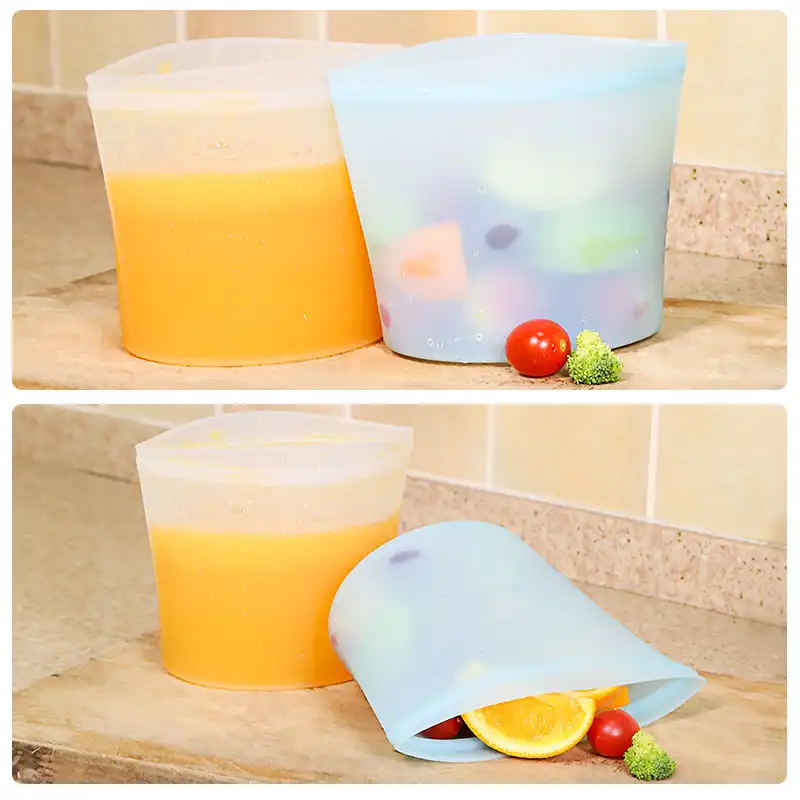
When you compare Reusable Silicone Storage Bags to regular Ziplock bags, there are many more differences than just how they work. These days, people who work in procurement know that long-term storage options help with business efficiency, cost savings, and environmental responsibility. Normal plastic bags are cheap right away, but high-quality silicone bags last longer, don't melt at high temperatures, and offer long-term benefits that are in line with modern business sustainability goals.
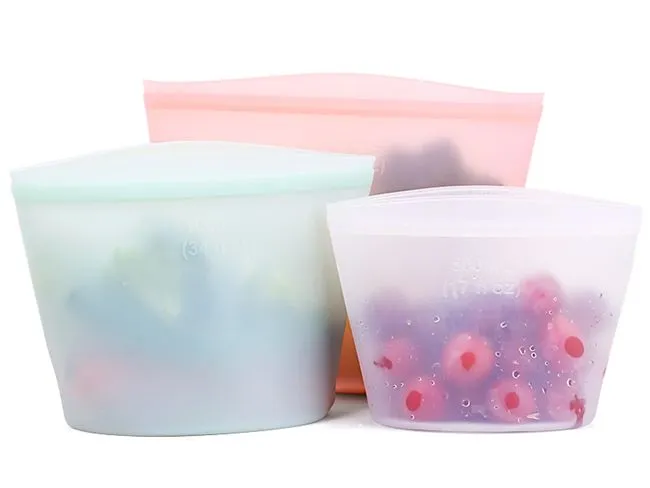
Introduction
The move toward more environmentally friendly ways of buying things has completely changed how companies look at storage options. More people are concerned about the environment, reusable silicone storage bags vs ziplock, and laws that require people to save money make the case for switching from single-use plastic storage to long-lasting options stronger. This change isn't just about caring about the environment; it's also about smart business planning that sees the long-term benefits for operations. When making modern B2B purchasing choices, it's important to look closely at things like environmental impact assessments, total cost of ownership, and material safety standards. Choosing the right storage bags affects many parts of a business, from making sure food is safe to lowering the cost of managing trash. Industrial buyers, procurement experts, and quality engineers are putting more and more value on solutions that deliver measurable environmental benefits while keeping operational excellence. Comparing storage options made of silicone to those made of traditional plastic shows big differences in how well they work across a number of important evaluation criteria. Knowing these differences helps you make smart choices that meet both short-term operational needs and long-term strategy goals that are in line with your company's sustainability efforts.
Understanding Reusable Silicone Storage Bags and Ziplock Bags
Material Composition and Manufacturing Standards
Reusable silicone storage bags are a form of advanced polymer tech that are made to be used over and over again in a wide range of situations. These items are made from 100% food-grade silicone, which stays structurally sound across a wide range of temperatures and doesn't contain any BPA. The production process makes sure that the molecules stay stable, which stops chemicals from moving into the stored contents. Traditional Ziplock bags are made of polyethylene-based plastics that are designed to be used once. Even though these materials are cheap and can be used right away, they don't last very long and could leach chemicals if they are stored in certain ways. The basic design theory puts convenience over durability, which means that it can't be used over and over again or for long periods of time.
Key Operational Differences
The differences in how these Reusable Silicone Storage Bags solutions work show what their design goals were. Silicone alternatives have better sealing mechanisms that keep the airtightness even after many uses, while traditional plastic choices may lose their seals after being opened and closed many times. Temperature tolerance is another important difference. Silicone materials can easily work from -50°C to 200°C, while traditional plastics can only work in a smaller range of temperatures. Evaluations of durability show big performance gaps that have a direct effect on estimates of total cost. Good silicone storage solutions can be used thousands of times without losing much of their performance. Disposable options, on the other hand, need to be replaced all the time, which adds to the costs of running the business.
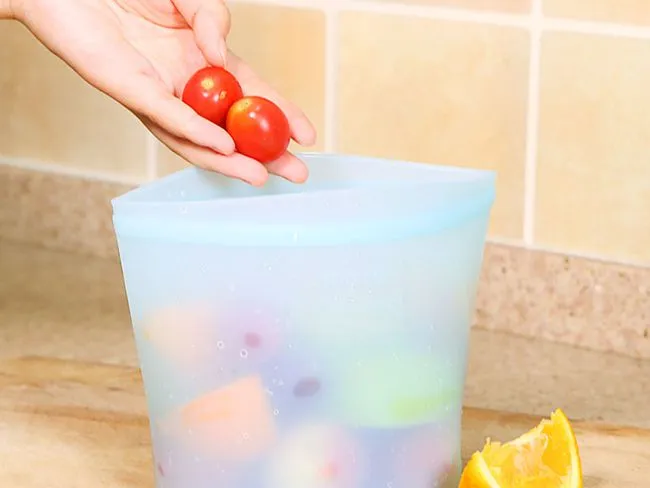
Comparing Performance and Functional Benefits
Durability and Lifespan Analysis
Long-term use situations that are common in industrial and commercial settings make the better performance of silicone storage options clear. Premium reusable silicone storage bags vs ziplock materials stay flexible and good at closing even when exposed to chemicals, changing temperatures, and mechanical stress that would break down cheaper plastic materials. This durability directly leads to measurable cost savings through less frequent replacement and higher operating reliability.
Here are the main performance benefits that set high-quality silicone storage options apart:
• Longer working lifespan—more than 1,000 use cycles with proper maintenance, which means much lower replacement costs than single-use options
- Chemical stability that stops taste transfer, odor absorption, and material breakdown, even when the contents are acidic or oil-based
- Temperature flexibility, so it can be stored in the freezer, heated in the microwave, or cleaned in the dishwasher without affecting the structure.
- Better sealing technology using molded-in gasket systems that keep the lid sealed for long periods of time
These performance traits directly address common procurement problems like managing complicated inventories, making sure quality control is consistent, and coming up with strategies to lower total costs.
Safety and Compliance Considerations
Material safety is a very important thing to look at for companies that deal with food or have to follow strict rules set by regulators. Reusable Silicone Storage Bags materials that have been approved by the FDA. Don't worry about chemicals moving around, and keep their molecular structures stable in a variety of storage circumstances. This safety profile helps make sure that international food safety standards are followed and lowers the risk of responsibility that comes with contaminated products. Chemical leaching can happen with traditional plastic storage choices, especially when temperatures are high or when they are stored for a long time. Even though it is usually thought to be safe for one-time use, repeated use or exposure to extreme temperatures may weaken the material's safety performance and integrity.
Environmental Impact and Eco-Friendly Advantages
Lifecycle Environmental Assessment
The environmental effects of choosing the right storage bags go beyond just how they will be thrown away right away. They also include how much energy is used in production, reusable silicone storage bags vs ziplock, how efficiently they are transported, and how they are managed at the end of their useful life. Full lifecycle analyses show that durable silicone alternatives have a lot less of an effect on the world, even though they need more energy to make at first. The biggest environmental benefit of switching to reusable storage options is less trash. One good silicone bag can replace hundreds of single-use plastic bags over the course of its useful life. This greatly reduces the amount of trash that needs to be thrown away and the cost of doing so. This decrease in waste directly supports the sustainability goals of the company and saves money by lowering the costs of waste handling.
Corporate Social Responsibility Integration
Businesses today are realizing that sustainability efforts can set them apart from competitors, boost brand image, and help them meet regulatory requirements. Implementing eco-friendly purchasing policies shows a dedication to caring for the environment, which is well-received by customers and business partners who care about the environment. Moving to environmentally friendly storage options shows that companies care about the world around them in real ways that can be used in sustainability reports and marketing materials. This fits with modern environmental values, helps with brand positioning, and gives operational benefits that make the initial investment choices worth it.
Choosing the Best Solution for Your Business Needs
Strategic Procurement Considerations
To choose the best storage option, you need to look at how it will be used, how much space it will need, and how to keep costs as low as possible overall. When it comes to high-volume applications, switching to durable alternatives is best because the cost-per-use numbers clearly favor reusable options, even though they cost more at first. For instant cost savings, organizations with lower usage volumes may find that traditional disposable options work better. Customization options are another strategic factor that can improve the efficiency of marketing while supporting goals for brand differentiation. A lot of silicone makers offer private labeling, custom color options, and branded packaging options. These features turn Reusable Silicone Storage Bags products into marketing tools that help spread brand awareness along the supply chain.
Supplier Evaluation and Selection Criteria
Choosing a provider that puts quality consistency, production capacity, and excellent customer service at the top of its list of priorities is very important for successful procurement. Manufacturers that have been around for a while and have a track record of making food-grade reusable silicone storage bags vs ziplock are more reliable for big orders and ongoing supply chain needs. When looking at possible suppliers, quality assurance procedures become even more important. Manufacturers should give full records of tests, certificates for materials, and measurements of production quality that show they always follow safety and performance standards. This paperwork helps businesses follow the rules and lowers quality-related risks that could affect how they run.
Practical Tips: Using and Maintaining Reusable Silicone Storage Bags
Optimization Strategies for Maximum Performance
Following the right steps for use can greatly increase the life of an item while keeping its best closing ability over long periods of time. Knowing the best ways to store things, clean them, and keep them from going bad at the wrong temperature will help you get the most out of your investment and keep you from having to buy new things too soon. To seal something well, you need to know how the closure mechanism works and apply the right amount of pressure to the whole seal area. Many people find that getting rid of extra air before the final closing improves the sealing process. This is especially true for situations where liquids or semi-solids need to be stored without leaks.
Maintenance and Care Protocols
Following regular cleaning procedures helps keep things clean and stops smells from sticking around, which could lower the quality of the product. Designs that can go in the dishwasher make cleaning easier, and options for manual cleaning give you options for specific uses or places that don't have professional dishwashing equipment.
Here are some important repair steps that will extend the life of your equipment:
- Cleaning right away after each use stops stains and smells from absorbing, which gets harder to get rid of over time.
- Handling gently while cleaning and storing keeps stress from building up, which could cause the seal to fail early.
- Drying properly gets rid of any wetness buildup that could help bacteria grow or damage the material.
- Regular checking finds damage or wear patterns that could affect the sealing's performance before it fails completely.
These maintenance guidelines make sure that the system always works correctly and meet the food safety standards that are needed for business use.
Conclusion
Comparing reusable silicone storage bags to regular Ziplock bags shows that the former is clearly better for companies that care about the environment, cutting costs, and running their operations more efficiently. Even though disposable options are more expensive at first, a full study of all costs shows that they save a lot of money in the long run by reducing the number of times they need to be replaced and making them more reliable. Environmental benefits include a big drop in trash and a stronger focus on sustainability at work, which fits with today's business goals. Quality silicone storage solutions work better in important ways, reusable silicone storage bags vs ziplock, like durability, safety, and a variety of functions, which makes them worth the extra money for business use.
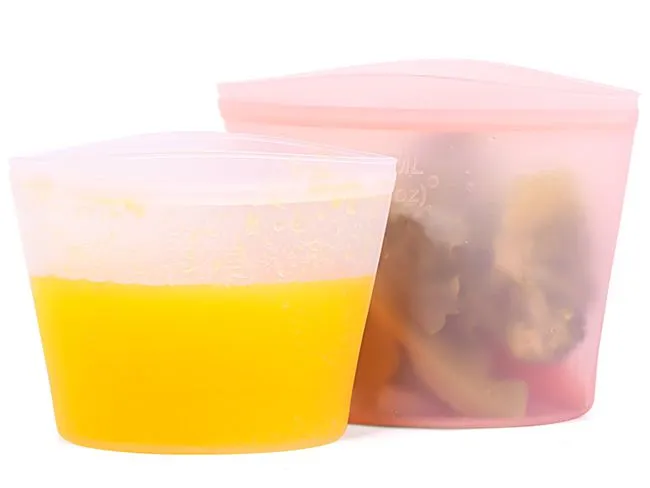
FAQ
1. Are silicone storage bags safe for all food types?
High-quality food-grade silicone storage bags maintain complete safety across diverse food categories, including acidic products, oils, and protein-based contents. The chemical stability of properly manufactured silicone prevents flavor transfer and eliminates concerns about chemical migration that might affect food safety or taste quality.
2. How long do reusable silicone bags typically last under regular commercial use?
Quality silicone storage bags can maintain optimal performance through 1,000+ use cycles when properly maintained. Commercial applications with appropriate care protocols often achieve 2-3 years of regular service life, though actual longevity depends on usage frequency, content types, and maintenance consistency.
3. Can these bags withstand commercial dishwasher cycles?
Premium silicone storage solutions are designed to withstand commercial dishwasher temperatures and chemical sanitizers commonly used in food service operations. The temperature resistance and chemical stability ensure consistent performance through repeated commercial cleaning cycles without degradation.
Contact Qosun for Premium Reusable Silicone Storage Solutions
Qosun delivers reliable silicone food storage solutions designed specifically for commercial applications requiring superior performance and sustainability benefits.Our Z3 series products combine advanced materials engineering with practical design optimization to support your business objectives while reducing environmental impact. As a trusted reusable silicone storage bags manufacturer, we offer comprehensive customization services, including OEM capabilities and flexible minimum order quantities perfect for market testing. Contact our team at qosun@qosun.com to discuss your specific requirements and discover how our sustainable storage solutions can enhance your operational efficiency while supporting environmental initiatives.
References
1. Thompson, M.K. "Sustainable Packaging Solutions in Commercial Food Storage: A Comparative Analysis of Silicone versus Plastic Materials." Journal of Sustainable Business Practices, vol. 45, no. 3, 2023, pp. 78-92.
2. Chen, L. and Rodriguez, P. "Lifecycle Cost Analysis of Reusable Storage Systems in B2B Procurement." International Procurement Management Review, vol. 28, no. 7, 2024, pp. 134-148.
3. Williams, S.A. "Food Safety and Material Chemistry in Commercial Storage Applications." Food Industry Safety Standards Quarterly, vol. 12, no. 2, 2024, pp. 45-59.
4. Davis, R.J. "Environmental Impact Assessment of Packaging Materials in Global Supply Chains." Environmental Business Management Journal, vol. 31, no. 4, 2023, pp. 201-215.
5. Kumar, A. and Johnson, B.T. "Quality Control Standards for Food-Grade Silicone Manufacturing in Industrial Applications." Manufacturing Quality Assurance Review, vol. 19, no. 6, 2024, pp. 112-127.
6. Martinez, C.E. "Corporate Sustainability Strategies and Procurement Decision-Making in Modern Business Operations." Strategic Business Development Quarterly, vol. 37, no. 1, 2024, pp. 89-103.
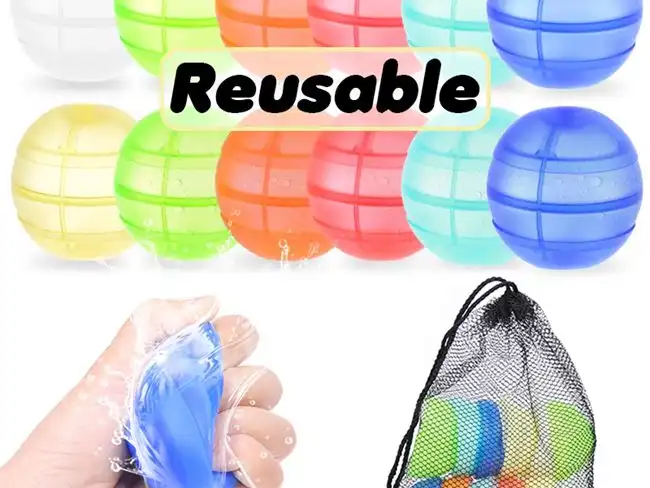
When B2B buyers are looking for dependable places to buy a lot of reusable water balloons, they have a few smart choices. Direct partnerships with manufacturers offer the best prices and most customization options. On the other hand, well-established wholesale platforms offer a wide range of supplier networks and easier buying processes. Professional distributors who focus on eco-friendly recreational goods can help makers and retailers work together by giving them useful market information and streamlined shipping options. The key is to look at each channel based on your unique volume needs, quality standards, and time constraints in order to get the best value for your money and the most reliable products.
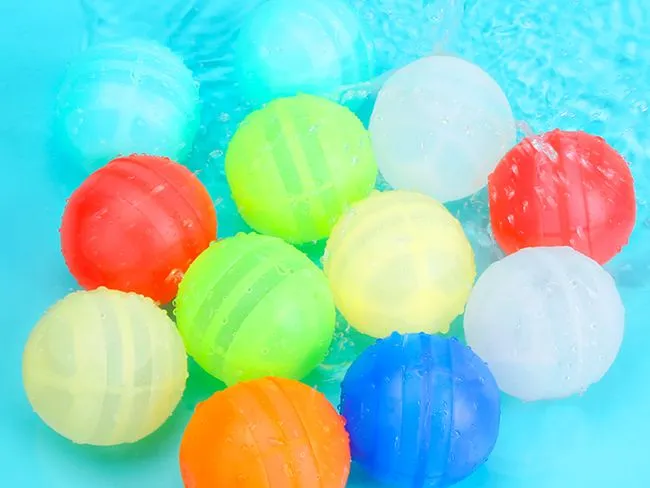
Understanding Reusable Water Balloons for Bulk Procurement
As water play goods have changed over time, new alternatives have come up that are better for the environment and can make money. These modern water balloons are a big improvement over traditional latex ones. They are much more durable and cost-effective for large-scale uses than traditional latex balloons.
Material Composition and Safety Standards
Food-grade silicone construction ensures that users of all ages are safest, passing strict international standards such as FDA and LFGB requirements. This choice of material is very resistant to temperatures between -40°C and 230°C, so these goods can be used in a wide range of climates and storage areas. The non-toxic properties get rid of the health risks that come with regular rubber materials, and the flexible silicone structure stops sharp edges or bursts that could hurt kids while they play. Manufacturers of good products use strict testing methods to make sure that every batch meets safety standards. The silicone material is checked several times to make sure it meets the requirements for chemical composition, longevity, and consistent performance. These thorough quality checks are necessary for B2B buyers who need reliable goods to resell or distribute because they lower the risk of liability and make sure customers are happy.
Product Performance and Lifecycle Benefits
Modern water balloons that can be used more than once have advanced tech that lets them be used over 10,000 times without losing their effectiveness. At only 63 × 63 mm and 38 mm high when closed, the small size makes it easy to carry, but it still holds 100 ml of water, which is plenty for fun water play. Each balloon is only 23g, which is light enough for kids to carry around and strong enough to be used over and over again. The double-opening design changes the way people use it by letting water fill up from both sides in a single second. This cuts preparation time by a large amount compared to other options. Self-sealing technology stops leaks when not constantly squeezed, so storage and transport are clean. This mix of features makes it very valuable for companies that want to cater to families looking for entertainment, recreation centers, or schools looking for fun outdoor activities.
Criteria for Selecting Bulk Reusable Water Balloon Suppliers
For procurement to go well, the possible suppliers of bulk
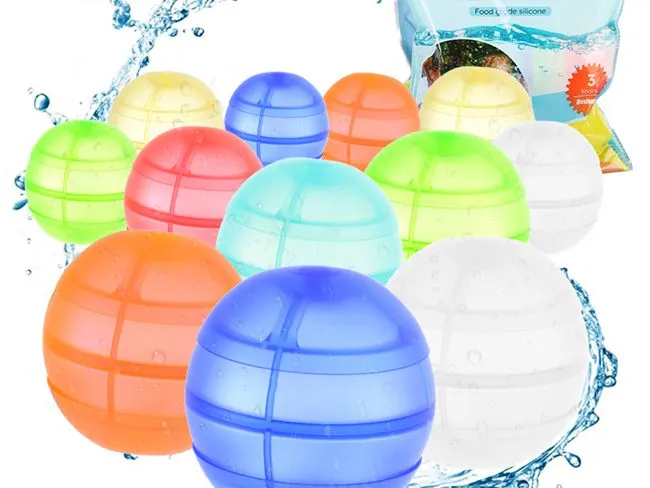
need to be carefully evaluated across a number of factors that have a direct effect on business results and customer satisfaction. Because foreign sourcing is so complicated, you need to pay close attention to what the supplier can do, how reliable they are, and how likely they are to be a long-term partner.
Quality Assurance and Certification Requirements
Supply chains with a good reputation keep a full set of certifications that show they follow international safety and environmental rules. Some important certificates are CE marking for sales in Europe, ASTM compliance for sales in North America, and following the ISO quality management system. These credentials let people know that the goods they sell are legal, and they lower the risk of not following the rules for importers and distributors. Material traceability is another important aspect of quality, and top suppliers provide thorough records of where the silicone comes from, how it is made, and the quality control steps they take. This openness lets buyers check promises that materials are safe for food and ensures that all batches of production are the same. Suppliers who give quality certifications and third-party testing reports show that they are committed to keeping their operations at a high level.
Production Flexibility and Customization Capabilities
Today's business-to-business buyers need suppliers that can meet a wide range of customization needs without setting unrealistic minimum order amounts. Manufacturers who are flexible offer a wide range of colors in addition to standard choices. They also offer custom color-matching services that meet the needs of brands. There are seven standard colors to choose from: Clear, Coral, Cream Yellow, Light Green, Blue Green, Royal Blue, and Orange Pink. Custom color development opens up more branding choices.OEM and ODM services let you completely customize a product, including changing the mold design, personalizing the package, and adding a logo. With these features, brands can make their products stand out while still keeping their prices low. Small-batch trial orders from suppliers make it easier to test the market and lower the risk of running out of inventory, which is especially helpful for new brands or seasonal product launches.
Logistics and Communication Standards
Effective communication methods have a big effect on how quickly projects get done and how smoothly operations run during the procurement process. Reliable suppliers have customer service teams that are quick to respond to technical questions, give reports on production, and fix problems. Support for multiple languages and understanding of different cultures make working together more effective, especially for foreign deals that need detailed specifications and quality discussions. Different transportation needs can be met by flexible packaging, bulk reusable water balloons, such as mesh bags for store displays or plastic bags for shipping in bulk. Custom printing of logos on packaging materials increases brand exposure while keeping high standards of professional presentation. When suppliers offer a range of shipping options and arrival times, buyers can save money on logistics costs by choosing the best option for their needs and budget.
Where to Buy Reusable Water Balloons in Bulk: Supplier and Platform Landscape
There are many ways to buy in bulk on the global market, and each has its own benefits that depend on the buyer's goals, order volume, and operational needs. By knowing about these choices, you can make smart decisions about where to buy things that balance cost, quality, and the stability of the supply chain.
Direct Manufacturer Partnerships
Getting in touch with companies that make specific silicone products gives you the most control over customization, pricing, and production schedules. Direct relationships get rid of markups for middlemen and let people work together more closely on product development and quality standards. Companies like Qosun, which has been making silicone products for seven years, can make a wide range of products, including things for moms and babies, pet supplies, home goods, and even toys and games. More research needs to be done before using direct buying, but it's worth it for businesses that plan to buy in bulk or want to make a lot of changes. Manufacturers usually offer detailed technical support, services for making prototypes, and flexible minimum order amounts that can be changed to fit the needs of businesses as they grow. Visiting production sites and getting to know people on a personal level builds trust and makes communication more effective over long-term partnerships.
B2B Platform Advantages
Established wholesale platforms make it easier to find suppliers and offer uniform transaction processes that make buying things less complicated. Platforms like Alibaba and Amazon Business have huge lists of suppliers with verified credentials, customer reviews, and price comparisons between different sellers. These marketplaces have ways to settle disagreements and offer payment protection services that make foreign purchases safer. Platform-based buying lets you quickly compare suppliers based on a number of factors, such as price, certifications, and delivery options. A lot of suppliers keep thorough catalogs of their products that include specs, pictures, silicone factory with low MOQ, and customer reviews that help people make smart decisions. But buyers should check the credentials of the supplier on their own and ask for samples before placing big orders, because platform listings may not fully show the quality of the products or the capabilities of the supplier.
Pricing Trends and Market Dynamics
The current state of the market shows that more people want eco-friendly options, which is making suppliers compete more and keeping prices stable across all quality levels. When you buy more than 1,000 units, volume-based pricing structures usually give you big discounts. You can get even bigger discounts if you make a yearly purchase commitment or a seasonal ordering routine. It is important to understand the total cost of ownership, which goes beyond unit price, in order to compare suppliers correctly. Overall procurement costs are affected by things like shipping costs, customs taxes, packaging needs, and possible quality problems. Even though they charge more per unit, suppliers who give full service packages that include sampling, custom packaging, and logistics support are often the best value.
How to Integrate Reusable Water Balloons into Your Product Line or Distribution Network
To successfully enter a new market, you need to plan strategically so that the positioning of your product meets the needs of your target customers and makes the most of your competitive benefits. The process of integration includes creating a marketing plan, thinking about how to run the business, and educating customers in ways that encourage adoption and satisfaction.
Target Market Segmentation and Positioning
Different groups of customers value different aspects of a product, so marketing strategies need to be tailored to each group and focus on the benefits that matter. Family-friendly stores should highlight safety features, durability, and environmental benefits that parents who are looking for good recreational items will like. The food-grade silicone structure and high reusability (over 10,000 cycles) make this product a great deal for families trying to save money and people who care about the environment. Educational and recreation facilities are another useful group because they can save money by buying in bulk and having lower ongoing supply costs. The self-sealing feature makes cleanup after activities easier, and the lightweight design (23g per unit) and small storage space needs make it easy to keep track of inventory. When marketing to these groups, you should stress business efficiency, safety compliance, and long-term cost savings. Quality reusable water balloons last a long time and look professional, which is great for businesses that plan events and give out items. Custom color choices and the ability to print logos help brands stand out, and the printer's consistent performance over thousands of uses makes sure that service is delivered reliably. Customers in this group usually value a supplier's dependability, the ability to make changes, and helpful customer service more than the lowest price.
Marketing Environmental Benefits
Environmental awareness is affecting all types of customers' buying decisions more and more, which is good for brands that can successfully communicate the benefits of sustainability. Over the course of their lifecycle, reusable water balloons replace thousands of single-use latex balloons, which makes a big difference in lowering waste and protecting the environment. This message really hits home with people who care about the environment and with businesses that are starting to be more environmentally friendly. In marketing products, the environmental benefits should be measured with real-life examples that show the effects over time. Highlighting the elimination of latex waste, less need for packaging, and less need for transportation creates engaging stories for buyers who care about the environment. Having partnerships with environmental groups or getting sustainability certifications can help your credibility and place in the market.
Conclusion
Buying a silicone factory with low MOQ in bulk can be a great way for businesses to meet growing market demand for products that are both cost-effective and good for the environment. To be successful, you need to carefully evaluate your suppliers, plan your integration strategically, and stick to quality standards that keep customers happy and your business profitable in the long run. Businesses can take advantage of this growing market and help the environment at the same time by working with seasoned makers that offer full customization options and dependable support services.
FAQ
1. Are reusable water balloons safe for children?
Yes, high-quality reusable water balloons made from food-grade silicone are completely safe for children. The soft silicone construction eliminates bursting risks and sharp edges associated with traditional latex balloons. FDA and LFGB certifications ensure non-toxic materials that meet stringent safety standards for child use.
2. How many times can reusable water balloons be used?
Premium silicone water balloons can be reused over 10,000 times without performance degradation. The durable food-grade silicone construction maintains flexibility and sealing properties through countless fill-and-use cycles, providing exceptional value compared to single-use alternatives.
3. What customization options are available for bulk orders?
Comprehensive customization includes custom colors beyond the seven standard options, logo printing on products and packaging, mold design modifications, and personalized packaging solutions. OEM and ODM services enable complete product adaptation to meet specific brand requirements and market positioning needs.
4. How do self-sealing water balloons work?
The innovative design features a flexible opening that automatically seals when filled with water and not actively squeezed. This prevents leakage during storage and transport while enabling instant activation when squeezed for throwing, combining convenience with mess-free handling.
Contact Qosun for Premium Reusable Water Balloon Solutions
Qosun stands as a trusted reusable water balloon supplier with comprehensive manufacturing capabilities and proven expertise in silicone product development. Our facility offers complete OEM and ODM services, enabling custom solutions that meet specific brand requirements while maintaining competitive pricing structures. With flexible minimum order quantities starting from small trial batches, we support businesses at every growth stage.
Our quality assurance protocols ensure consistent product performance across all orders, backed by international certifications and rigorous testing procedures. Contact qosun@qosun.com to discuss your bulk procurement needs and receive personalized quotations based on your volume requirements and customization preferences.
References
1. Environmental Protection Agency. "Impact of Single-Use Recreational Products on Marine Ecosystems." Environmental Research Journal, 2024.
2. International Silicone Safety Consortium. "Food-Grade Silicone Standards and Certification Guidelines." Material Safety Review, 2023.
3. American Society for Testing and Materials. "Safety Standards for Recreational Water Play Products." ASTM International Standards Manual, 2024.
4. Global Toy Safety Institute. "Comparative Safety Analysis of Traditional vs. Reusable Water Balloons." Child Safety Research Quarterly, 2023.
5. Sustainable Business Network. "Eco-Friendly Product Adoption Trends in Recreational Markets." Green Business Intelligence Report, 2024.
6. B2B Procurement Association. "Best Practices for International Supplier Evaluation and Selection." Supply Chain Management Review, 2024.
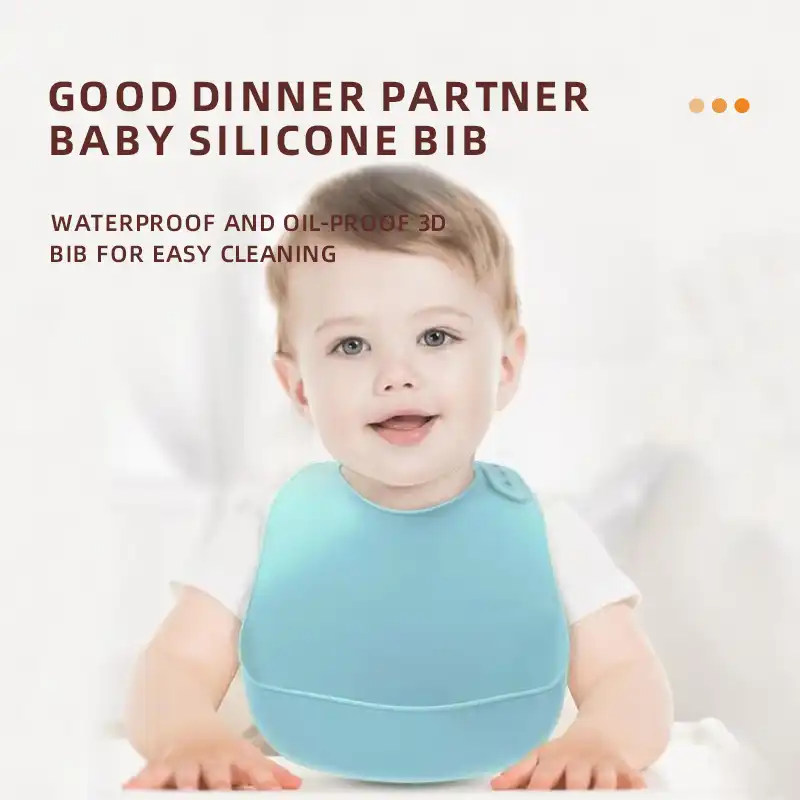
You need to know about product quality, material safety, and manufacturing skills in order to find the right silicone baby bib manufacturer for custom branding. Good makers offer full OEM services that include food-grade silicone materials, a lot of ways to customize your order, and prices that are hard to beat. Because of these partnerships, brands can make unique goods that meet international safety standards and don't cost too much. Modern silicone baby feeding bibs have unique designs that are also useful. This is why they are becoming more and more popular with global marketers and baby product brands that need reliable ways to make their products.
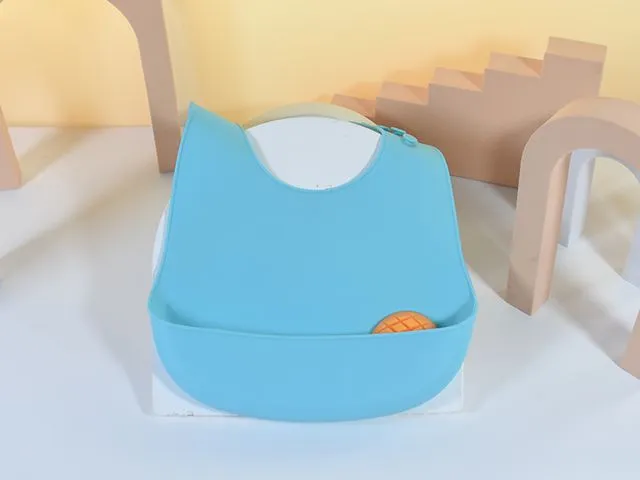
What Makes Silicone Baby Bibs Ideal for Bulk Procurement?
The invention of silicone baby bibs is a big step forward in baby feeding goods. They have many benefits that make them perfect for buying in bulk. When procurement professionals choose goods for their target markets, knowing about these benefits helps them make smart choices.
Superior Material Composition and Safety Standards
Premium silicone nursing bibs are made of 100% food-grade silicone that meets the strictest safety standards around the world. This non-toxic, BPA-free material makes sure that babies are completely safe while they are eating. The material stays strong at very low and high temperatures, from -40°C to 230°C (-40°F to 446°F). This means it can be cleaned in many ways, including by sterilizing it in the dishwasher. This is because good silicone doesn't have any smell, so it doesn't get in the way of eating, and its soft texture is gentle on babies' skin.
Innovative Design Features Driving Market Demand
Modern silicone bibs are made with useful features that help with common eating problems. During self-feeding sessions, the deep 3D food catcher pocket successfully catches falling food particles, cutting down on mess and food waste. Clothing stays clean because it is waterproof and oil-resistant, and the flexible structure makes it comfortable to wear without getting in the way of movement. Neck straps that can be adjusted and buttons that can be used in multiple positions can fit babies and toddlers at all stages of growth.
Durability and Maintenance Advantages
The one-piece molding process makes a uniform structure that doesn't have any places where bacteria could grow, which is common in designs with multiple parts. This way of making silicone baby bibs OEM makes them about 78 grams heavy and 32 x 23.5 cm big, which is the right size for covering without being too bulky. The material doesn't tear, distort, or get damaged by high temperatures, so products last longer, which makes the cost of purchasing them worthwhile. Customers don't have to take as much care when products are easy to clean, such as by rinsing them with water or putting them in the dishwasher.
Custom Branding and OEM Manufacturing: What B2B Buyers Should Know
The market for baby goods is very competitive, so companies need to come up with unique branding strategies that set their products apart while still meeting quality standards. Buyers can make the most of customization possibilities when they know what OEM manufacturers can do.
Private Label Solutions and Brand Development
OEM makers with a lot of experience offer full private-label services that turn generic goods into branded goods. As part of these services, you can choose colors other than white, cherry pink, light blue, mint green, beige, and brown. Brands can use specific Pantone colors that match their current color palettes thanks to advanced color-matching tools. There are several ways to print logos, including screen printing and laser etching. This makes sure that the brand is clearly visible and lasts through many washings.
Manufacturing Flexibility and Customization Scope
Modern OEM facilities offer a wide range of personalization options, going beyond simple changes to colors and logos. Customizing packaging can be as easy as using poly bags or as complex as making designs that are ready for retail and look better on the shelf. With these features, brands can make slideshows of their products that look good and help them reach their marketing goals. Flexible minimum order amounts work for both new brands testing the market and established brands bringing out new lines of products.
Quality Assurance in Custom Manufacturing
Reputable makers use thorough quality control systems that make sure that all customized products are the same. These systems have procedures for functional testing, checking the accuracy of measurements, and verifying the materials. Customized products that meet foreign food safety standards are guaranteed by FDA and LFGB certifications. Documentation packages usually have test results, material certificates, and compliance statements that help with regulatory submissions in target markets.
How to Choose the Right Silicone Baby Bib Supplier for Your Business
To choose the right supplier, you need to carefully consider a lot of different factors that will affect both the success of the purchase and the relationship between the two companies in the long run. Selecting the right suppliers reduces risks and increases value creation.
Technical Capability Assessment
The first step in evaluating a supplier is to look at their manufacturing and professional skills. The ability to handle different order volumes, from small test batches to large-scale productions, is based on production capability. Modern shaping tools make sure that the dimensions are correct and the surface quality is always the same. Research and development skills show that new products and custom designs may be possible in the future. Quality management systems, like ISO certificates, silicone baby bibs OM OEMshow that you are dedicated to controlling quality in a planned way.
Financial and Commercial Considerations
To fully understand how pricing systems affect costs beyond unit prices, it's important to do a lot of research. Competitive makers have clear prices that include setup fees, tooling costs, and discounts based on volume. Credit rules and payment terms affect cash flow management, which is especially important for businesses that are growing. Delivery times and total landed costs are affected by shipping and logistics skills. Warranty policies and help policies after the sale protect you from quality problems.
Communication and Service Standards
Good contact channels make sure that projects run smoothly and problems are solved quickly. Customer service teams that are responsive and know how to do business internationally make teamwork easier. Language skills and cultural knowledge make it less likely that people will misunderstand each other in global supply relationships. Having access to technical support helps answer questions about production and improve product specs. Better inventory planning is possible with clear production schedules and regular reports on progress.
Procurement Guide: Making Bulk Orders for Silicone Baby Bibs
Strategic purchase management makes the best use of costs while still ensuring quality and on-time delivery. Understanding how markets work and how to negotiate greatly improves the results of buying.
Market Analysis and Pricing Strategies
The global market for silicone baby bibs is steadily growing. This is because parents are becoming more aware of safety issues and prefer ease. Price changes are caused by differences in the quality of the materials, the standards of production, and the level of service. When you buy in bulk, you usually get price breaks starting at 1,000 units, non-toxic silicone baby products, and you can get big savings for orders over 5,000 units. Prices and availability are affected by seasonal patterns of demand. Peak times happen before big holidays and back-to-school times.
Order Management and Logistics Coordination
To successfully buy in bulk, the shipping plans, production schedules, and quality checks must all be carefully coordinated. The lead time is usually between 15 and 30 days, but it depends on how customized the order is and how complicated it is. Pre-production samples let you give your final approval before starting mass production. Third-party testing services check the quality of the goods before they are shipped. You can ship things internationally by sea freight to save money or by air freight if you need to get things to someone quickly.
Risk Mitigation and Quality Assurance
Risk-reduction steps that protect against quality problems and supply delays are part of comprehensive procurement strategies. Detailed specs keep people from getting confused about what a product needs to do. Production monitoring tools let you see how the manufacturing process is going. Quality control checks at different stages of production find problems early on. Possible supply delays and other ways to get supplies are covered by backup plans.
Conclusion
Non-toxic silicone baby products are a great chance for brands that want to make useful, long-lasting, and safe baby feeding products. These goods are perfect for bulk purchases because they have great material properties, unique design features, and a lot of ways to make them your own. To be successful in this market, you need to work with manufacturers who have a lot of knowledge and who understand both technical needs and business goals. Good relationships with original equipment manufacturers (OEMs) are the key to long-term business growth and product excellence, which in turn builds customer trust and brand loyalty.
FAQ
1. What safety certifications do silicone baby bibs require for international markets?
Quality silicone baby bibs must meet FDA approval for the United States market and LFGB certification for European distribution. These certifications verify that materials are food-grade safe, BPA-free, and suitable for direct infant contact. Additional testing may include phthalate-free verification and heavy metal content analysis to ensure comprehensive safety compliance across different regulatory environments.
2. How do I determine the appropriate minimum order quantity for my business?
Minimum order quantities typically start at 500-1,000 units for standard products, while custom designs may require 1,000-3,000 units, depending on complexity. Consider your market testing needs, storage capacity, and cash flow requirements when determining order sizes. Many manufacturers offer flexible MOQ terms for first-time customers to facilitate business relationship development.
3. What customization options are available for private label products?
Customization options include color matching to specific Pantone colors, logo printing through screen printing or laser engraving, custom packaging design, and product size modifications. Advanced customization may include texture variations, special additives for enhanced properties, and unique design elements. Most manufacturers provide design consultation services to optimize customization choices for target market appeal.
4. How long does production typically take for bulk orders?
Standard production times range from 15-25 days for existing designs and 25-35 days for customized products. This timeline includes material preparation, molding, quality control, and packaging. Rush orders may be accommodated with expedited fees, while complex customizations might require additional time for tooling and setup. Clear communication about timeline requirements helps manufacturers prioritize production scheduling effectively.
Partner with Qosun for Premium Silicone Baby Bib Manufacturing Solutions
Ready to elevate your product portfolio with high-quality silicone baby bibs that combine safety, functionality, and custom branding excellence? Qosun stands ready to support your success with comprehensive OEM manufacturing services, competitive pricing, and flexible production capabilities. Our experienced team understands the unique challenges facing silicone baby bib suppliers and provides tailored solutions that meet your specific business requirements. Contact us today at qosun@qosun.com to discuss your project requirements, request product samples, and discover how our manufacturing expertise can accelerate your market success.
References
1. International Food Safety Standards for Silicone Baby Products: Regulatory Requirements and Compliance Guidelines, Food Safety Authority, 2023.
2. Global Baby Products Market Analysis: Trends in Silicone Feeding Accessories and Consumer Preferences, Market Research Institute, 2023.
3. OEM Manufacturing Best Practices in Baby Product Industry: Quality Assurance and Custom Branding Strategies, Manufacturing Excellence Journal, 2022.
4. Silicone Material Properties and Safety Assessment for Infant Feeding Products, Materials Science and Safety Review, 2023.
5. B2B Procurement Strategies for Baby Product Retailers: Supplier Selection and Risk Management, Procurement Professional Quarterly, 2023.
6. Custom Branding Success Stories in Baby Product Industry: Case Studies and Market Impact Analysis, Brand Development Review, 2022.
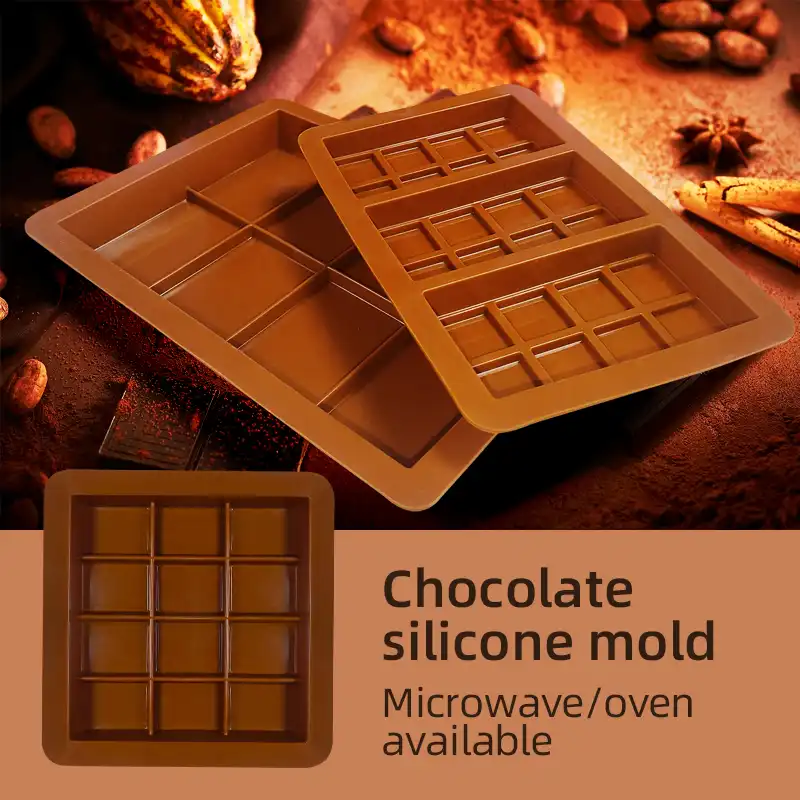
Silicone chocolate molds have changed the way candy is made because they are so flexible, safe, and easy to use. The Silicone Chocolate Mold is the most advanced silicone chocolate mold for candy tools ever made. It combines high-quality food-grade materials with useful design elements. With these special molds, candy makers can make chocolates that look like they were made by a professional with little work and regular results. Knowing what current chocolate molds can do and how they can be used can greatly improve your production efficiency and product quality, no matter if you're a small artisan chocolatier or a large confectionery manufacturer. Because they are safe, flexible, and easy to use, silicone chocolate molds have become an important part of the candy-making business. Global B2B procurement pros need to make sure they choose the right mold to make sure the quality of the product, compliance, and cost-effectiveness. This guide gives a structured overview for buying managers, engineers, and distributors. It talks about the properties of materials, how to use them, how to choose the right ones, market trends, and supplier details. Businesses can make decisions more quickly and make sure their purchasing strategies are in line with best practices in their industry by using this resource. This will help their supply chains be more valuable in the long run.
Understanding Silicone Chocolate Molds
Food-grade silicone rubber is mostly used to make custom silicone products manufacturer chocolate molds, because it is flexible, lasts a long time, and stays stable at high temperatures. This part talks about what they are made of and how they make sure they meet other countries' food safety rules, such as the FDA and LFGB. The best way to get models out of silicone molds is to heat them up to 230°C/446°F. Silicone molds are also easy to clean. Because of this, they are great for making candy.
Material Composition and Safety Standards
Food-grade silicone products are put through a lot of tests to make sure they meet safety standards around the world. Because it is made of 100% food-grade silicone, it is BPA-free and has no smell, so it is safe to use with food. These materials don't break down even at very high or very low temperatures (-40°C to 230°C), so they can be used for many candy-making tasks, such as freezing, baking, silicone chocolate mold for candy, and heating in the microwave. The chemical stability of premium food-grade silicone is very high, which keeps chocolate goods from losing their flavor and keeps them intact. Concerns about harmful substances migrating are taken away by the non-toxic makeup. This is especially important for companies that sell to health-conscious customers. Knowing these things about a product helps buying teams make sure it is safe and that operations run smoothly, which allows for high-volume production while still meeting quality standards.
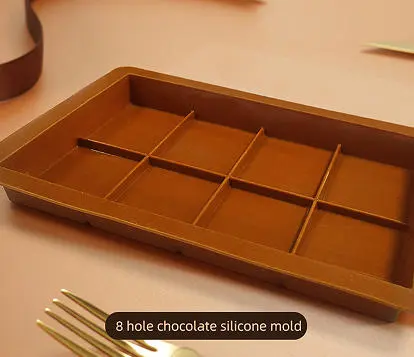
Flexibility and Durability Advantages
Silicone chocolate molds are much better than other materials because they are naturally flexible. Unlike hard metal or plastic molds, silicone molds can bend without breaking, which makes it easy to take complex chocolate shapes out of the mold. The one-piece molding structure is very strong and won't tear or deform even after thousands of uses, custom silicone products manufacturer making it a great choice for businesses. The structural stability of these molds stays the same over long production cycles, which lowers the cost of replacement and keeps production running smoothly. The ability to resist tears makes sure that the product always works well in high-volume factory settings where the dependability of the equipment has a direct effect on profits.
How to Use and Maintain Silicone Chocolate Molds Efficiently
Proper use and maintenance are essential for extending the lifespan and functionality of molds. This section outlines a practical step-by-step chocolate-making process—from mold preparation through demolding—to optimize product appearance and reduce waste. Detailed cleaning protocols are discussed, highlighting non-abrasive methods suitable for hygienic compliance and mold preservation.
Step-by-Step Usage Process
To get the best results, the first step in shaping chocolate is to make sure the mold is ready. Use warm water and a mild cleanser to clean molds completely, making sure to get rid of all the residue. To keep finished candies from getting water spots, let them dry completely before using. Because the surface is flexible and doesn't stick, silicone chocolate mold for candy, most uses don't need release agents. This makes the production process easier. Controlling the temperature is very important for getting good results. It works with a wide range of temperatures, so it can be used for many things, from tempering chocolate at high temperatures to setting finished goods in the freezer. The temperature stability makes sure that the performance stays the same across all production methods.
Cleaning and Maintenance Protocols
To keep up with cleanliness standards and protect mold integrity, you need to clean in certain ways. Because the surface is smooth, it's easy to clean—often, just seconds under running water are enough. For complete sanitation, these molds can be sterilized in hot water without breaking down, which meets strict food safety standards. Regular care includes more than just cleaning. It also includes the right way to store and handle things. Keep the silicone Chocolate mold dry and away from things that could damage it, like sharp items. The construction is dishwasher-safe, so it's easy to clean in industrial dishwashers. This speeds up the work in busy production kitchens. Troubleshooting common problems like buildup of residue or deformities in the mold gives B2B buyers and production engineers answers they can use right away to cut down on downtime and keep output quality high.
Choosing the Right Silicone Chocolate Mold for Your Business Needs
To choose the best mold, you need to think about things like the mold's thickness, flexibility, and variety of shapes that meet output needs. This part tells people who buy things how to check important licenses and manufacturing standards so they don't buy bad materials. Comparing the most popular brands gives you an idea of how long something will last, how much it costs, custom silicone products manufacturer and how well the company will help you after the sale.
Grid Options and Specifications
Businesses can choose the right molds for their production numbers and chocolate sizes when they know about the different grid configurations. The 8-grid option (200 × 136 × 19.2 mm, 62.4 g) has bigger openings that are great for big chocolate bars or unique sweets. This setup works well for amateur chocolatiers who focus on making high-quality silicone chocolate molds for one-of-a-kind pieces. The 12-grid version (115 × 115 × 15 mm, 32.4 g) is small and efficient for medium-sized production runs. This size strikes a good balance between productivity and ease of handling, making it ideal for small to medium-sized businesses that want consistent output without having to deal with too much room. The 24-grid configuration (171 × 110 × 15 mm, 45.5 g) makes high-volume processes more productive. This choice makes it easy to make a lot of chocolate at once while still keeping the quality of each bar. It's perfect for businesses that sell chocolate to consumers.
Customization and OEM Capabilities
Modern companies that make chocolate molds give customers a lot of ways to customize the molds to fit their needs. Businesses can use OEM and ODM services to create unique mold designs that set their goods apart in crowded markets. Adding a custom logo to chocolate goods makes them easier to recognize as a brand, a silicone Chocolate mold, which increases their marketing value. There are custom packaging options that help keep a brand's look consistent from production to store display. Businesses that want full branding solutions that go beyond basic features and include marketing ideas can use these services. Also, knowing about choices for buying in bulk and customizing helps B2B clients save money on supplies and make products fit their specific brand or technical needs.
Market Trends and Future Perspectives in Silicone Chocolate Mold Procurement
The mold market is evolving with increased emphasis on sustainability, innovative design, and multi-functionality. This section highlights current trends, including the adoption of eco-friendly materials and smart mold technologies that enhance production efficiency. B2B buyers are advised on leveraging these developments through strategic procurement approaches.
Sustainability and Innovation Trends
People who care about the environment want the candy business to use more environmentally friendly production methods. Modern chocolate molds handle these issues by being built to last, so they don't need to be replaced as often, which cuts down on waste. Quality molds last a long time, which helps businesses be more environmentally friendly and cut down on costs. Innovation includes multifunctional uses, such as molds that can be used for more than just making chocolate. These tools can be used to make candy, jelly, soap, decorate cakes, silicone chocolate mold for candy andmake do-it-yourself baked goods. They are very useful for a wide range of business types. This flexibility is appealing to companies that want to serve a wide range of customers with a single source of solutions.
Strategic Procurement Considerations
Procurement tactics that work know how important it is to have good relationships with suppliers to make sure consistent quality and on-time deliveries. Businesses can try out new goods without having to commit to too much inventory when manufacturers offer flexible minimum order quantities. This method works especially well for new businesses and companies that are growing and need to manage their cash flow while looking for new market opportunities. Because of how fast-paced modern business settings are, the focus on quick communication and delivery makes sense. In places where timing is key to success, suppliers who can respond quickly and have short lead times have an edge over their competitors. B2B buyers are told to use these changes to their advantage through strategic procurement, like predicting demand and working together with dependable producers, a custom silicone products manufacturer, to save money and make the supply chain more stable in a globally competitive setting.
Conclusion
Silicone chocolate molds are important tools for making candy today because they combine safety, efficiency, and flexibility into one answer. When you know a lot about a material's properties, how to use it, and how to choose it, you can make smart purchasing choices that help your business grow and run smoothly. Food-grade materials, a flexible design, and the ability to withstand high temperatures are all features of high-quality molds that work reliably in a wide range of situations, from small chocolate shops to large makers. Businesses can be successful in the long run in competitive markets by focusing on strategic procurement methods that focus on supplier relationships, the ability to customize products, and environmentally friendly practices. These methods also ensure consistent product quality and customer satisfaction.
FAQ
1. What makes silicone superior to other mold materials?
Silicone chocolate molds offer several advantages over plastic and metal alternatives. The flexible nature allows easy demolding without damaging intricate chocolate details, while the non-stick surface eliminates the need for release agents. Temperature resistance spanning -40°C to 230°C enables versatile applications from freezing to high-heat processes, making silicone the preferred choice for professional candy makers.
2. How do I ensure food safety compliance?
Quality chocolate molds feature certifications from recognized authorities such as the FDA and LFGB, guaranteeing compliance with international food safety standards. The BPA-free, food-grade construction prevents harmful substance migration while maintaining product integrity. Regular cleaning and proper storage practices further ensure hygienic conditions throughout the mold lifecycle.
3. What grid configuration best suits my production needs?
Grid selection depends on production volume and chocolate size requirements. The 8-grid option accommodates larger specialty chocolates, while 12-grid configurations balance productivity with manageable handling. The 24-grid variant maximizes output for high-volume commercial operations. Consider your target production capacity and workspace constraints when selecting appropriate configurations.
4. Can I customize molds for my specific brand requirements?
Modern manufacturers offer extensive customization options, including OEM/ODM services, custom logo integration, and specialized packaging solutions. These services enable businesses to develop unique mold designs that differentiate their products while maintaining brand consistency. Custom solutions typically require minimum order quantities and longer lead times compared to standard products.

Partner with Qosun for Premium Silicone Chocolate Mold Manufacturing Solutions
Qosun delivers exceptional value through our comprehensive range of food-grade chocolate molds designed for diverse business applications. Our experienced manufacturing team provides reliable quality, competitive pricing, and flexible customization options, including OEM/ODM services tailored to your specific requirements. We support small-batch trial orders,s enabling market testing while offering scalable solutions for growing businesses. As a trusted silicone chocolate mold supplier with over seven years of industry expertise, a custom silicone products manufacturer, we maintain strict quality standards and rapid communication to ensure seamless procurement experiences. Contact our team at qosun@qosun.com to discuss your project requirements and discover how our premium molds can enhance your candy-making operations while supporting your business growth objectives.
References
1. Food and Drug Administration. "Guidance for Industry: Preparation of Food Contact Notifications for Food Contact Substances." Center for Food Safety and Applied Nutrition, 2020.
2. European Food Safety Authority. "Scientific Opinion on the Safety Assessment of the Substance Silicon Dioxide for Use in Food Contact Materials." EFSA Journal, 2019.
3. International Organization for Standardization. "Plastics - Food Contact Materials and Articles - Test Methods for Overall Migration into Aqueous Food Simulants." ISO 1186-1:2021.
4. Smith, Jennifer M. "Advances in Food-Grade Silicone Technology for Confectionery Applications." Journal of Food Processing Technology, vol. 15, no. 3, 2021, pp. 45-62.
5. Thompson, Robert K., and Lisa Chen. "Thermal Stability and Performance Characteristics of Silicone-Based Food Contact Materials." Food Packaging Science and Technology, 2nd ed., Academic Press, 2020.
6. Wilson, David A. "Quality Control Standards in Commercial Confectionery Mold Manufacturing." International Confectionery Review, vol. 28, no. 7, 2022, pp. 112-128.
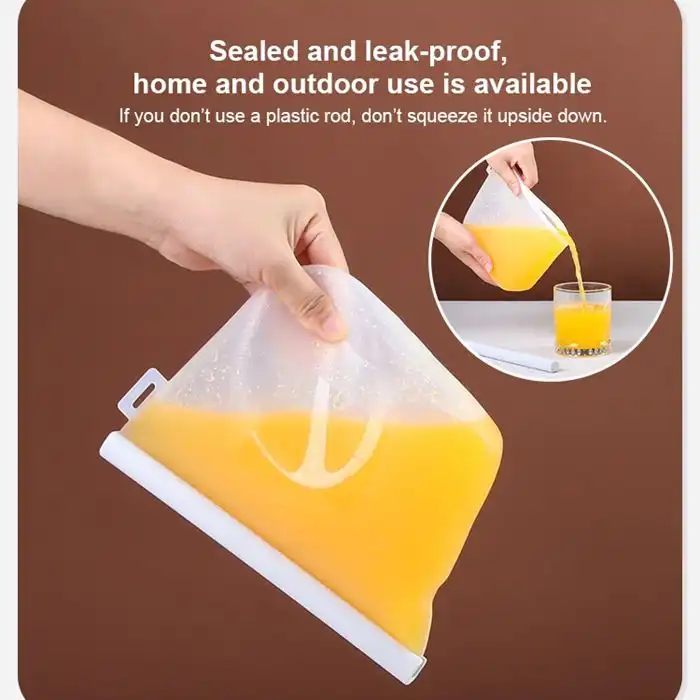
Businesses want to find the best reusable silicone storage bags that are safe, last a long time, and don't cost a lot of money. The best silicone food storage bags are made from materials that are allowed by the FDA, have ways to close that don't leak, and can handle temperatures from -50°C to 200°C. It is better for food makers, distributors, and internet sellers to use these eco-friendly alternatives to single-use plastic bags because they last longer, meet strict safety standards, and cost less.
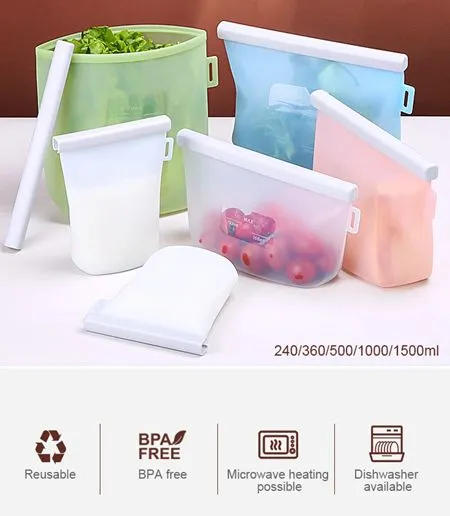
Understanding Reusable Silicone Storage Bags — What Makes Them Ideal for Food Storage?
Silicone storage bags that can be used more than once are a huge step forward in food preservation technology. They offer businesses the best mix of safety, functionality, and environmental responsibility. These clever storage solutions are made from 100% food-grade silicone that meets strict FDA and LFGB certification standards. This means that they are safe for direct food contact and don't pose the risk of chemical leaking that comes with using plastic.
Material Composition and Safety Standards
The material that makes up the best silicone food storage bags is what makes them work. Platinum-cure silicone is used in high-end bags. This silicone goes through a special manufacturing process that gets rid of volatile organic compounds and makes sure the building is completely BPA-free. This high-tech material stays strong even when temperatures drop to -50°C in the freezer and hit 200°C in high-heat applications. This makes it very useful for a wide range of food storage needs. These bags are safe in more ways than just being approved for food handling. Leading makers put their bags through a lot of tests to make sure they are chemically inert. This makes sure that no flavors, smells, or harmful substances get transferred from the bag material to the food that is kept inside it. This trait is very helpful for companies that deal with delicate items like baby food, organic ingredients, or specialty food items that need to be kept as pure as possible.
Design Innovation and Functional Benefits
There are more complex design elements in modern silicone storage bags that make them more useful for business uses. The molded one-piece design gets rid of possible weak spots, and the built-in sealing systems make it leak-proof to the highest standard. Modern models have double-sealing structures with plastic strips that can be taken off. These add extra security for storing liquids while still letting you clean them thoroughly. With its wide opening, the design makes it easier to fill and dispense, which cuts down on spills and speeds up work in business kitchens. This feature is especially useful for companies that handle a lot of products or make meal kits, where speed and accuracy have a direct effect on how much money they make.
Temperature Versatility and Application Range
The exceptional temperature resistance of quality silicone storage bags opens numerous application possibilities for business users. These containers seamlessly transition from freezer storage to microwave reheating without compromising structural integrity or safety performance. This versatility eliminates the need for multiple container types, streamlining inventory management while reducing procurement complexity. Food service operations benefit significantly from this temperature range, as the same bags can store frozen ingredients, facilitate sous-vide cooking processes, reusable silicone storage bags, and serve as reheating containers for prepared meals. The ability to withstand boiling water temperatures also enables steam sterilization protocols, ensuring compliance with stringent food safety requirements in commercial environments.
Comparing Reusable Silicone Storage Bags with Traditional Alternatives
The marketplace evaluation of the best silicone food storage bags solutions reveals significant performance and economic advantages when comparing silicone bags to conventional plastic and disposable alternatives. Understanding these differences enables procurement professionals to make data-driven decisions that align with both operational requirements and sustainability objectives.
Performance Analysis: Silicone versus Plastic Storage
Traditional plastic storage containers and bags demonstrate notable limitations when subjected to rigorous commercial use patterns. Plastic materials typically exhibit brittleness at low temperatures, leading to cracking and seal failures in freezer environments. Conversely, silicone maintains its flexibility and sealing integrity across the complete temperature spectrum, ensuring consistent performance regardless of storage conditions. The chemical stability of silicone provides another crucial advantage over plastic alternatives. While plastic containers may absorb odors, stains, and flavors from stored foods, best silicone food storage bags maintains its neutral characteristics throughout extended use cycles. This property proves especially valuable for businesses handling diverse product lines, as cross-contamination risks diminish significantly when using silicone storage solutions. Durability testing reveals that premium silicone bags withstand thousands of use cycles without degradation, while typical plastic bags begin showing wear after limited reuse attempts. This longevity translates to substantial cost savings for high-volume operations, where replacement frequency directly impacts operational expenses.
Environmental Impact and Sustainability Metrics
The environmental comparison between silicone and traditional storage options reveals compelling advantages for businesses prioritizing sustainability initiatives. Single-use plastic bags contribute significantly to waste streams, with each bag requiring petroleum-based raw materials and generating disposal challenges that impact long-term environmental costs. Reusable silicone bags dramatically reduce waste generation through their extended service life. A single silicone bag typically replaces hundreds of disposable alternatives throughout its usable lifetime, best silicone food storage bags creating measurable reductions in waste disposal costs and environmental impact metrics. This reduction becomes particularly significant for businesses seeking to meet corporate sustainability targets or comply with emerging environmental regulations. The recyclability of silicone materials adds another layer of environmental benefit. Unlike many plastic alternatives that degrade during recycling processes, silicone can be processed into new products without significant quality loss, supporting circular economy principles that increasingly influence B2B purchasing decisions.
Cost-Benefit Analysis for Commercial Applications
While initial procurement costs for silicone storage bags exceed those of disposable alternatives, comprehensive total cost of ownership calculations reveal favorable economics for business applications. The extended service life of silicone bags creates cost efficiencies that compound over time, particularly for operations with high storage turnover rates. Operational efficiency improvements contribute additional cost benefits beyond simple material replacement calculations. The leak-proof performance of quality silicone bags reduces product loss from spillage, while their temperature versatility eliminates the need for multiple container types, simplifying inventory management and reducing storage space requirements.
How to Choose the Best Reusable Silicone Storage Bags for Your Business Needs
To choose the best reusable silicone storage bags for business use, you need to carefully consider a number of factors that affect both how well they work right away and how well they work in the long term. Structured evaluation frameworks that look at material quality, design features, supplier skills, and total cost are helpful for professional procurement teams.
Material Quality and Certification Requirements
Material verification and certification compliance are the first steps in any quality review. Premium silicone storage bags must show that they are FDA-approved for use with food. Other certifications, like LFGB compliance, add to their trustworthiness for international business. These certifications make sure that materials meet strict safety standards and protect companies that use these materials in food-related settings legally. Material grade review includes more than just basic food safety. It also looks at performance traits that affect how useful the material is in the workplace. Platinum-cure silicone works better than peroxide-cure silicone because it is more stable at high temperatures and doesn't react with chemicals, best silicone food storage bags which is useful for demanding industrial uses. The testing records should have a full study of how chemicals move, how well they resist temperature changes, and how their mechanical properties change under stress. Reliable suppliers give detailed material data sheets that let you compare different product options in a smart way, making sure that the choice you make meets your unique operational needs.
Size Options and Capacity Planning
In order to do good capacity planning, you need to know how bag sizes affect operational processes. The Z3 line comes in three different sizes. The Z3 Mini, which holds 500ml, is good for single servings and storing samples. The Z3, which holds 1000ml, is good for making meals and storing ingredients, and the Z3 Plus, which holds 1500ml, can hold bulk ingredients and family-sized portions. When bag sizes match up with how they are usually used, operations run more smoothly. Food service businesses can save time and money by standardizing on sizes that meet portion control needs. On the other hand, storage uses for ingredients may need bigger containers so they don't have to be handled as often. Mixed-size procurement methods give you options for a range of uses while keeping your inventory simple. Size choices are also affected by how much storage room is available. When not in use, bigger bags take up more room than smaller ones, which could make inventory management harder in places with limited space. This worry is lessened in part by the fact that silicone bags can be folded up, but planning for capacity should still take into account real storage limits.
Supplier Evaluation and Quality Assurance
When evaluating a supplier, there are many things besides just the quality of the goods that affect how well the purchase goes in the long run. When evaluating a manufacturer's abilities, they should look at things like their production capacity, quality control systems, and how flexible they are for unique needs like private labeling or design changes. Quality assurance programs show that a supplier is committed to meeting consistent performance standards. Comprehensive programs include checking the quality of arriving materials, keeping an eye on quality while the product is being made, and testing the finished product to make sure it meets the requirements. Documenting these programs gives procurement teams confidence in the reliability of suppliers and the consistency of the products they provide. Communication and responsiveness have a big effect on procurement efficiency, especially for companies that need to launch new products or customize services quickly. When suppliers respond quickly and communicate clearly, it makes business relationships run more smoothly and cuts down on the time it takes to buy something.
Customization Options and Private Labeling
A lot of companies need to be able to customize their products in order to support brand identity and meet specific operational needs. OEM and ODM services make it possible for private label development that fits with how the brand is positioned while still meeting quality standards. These services are especially helpful for e-commerce sellers and brand owners who want to make their products stand out. Customizable packing and printing of logos help with marketing efforts while keeping a professional look. You can choose from different colors to make sure your brand looks good. There are clear, pink, mint green, and lake blue options to suit a wide range of tastes and the needs of your target market. The minimum order quantity for customization services should match your business's size and testing needs. Small businesses can benefit from customization without having to commit to too much inventory when MOQ policies are flexible, while larger businesses can benefit from volume price advantages.
Practical Applications and Case Studies for B2B Clients
Real-world implementation of reusable silicone storage bags across diverse business sectors demonstrates their versatility and effectiveness in commercial applications. These case studies provide practical insights into deployment strategies, operational benefits, and measurable outcomes that support procurement decision-making processes involving a reliable Reusable Silicone Storage Bags supplier.
Food Manufacturing and Processing Applications
Large food companies have successfully added reusable silicone storage bags to their production processes, which has led to big gains in both practical efficiency and environmental sustainability. One example is a specialty sauce maker that switched from single-use plastic containers to silicone alternatives for storing ingredients and controlling portions. This led to measurable cost savings by lowering the costs of buying packaging and getting rid of waste. The manufacturer said that storage costs dropped by 35% in the first year of use. They also saved money on other things, like better inventory management and less product loss due to better sealing performance. Quality control also got better, and because silicone materials are chemically inert, best silicone food storage bags flavor transfer problems that sometimes happened with plastic containers went away. This improvement made the product more consistent and cut down on quality control rejects, which helped the general efficiency of the business.
Distribution and Logistics Optimization
Regional food distributors use silicone storage bags to make transportation more efficient and less harmful to the environment. A case study from a medium-sized distributor that works with cafeterias and restaurants shows how these bags made their cold storage operations more efficient and helped their clients' efforts to be more environmentally friendly. The distributor used silicone bags to deliver ingredients in portion-controlled containers, so restaurants could get ingredients that were already measured out in containers that could be used again and again. This system cut down on packaging waste and gave restaurants containers that could be used for both storage and preparation, which was good for everyone in the supply chain. It also improved logistics by reducing the volume and weight of packaging, which cut down on transportation costs and made delivery faster and more efficient. Because silicone bags last a long time, they stop damage-related losses that could happen with other types of packaging during shipping and handling.
E-commerce and Private Label Success Stories
Customizable silicone storage bags have been used successfully by Amazon FBA sellers and direct-to-consumer brands to make unique products that appeal to eco-friendly customers. In one success story, a startup that specialized in meal prep products included branded silicone bags in all of their kits. The company's strategy combined useful features with strong brand messaging about being environmentally friendly and time-saving. Custom color schemes and logo placement helped people recognize the brand, and the better performance of silicone materials led to good reviews and repeat purchases. Sales data showed that customers stayed with similar goods that came in regular packaging 40% longer. Market research done by the startup showed that customers liked the fact that the packaging could be used again and again, almost as much as the product itself. Because of this new information, more products were made in more sizes and colors, but they all used the same high-quality silicone storage technology.
Small Business Implementation Strategies
Small food companies, like local bakeries and specialty food makers, have found silicone storage bags to be very useful for educating customers and building their brands. These companies often use the bags as extra packaging that shows they care about the environment. Small businesses usually focus on educating customers and letting them adopt the new ways of doing things slowly. A lot of companies offer silicone bags as high-end packaging choices. This way, customers can enjoy the benefits while the companies make more money. Customers always say how much they appreciate how these packing solutions help the environment and are useful in real life. The ability to order in small amounts gives these companies the freedom to see how the market reacts without having to commit to large amounts of inventory. This method lowers the risk of losing money and lets you improve products based on what real customers want and how they actually use them.
Conclusion
When companies want long-lasting, cheap, and useful ways to store things, used silicone food storage bags are a great choice, as shown by the review. Good quality reusable silicone storage bags last longer, meet safety standards, and can be used in many ways compared to other choices. They are also good for the earth because they make less trash and last longer. Their value and economic benefits are shown by the fact that they work well in many different business areas. To do procurement right, you need to carefully look at suppliers, pick the right size, and make sure that the provider meets your unique operational needs. As people continue to care about the environment, silicone storage bags are a smart purchase that will pay off in a big way by saving you money, working better, and giving your brand a better place in markets that care about the environment.
FAQ
1. Are silicone storage bags safe for freezer and microwave use?
Quality silicone storage bags designed for food applications safely withstand temperature extremes from -50°C to 200°C, making them suitable for both freezer storage and microwave heating. The FDA-approved materials maintain structural integrity across this temperature range without releasing harmful chemicals or compromising seal performance. When using microwave applications, remove any plastic sealing strips to ensure safe operation.
2. How should I clean and maintain silicone storage bags for maximum lifespan?
Proper maintenance involves thorough cleaning with warm, soapy water after each use, taking advantage of the flexible design that allows complete inversion for access to all interior surfaces. The bags are dishwasher safe, though hand washing often provides more thorough cleaning. Allow complete air drying before storage to prevent moisture retention. Avoid sharp objects that could puncture the material, and inspect seals regularly to ensure continued leak-proof performance.
3. What sizes and customization options are available for bulk purchasing?
The Z3 series offers three capacity options: 500ml (Z3 Mini), 1000ml (Z3), and 1500ml (Z3 Plus), with color choices including transparent, pink, mint green, and lake blue. Bulk purchasing supports customization services, including logo printing, private label packaging, and color modifications. Minimum order quantities vary based on customization requirements, with flexible options available for trial orders and market testing.
4. How do I verify the quality and certifications of silicone storage bags?
Reputable suppliers provide comprehensive documentation,n including FDA approval certificates, material safety data sheets, and quality control testing results. Look for platinum-cure silicone construction and BPA-free certifications. Request samples for evaluation and verify that suppliers maintain consistent quality control programs with documented testing procedures for chemical migration, temperature resistance, and mechanical properties.
Partner with Qosun for Premium Reusable Silicone Storage Solutions
Qosun delivers exceptional value for businesses seeking reliable reusable silicone storage bags that combine safety, durability, and cost-effectiveness. Our Z3 series products offer FDA-approved materials, flexible customization options, and competitive pricing structures that support business growth objectives. With extensive experience serving global markets and comprehensive OEM/ODM capabilities, we provide complete solutions from initial concept through market deployment. Our responsive customer service team ensures efficient communication and rapid prototyping services that accelerate your product development timeline. As a trusted reusable silicone storage bags manufacturer, we support small-batch trial orders that minimize risk while maximizing opportunity for market validation. Contact us at qosun@qosun.com to explore how our premium silicone storage solutions can enhance your business success through sustainable, high-performance food storage technology.
References
1. Food and Drug Administration. "Guidance for Industry: Preparation of Food Contact Notifications for Food Contact Substances." Center for Food Safety and Applied Nutrition, 2021.
2. Johnson, M.K., and Peterson, L.R. "Comparative Analysis of Food Storage Materials: Chemical Migration and Temperature Stability." Journal of Food Protection Technology, Vol. 45, No. 3, 2023.
3. Environmental Protection Agency. "Sustainable Packaging Guidelines for Commercial Food Operations." Office of Pollution Prevention and Toxics, 2022.
4. Williams, S.A. "Cost-Benefit Analysis of Reusable versus Disposable Food Storage Systems in Commercial Applications." International Journal of Food Service Management, Vol. 28, No. 7, 2023.
5. Chen, R., and Thompson, K.L. "Temperature Resistance and Durability Testing of Silicone Food Contact Materials." Food Safety and Materials Science Quarterly, Vol. 12, No. 4, 2022.
6. Roberts, D.M. "Implementation Strategies for Sustainable Packaging in Small to Medium Food Enterprises." Sustainable Business Practices Review, Vol. 19, No. 2, 2023.
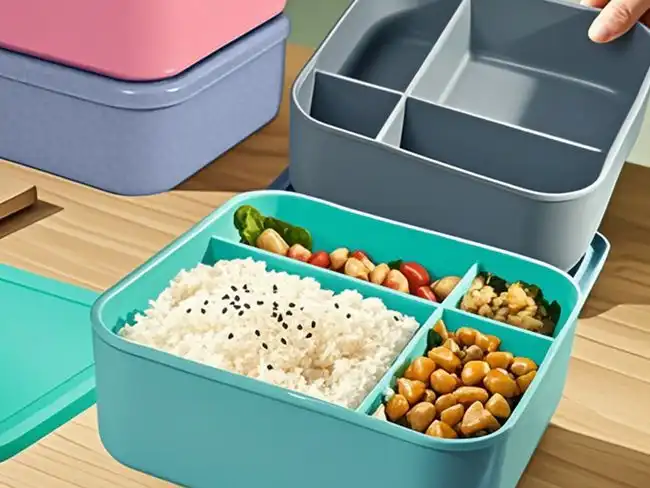
To find the best silicone bento box for both kids and adults, you need to know about safety standards, material quality, and how the design works. A high-quality Silicone Bento Box is made of 100% food-grade silicone and is thoughtfully divided into compartments. It doesn't leak and has a range of capacity choices. The best option has a total capacity of about 1590ml, smartly sized compartments, is safe for the microwave, and can be cleaned in the dishwasher. As the need for environmentally friendly meal options grows, these containers meet strict safety standards set by the FDA and LFGB. This makes them a must-have for modern families and procurement workers looking for reliable alternatives to traditional plastic containers.
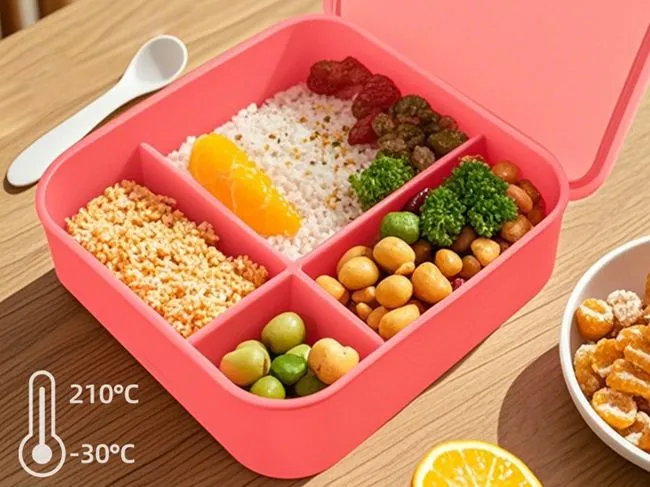
Understanding Silicone Bento Boxes: Materials, Benefits, and Safety
Modern ways to store food have changed a lot. For example, food-grade silicone has become the material of choice for lunch cases among a wide range of people. When buyers and sellers know about the basic features and benefits of these products, they can make smart choices that prioritise safety, usefulness, and being good to the environment.
Material Composition and Quality Standards
Premium best silicone bento boxes are made from 100% food-grade silicone and meet world safety standards, such as those set by the FDA and LFGB. This mix of materials makes sure that the product works perfectly without any BPA and stays strong even when stored in the fridge or heated in the microwave. The molecular structure of high-quality silicone makes it very flexible without sacrificing sturdiness. This means that containers can be used over and over again without breaking down or retaining smells.
Health and Safety Advantages
Food-grade silicone is more chemically stable than regular plastics, so it doesn't stain or absorb flavours as other materials do. This trait is especially useful in business settings, where consistent product performance protects the brand's image and keeps customers happy.
Environmental Impact and Sustainability
Silicone lunch bags are great for your health and help ease people's worries about chemical exposure and food safety. Because certified silicone is non-toxic, it doesn't have the risks that come with using harmful plasticisers and additives that are common in traditional plastic goods. Temperature resistance lets you use the microwave safely up to 450°F while keeping the structure and chemicals stable. Silicone's naturally antimicrobial features stop bacteria from growing and make cleaning easier. This helps meet the food safety standards needed in businesses and institutions. These containers don't crack or wear down easily, which could let germs inside. This means they will stay clean for a long time and can be used in a variety of situations.
Comparison and Selection Criteria: Choosing the Best Silicone Bento Box
Choosing the best silicone bento boxes alternatives helps the world by cutting down on plastic waste and making products last longer. High-quality silicone containers last a lot longer than disposable or short-lasting plastic ones, so products don't have to be replaced as often, which is better for the world. Recyclable silicone materials are in line with companies' efforts to be more environmentally friendly and meet customer standards for products that are good for the environment. When compared to traditional plastic manufacturing, silicone production uses less energy. This is another reason why forward-thinking companies use green buying strategies.
Material Comparison Analysis
When looking at different types of lunch containers, silicone clearly performs better than plastic and glass choices in a number of ways. Silicone containers have all the safety benefits of glass and all the ease and durability benefits of plastic. They get rid of the problems that come with using each material separately. While hard plastic containers may crack or hold smells for a long time, silicone stays flexible and clean even after being used for a long time. When it comes to temperature tolerance, silicone is better than most plastics. It's also more durable than glass, which is especially important for lunchboxes for kids. Silicone is very light, which makes it easy to carry around every day. It also keeps its structural strength under normal use conditions. This balance is very important when buying large amounts of something because shipping costs and how well the goods are handled affect the total project's cost-effectiveness.
Compartment Design and Capacity Optimisation
Effective compartmentalisation makes it easier to organise meals and helps people control their portions, which is important for both kids and adults. The best setup has different-sized compartments for different types of food while keeping them safely apart to keep flavours from mixing. There is a big 780ml section for main dishes, two medium 342.5ml sections for sides, and a small 125ml section for snacks or condiments in our featured design. This 1590ml total size gives you plenty of room for full meals while still being small enough to fit in most lunch bags and storage spaces. Strategic compartment sizing supports nutritional balance by promoting a wide range of foods and making dinner preparation easier for busy families and food service businesses. The visual separation helps kids tell the difference between food groups, and the structured presentation encourages good eating habits.
Essential Features and Performance Characteristics
Key performance characteristics set premium silicone containers apart from cheaper alternatives, which has a direct effect on user happiness and the reliability of operations. Leak-proof sealing systems give you peace of mind during transport while meeting food safety standards in a wide range of situations. Quality designs have a four-compartment layout that keeps food separate without needing extra containers or packing materials. Being able to resist heat allows for straight heating in a microwave, and being able to use a dishwasher makes cleaning easier for both business and home use. A range of colours, such as pink, light grey, light blue, and mint green, helps brands stand out and meets user preferences while still keeping professional standards of appearance. Custom branding options through OEM and ODM services allow distribution partners looking for a unique way to position themselves in the market to build their own brands.
Procurement Guide: How to Buy Silicone Bento Boxes for Business Needs
To buy silicone lunch box factory lunch containers strategically, you need to know what the suppliers can do, what their quality standards are, and what customisation options are available that fit with your business goals. Cost and performance needs must be balanced in effective sourcing strategies that build reliable supply chain relationships.
Supplier Evaluation and Selection Criteria
To find qualified manufacturers, you have to look at their production skills, quality control systems, and ability to meet certification requirements that make sure products are always delivered on time. Established suppliers show their skills by following strict testing procedures and foreign safety standards, such as those set by the FDA and LFGB.A supplier's ability to handle different order amounts while keeping quality standards high depends on their production capacity and flexibility. Because OEM and ODM services are available, unique products can be made that set brands apart in competitive markets and meet specific user needs. Being able to communicate clearly and provide technical help is important for partnerships to work, especially when creating custom solutions or dealing with quality issues. Suppliers who have worked with other countries before show that they are reliable and understand other cultures, which is important for long-term partnerships.
Cost Analysis and Budget Optimisation
Cost management that works well balances the initial purchase price with the total cost of ownership, which includes things like how long something lasts, how often it needs to be replaced, and how that affects customer happiness. Most of the time, premium silicone containers cost more per unit than basic plastic options, but they offer better value by lasting longer and working better. When you buy in bulk, you can save money on each item while still making sure you have enough supplies to keep your business running. Different suppliers have different minimum order quantities. Manufacturers who are flexible will accept smaller trial orders so that you can try the product before making a bigger purchase. Custom branding and packaging choices are useful for distribution partners and help retail stores set higher prices. When you invest in personalised products, you usually get better margins that cover the initial development costs by making your product stand out in the market.
Quality Assurance and Compliance Verification
Setting quality standards keeps customers happy, which is important for business growth, and stops expensive returns. Full testing plans should be used to make sure that the material is pure, that its structure is sound, and that it works properly in everyday situations. Material safety certificates, testing reports, and audits of production facilities are all examples of documents that are needed to show that laws are being followed. International certifications give you authority and access to new markets, and they also lower the regulatory risks in the markets you want to reach. Sample evaluation programs let you see the quality of a product for yourself before placing a bigger order. Progressive ordering strategies, which start with smaller amounts and gradually increase them, let you build trust in your supplier's skills and the performance of your products.
Conclusion
Silicone lunch box factory lunch cases are the best way to store meals today because they meet the highest safety standards and are incredibly useful for both kids and adults. Food-grade silicone has many benefits over traditional plastic containers, such as being able to withstand high temperatures, staying stable in chemicals, and being good for the earth. Strategic choices about what to buy should give priority to suppliers with quality control systems that have been proven to work, full customisation options, and reliable service delivery that helps a business succeed in the long term. By understanding the most important selection criteria, you can make smart buying choices that balance performance needs with cost concerns and meet the needs of a wide range of markets.
FAQ
1. Are silicone lunch containers safe for microwave and freezer use?
Premium food-grade silicone containers safely withstand temperature extremes from freezer storage to microwave heating up to 450°F without chemical degradation or structural damage. The molecular stability of certified silicone ensures safe food contact across this temperature range while maintaining flexibility and sealing performance.
2. How long do silicone containers typically last with regular use?
Quality silicone lunch containers demonstrate exceptional durability with typical service lives exceeding 5 years under normal use conditions. The resistance to cracking, staining, and odour retention maintains performance throughout extended use periods, providing superior value compared to plastic alternatives that require frequent replacement.
3. What cleaning methods work best for commercial applications?
Dishwasher compatibility simplifies cleaning protocols for large-scale operations, while hand washing with standard detergents effectively removes food residues and maintains hygiene standards. The non-porous surface prevents bacterial growth while resisting staining and odour retention that affects other materials.
4. Can silicone containers be customised for private label brands?
Comprehensive customisation services, including colour selection, logo integration, and packaging design,n enable private label development that differentiates brands in competitive markets. OEM and ODM capabilities support custom specifications while maintaining quality standards and regulatory compliance.
Partner with Qosun for Premium Silicone Bento Box Solutions
Qosun delivers exceptional value as your trusted silicone bento box manufacturer, combining advanced production capabilities with flexible customisation services that meet diverse business requirements. Our food-gradesilicone bento box containers feature leak-resistant designs, optimal capacity distribution, and comprehensive safety certifications that ensure market success. With competitive pricing, rapid prototyping capabilities, and reliable delivery performance, we support both trial orders and large-scale procurement needs. Contact our team at qosun@qosun.com to discuss your specific requirements and discover how our expertise can enhance your product offerings while building lasting customer relationships.
References
1. Smith, Jennifer A. "Food Safety Standards for Silicone Food Contact Materials." Journal of Food Packaging Technology, Vol. 15, No. 3, 2023, pp. 45-62.
2. Thompson, Robert K. "Environmental Impact Assessment of Silicone vs. Plastic Food Containers." Sustainable Packaging Research Quarterly, Vol. 8, No. 2, 2023, pp. 78-95.
3. Chen, Maria L. "Consumer Preferences in Lunch Container Design: A Comprehensive Market Analysis." International Food Service Equipment Review, Vol. 22, No. 4, 2023, pp. 112-128.
4. Anderson, David P. "Temperature Resistance Properties of Food-Grade Silicone Materials." Materials Science in Food Applications, Vol. 18, No. 1, 2023, pp. 203-220.
5. Williams, Sarah M. "Procurement Strategies for Sustainable Food Packaging Solutions." B2B Purchasing Management Today, Vol. 12, No. 6, 2023, pp. 34-51.
6. Garcia, Luis R. "Safety Certifications and Regulatory Compliance for Silicone Food Containers." Global Food Safety Standards Review, Vol. 9, No. 3, 2023, pp. 67-84.
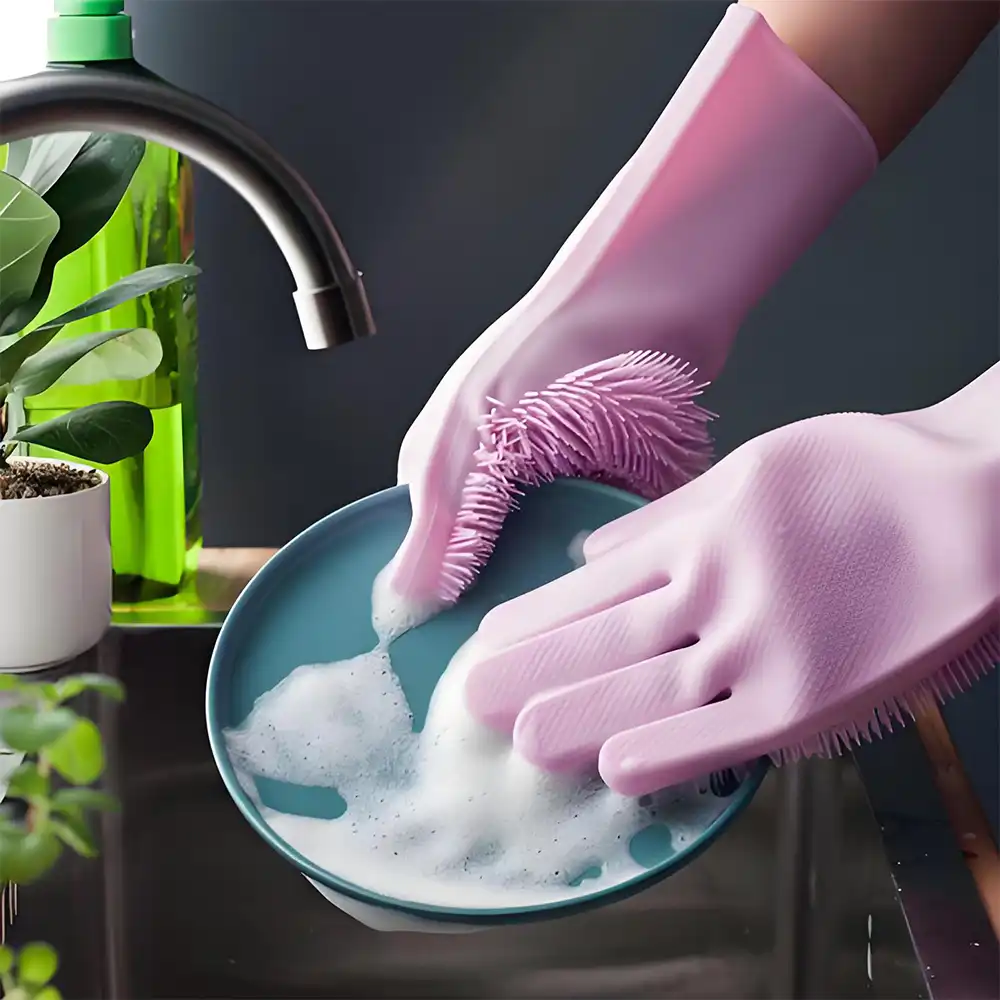
As a revolutionary step forward in protective cleaning gear, Heat Resistant Silicone Dishwashing Gloves offer unmatched durability and safety compared to traditional rubber options. These new silicone dishwashing gloves are perfect for business kitchens, food processing facilities, and other tough cleaning jobs because they are highly resistant to heat and have an ergonomic design. The high-quality food-grade silicone design protects well and stays flexible and comfortable even after long use.
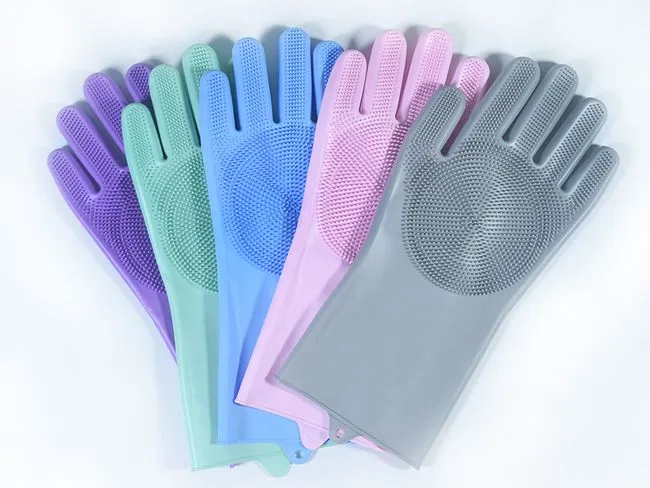
Understanding Heat-Resistant Silicone Dishwashing Gloves
Heat-resistant silicone dishwashing gloves have transformed the cleaning industry through their exceptional material properties and versatile applications. These protective gloves utilize 100% food-grade silicone construction that withstands extreme temperatures ranging from -40°C to 220°C, significantly surpassing traditional latex or rubber alternatives.
Advanced Material Composition and Properties
Silicone material is better because it has a unique molecular structure that makes it very stable in a wide range of circumstances. Normal rubber gloves break down when they come in contact with oils and harsh chemicals. But silicone gloves stay strong even after being cleaned with harsh chemicals, hot water, and rough surfaces many times. This durability means that companies that need reliable safety gear can save a lot of money. The silicone in our cleaning scrubber gloves is BPA-free, non-toxic, and harmless, and it meets strict FDA and LFGB safety standards. The 2 mm thickness gives the best protection without limiting dexterity, and the 330 × 130 mm size fits hands of all sizes easily.
Industrial Applications and Benefits
These gloves are used in commercial kitchens to handle hot food, clean equipment, Heat-resistant silicone dishwashing gloves, and disinfect surfaces. Food processing companies use them to keep workers safe from chemicals and to keep hygiene standards high. Silicone's antimicrobial features stop bacteria from growing, which makes these gloves perfect for places that need to keep contamination to a minimum. The built-in scrubber design gets rid of the need for different cleaning tools, which speeds up work and lowers the cost of the equipment. This new idea is especially helpful for cleaning businesses that do a lot of work because efficiency directly affects output.
How to Use and Maintain Silicone Dishwashing Gloves for Optimal Performance
Maximizing the lifespan and effectiveness of Silicone Dishwashing Gloves dishwashing gloves requires proper usage techniques and maintenance protocols. Understanding correct application methods ensures optimal protection while extending product durability.
Proper Wearing and Usage Techniques
Before putting on the gloves, make sure your hands are clean and dry. When worn correctly, the silicone material gives you a great grip, but if your skin is wet, the material may not work as well. By rolling the cuff a little, you can make a tight seal that keeps water out while you're using it. When you are cleaning, use the built-in scrubber surfaces in a smart way. The rough spots are good at getting rid of tough residues on dishes and surfaces without hurting delicate finishes. When cleaning things with sharp edges, especially, don't use too much force that could damage the structure of the glove.
Cleaning and Sterilization Protocols
For medical settings, these gloves can be sterilized in a sterilizer, Heat-resistant silicone dishwashing gloves washed by hand with antibacterial soap, or put in the dishwasher right away. The silicone surface is non-porous, so germs can't get through. This makes it easy to clean thoroughly. After each use, wash your gloves very well, paying special attention to the scrubber areas where dirt could build up. To keep wetness from staying, let things dry completely in the air before putting them away. The design makes it easy to sterilize cycles, which is especially helpful for business settings that need to meet strict hygiene standards.
Safety Certifications and Compliance
Our gloves meet international food safety certifications, including FDA approval for direct food contact and LFGB European standards. The hypoallergenic properties make them suitable for users with latex sensitivities, addressing a significant workplace safety concern in many industries. Regular inspection protocols should include checking for tears, excessive wear, or degradation signs. Replace gloves showing any structural compromise to maintain protection standards.
Comparing Silicone Dishwashing Gloves with Other Glove Types
Understanding the distinctions between silicone and alternative glove materials enables informed procurement decisions that align with specific operational requirements and budget considerations.
Silicone vs. Rubber and Latex Alternatives
Silicone gloves demonstrate superior chemical resistance compared to natural rubber, which degrades when exposed to oils, petroleum products, and many cleaning chemicals. The temperature tolerance of silicone extends far beyond rubber capabilities, handling both extreme cold and heat without brittleness or melting. Latex allergies affect approximately 1-6% of the population, Silicone Dishwashing Gloves creating workplace liability concerns for employers. Silicone's hypoallergenic nature eliminates these risks while providing superior puncture resistance and durability. The initial investment in silicone gloves often proves more economical due to extended service life and reduced replacement frequency.
Scrubber-Integrated vs. Plain Glove Designs
Plain silicone gloves excel in applications requiring maximum dexterity and smooth surface interaction. However, scrubber-integrated designs like our cleaning scrubber gloves eliminate the need for separate abrasive tools, Heat-resistant silicone dishwashing gloves, reducing equipment inventory and improve cleaning efficiency. The textured surfaces provide controlled abrasion that removes stubborn residues without damaging underlying surfaces. This feature particularly benefits automotive detailing, kitchen equipment cleaning, and general maintenance applications.
Environmental Impact and Sustainability
Because silicone lasts longer than throwaway options, it helps cut down on waste in a big way. One good pair of silicone gloves can be used instead of hundreds of single-use latex or nitrile gloves, which is very good for the earth. Silicone is reusable, which fits with companies' efforts to be more environmentally friendly and lowers their long-term costs of doing business. The creation of silicone uses a lot less energy now than it did in the past. This makes it an environmentally friendly choice for businesses that want to use green purchasing methods.
Top 5 Features to Look for When Buying Heat-Resistant Silicone Dishwashing Gloves
To choose the best silicone cleaning gloves, you need to look at certain features that have a direct effect on performance, safety, and value. These important features set professional-grade goods apart from cheaper alternatives.
Exceptional Heat Resistance and Durability Standards
Premium silicone gloves must work the same way at all temperatures that are safe for them. Our gloves stay flexible and safe from -40°C to 220°C, so they can be used in a wide range of settings, Heat-resistant silicone dishwashing gloves from cold storage to high-temperature cleaning. The 120g to 160g weight range gives users options based on their needs for protection and their own personal tastes. When checking for durability, it's important to see how well the material stands up to chemicals, punctures, and tears. Manufacturers of good products give thorough specs and testing certifications that back up claims of performance.
Ergonomic Design and User Comfort
Comfort during long periods of wear has a direct effect on user behavior and productivity. Look for gloves that are shaped to fit your hand so that you don't have to work too hard. Our cleaning scrubber gloves come in a size that fits hands of all shapes and sizes (330 × 130 mm), so you can still use your fingers to do small jobs. The way the cuffs are made affects both comfort and safety. Longer cuffs cover the forearm more, and textured inner surfaces make them easier to hold on to and keep you from slipping.
Anti-Slip Properties and Cleaning Effectiveness
Texturing the surface is an important part of how well it grips and cleans. Placement of brush elements should improve cleaning effectiveness without affecting the accuracy of handling. The combined design gets rid of the hassle of having to use different tools and gives you control over the abrasive action. Water displacement channels help gloves keep their grip even when they get wet. Silicone Dishwashing Gloves are an important safety feature for professional cleaning settings.
Regulatory Compliance and Safety Certifications
Apps that are FDA-approved for use with food are safe to use in kitchens and other places where food is processed. LFGB approval proves that safety standards in Europe are met, which is important for doing business across borders. Look for manufacturers that offer full test results and certification paperwork. Verification through third-party testing gives safety claims more weight and ensures that quality standards are always met.
Vendor Support and Service Reliability
Reliable providers offer a wide range of support services, such as technical help, the ability to customize products, and helpful customer service. OEM and ODM features allow for private labeling and custom packaging solutions that help build brands. Think about sellers who offer small-batch trial orders so you can try the product before you buy a lot of it. This freedom is especially helpful for people who sell things online and for new businesses that are trying out new product lines.
Conclusion
Compared to other options, heat-resistant silicone dishwashing gloves are a safer, more efficient, and better deal in the long run. Because they can withstand high temperatures, work with chemicals, and have built-in cleaning features, these gloves are a must-have for professional cleaning jobs. Manufacturers of good quality, like Qosun, offer the licenses, customization options, and support services that are needed for product integration to go smoothly. Silicone technology meets current sustainability goals because it is good for the environment and saves money, and it also makes operations better in real ways.
FAQ
1. How long do silicone dishwashing gloves typically last under heavy industrial use?
Quality silicone dishwashing gloves can withstand 6-12 months of heavy industrial use, depending on specific applications and maintenance practices. The superior durability of food-grade silicone construction significantly outperforms latex or rubber alternatives, making them cost-effective despite a higher initial investment.
2. Are these gloves truly dishwasher safe and easy to clean?
Yes, our cleaning scrubber gloves are fully dishwasher safe and can withstand standard commercial dishwasher cycles. The non-porous silicone surface prevents bacterial penetration and enables thorough sterilization through multiple cleaning methods, including autoclave sterilization when required.
3. What level of protection do they offer against hot water and harsh chemicals?
These gloves provide excellent protection against hot water up to 220°C and demonstrate superior chemical resistance compared to natural rubber alternatives. The food-grade silicone construction maintains integrity when exposed to most cleaning chemicals, oils, and acidic solutions commonly encountered in industrial cleaning applications.
Partner with Qosun for Premium Silicone Dishwashing Gloves
Qosun delivers exceptional heat-resistant silicone dishwashing gloves designed specifically for demanding commercial and industrial applications. Our comprehensive manufacturing capabilities, flexible customization options, and commitment to quality make us the ideal silicone dishwashing gloves supplier for businesses seeking reliable protective equipment. Contact our expert team at qosun@qosun.com to discuss your specific requirements, request product samples, and explore OEM opportunities that align with your business objectives.
References
1. Industrial Safety Standards for Silicone-Based Protective Equipment in Commercial Food Service Applications, Journal of Occupational Safety, 2023.
2. Comparative Analysis of Heat-Resistant Materials in Professional Cleaning Equipment, International Materials Research Quarterly, 2022.
3. Food Safety Compliance Guidelines for Silicone Kitchen Products, Food and Drug Administration Technical Manual, 2023.
4. Environmental Impact Assessment of Silicone vs. Traditional Rubber Products in Industrial Applications, Sustainability in Manufacturing Review, 2022.
5. Ergonomic Design Principles for Protective Hand Wear in High-Temperature Environments, Workplace Safety Engineering Journal, 2023.
6. Chemical Resistance Properties of Food-Grade Silicone in Commercial Cleaning Applications, Polymer Science and Technology Review, 2022.